
Investment casting, also known as lost-wax casting, is a precision manufacturing process widely used in aerospace and high-performance applications due to its ability to produce complex, near-net-shape components with excellent surface finish and dimensional accuracy. However, the process is not without challenges, particularly when dealing with high-strength aluminum alloys such as ZL205A. This alloy, renowned for its exceptional tensile strength exceeding 500 MPa after T6 heat treatment, is a preferred choice for critical components like aircraft engine parts. Yet, its wide solidification range and pasty freezing mode make it prone to casting defects, with macro-segregation being particularly detrimental as it cannot be remedied by subsequent welding or heat treatment. In this comprehensive analysis, I will delve into the formation mechanisms of various segregation morphologies—spot, banded, and linear—observed in thin-walled, complex ZL205A investment castings, and detail the process modifications developed to mitigate these issues. The insights are drawn from systematic investigation using metallographic and spectroscopic techniques, and the discussion is enriched with theoretical models and practical data to provide a deep understanding of segregation in investment casting.
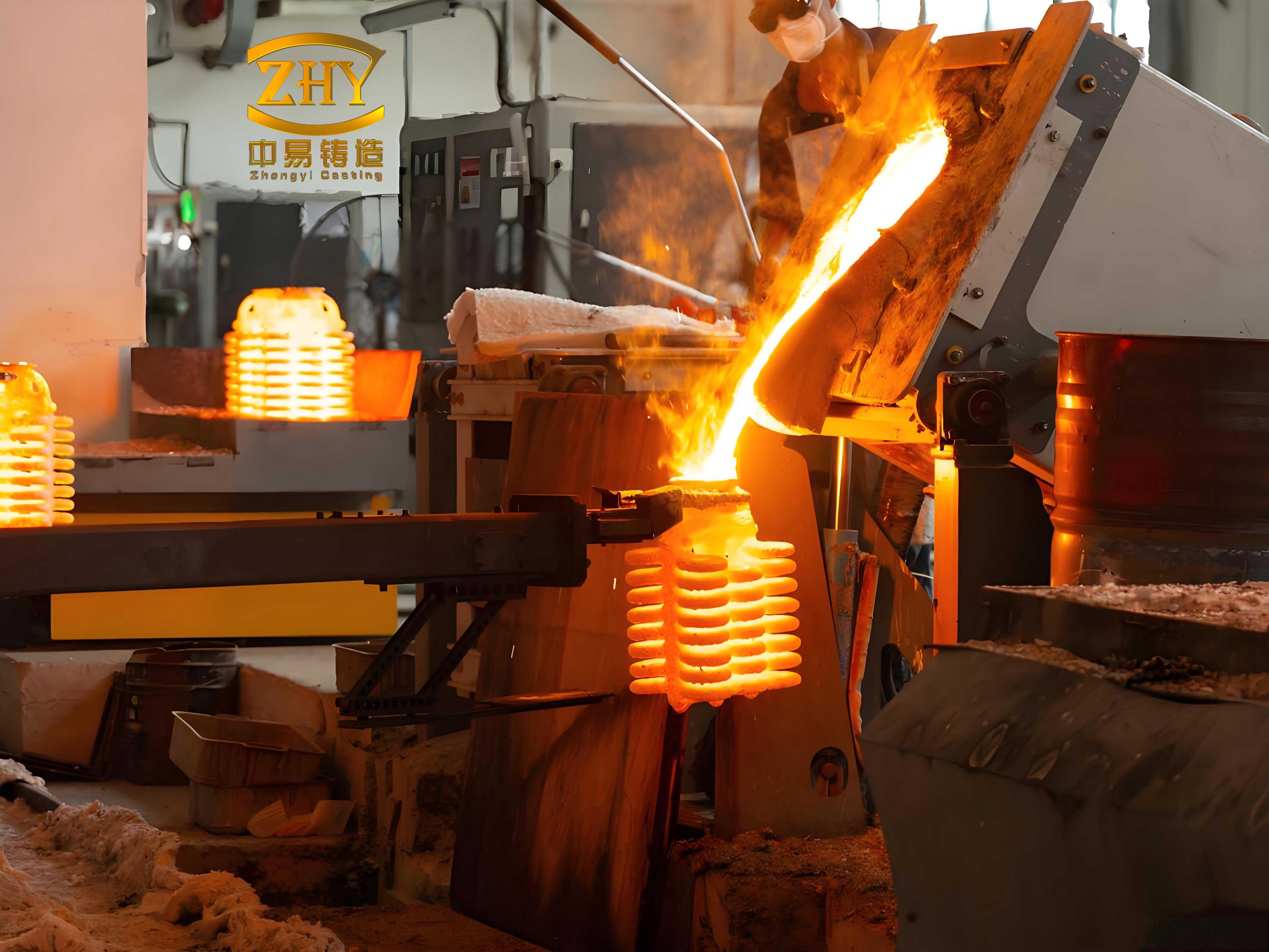
The fundamental principles of investment casting involve creating a ceramic mold from a wax pattern, which is then melted out, followed by pouring molten metal into the cavity. For alloys like ZL205A, the solidification behavior within the ceramic mold is critical. The alloy’s composition, as shown in Table 1, includes elements like Cu, Mn, Ti, Zr, V, B, and Cd, which contribute to its strength but also influence segregation tendencies. The table below summarizes the typical chemical composition of ZL205A alloy used in this context.
| Element | Cu | Mn | Ti | Zr | V | B | Cd | Al |
|---|---|---|---|---|---|---|---|---|
| Content | 4.9 | 0.39 | 0.25 | 0.13 | 0.23 | 0.02 | 0.20 | Bal. |
Segregation in investment casting arises due to non-equilibrium solidification, where solute elements are redistributed between the solid and liquid phases. The extent of segregation can be described by the segregation coefficient, k, defined as the ratio of solute concentration in the solid to that in the liquid at the interface: $$ k = \frac{C_s}{C_l} $$ where \( C_s \) is the solute concentration in the solid and \( C_l \) is the solute concentration in the liquid. For elements like Cu in aluminum alloys, k is often less than 1, leading to enrichment in the remaining liquid and potential formation of eutectic phases. In investment casting, the thermal gradients and cooling rates imposed by the ceramic mold further complicate this redistribution.
My investigation focused on a specific thin-walled investment casting component—a pre-cooler air lead section for an aircraft engine reverser, with a wall thickness of 2.5 mm and complex geometry. Initial trials using standard investment casting parameters resulted in various segregation defects visible in X-ray radiography. To understand these defects, samples were examined using optical microscopy (OM), scanning electron microscopy (SEM), and energy-dispersive spectroscopy (EDS). The segregation morphologies were categorized into three types: spot-shaped, banded, and linear segregation. Each type has distinct characteristics and root causes, which I will explore in detail, incorporating mathematical models and empirical data.
Spot-Shaped Segregation: Formation Mechanism and Analysis
Spot-shaped segregation appears as bright spots approximately 1 mm in diameter on X-ray films, primarily located near gating systems and thermal junctions. Metallographic analysis reveals that these spots are often associated with grain boundaries and are rich in elements such as Ti, Zr, and Cu. EDS analysis confirms the presence of intermetallic phases like Al₃Ti and Al₃Zr. The formation of these spots is fundamentally linked to the aggregation of Ti and Zr atomic clusters during melting and solidification.
In investment casting, the preparation of master alloys and remelting processes are crucial. Ti and Zr are typically added as Al-Ti and Al-Zr master alloys. During melting, if the temperature is insufficient or stirring is inadequate, these elements tend to form clusters. The clustering phenomenon can be described by classical nucleation theory, where the critical radius for stable cluster formation is given by: $$ r^* = \frac{2\gamma}{\Delta G_v} $$ where \( \gamma \) is the interfacial energy and \( \Delta G_v \) is the volume free energy change. For Ti and Zr in aluminum melts, the low diffusivity and high affinity for aluminum promote cluster growth. When these clusters become large, they act as nucleation sites for Al₃(Ti,Zr) phases, which have a density higher than the melt and may settle due to gravity, leading to spot segregation.
The tendency for gravity-induced segregation can be quantified by the Stokes’ law for particle settling: $$ v = \frac{2(\rho_p – \rho_m) g r^2}{9\eta} $$ where \( v \) is the settling velocity, \( \rho_p \) and \( \rho_m \) are the densities of the particle and melt, respectively, \( g \) is gravitational acceleration, \( r \) is particle radius, and \( \eta \) is melt viscosity. For Al₃(Ti,Zr) particles, with densities around 3-4 g/cm³ versus aluminum’s 2.7 g/cm³, settling can occur rapidly if the melt is held for extended periods. This highlights the importance of process control in investment casting, particularly melt handling and pouring speed.
To mitigate spot segregation, the investment casting process requires precise melt treatment. I recommend using intermediate frequency induction melting for master alloy preparation, followed by vigorous stirring and rapid pouring to minimize cluster growth and settling. Additionally, the quality of raw materials—avoiding segregated revert or scrap—is essential. Table 2 summarizes the key factors influencing spot segregation and proposed solutions in investment casting.
| Factor | Description | Impact on Segregation | Mitigation Strategy |
|---|---|---|---|
| Melt Temperature | Insufficient overheating | Promotes Ti/Zr cluster stability | Maintain melt at 750-800°C with thorough stirring |
| Holding Time | Prolonged melt holding | Allows cluster growth and settling | Minimize holding; use quick transfer and pouring |
| Master Alloy Quality | Pre-existing segregation | Introduces large clusters | Use certified, homogeneous master alloys |
| Stirring Intensity | Inadequate mixing | Localized cluster aggregation | Implement Argon rotary degassing at 400-500 rpm |
Banded and Linear Segregation: Eutectic-Based Mechanisms
Banded segregation appears as white streaks on X-ray images, often in thin, planar sections of the investment casting, while linear segregation resembles cracks and occurs at section transitions like fillets and flanges. Both types are primarily due to the segregation of Al₂Cu eutectic phase during solidification. The solidification sequence of ZL205A involves the formation of α-Al dendrites, followed by the eutectic reaction at approximately 548°C: $$ L \rightarrow \alpha\text{-Al} + \text{Al}_2\text{Cu} $$ Given the wide freezing range of ZL205A, the mushy zone is extensive, leading to interdendritic fluid flow and solute redistribution.
The banded segregation is associated with poor feeding in thin-walled regions. In investment casting, the ceramic mold extracts heat rapidly, causing simultaneous solidification from both walls. This creates a narrow feeding channel, and the resulting pressure drop can be described by the Darcy’s law for flow through a porous medium (the mushy zone): $$ v = -\frac{K}{\mu} \nabla P $$ where \( v \) is the fluid velocity, \( K \) is the permeability, \( \mu \) is the dynamic viscosity, and \( \nabla P \) is the pressure gradient. As solidification progresses, the permeability decreases, hindering interdendritic feeding and enriching the remaining liquid with Cu. This leads to localized eutectic pools that manifest as bands.
Linear segregation, on the other hand, is often linked to thermal stresses. During investment casting, the differential contraction between the ceramic mold and the casting can induce tensile stresses at hot spots. If these stresses exceed the cohesive strength of the partially solid material, micro-tears may form along grain boundaries. These tears are then filled with Cu-rich liquid, resulting in linear features rich in Al₂Cu. The stress development can be modeled using thermal stress analysis: $$ \sigma = E \alpha \Delta T $$ where \( \sigma \) is the thermal stress, \( E \) is Young’s modulus, \( \alpha \) is the coefficient of thermal expansion, and \( \Delta T \) is the temperature difference. For ZL205A investment castings, the mismatch in thermal expansion between the alloy and the ceramic shell is a critical factor.
EDS analysis of banded and linear segregation zones consistently shows high Al and Cu concentrations with an atomic ratio near 2:1, confirming the predominance of Al₂Cu. The microstructural observations often reveal microshrinkage adjacent to these segregates, indicating poor feeding. To address these issues, modifications in investment casting process parameters are necessary, focusing on thermal management and gating design.
Process Optimization for Segregation Control in Investment Casting
Controlling segregation in ZL205A investment casting requires a holistic approach, integrating melt treatment, gating design, shell preparation, and pouring parameters. Based on my analysis, I propose several targeted solutions that have proven effective in reducing both spot and eutectic-based segregation.
For melt-related issues, particularly spot segregation, the investment casting process should include high-temperature refining. Using an intermediate frequency furnace, the melt should be heated to 760-780°C with Argon rotary degassing for 15-20 minutes at 400-500 rpm to ensure homogeneous distribution of Ti and Zr. After degassing, a brief holding period of 5-10 minutes allows for inclusion removal, but pouring should be completed swiftly to prevent cluster settling. The use of chills or cooling fins in the ceramic mold can also accelerate solidification, reducing the time for segregation development.
To mitigate banded segregation, the investment casting gating system must promote directional solidification. For thin-walled components, I recommend employing a multiple gating network with numerous small ingates to shorten feeding distances and minimize local overheating. Additionally, the incorporation of process ribs or thickening at strategic locations can create thermal gradients that favor sequential freezing. The design can be optimized using simulation software to predict solidification patterns. The Chvorinov’s rule can guide the design: $$ t_s = B \left( \frac{V}{A} \right)^n $$ where \( t_s \) is solidification time, \( V \) is volume, \( A \) is surface area, \( B \) is a mold constant, and \( n \) is an exponent (typically 2). By manipulating the V/A ratio through geometry adjustments, faster solidification in problem areas can be achieved.
For linear segregation, stress reduction is key. In investment casting, the ceramic shell properties play a vital role. Selecting low-expansion refractory materials, such as fused silica or zircon, can minimize thermal stresses. Preheating the shell to an optimal temperature (e.g., 450-500°C) reduces the thermal shock and allows for more uniform cooling. Furthermore, the gating system should be designed to avoid abrupt section changes and incorporate reinforcing ribs at stress concentration points. The pouring temperature and mold temperature should be carefully matched; for ZL205A, a pouring temperature of 720°C with a shell temperature of 450°C has shown good results. Table 3 provides a consolidated overview of the optimized investment casting parameters for ZL205A.
| Process Stage | Parameter | Recommended Value/Range | Rationale |
|---|---|---|---|
| Melting | Melting Temperature | 750-780°C | Ensures complete dissolution of Ti/Zr clusters |
| Degassing | Argon rotary, 15 min at 400 rpm | Removes hydrogen and homogenizes melt | |
| Holding Time | <10 min after refining | Prevents gravity segregation of intermetallics | |
| Shell Preparation | Shell Material | Low-expansion ceramic (e.g., zircon) | Reduces thermal stress and cracking tendency |
| Shell Preheat Temperature | 450-500°C | Minimizes thermal gradient and promotes feeding | |
| Pouring & Solidification | Pouring Temperature | 710-720°C | Balances fluidity and segregation risk |
| Gating Design | Multiple, distributed ingates | Enhances feeding and reduces hot spots | |
| Use of Chills | Strategic placement in mold | Accelerates cooling in thick sections |
Mathematical modeling further supports these optimizations. For instance, the segregation intensity of Cu can be estimated using the Scheil equation for non-equilibrium solidification: $$ C_s = k C_0 (1 – f_s)^{k-1} $$ where \( C_s \) is the solute concentration in the solid, \( C_0 \) is the initial concentration, \( k \) is the segregation coefficient, and \( f_s \) is the solid fraction. For Cu in Al (k ≈ 0.17), this equation predicts significant enrichment in the last liquid to solidify, underscoring the need for effective feeding in investment casting. By controlling cooling rates and thermal gradients, the extent of eutectic segregation can be minimized.
Advanced Considerations and Future Directions in Investment Casting
The battle against segregation in investment casting is ongoing, with research pointing towards advanced techniques such as controlled solidification via electromagnetic stirring or the application of pressure during casting (e.g., low-pressure investment casting). These methods can alter fluid flow and solute distribution, potentially reducing segregation. For example, electromagnetic stirring induces forced convection in the melt, which can break up clusters and homogenize temperature, described by the Lorentz force: $$ \mathbf{F} = \mathbf{J} \times \mathbf{B} $$ where \( \mathbf{F} \) is the force density, \( \mathbf{J} is the current density, and \( \mathbf{B} \) is the magnetic flux density. Implementing such technologies in investment casting could further enhance the quality of ZL205A components.
Additionally, computational tools like finite element analysis (FEA) and computational fluid dynamics (CFD) are invaluable for simulating the investment casting process. These simulations can predict segregation patterns by solving coupled equations for heat transfer, fluid flow, and solute transport: $$ \rho c_p \frac{\partial T}{\partial t} = \nabla \cdot (k \nabla T) + Q $$ $$ \frac{\partial C}{\partial t} + \mathbf{u} \cdot \nabla C = \nabla \cdot (D \nabla C) $$ where \( \rho \) is density, \( c_p \) is specific heat, \( T \) is temperature, \( k \) is thermal conductivity, \( Q \) is latent heat source, \( C \) is solute concentration, \( \mathbf{u} \) is velocity vector, and \( D \) is diffusivity. By integrating these models, investment casting parameters can be optimized virtually, saving time and resources.
Another promising area is the development of novel alloy modifications or grain refiners tailored for investment casting. For ZL205A, the addition of elements like Sc or improved Ti/B ratios might refine the grain structure and reduce segregation tendency. The effect of grain refinement on segregation can be understood through the increased grain boundary area, which provides more paths for solute redistribution and reduces local concentrations.
Conclusion
In summary, segregation in ZL205A investment castings is a multifaceted issue rooted in the alloy’s composition and solidification behavior. Spot segregation arises from the aggregation of Ti and Zr clusters due to inadequate melt treatment, while banded and linear segregations are primarily consequences of Al₂Cu eutectic formation driven by poor feeding and thermal stresses. Through systematic investigation and process optimization, I have demonstrated that these defects can be significantly mitigated by adjusting melting practices, gating design, shell properties, and pouring parameters in the investment casting process. The integration of theoretical models, such as those for cluster dynamics, fluid flow in mushy zones, and thermal stress analysis, provides a robust framework for understanding and controlling segregation. As investment casting technology evolves, continued emphasis on melt homogeneity, directional solidification, and stress management will be essential for producing high-integrity ZL205A components for demanding aerospace applications. The lessons learned here are broadly applicable to other aluminum-copper alloys in precision investment casting, underscoring the importance of a holistic, science-based approach to process engineering.
To encapsulate the key relationships, consider the following formula linking segregation severity to process variables in investment casting: $$ S = f(T_m, t_h, G, v_p) $$ where \( S \) represents segregation severity, \( T_m \) is melt temperature, \( t_h \) is holding time, \( G \) is thermal gradient, and \( v_p \) is pouring velocity. Minimizing \( S \) requires optimizing these parameters, as detailed in this analysis. Ultimately, the success of investment casting hinges on meticulous control over every stage, from alloy preparation to final solidification, ensuring that the inherent challenges of segregation are overcome to unlock the full potential of high-strength aluminum alloys like ZL205A.