
In my extensive practice of precision lost wax casting, I have refined a process that ensures high-dimensional accuracy and surface finish for complex components, such as valve bodies. This method, often referred to as investment casting, relies on meticulous control at every stage, from pattern making to final cleaning. The core of precision lost wax casting lies in its ability to produce near-net-shape parts with minimal machining, making it indispensable for industries requiring intricate geometries. Throughout this narrative, I will detail each step, emphasizing the critical parameters and techniques that define successful precision lost wax casting operations.
The journey begins with mold preparation, specifically for creating urea cores. Urea is favored due to its excellent solubility in water, which facilitates easy removal after the wax pattern is formed. The urea mixture is prepared by heating urea to its melting point, typically around 130–140°C. Care must be taken to avoid overheating, as urea decomposes above 140°C, forming biuret and ammonia, which degrades its properties. The decomposition can be represented by the chemical equation: $$ 2 \text{CO(NH}_2\text{)}_2 \rightarrow \text{H}_2\text{N-CO-NH-CO-NH}_2 + \text{NH}_3 $$ This reaction underscores the importance of temperature control in precision lost wax casting. After melting, the surface scum and impurities are skimmed off, and continuous boiling is maintained until water vapor nearly disappears. Then, the heat is reduced to a slow flame to prevent carbonization, with constant stirring to avoid bottom scorching. Upon reaching 130–140°C, the molten urea is poured into stainless steel troughs to cool and solidify for reuse. The exact temperature is adjusted based on ambient humidity: in dry conditions, the lower limit of 130°C is preferred, while in humid conditions, the upper limit of 140°C is used. This variability ensures optimal moisture content, as too much water (below 130°C) or excessive heat (above 140°C) compromises the core quality in precision lost wax casting.
Once the urea cores are ready, wax patterns are injection-molded around them. The wax blend typically consists of paraffin, stearic acid, and other additives to achieve suitable flow and strength. After molding, individual wax patterns are inspected, trimmed, and assembled into clusters using gating systems. The gating design is crucial for proper metal flow and feeding during casting. Below is a table summarizing the gating rod specifications commonly employed in precision lost wax casting for valve bodies:
| Valve Body Diameter (mm) | Gating Rod Diameter (mm) | Length (mm) | Number of Branches |
|---|---|---|---|
| 25–20 | 6 | 150 | 4 |
| 25–32 | 8 | 180 | 6 |
| 40–50 | 10 | 200 | 8 |
| 55–60 | 12 | 220 | 10 |
| 60–65 | 14 | 240 | 12 |
| 65–70 | 16 | 260 | 14 |
Wax recovery is an integral aspect of precision lost wax casting, promoting cost efficiency and material consistency. Spent wax is reclaimed through a hydrochloric acid-steam treatment process. The recovered wax must be free of moisture, with ash and stearate content not exceeding 1%. Analysis of stearic acid content is routinely performed, typically maintained at 5–6% to ensure proper rheology. The recovery involves heating the wax to boiling, skimming off residual impurities, and concentrating it until water vapor diminishes. Temperature management is critical; for instance, the viscosity of the wax blend can be modeled using an Arrhenius-type equation: $$ \eta = A e^{E_a / (RT)} $$ where $\eta$ is the dynamic viscosity, $A$ is a pre-exponential factor, $E_a$ is the activation energy, $R$ is the gas constant, and $T$ is the absolute temperature. This relationship highlights how temperature fluctuations impact wax behavior in precision lost wax casting.
The next phase in precision lost wax casting is shell building, where the wax cluster is repeatedly dipped into ceramic slurries and stuccoed with refractory sands to form a robust mold. We utilize a low-strength shell system to balance permeability and resistance. The shell construction involves multiple layers, each with specific compositions and drying times. The table below details the shell-building parameters, which are pivotal for achieving defect-free castings in precision lost wax casting:
| Layer Number | Slurry Ratio by Weight (Quartz Powder : Sodium Silicate) | Slurry Viscosity (seconds) | Ammonium Chloride Solution Concentration (%) | Temperature (°C) | Hardening Time (min) | Drying Time (min) | Sand Grit Size (mesh) |
|---|---|---|---|---|---|---|---|
| 1 | 1.1 : 1 | 60–70 | 18–20 | 40–70 | Natural hardening | 10–12 | 50–70 |
| 2 | 1.15–1.2 : 1 | 80–90 | 18–20 | 20–40 | 20–25 | 10–12 | 30–40 |
| 3 | 1.15–1.2 : 1 | 80–90 | 18–20 | 8–12 | 20–25 | 10–12 | 30–40 |
| 4 | 1.15–1.2 : 1 | 80–90 | 18–20 | 8–12 | 20–25 | 10–12 | 30–40 |
| 5 | 1.15–1.2 : 1 | 80–90 | 18–20 | 8–12 | 20–25 | 10–12 | 30–40 |
Notes: Quartz powder is 270 mesh with SiO₂ content ≥95%; sodium silicate has a modulus of 2.9–3.5 and specific gravity of 1.30–1.33; viscosity is measured using a 90 mL funnel with a 7 mm aperture; ammonium chloride solution pH is adjusted to 5–7 with hydrochloric acid. The first layer includes a wetting agent at 0.02–0.05% to enhance coating uniformity in precision lost wax casting.
After shell formation, the wax must be removed through a controlled dewaxing process. The shells are air-dried for at least four hours before dewaxing. They are then immersed in a boiling aqueous solution containing 7% ammonium chloride, maintained at 90–95°C for 20 minutes. Prolonged exposure or higher temperatures can weaken the shell, so precision is key in precision lost wax casting. After 15 minutes, the clusters are vertically withdrawn to prevent sand ingress, followed by rinsing with 90°C water or 5% hot hydrochloric acid to eliminate residual wax. Clean shells are stored浇口-down for 1–2 days to ensure complete drying. The dewaxing solution is filtered monthly, and the reclaimed wax is processed as described earlier. This step ensures the ceramic mold is free of organic residues, which is critical for preventing gas defects during metal pouring in precision lost wax casting.
Shell baking follows, conducted in indirectly heated coke dryers or electric box furnaces. The shells undergo low-temperature drying at around 300°C to remove residual moisture, followed by high-temperature firing at 600–700°C to develop adequate strength and remove any remaining volatiles. The firing process can be modeled using a kinetic equation for ceramic sintering: $$ \frac{d\rho}{dt} = K \exp\left(-\frac{Q}{RT}\right) $$ where $\rho$ is the density, $t$ is time, $K$ is a constant, $Q$ is the activation energy for sintering, and $T$ is the absolute temperature. This equation helps optimize the baking cycle for consistency in precision lost wax casting.
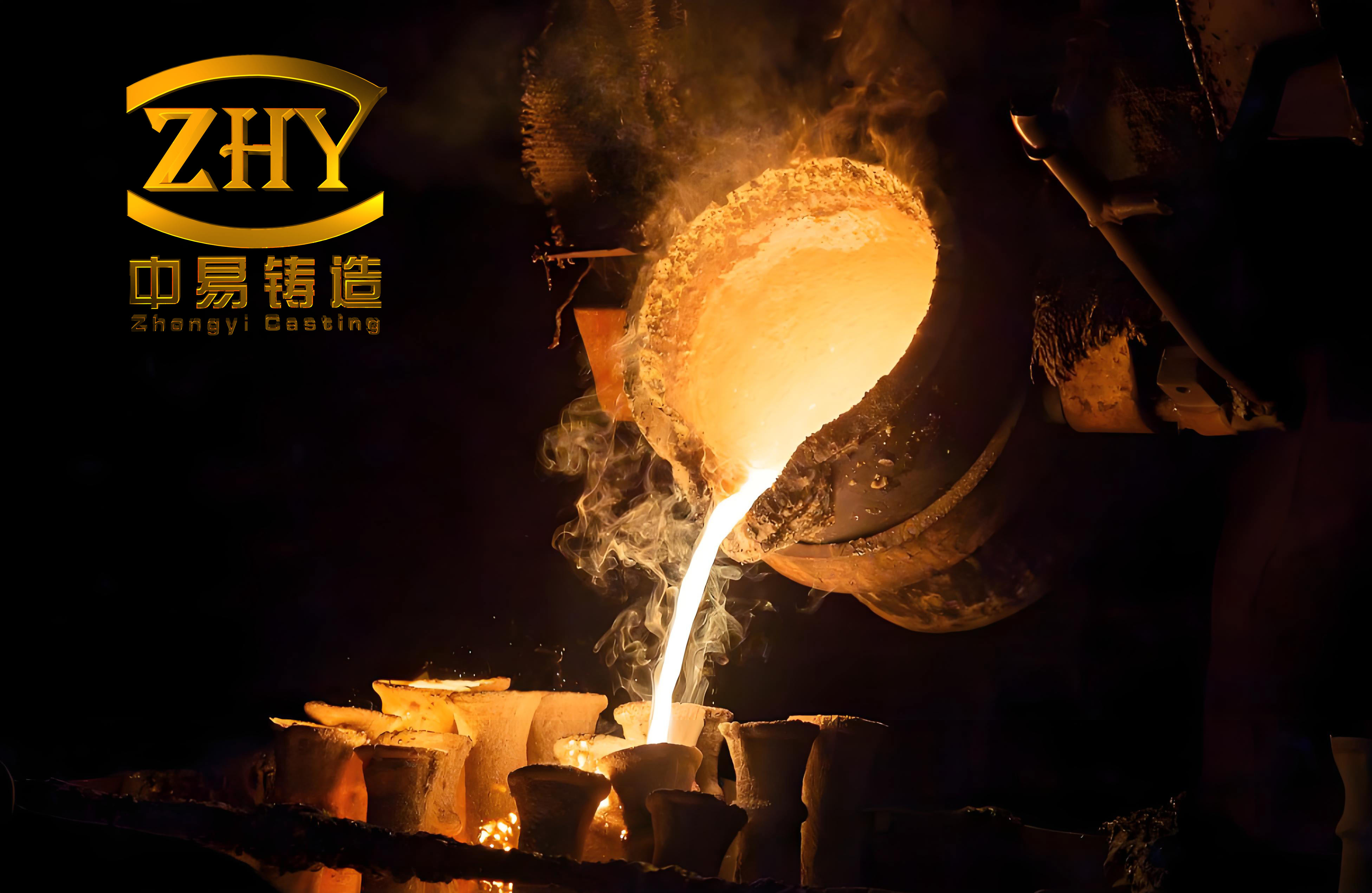
Melting and pouring are central to precision lost wax casting, directly influencing the metallurgical quality of the final product. We employ medium-frequency induction furnaces for melting stainless steel grades like 1Cr18Ni9 and 1Cr18Ni9Ti. The furnace lining is basic, made from magnesite, and rammed in situ. The lining composition is critical for furnace life and metal purity, as summarized below:
| Component | Particle Size (mm) | Percentage by Weight (%) | Remarks |
|---|---|---|---|
| Fused Magnesite | 5–8 | 35.0 | |
| Fused Magnesite | 3–5 | 15.0 | |
| Fused Magnesite | 1–3 | 12.5 | |
| Fused Magnesite | 0–1 | 15.0 | |
| Dead-Burned Magnesite | 0–1 | 12.5 | |
| Boric Acid | Powder | 5.0 | |
| Water | – | 5.0 |
The magnesite and boric acid are dry-mixed, then gradually hydrated, matured for about an hour, and re-mixed before use. The lining is rammed around a core, with the slag line area above the induction coil reinforced with a mixture of冶金 magnesite and brine for durability. After construction, the lining is dried by gradually increasing power input over six hours, followed by melting a charge of pig iron to sinter the lining, which enhances its longevity in precision lost wax casting operations.
Melting is performed using a full-return non-oxidizing method, with charge materials comprising stainless steel scrap, risers, and trimmings. The charge is packed tightly at the bottom and loosely on top to avoid bridging. Alloying additions include chromium (0.7–1.0%), manganese (0.1–0.2%), and silicon (0.1–0.2%). If oxygen lancing is used for accelerated melting, element losses are compensated based on analysis. Deoxidation is achieved with aluminum powder, silicon-calcium powder, or ferrosilicon powder, while lime is used for slag formation with minimal slag volume to reduce inclusion pickup. The tap temperature is carefully controlled between 1620–1640°C, often with multiple taps to manage heat distribution. The average melting time is around 110 minutes, reducible by 40 minutes with oxygen assistance. The thermal efficiency of the induction furnace can be expressed as: $$ \eta_{\text{thermal}} = \frac{P_{\text{useful}}}{P_{\text{input}}} = \frac{m C_p \Delta T + m L_f}{V I \cos \phi} $$ where $m$ is the melt mass, $C_p$ is the specific heat, $\Delta T$ is the temperature rise, $L_f$ is the latent heat of fusion, $V$ is voltage, $I$ is current, and $\cos \phi$ is the power factor. This formula underscores the energy considerations in precision lost wax casting melting practices.
Pouring is conducted with preheated shells, typically at 550–650°C, placed in boxes with backing sand to support the mold during metal entry. The gating design ensures smooth, turbulent-free filling to minimize air entrapment and oxide formation, which are detrimental in precision lost wax casting. After pouring, the castings are allowed to cool solidly before extraction.
Cleaning begins by mechanically breaking away the ceramic shell using hammers. The castings then undergo alkaline boiling for core and sand removal, utilizing waste NaOH and NaNO₃ solutions from surface treatment processes, with concentrations of 20–40%. Boiling for one shift effectively dissolves residual ceramic materials. Subsequently, the castings are heat-treated (quenched), followed by alkaline cleaning, acid pickling, and passivation to achieve a silvery-white, corrosion-resistant surface. The passivation process can be described by an electrochemical equation: $$ \text{Cr} + 3\text{H}_2\text{O} \rightarrow \text{Cr}_2\text{O}_3 + 6\text{H}^+ + 6e^- $$ This reaction forms a protective oxide layer, enhancing the durability of components produced via precision lost wax casting.
Throughout the precision lost wax casting process, quality control is paramount. Dimensional checks are performed using coordinate measuring machines (CMMs), while non-destructive testing like penetrant inspection ensures integrity. Statistical process control (SPC) charts are maintained for key variables such as slurry viscosity, firing temperature, and melt chemistry. For instance, the control limits for tapping temperature can be calculated using: $$ \text{UCL} = \bar{T} + A_2 \bar{R} $$ $$ \text{LCL} = \bar{T} – A_2 \bar{R} $$ where $\bar{T}$ is the average temperature, $\bar{R}$ is the average range, and $A_2$ is a constant based on sample size. This statistical approach minimizes variability in precision lost wax casting outputs.
Material science principles further inform the process. The solidification behavior of stainless steel in ceramic molds is analyzed using the Chvorinov’s rule: $$ t_s = B \left( \frac{V}{A} \right)^n $$ where $t_s$ is the solidification time, $V$ is the volume, $A$ is the surface area, $B$ is a mold constant, and $n$ is an exponent typically around 2. This rule aids in designing feeding systems to prevent shrinkage porosity, a common defect in precision lost wax casting. Additionally, the interfacial reaction between the molten metal and ceramic shell is studied to avoid metal penetration, modeled by the penetration depth equation: $$ d = \sqrt{\frac{2 \gamma \cos \theta}{\rho g}} t $$ where $d$ is the penetration depth, $\gamma$ is the surface tension, $\theta$ is the contact angle, $\rho$ is the metal density, $g$ is gravity, and $t$ is time. Optimizing these parameters ensures crisp definition and smooth surfaces in precision lost wax casting.
Environmental and economic aspects are also integral to modern precision lost wax casting. Wax and ceramic recycling rates are tracked to minimize waste, with reclaim efficiencies often exceeding 90%. Energy consumption per kilogram of castings is monitored, aiming for reductions through improved furnace insulation and process automation. The overall cost model for precision lost wax casting can be expressed as: $$ C_{\text{total}} = C_{\text{material}} + C_{\text{labor}} + C_{\text{energy}} + C_{\text{capital}} $$ where each component is optimized through lean manufacturing techniques. For example, just-in-time inventory management reduces holding costs for wax and ceramic materials.
In conclusion, precision lost wax casting is a sophisticated manufacturing technique that demands harmonization of multiple disciplines—metallurgy, ceramics, thermodynamics, and quality assurance. My hands-on experience has shown that success hinges on disciplined adherence to process parameters, continuous improvement through data analysis, and a deep understanding of material behaviors. From urea core making to final passivation, each step is interlinked, and deviations can propagate defects. By leveraging tables for specification summaries, mathematical models for process optimization, and rigorous controls, precision lost wax casting achieves its promise of producing high-integrity, complex components efficiently. As technology advances, innovations such as 3D-printed wax patterns and advanced ceramic slurries will further enhance the capabilities of precision lost wax casting, solidifying its role in precision manufacturing landscapes worldwide.