
In our foundry’s extensive practice of precision lost wax casting, the selection and optimization of the binder system for shell molding is paramount. This article details our first-hand experience and systematic approach in transitioning to and refining a high-performance binder system to overcome common casting defects, enhance dimensional accuracy, and meet stringent international certification standards.
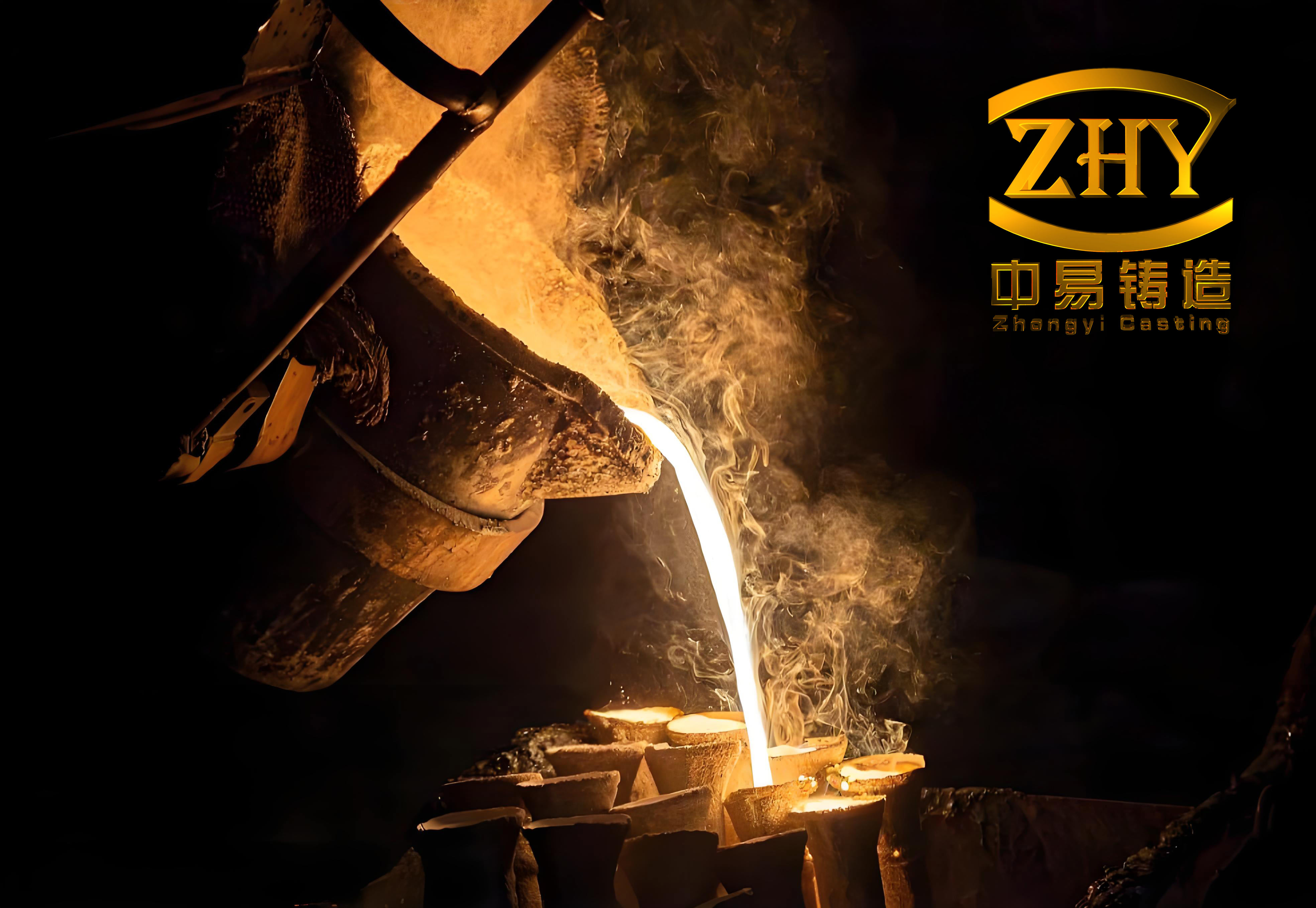
We have utilized our current molding sand system for mass production for over six months. The castings produced, such as marine corner fittings, have successfully passed certifications from international classification societies like the American Bureau of Shipping and Bureau Veritas, and have garnered positive feedback from end-users for their quality and consistency.
Challenges with Conventional Systems in Precision Lost Wax Casting
The production of components like excavator bucket teeth, which demand high dimensional accuracy and superior surface finish, is ideally suited for precision lost wax casting. Initial production trials using a conventional silica-based shell system revealed significant limitations. The primary issue was a metallurgical reaction during pouring: manganese oxides in the molten steel reacted with the silica ($SiO_2$) in the refractory, forming low-melting-point manganese silicates. This reaction led to severe casting defects, including veining, penetration, and burn-on, which compromised the surface integrity and required excessive post-casting cleaning. The chemical reaction can be summarized as:
$$ xMnO + ySiO_2 \rightarrow (MnO)_x\cdot(SiO_2)_y $$
These silicates have a significantly lower melting point than the surrounding materials, leading to liquid phase formation and penetration into the mold wall.
Development of an Advanced Binder System
To address these defects, we developed and implemented a novel shell system based on chemically stable high-alumina aggregates and a Poly-Aluminum Chloride (PAC) binder. This system was specifically engineered for the demanding environment of precision lost wax casting.
1. Refractory Aggregate: Calcined Bauxite (High-Alumina Chamotte)
We replaced quartz sand with calcined bauxite, a porous refractory material produced by high-temperature firing of bauxite ore. Its superior performance stems from its high alumina ($Al_2O_3$) content and thermal properties.
Key Technical Properties:
- High Alumina Content: When the $Al_2O_3$ content exceeds 70%, the solidus temperature of the material can reach above $1800^\circ C$, providing excellent refractoriness.
- Low Thermal Expansion: Exhibits minimal volume change during heating and cooling cycles, reducing the risk of shell cracking.
- Superior Thermal Shock Resistance: High porosity and stable crystalline structure impart excellent resistance to thermal stress.
- Chemical Inertness: High-alumina materials are far less reactive with metal oxides like $MnO$ and $FeO$ compared to silica, effectively preventing the formation of low-melting-point phases.
The relationship between alumina content and critical temperature is non-linear but generally follows a trend of increasing refractoriness with higher $Al_2O_3$ percentage.
2. Binder: Poly-Aluminum Chloride (PAC)
Poly-Aluminum Chloride, a polymeric inorganic coagulant, serves as the primary hardening agent for the ceramic shell in this precision lost wax casting process. Its performance is governed by several key physical and chemical parameters, as detailed in Table 1.
| Parameter | Specification | Significance |
|---|---|---|
| Density ($\rho$) | 1.18 – 1.20 g/cm³ | Indicates total dissolved solids concentration. |
| $Al_2O_3$ Content | 10 – 12% | Primary indicator of active aluminum ion concentration. |
| Basicity (B) | 45 – 55% | Measures the degree of hydroxylation; affects coagulation speed and stability. $$ B = \frac{[OH]}{3[Al]} \times 100\% $$ |
| pH | 3.5 – 4.5 | Affects the gelation rate and solution stability. |
The $Al_2O_3$ content and density are linearly correlated and are critical indicators of the aluminum ion concentration in the PAC solution. If these values are too low, the shell will harden incompletely, resulting in low green strength. Conversely, if they are too high, the excessive formation of aluminum gel makes shell removal (knock-out) extremely difficult after casting. An optimal balance is essential for successful precision lost wax casting.
Shell Building Process and Parameters
The successful application of the PAC binder system requires precise control over the entire shell-building sequence. The hardening mechanism relies on the controlled precipitation of aluminum gel ($Al(OH)_3$) during the hardening and drying stages. This gel bonds the refractory particles, providing the shell with its strength. The process parameters are summarized in Table 2.
| Coating Layer | Slurry Composition | Stucco Grit Size (Mesh) | Hardening Time (min) | Rinse | Drying Time (min) |
|---|---|---|---|---|---|
| Primary (1-2) | Alumina Flour Slurry | 80/100 | 8-10 | Yes | 25-30 |
| Secondary (3-4) | Alumina Flour Slurry | 30/60 | 8-10 | Yes | 25-30 |
| Back-up (5+)* | Mixed Flour Slurry | 16/30 | 10-12 | Yes | 30-40 |
*Note: Back-up coatings may use a blend of calcined bauxite and quartz flour to control cost and permeability.
Process Control要点:
- Slurry Viscosity: Must be tightly controlled, typically lower than that used for ammonium chloride hardening, to facilitate PAC penetration. Viscosity ($\eta$) is monitored using a flow cup, targeting a specific drain time.
- Hardening & Drying Synchronization: The gelation time of PAC must be carefully matched with the drying cycle. Inadequate drying before the next coat leads to weak inter-layer bonding.
- Rinsing: Mandatory after each hardening step to remove residual PAC solution from the shell surface. This prevents “over-hardening” of the subsequent slurry layer, which would create a weak boundary.
- Hardener Modification: PAC is a colloidal solution with high viscosity and poor molecular mobility. To enhance its penetration into the slurry layer, we sometimes:
- Add a small proportion of a wetting agent (surfactant) to reduce surface tension.
- Warm the PAC solution to $40-50^\circ C$, which decreases its viscosity and accelerates the hardening reaction. The temperature effect on viscosity can be approximated by an Arrhenius-type relationship: $$ \eta \propto e^{\frac{E_a}{RT}} $$ where $E_a$ is the activation energy for flow.
- Shell Firing: The completed mold is fired at $900-950^\circ C$. A higher firing temperature within this range increases final shell strength and improves its gas permeability, which is crucial for avoiding gas-related casting defects in precision lost wax casting.
Results and Defect Analysis in Precision Lost Wax Casting
The implementation of this binder system for excavator bucket teeth resulted in castings that fully met design specifications. The internal quality, dimensional accuracy, and surface finish were comparable to international benchmarks. The primary drawback was the high residual shell strength, which made mechanical knockout more challenging. This can be effectively mitigated by employing chemical cleaning (leaching) processes.
While the PAC-bauxite system solves chemical burn-on, other defects like sand inclusion (sand wash) remain a universal challenge in precision lost wax casting. We conducted a detailed statistical analysis of sand inclusion occurrences across different zones of various castings produced via a silicate-bonded process to understand the root causes. The casting was divided into three zones (see Figure 1), and the frequency of sand inclusion in each zone was recorded, as summarized in Table 3.
| Casting Zone | Description | Relative Defect Frequency (%) | Primary Causes |
|---|---|---|---|
| Zone A | Bottom of the casting (opposite the sprue). | ~45% | Slurry accumulation, poor drainage, residual hardener, physical damage. |
| Zone B | Area around the ingate(s). | ~35% | Weld imperfections on pattern cluster, slurry/stucco accumulation, high metal velocity and thermal shock. |
| Zone C | Top of the casting. | ~20% | Loose sand falling into cavity, shell spallation due to prolonged radiant heat. |
Root Cause Analysis and Corrective Actions
The defect analysis led to specific, targeted corrective measures for each zone to optimize the precision lost wax casting process:
For Zone A (Bottom Area):
The defect mechanism here is largely gravitational. During slurry dipping, excess slurry drains and accumulates at the bottom (lowest point) of the pattern cluster. This results in a locally thicker coating that may not harden thoroughly. Furthermore, residual hardener also drains and pools in this area, impeding proper drying.
Corrective Actions:
- After withdrawing the pattern cluster from the slurry, allow it to drain until the drips become intermittent. Then, systematically rotate and tilt the cluster (including positioning it with the sprue down) to redistribute the slurry more evenly before stuccoing.
- After stuccoing, visually inspect Zone A to ensure adequate sand adhesion. Use a soft brush to remove any loose sand (“floaters”) before and after hardening.
- Modify the drying procedure for the first two shell layers: place the cluster on a bed of dry sand instead of hanging it. This allows the bottom area to dry more effectively, synchronizing the drying rate with the top of the cluster.
- Minimize physical contact of Zone A with floors, tanks, and other clusters during handling.
For Zone B (Ingate Area):
This zone is prone to defects due to pattern cluster geometry and extreme service conditions. Weld joints on the cluster can have pits or crevices that trap slurry, forming fragile “fins” after dewaxing. The convergence of patterns creates flow resistance, leading to slurry buildup. The ingate also shields the area during stuccoing, causing sand to pile up and creating a weak, unconsolidated region.
Corrective Actions:
- During pattern assembly, ensure all wax welds are smooth, with rounded fillets and no sharp corners, pits, or gaps.
- Pay special attention to stucco application in this congested area. Use targeted air blowing or brushing to ensure proper sand embedment and remove loose aggregates.
- Acknowledge that this area will experience the highest thermal and mechanical stress during pouring. Ensure shell integrity here is maximized through rigorous process control.
For Zone C (Top Area):
Defects here are often “secondary,” caused by external contamination or internal shell failure.
Corrective Actions:
- Keep mold handling areas clean. After dewaxing and before pouring, inspect and gently blow out the mold cavity to remove any loose sand that may have fallen in.
- Ensure the shell has sufficient hot strength and thermal shock resistance to resist spallation from prolonged exposure to radiant heat from the metal below.
General Process Control: Hardener Bath Management
A critical but often overlooked aspect of consistent shell production in precision lost wax casting is maintaining the chemical balance of the hardener bath (e.g., ammonium chloride for silicate systems). The bath degrades with use, accumulating sodium chloride and other by-products, which reduce its hardening efficiency and promote defects in Zone A.
We established a simplified control method based on the consumption of slurry. For a given bath volume, the changes in hardener composition per 100 kg of slurry consumed can be estimated, and corrective additions made. This is outlined in Table 4.
| Slurry Consumed | NH4Cl Consumed | NaCl Generated | Recommended Addition of NH4Cl* |
|---|---|---|---|
| 100 kg | ~4.0 kg | ~3.3 kg | 4.0 – 4.5 kg |
*Note: The bath should be periodically analyzed and completely replaced when contaminant levels exceed practical limits for effective control.
Industrial Application and Parallel Considerations
The principles of material stability and process control extend beyond precision lost wax casting. A relevant parallel is found in the galvanizing industry, where the lifespan of a core tool—the galvanizing kettle—is critically dependent on controlling interfacial reactions. In induction-heated (e.g., line-frequency) kettles, the buildup of zinc-iron intermetallic phases (primarily the hard, dense $\zeta$-phase) is a major concern. These dross particles can settle in and eventually block the induction channel, causing kettle failure.
The formation rate of the $\zeta$-phase is a function of bath temperature and immersion time, often described empirically. To maximize equipment life, analogous to maintaining a healthy mold interface, strict control is enforced:
- Minimize Iron Introduction: Thorough rinsing after acid picking to remove iron salts.
- Control Bath Temperature: Maintain zinc bath temperature at a lower optimum, typically around $450^\circ C$, rather than near $480^\circ C$. The formation of $\zeta$-phase increases dramatically with temperature, as the reaction kinetics follow an exponential relationship: $$ \text{Formation Rate} \propto e^{-\frac{Q}{RT}} $$ where $Q$ is the activation energy for the Fe-Zn reaction.
- Regular Bath Maintenance: Periodically remove dross and monitor the iron content in the zinc bath to prevent excessive accumulation.
This systematic approach to controlling interfacial reactions—whether in a ceramic mold or a metal kettle—is fundamental to achieving quality, consistency, and cost-effectiveness in high-temperature manufacturing processes like precision lost wax casting and hot-dip galvanizing.
Conclusion
The journey toward excellence in precision lost wax casting is a continuous process of material science and meticulous engineering. By transitioning from a reactive silica-based system to an inert, high-alumina aggregate bonded with a carefully controlled Poly-Aluminum Chloride binder, we eliminated fundamental chemical defects like metal penetration and burn-on. Furthermore, through rigorous statistical analysis of process-related defects such as sand inclusion, we implemented targeted corrective actions at each stage of shell building—from pattern assembly and slurry application to hardening, drying, and bath management. These combined efforts have resulted in a robust, reliable precision lost wax casting process capable of producing high-integrity components that meet international quality standards. The core lesson is that achieving precision requires a holistic, controlled-system approach where every parameter, from the chemical composition of the binder to the gravitational drainage of slurry, is recognized as a critical variable in the final casting quality.