
As an engineer deeply immersed in advanced manufacturing, I have dedicated years to refining the precision lost wax casting process for large turbine rotor blades. This technique is pivotal in aerospace and power generation, where components demand exceptional dimensional accuracy and material integrity. Through my involvement in numerous projects, I have encountered and addressed the unique challenges posed by casting large blades from high-performance alloys like IN738. In this article, I will elaborate on the characteristics, methodologies, and innovations that define precision lost wax casting for such applications, drawing from firsthand experience to provide a comprehensive guide.
The journey begins with understanding the blade’s geometry. Large turbine rotor blades are characterized by complex, slender profiles with significant variations in thickness. For instance, a typical blade may measure over 300 mm in length, with a maximum chord width around 60 mm and a trailing edge as thin as 1 mm. This geometry exacerbates thermal gradients during solidification, leading to potential defects like shrinkage porosity and distortion. In precision lost wax casting, mastering these geometric intricacies is essential, as blades are often cast to near-net shape with minimal machining allowances. The table below summarizes key geometric parameters that influence the casting process.
| Parameter | Value (mm) | Description |
|---|---|---|
| Total Length | 311.86 | Overall blade length from root to tip |
| Flow Path Length | 258.01 | Length of the aerofoil section |
| Maximum Chord Width | 62.382 | Widest point of the blade profile |
| Minimum Chord Width | 59.535 | Narrowest point of the blade profile |
| Trailing Edge Thickness | < 1 | Thinnest section, prone to incomplete filling |
| Shroud Dimension | 10 × 12 | Additional mass at tip, creating a thermal hotspot |
| Root Section Thickness | 9.220 – 13.233 | Thick region requiring focused feeding |
The material selection is equally critical. IN738, a nickel-based superalloy, is widely used for its high-temperature strength and corrosion resistance. However, its casting properties present hurdles in precision lost wax casting. The alloy contains elevated levels of aluminum and titanium, which enhance mechanical properties but impair fluidity and promote microsegregation. The chemical composition must be tightly controlled, as outlined in Table 2, to ensure consistent performance.
| Element | Minimum | Maximum | Role in Alloy |
|---|---|---|---|
| C | 0.09 | 0.13 | Carbide formation, strength |
| Cr | 15.0 | 16.0 | Oxidation and corrosion resistance |
| Co | 8.0 | 9.0 | Solid solution strengthening |
| Mo | 1.5 | 2.0 | High-temperature strength |
| W | 2.4 | 2.8 | Similar to Mo, enhances creep resistance |
| Al | 3.2 | 3.7 | Gamma prime (γ’) formation, precipitation hardening |
| Ti | 3.2 | 3.7 | Gamma prime (γ’) formation, but promotes segregation |
| Ta | 1.5 | 2.0 | Stabilizes microstructure, improves strength |
| Ni | Balance | Balance | Base element, provides ductility |
| Other Elements (B, Zr, etc.) | Trace amounts | As per specification | Grain boundary strengthening |
The mechanical properties required for rotor blades are stringent, as shown in Table 3. Achieving these in precision lost wax casting demands meticulous control over every process step, from mold fabrication to heat treatment.
| Property | Test Condition | Minimum Value | Typical Target |
|---|---|---|---|
| Tensile Strength | Room Temperature | 830 MPa | 850–900 MPa |
| Yield Strength (0.2% Offset) | Room Temperature | Not explicitly specified, but high | 700–750 MPa |
| Elongation | Room Temperature | 5% | 8–12% |
| Stress Rupture Life | 982°C at 150 MPa | 23 hours | 25–30 hours |
| Fatigue Strength | 260°C, cyclic loading | Depends on application | Optimized through processing |
In precision lost wax casting, the initial phase involves creating accurate wax patterns. For large blades, distortion during pattern making is a major concern. To mitigate this, we employ several strategies. One effective method is using pre-cooled wax cores and high-strength rosin-based pattern materials. The wax injection is performed under high pressure—typically 500–700 kN—using advanced machines like the H-A-D-4-500kN-VZ-R50 model, which ensures dimensional stability. Additionally, forced cooling of the wax pattern in a correction mold minimizes deformation. The assembly of wax patterns onto the gating system also introduces stress; hence, we use tailored gating components and specialized fixtures to reduce welding stress. This attention to detail in the pattern stage sets the foundation for successful precision lost wax casting.
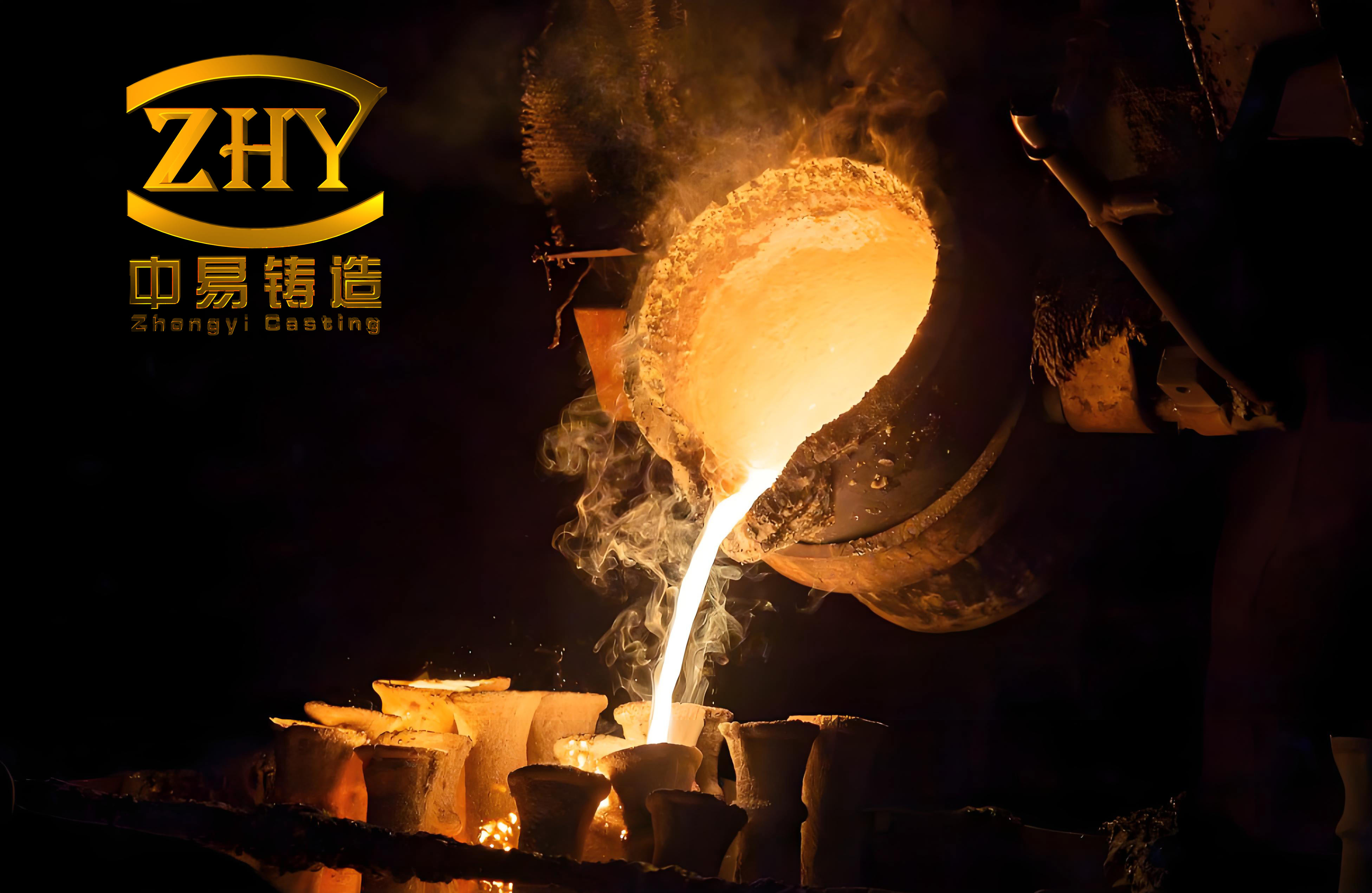
The gating system design is paramount in precision lost wax casting to ensure proper filling, feeding, and defect minimization. For large blades, we position the thin trailing edge near the sprue to reduce thermal gradients, while the thicker leading edge is placed outward. This arrangement promotes directional solidification and reduces stress. The gating system must provide adequate feed metal to hotspots like the root and shroud. The cross-sectional area of the ingate should be maximized and placed close to these regions to enhance feeding pressure. Mathematically, the feeding efficiency can be related to the pressure head $H$ and the distance $L$ from the ingate to the hotspot:
$$ P_f = \rho g H – \frac{\mu L}{A} Q $$
where $P_f$ is the effective feeding pressure, $\rho$ is the alloy density (approximately 8.0 g/cm³ for IN738), $g$ is gravitational acceleration, $\mu$ is the dynamic viscosity of the molten alloy, $A$ is the cross-sectional area of the ingate, and $Q$ is the volumetric flow rate. In precision lost wax casting, optimizing these parameters is key to avoiding shrinkage porosity. Furthermore, the gating ratio—defined as the ratio of sprue, runner, and ingate areas—is critical. For IN738 blades, we often use a ratio of 1:2:1.5 to balance flow and minimize turbulence.
Temperature control during pouring is another critical aspect of precision lost wax casting. For IN738, the liquidus temperature is approximately 1330°C, and we found that a pouring temperature between 1420°C and 1460°C yields the best results. Lower temperatures lead to incomplete filling, especially at thin sections, while higher temperatures cause coarse grains and increased segregation. The mold temperature also plays a vital role; we preheat molds to 950°C–1050°C to slow cooling and improve feeding. The solidification time $t_s$ can be estimated using Chvorinov’s rule:
$$ t_s = C \left( \frac{V}{A} \right)^2 $$
where $V$ is the volume of the casting, $A$ is its surface area, and $C$ is a constant dependent on mold material and alloy properties. For large blades, extending $t_s$ through mold preheating helps reduce shrinkage defects. Additionally, the thermal gradient $\nabla T$ during solidification influences defect formation. Fourier’s law describes heat transfer:
$$ q = -k \nabla T $$
where $q$ is the heat flux and $k$ is the thermal conductivity. In precision lost wax casting, we aim to minimize $\nabla T$ in critical regions by designing the gating system to promote uniform cooling.
To address porosity issues inherent in precision lost wax casting of IN738 blades, we adopt multiple approaches. Firstly, the gating design ensures direct feeding to thermal centers. Secondly, post-casting treatments like hot isostatic pressing (HIP) are employed. HIP involves subjecting the castings to high temperature and pressure in an inert atmosphere, which can heal internal pores and cracks. The typical HIP parameters for IN738 are:
- Temperature: 1150°C–1200°C
- Pressure: 115–120 MPa
- Time: 2–4 hours
- Atmosphere: Argon or helium
This process significantly improves density and mechanical properties, salvaging castings that would otherwise be scrapped. The effectiveness of HIP can be modeled using the following equation for pore closure under pressure:
$$ \frac{d r}{d t} = -\frac{P_{ext} – P_{int}}{4 \eta} r $$
where $r$ is the pore radius, $P_{ext}$ is the external pressure, $P_{int}$ is the internal gas pressure, $\eta$ is the viscosity of the material at HIP temperature, and $t$ is time. In precision lost wax casting, combining HIP with optimized gating reduces porosity to acceptable levels.
Despite preventive measures, some distortion may occur during solidification due to residual stresses. In precision lost wax casting, we use static pressure correction to straighten blades. This involves applying controlled force to the cast blade at elevated temperatures to plastically deform it back to specification. The stress-strain relationship during correction can be modeled using the Hollomon equation:
$$ \sigma = K \epsilon^n $$
where $\sigma$ is the true stress, $\epsilon$ is the true strain, $K$ is the strength coefficient, and $n$ is the work-hardening exponent. For IN738 at correction temperatures (around 1000°C), $K$ and $n$ are derived from experimental data to ensure accurate correction without causing cracks. Additionally, finite element analysis (FEA) simulations help predict distortion patterns, allowing pre-emptive adjustments in the precision lost wax casting process.
Quality assurance in precision lost wax casting involves non-destructive testing methods such as X-ray radiography and fluorescent penetrant inspection. These techniques detect internal defects like shrinkage pores and surface cracks. For IN738 blades, we adhere to strict standards, often requiring 100% inspection. The acceptance criteria are based on defect size and location, with critical areas like the aerofoil section having zero tolerance for major flaws. Statistical process control (SPC) is employed to monitor variables like wax temperature, mold humidity, and alloy composition. Data from production runs are analyzed to identify trends and prevent defects. For example, using regression analysis, we can correlate pouring temperature $T_p$ and mold temperature $T_m$ with defect rate $D_r$:
$$ D_r = \alpha + \beta_1 T_p + \beta_2 T_m + \beta_3 T_p T_m + \epsilon $$
where $\alpha$, $\beta_1$, $\beta_2$, $\beta_3$ are coefficients determined from historical data, and $\epsilon$ is the error term. This empirical model aids in fine-tuning parameters for optimal results in precision lost wax casting.
| Parameter | Recommended Range | Rationale |
|---|---|---|
| Wax Injection Pressure | 500–700 kN | Ensures pattern detail and reduces distortion |
| Wax Pattern Cooling Rate | Controlled, forced cooling | Minimizes warping during solidification |
| Mold Preheating Temperature | 950°C–1050°C | Slows cooling, enhances feeding, reduces thermal shock |
| Pouring Temperature | 1420°C–1460°C | Balances fluidity and grain structure |
| Vacuum Level During Melting/Pouring | < 0.133 Pa | Minimizes gas porosity and oxidation |
| Solidification Time (Estimated) | Varies with section thickness | Governed by Chvorinov’s rule, extended via preheat |
| HIP Temperature | 1150°C–1200°C | Activates diffusion for pore closure |
| HIP Pressure | 115–120 MPa | Applied isostatically to eliminate voids |
| Correction Temperature | ~1000°C | Enables plastic deformation without cracking |
The precision lost wax casting process is also influenced by alloy fluidity, which affects mold filling. The fluidity length $L_f$ can be approximated using the following formula:
$$ L_f = \frac{\Delta H_f \cdot v}{\alpha \cdot (T_p – T_l)} $$
where $\Delta H_f$ is the latent heat of fusion, $v$ is the flow velocity, $\alpha$ is the thermal diffusivity of the mold, $T_p$ is the pouring temperature, and $T_l$ is the liquidus temperature. For IN738, the high Al and Ti content reduces fluidity, necessitating higher pouring temperatures or improved gating designs in precision lost wax casting.
Moreover, microstructural control is vital in precision lost wax casting. IN738 forms gamma prime (γ’) precipitates, which contribute to strength. The volume fraction of γ’ can be estimated from the Al and Ti content using empirical relations:
$$ f_{\gamma’} \approx 0.9 \times (\%\text{Al} + \%\text{Ti}) – 2.5 $$
where $f_{\gamma’}$ is the volume fraction in percent. This highlights the importance of composition control. During solidification, secondary dendrite arm spacing (SDAS) $\lambda_2$ influences mechanical properties and is related to local solidification time $t_f$:
$$ \lambda_2 = a \cdot t_f^n $$
with $a$ and $n$ being material constants. In precision lost wax casting, we aim for fine SDAS through controlled cooling rates, often achieved by tailoring mold preheat and insulation.
| Defect Type | Primary Causes | Mitigation Strategies in Precision Lost Wax Casting |
|---|---|---|
| Shrinkage Porosity | Inadequate feeding, high Ti/Al content, rapid solidification | Optimize gating design for directional solidification; use HIP; control pouring and mold temperatures; incorporate chills or insulation as needed. |
| Distortion (Warping) | Residual stress from non-uniform cooling, pattern inaccuracies | Employ cold wax cores; use high-pressure wax injection; implement static pressure correction; design gating to minimize constraint. |
| Cold Shuts | Low fluidity, improper gating, insufficient superheat | Increase pouring temperature within range; improve gating design to ensure turbulent-free flow; preheat molds adequately. |
| Inclusions (Slag, Oxide) | Mold erosion, alloy contamination, inadequate filtering | Use high-quality ceramic materials; filter molten metal through ceramic filters; maintain clean melting environment. |
| Grain Growth (Coarse Grains) | High pouring temperature, slow cooling, lack of grain refiners | Control pouring temperature; adjust mold preheat to moderate cooling rate; consider grain refiners like carbon or boron (within spec). |
| Microsegregation | High Ti and Al, slow solidification | Optimize cooling rates; use HIP to homogenize; apply post-casting heat treatments. |
| Surface Roughness Exceedance | Mold surface quality, wax pattern defects | Ensure fine-grained ceramic shells; control wax injection parameters; apply adequate coatings. |
In conclusion, the precision lost wax casting of large turbine rotor blades is a demanding process that requires meticulous attention to detail. Through innovative techniques in pattern making, gating design, temperature control, and post-processing, we can overcome challenges like distortion and porosity. The use of IN738 superalloy, while beneficial for high-temperature performance, adds complexity due to its casting characteristics. However, with continuous refinement of the precision lost wax casting methodology—supported by mathematical modeling, statistical analysis, and advanced treatments like HIP—we can produce blades that meet stringent aerospace standards. The integration of simulation tools and real-time monitoring will further enhance the reliability and efficiency of precision lost wax casting, paving the way for next-generation turbine components. As I reflect on my experiences, the evolution of precision lost wax casting continues to inspire innovation in manufacturing high-integrity castings for critical applications.