
In recent years, the development of precision lost wax casting has shown an upward trend, yet high scrap rates often plague production due to inadequate control over the process. Among various defects, gas porosity stands as a primary concern, significantly impacting the quality and reliability of cast components. Based on my extensive production experience in precision lost wax casting, I will delve into the mechanisms behind gas porosity formation and propose practical prevention methods. This analysis aims to provide a comprehensive understanding that can enhance the efficiency and yield of precision lost wax casting operations, ensuring that this sophisticated technique meets the demands of modern manufacturing.
Gas porosity in precision lost wax casting typically manifests as voids or bubbles within the cast metal, resulting from entrapped gases during solidification. These defects can compromise mechanical properties, such as strength and fatigue resistance, leading to part failure. The complexity of the precision lost wax casting process, involving multiple stages from pattern making to shell building and metal pouring, introduces numerous potential sources for gas generation. By systematically examining each stage, we can identify root causes and implement targeted countermeasures. In this discussion, I will focus on three main categories: porosity originating from raw materials and impurities, porosity arising from shell manufacturing processes, and porosity related to alloy gases and melt purification. Throughout, I will emphasize the critical role of process control in precision lost wax casting to mitigate these issues.
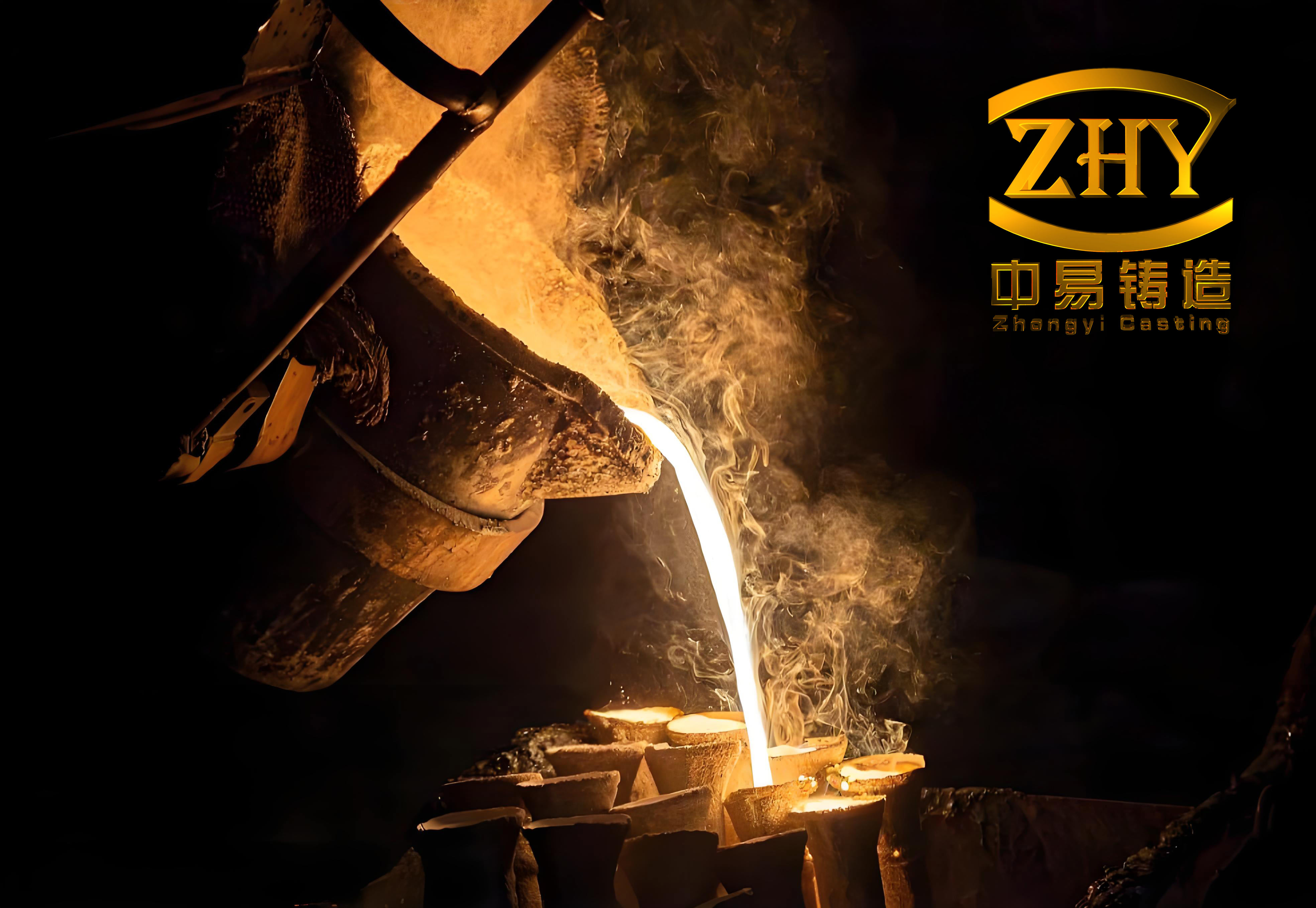
The fundamentals of precision lost wax casting involve creating a ceramic shell around a wax pattern, which is then melted out to form a mold cavity for metal casting. This method allows for high-dimensional accuracy and complex geometries, but it is susceptible to gas-related defects if not meticulously managed. In my experience, adopting a holistic approach—from material selection to final pouring—is key to minimizing porosity. Below, I will detail the specific factors contributing to gas porosity and integrate tables and formulas to summarize the relationships and solutions. This structured analysis should serve as a valuable reference for practitioners in the field of precision lost wax casting.
Gas Porosity from Raw Materials and Impurities
In precision lost wax casting, the quality of raw materials directly influences the incidence of gas porosity. Metal charge materials and refractory substances often contain inherent gases or contaminants that can release gases during heating, leading to defect formation. Let me break down these sources.
Metal Charge Materials
Many foundries use metal scrap or recycled materials that are rusty, oily, or moist. During melting in induction furnaces commonly employed in precision lost wax casting, these impurities decompose, releasing gases such as hydrogen and oxygen. For instance, hydrogen can dissolve into the molten steel according to the reaction:
$$ \text{H}_2 (\text{gas}) \rightleftharpoons 2[\text{H}]_{\text{in steel}} $$
where [H] represents dissolved hydrogen atoms. The solubility of hydrogen in steel increases with temperature, as described by Sieverts’ law:
$$ [\text{H}] = K_H \sqrt{P_{\text{H}_2}} $$
Here, \( K_H \) is the equilibrium constant dependent on temperature, and \( P_{\text{H}_2} \) is the partial pressure of hydrogen. Upon cooling and solidification, hydrogen saturation leads to bubble nucleation via:
$$ 2[\text{H}] \rightarrow \text{H}_2 \uparrow $$
Similarly, oxygen from oxides like FeO can react with hydrogen:
$$ \text{FeO} + 2[\text{H}] \rightarrow \text{H}_2\text{O} \uparrow + \text{Fe} $$
producing water vapor bubbles. To mitigate this in precision lost wax casting, I recommend using clean, dry charge materials with minimal surface contamination. Pre-treatment methods, such as shot blasting in rotary machines, can effectively remove rust and oils. The table below summarizes key gas sources from metal charges and prevention strategies.
| Gas Source | Chemical Reaction | Prevention Method | Impact on Precision Lost Wax Casting |
|---|---|---|---|
| Rust (FeO) | FeO + 2[H] → H₂O + Fe | Use descaled or virgin materials | Reduces water vapor porosity |
| Oil Contaminants | CₙH₂ₙ₊₂ → nC + (n+1)H₂ | Implement thermal cleaning | Minimizes hydrogen evolution |
| Moisture | H₂O → 2[H] + [O] | Store materials in dry conditions | Lowers gas solubility in melt |
Refractory Material Impurities
Refractory materials used in shell building, such as silica or alumina-based compounds, may contain impurities like calcium carbonate (CaCO₃). During pouring in precision lost wax casting, when shell temperatures exceed 960°C, CaCO₃ decomposes:
$$ \text{CaCO}_3 \rightarrow \text{CaO} + \text{CO}_2 \uparrow $$
This CO₂ gas can infiltrate the metal, creating porosity. In my practice, strict quality control of refractories is essential. Ensure materials are stored properly to avoid cross-contamination and test for impurity levels regularly. The following formula illustrates the temperature dependence of this decomposition, which is critical in precision lost wax casting where shell preheating temperatures often reach 800–900°C:
$$ \Delta G^\circ = \Delta H^\circ – T\Delta S^\circ $$
where \( \Delta G^\circ \) is the standard Gibbs free energy change, \( \Delta H^\circ \) is enthalpy change, \( T \) is temperature, and \( \Delta S^\circ \) is entropy change. For CaCO₃, \( \Delta G^\circ \) becomes negative above 960°C, indicating spontaneous decomposition. By maintaining shell temperatures below this threshold during initial stages or using high-purity refractories, gas evolution can be controlled. Below is a table comparing common refractory impurities and their effects.
| Impurity | Decomposition Reaction | Temperature Range | Prevention in Precision Lost Wax Casting |
|---|---|---|---|
| Calcium Carbonate | CaCO₃ → CaO + CO₂ | 960–1060°C | Source high-purity silica sands |
| Hydrated Compounds | e.g., Al₂O₃·2H₂O → Al₂O₃ + 2H₂O | 200–500°C | Pre-dry refractories before use |
| Organic Contaminants | CₓHᵧO₂ → gases | Varies | Implement sieving and washing |
Gas Porosity from Shell Manufacturing Processes
The shell-building stage in precision lost wax casting is intricate and prone to gas-generating issues if not carefully monitored. Using sodium silicate as a binder, common in many operations, introduces specific challenges related to residual pattern materials, moisture, and salt migration.
Residual Pattern Material and Moisture
During dewaxing, incomplete removal of wax patterns can leave residues that carbonize during shell baking. When molten metal is poured in precision lost wax casting, these residues react:
$$ \text{C}_n\text{H}_{2n+2} \rightarrow n\text{C} + (n+1)\text{H}_2 $$
followed by oxidation:
$$ 2\text{C} + \text{O}_2 \rightarrow 2\text{CO} \uparrow $$
$$ 2\text{CO} + \text{O}_2 \rightarrow 2\text{CO}_2 \uparrow $$
These gases can cause bubbling in the gating system or porosity in castings. Additionally, inadequate shell baking leaves moisture from hydrolysis reactions, such as between Na₂O and HCl from NH₄Cl hardening:
$$ \text{Na}_2\text{O} + 2\text{HCl} \rightarrow 2\text{NaCl} + \text{H}_2\text{O} $$
To prevent this, I advocate for thorough baking at 800–850°C for at least two hours in precision lost wax casting. This ensures removal of volatiles and transforms the shell to a white or pinkish hue, indicating proper sintering. Shells appearing gray often retain moisture and carbon, leading to gas defects. The relationship between baking parameters and gas evolution can be modeled using Arrhenius equations for decomposition rates:
$$ k = A e^{-E_a/(RT)} $$
where \( k \) is the rate constant, \( A \) is the pre-exponential factor, \( E_a \) is activation energy, \( R \) is the gas constant, and \( T \) is temperature. Optimizing \( T \) and time minimizes residual gases.
“Fuzz” Formation and Salt Migration
In precision lost wax casting, “fuzz” refers to salt deposits on shell surfaces due to migration of NaCl and NH₄Cl during drying. Chemical analysis shows NaCl content up to 83.27%, with a melting point of 803°C and boiling point of 1413°C. During pouring, NaCl vaporizes, creating fine pin-hole porosity. This phenomenon correlates with storage conditions: high humidity and prolonged storage (>24 hours) exacerbate fuzz. Control measures include limiting storage time and maintaining dry environments. The solubility of NaCl in water influences migration, given by:
$$ S = S_0 \exp\left(-\frac{\Delta H_{\text{sol}}}{RT}\right) $$
where \( S \) is solubility, \( S_0 \) is a constant, and \( \Delta H_{\text{sol}} \) is enthalpy of solution. Reducing humidity lowers \( S \), curtailing migration. Below is a summary table for shell-related porosity causes.
| Shell Issue | Gas Generation Mechanism | Critical Parameters | Prevention in Precision Lost Wax Casting |
|---|---|---|---|
| Residual Wax | CₙH₂ₙ₊₂ → H₂ + CO/CO₂ | Dewaxing temperature and time | Use steam or flash firing for complete removal |
| Inadequate Baking | H₂O release from hydrated compounds | Baking temperature ≥ 850°C | Implement controlled furnace profiles |
| Salt Fuzz | NaCl vaporization at high T | Storage humidity < 50% | Apply seal coats or reduce binder salts |
Gas Porosity from Alloy Gases and Melt Purification
In precision lost wax casting, molten alloy gases—primarily hydrogen, oxygen, and nitrogen—play a significant role in porosity formation. Induction melting, while efficient, can lead to gas dissolution if not managed with proper degassing and deoxidation practices.
Gas Solubility and Reaction Mechanisms
Gases dissolve in molten steel according to dissolution equilibria. For diatomic gases like hydrogen and nitrogen:
$$ \text{H}_2 (\text{gas}) \rightleftharpoons 2[\text{H}] \quad \text{and} \quad \text{N}_2 (\text{gas}) \rightleftharpoons 2[\text{N}] $$
with solubility given by Sieverts’ law:
$$ [\text{H}] = K_H \sqrt{P_{\text{H}_2}} \quad \text{and} \quad [\text{N}] = K_N \sqrt{P_{\text{N}_2}} $$
Solubility increases with temperature, so rapid cooling during solidification in precision lost wax casting causes supersaturation and bubble nucleation. Additionally, reactive porosity from carbon-oxygen interaction occurs if deoxidation is incomplete:
$$ [\text{C}] + [\text{O}] \rightarrow \text{CO} \uparrow $$
leading to “honeycomb” porosity. To address this, effective deoxidation using elements like Mn, Si, and Al is standard. However, in my work with precision lost wax casting, I have found that rare earth (RE) elements offer superior deoxidation. The standard free energy of formation for oxides, \( \Delta G^\circ \), indicates RE oxides are more stable at casting temperatures. For example, the reaction:
$$ 2[\text{RE}] + 3[\text{O}] \rightarrow \text{RE}_2\text{O}_3 $$
has a highly negative \( \Delta G^\circ \), enhancing oxygen removal. From thermodynamic data, adding 0.15% RE can reduce oxygen content from 0.01% to below 0.003%, achieving over 80% deoxidation efficiency. Hydrogen levels can drop to 2–3 ppm. It’s crucial to add RE after aluminum addition to prevent oxidation loss. The relationship between deoxidation power and temperature is shown in the following formula derived from Ellingham diagrams:
$$ \Delta G^\circ = \Delta H^\circ – T\Delta S^\circ \approx -RT \ln K $$
where \( K \) is the equilibrium constant for deoxidation. RE elements have steeper negative slopes, making them more effective at higher temperatures typical in precision lost wax casting.
Melt Purification Techniques
Beyond deoxidation, melt purification in precision lost wax casting involves slag control, temperature management, and gas flushing. For instance, argon purging can reduce hydrogen content via:
$$ [\text{H}] + \text{Ar} \rightarrow \text{H}_2 \uparrow + \text{Ar} $$
Vacuum degassing is another option, though less common in small-scale precision lost wax casting. The kinetics of gas removal can be described by mass transfer equations:
$$ \frac{dC}{dt} = -k A (C – C_{\text{eq}}) $$
where \( C \) is gas concentration, \( k \) is mass transfer coefficient, \( A \) is interfacial area, and \( C_{\text{eq}} \) is equilibrium concentration. Increasing \( A \) through stirring accelerates degassing. Below is a table comparing deoxidation methods.
| Deoxidation Method | Chemical Reaction | Advantages in Precision Lost Wax Casting | Optimal Addition Range |
|---|---|---|---|
| Aluminum | 2[Al] + 3[O] → Al₂O₃ | Strong deoxidizer, forms inclusions | 0.02–0.06% |
| Silicon | [Si] + 2[O] → SiO₂ | Moderate effect, cost-effective | 0.1–0.3% |
| Rare Earths | 2[RE] + 3[O] → RE₂O₃ | Excellent deoxidation, also desulfurizes | 0.1–0.2% |
| Combined (Al + RE) | Synergistic reduction | Maximizes gas removal, improves fluidity | Tailored per alloy |
Integrated Prevention Strategies for Precision Lost Wax Casting
To effectively prevent gas porosity in precision lost wax casting, a systematic approach covering all process stages is essential. Based on my analysis, I propose the following integrated strategies, emphasizing continuous monitoring and adaptation.
Material Management
Implement rigorous inspection protocols for all raw materials. Use certified metal charges with low gas content and store refractories in sealed containers. Pre-treatment like baking or washing can reduce inherent gases. In precision lost wax casting, this upfront investment pays off through reduced scrap rates.
Shell Process Optimization
Control dewaxing parameters (e.g., steam pressure, time) to ensure complete pattern removal. Standardize baking cycles with calibrated furnaces, targeting 850°C for 2 hours. Monitor shell color as a quality indicator: white or pink shells are preferable. Limit shell storage to less than 24 hours in controlled humidity environments (<50% RH). These steps are critical in precision lost wax casting to minimize gas generation from shells.
Melt Treatment and Pouring Practices
Employ advanced deoxidation using rare earth elements coupled with aluminum. Monitor melt temperature to avoid excessive gas solubility; for steel, aim for pouring temperatures 50–100°C above liquidus. Use degassing techniques like rotary impellers or flux additions. During pouring in precision lost wax casting, maintain smooth, turbulent-free flows to prevent air entrainment. The overall gas content can be estimated using the ideal gas law applied to bubble formation:
$$ PV = nRT $$
where \( P \) is pressure, \( V \) is bubble volume, \( n \) is moles of gas, \( R \) is gas constant, and \( T \) is temperature. Reducing \( n \) through purification decreases \( V \) of potential pores.
Quality Control and Testing
Incorporate non-destructive testing (e.g., X-ray radiography) to detect porosity early. Conduct regular chemical analysis of melts and shells. Document process variables in a database to correlate with defect rates, enabling predictive adjustments in precision lost wax casting. The following formula can guide quality metrics:
$$ \text{Porosity Index} = \frac{\text{Number of porous castings}}{\text{Total castings}} \times 100\% $$
Target an index below 1% through continuous improvement.
Conclusion
Gas porosity remains a significant challenge in precision lost wax casting, but it is manageable through comprehensive understanding and proactive measures. From raw material purity to shell integrity and melt purification, each stage offers opportunities for intervention. My experience underscores that strict process control, coupled with advanced techniques like rare earth deoxidation, can drastically reduce porosity defects. By adopting the strategies outlined—supported by tables and formulas for clarity—foundries can enhance the reliability and efficiency of precision lost wax casting. Ultimately, success in precision lost wax casting hinges on attention to detail and a commitment to quality at every step, ensuring that this ancient yet evolving technique meets modern precision demands.
In summary, precision lost wax casting is a delicate art that benefits from scientific rigor. Through continuous research and practical adaptations, we can overcome gas porosity and unlock the full potential of this manufacturing method. I encourage practitioners to share insights and collaborate, fostering innovation in the field of precision lost wax casting for years to come.