
In my years of practice and research within the field of advanced manufacturing, I have consistently found myself returning to the principles and nuances of precision lost wax casting. It is a process that marries ancient craftsmanship with cutting-edge science, enabling the creation of components with intricate geometries, superb surface finishes, and excellent dimensional accuracy that are often impossible to achieve through other means. The journey of a component, from a conceptual design to a tangible, high-integrity metal part, through the precision lost wax casting process is a fascinating sequence of meticulously controlled steps. Each phase, from pattern creation to final heat treatment, is governed by fundamental principles of materials science, fluid dynamics, and solidification kinetics. In this detailed exploration, I will dissect this process, underscoring why precision lost wax casting remains indispensable for industries ranging from aerospace and power generation to biomedical and artistic sculpture.
The core premise of precision lost wax casting, also known as investment casting, is deceptively simple: create a precise, disposable pattern of the desired part, surround it with a refractory ceramic shell, melt out the pattern, and pour molten metal into the resulting cavity. However, the devil—and the excellence—lies in the details. The pursuit of “precision” mandates control over every variable. This begins with the pattern. In modern precision lost wax casting, patterns are typically injection-molded from specialized waxes or polymers. The wax formulation is itself a critical science, balancing properties like flowability, contraction, ash content, and strength. A common wax blend might consist of natural and synthetic components, each playing a role.
| Wax Component | Primary Function | Typical Percentage (%) | Key Property Influenced |
|---|---|---|---|
| Microcrystalline Wax | Base material, provides body | 40-60 | Dimensional stability, strength |
| Paraffin Wax | Improves flowability | 20-35 | Injection performance, surface finish |
| Natural Resins (e.g., Rosin) | Enhances hardness & rigidity | 10-20 | Pattern handling strength |
| Polymers (e.g., EVA) | Modifies flexibility & toughness | 5-15 | Resistance to handling damage |
| Additives (e.g., Stearic Acid) | Surface active agents, modifiers | < 2 | Wettability, release properties |
The pattern geometry must account for both the wax’s solidification shrinkage and the subsequent metal’s shrinkage. This is often managed through the application of a precise linear shrink factor, or “pattern allowance,” incorporated into the tooling design. For a typical nickel-based superalloy, the total linear contraction from wax pattern to final cast part can be on the order of 2.0-2.5%. This is not a single event but a composite of several shrinkages: wax cooling, wax burnout, and metal solidification/cooling. We can model the final casting dimension ($D_{cast}$) relative to the tool cavity dimension ($D_{tool}$) with a simplified multiplicative model:
$$ D_{cast} = D_{tool} \times (1 – S_w) \times (1 – \epsilon) \times (1 – S_m) $$
Where $S_w$ is the wax pattern shrinkage, $\epsilon$ is a small correction factor for ceramic shell restraint and wax expansion during burnout, and $S_m$ is the metal shrinkage from pouring temperature to room temperature. In precision lost wax casting, $S_w$ and $S_m$ are carefully characterized for each material system to achieve net-shape or near-net-shape results.
Following injection, multiple wax patterns are assembled onto a central wax sprue, forming a cluster or “tree.” This assembly is a critical step for productivity and metallurgical quality. The gating system design—the channels through which metal will flow—must ensure complete filling, promote directional solidification, and minimize turbulence and slag entrapment. Chvorinov’s Rule is a fundamental guide here, stating that the solidification time $t$ of a casting section is proportional to the square of its volume-to-surface-area ratio $(V/A)^2$, modulated by a mold constant $C_m$:
$$ t = C_m \left( \frac{V}{A} \right)^2 $$
To prevent shrinkage porosity, the gating system is designed so that heavier sections (like the casting itself) solidify last, being fed by liquid metal from the thinner sprue and gates which solidify earlier. This is achieved by ensuring the modulus ($M = V/A$) of the feeder is greater than that of the casting section it feeds: $M_{feeder} > M_{casting}$.
The assembled cluster then undergoes the “investment” process, which gives the technique its formal name. It is repeatedly dipped into a slurry of fine refractory flour (such as silica, zircon, or alumina) suspended in a liquid binder (like colloidal silica or ethyl silicate), and then stuccoed with coarser refractory sand. Each layer is dried or chemically gelled before the next is applied. This builds up a ceramic shell, typically 6-10 mm thick, that must exhibit high refractoriness, adequate strength, and good permeability. The permeability $k$ of the shell, crucial for allowing gases to escape during metal pour, can be approximated by the Carmen-Kozeny equation for flow through a porous medium:
$$ k = \frac{\phi^3}{c \tau^2 S_0^2 (1-\phi)^2} $$
Here, $\phi$ is the porosity, $\tau$ is tortuosity, $S_0$ is the specific surface area of the particles, and $c$ is a constant. In precision lost wax casting, shell properties are tailored by controlling the particle size distribution of the refractories and the binder chemistry.
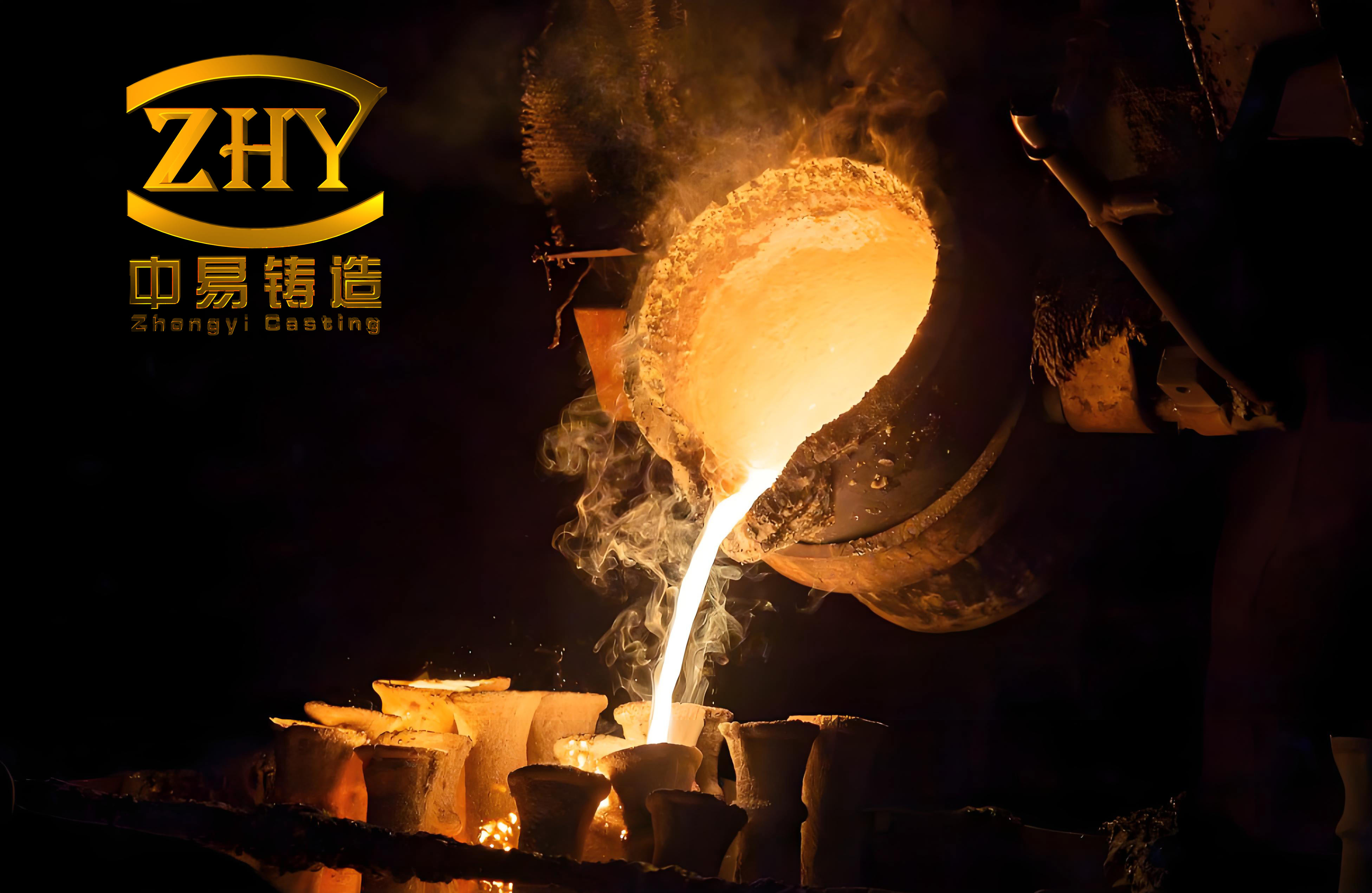
The next critical phase is dewaxing and firing. The invested cluster is placed in a high-temperature autoclave or flash fire furnace. The wax is rapidly melted and vaporized, leaving behind the precise negative cavity. The rapid heating rate must be controlled to avoid shell cracking from wax expansion, a phenomenon described by pressure build-up models. Following dewaxing, the shell is fired at temperatures often exceeding $1000^\circ\text{C}$ to remove residual volatiles, sinter the ceramic, and develop the final hot strength needed to withstand the metallostatic pressure of the molten metal. This preheating also ensures the metal does not chill too rapidly upon entry, which is vital for filling thin sections in precision lost wax casting.
Metal pouring is a transient event of fluid flow and heat transfer. The flow of molten metal into the complex cavity must be laminar to avoid oxide formation. The Reynolds number ($Re$) provides insight:
$$ Re = \frac{\rho v D}{\mu} $$
Where $\rho$ is density, $v$ is velocity, $D$ is the hydraulic diameter of the gate, and $\mu$ is dynamic viscosity. In precision lost wax casting, gate designs aim to keep $Re$ below a critical threshold (often around 2000 for the sprue/runner system) to maintain laminar or transitional flow. Furthermore, the filling process is governed by the Bernoulli principle and the equation of continuity, ensuring the gating system delivers metal to all parts of the mold before solidification begins at the front. The heat transfer from the metal to the preheated shell is a key boundary condition, described by Fourier’s law and affecting the undercooling $\Delta T$ at the solidification front:
$$ \Delta T = T_m – T_{interface} $$
$$ q = -k_{ceramic} \frac{\partial T}{\partial x} $$
Where $T_m$ is the metal’s melting point, $T_{interface}$ is the actual temperature at the metal-shell interface, $q$ is the heat flux, and $k_{ceramic}$ is the thermal conductivity of the shell. A well-preheated shell reduces the thermal gradient, allowing for finer, more equiaxed microstructures in some alloys.
The solidification event itself is the heart of determining the metallurgical quality of a precision lost wax casting. It defines grain structure, phase distribution, and the formation of defects. The solidification rate $R$ and temperature gradient $G$ at the liquid-solid interface are the master variables. Their product $G \times R$ controls the scale of the microstructure (e.g., dendrite arm spacing), while the ratio $G/R$ influences the mode of growth (planar, cellular, dendritic). For columnar dendritic growth common in superalloys, the primary dendrite arm spacing $\lambda_1$ is often related to the local solidification conditions by an empirical relationship of the form:
$$ \lambda_1 = a (G \times R)^{-n} $$
where $a$ and $n$ are material constants. In the production of directionally solidified (DS) or single crystal (SX) components—the pinnacle of precision lost wax casting for turbine blades—the process is meticulously controlled. The shell is withdrawn from a furnace hot zone into a cooling zone, establishing a steep, unidirectional temperature gradient. For single crystals, a grain selector (a spiral or a pigtail) is used at the base of the part to ensure only one favorably oriented grain propagates into the component. The competitive growth of grains is described by the crystallographic orientation dependence of growth velocity, often aligned with the <001> direction in cubic metals for fastest growth.
| Process Feature | Conventional Casting | Precision Lost Wax Casting | Directional/Single Crystal Casting |
|---|---|---|---|
| Tolerance Capability | ± 1.5 mm or more | ± 0.1 to 0.5 mm per 25 mm | ± 0.1 to 0.3 mm per 25 mm |
| Surface Finish (Ra) | 6.3 – 25 µm | 1.6 – 6.3 µm | 1.6 – 3.2 µm |
| Minimum Wall Thickness | ~5 mm | ~0.5 – 1.0 mm | ~1.0 mm |
| Typical Grain Structure | Equiaxed, coarse | Equiaxed, finer | Columnar or Single Crystal |
| Alloy Suitability | Wide range, simpler alloys | Complex, high-performance alloys | High-temperature superalloys |
| Post-Cast Machining Required | Extensive | Minimal to none (Net-shape) | Minimal (critical surfaces only) |
After solidification and cooling, the ceramic shell is removed by mechanical means (vibratory hammering) or chemical dissolution. The individual castings are cut off from the gating system, often using abrasive wheels or band saws. This is followed by a series of post-casting treatments essential for achieving the final properties in a precision lost wax casting. These treatments are highly alloy-specific but generally include:
1. Hot Isostatic Pressing (HIP): This process subjects the casting to high temperature and isostatic gas pressure (e.g., $1200^\circ\text{C}$, 100 MPa for superalloys). It effectively eliminates internal microporosity through creep and diffusion mechanisms, described by constitutive equations for power-law creep. The densification can be modeled as a function of time $t$, pressure $P$, temperature $T$, and initial pore characteristics.
2. Solution Heat Treatment: The casting is heated to a temperature where undesirable secondary phases dissolve into the matrix, achieving a homogeneous solid solution. The kinetics are governed by diffusion, following Fick’s laws. For a spherical precipitate of radius $r$ dissolving, the time $t$ for complete dissolution can be approximated by:
$$ t \propto \frac{r^2}{D_v} $$
where $D_v$ is the volume diffusion coefficient at the treatment temperature.
3. Aging/Precipitation Hardening: Subsequent heating at a lower temperature precipitates fine, strengthening phases (e.g., $\gamma’$ in Ni-superalloys, carbides in steels). The precipitate growth is diffusion-controlled, and the resulting strength increase often follows a relationship like the Orowan strengthening mechanism for bypassing particles:
$$ \Delta \tau = \frac{G b}{L} $$
where $\Delta \tau$ is the increase in shear stress, $G$ is the shear modulus, $b$ is the Burgers vector, and $L$ is the inter-precipitate spacing.
The choice of alloy in precision lost wax casting is vast, but the process is particularly advantageous for those that are difficult to machine or forge. The table below categorizes some key alloy families and their primary applications enabled by this process.
| Alloy Family | Example Alloys | Key Characteristics | Primary Applications in Precision Lost Wax Casting |
|---|---|---|---|
| Nickel-Based Superalloys | Inconel 718, 713C, Rene 80, CMSX-4 | High temp strength, creep & oxidation resistance | Turbine blades/vanes, combustor parts, rocket nozzles |
| Cobalt-Based Alloys | Stellite 6, Haynes 188 | Wear resistance, high temp strength | Dental implants, wear parts, gas turbine components |
| Titanium Alloys | Ti-6Al-4V, TiAl intermetallics | High strength-to-weight ratio, biocompatibility | Aerospace structural components, biomedical implants |
| Stainless Steels & Tool Steels | 17-4PH, 316L, H13 | Corrosion resistance, hardness & toughness | Valves, pumps, cutlery, injection molding tooling |
| Aluminum Alloys | A356, A357 | Light weight, good castability | Complex aerospace/defense housings, automotive components |
Looking forward, the evolution of precision lost wax casting is tightly linked with digital technologies. The integration of Additive Manufacturing (AM) is transformative. AM, specifically Stereolithography (SLA) or Binder Jetting, is used to produce sacrificial patterns directly from CAD data, eliminating the need for hard tooling. This is revolutionary for prototyping and low-volume production of highly complex parts. Furthermore, simulation software is now an indispensable tool. Finite Element Analysis (FEA) and Computational Fluid Dynamics (CFD) are used to simulate every stage: wax injection (filling/packing/cooling), ceramic shell sintering and stress, mold filling, solidification, and residual stress development. These simulations solve complex systems of equations numerically, such as the Navier-Stokes equations for fluid flow coupled with the energy equation:
$$ \rho \left( \frac{\partial \mathbf{v}}{\partial t} + \mathbf{v} \cdot \nabla \mathbf{v} \right) = -\nabla p + \mu \nabla^2 \mathbf{v} + \rho \mathbf{g} $$
$$ \rho C_p \left( \frac{\partial T}{\partial t} + \mathbf{v} \cdot \nabla T \right) = \nabla \cdot (k \nabla T) + \dot{q} $$
Where $\mathbf{v}$ is the velocity vector, $p$ is pressure, $\mathbf{g}$ is gravity, $C_p$ is specific heat, and $\dot{q}$ is a heat source term (like latent heat of fusion). By predicting potential defects like shrinkage porosity, hot tears, or mistruns, these tools allow for virtual optimization of the gating system and process parameters before any physical trial, drastically reducing development time and cost for precision lost wax casting.
In conclusion, precision lost wax casting is far more than a mere metal shaping technique. It is a sophisticated, multidisciplinary engineering process where chemistry, physics, metallurgy, and mechanical design converge. Its capability to produce net-shape components from the most challenging alloys, with intricate internal and external features, ensures its enduring relevance. From the ancient artisan crafting a bronze statue to the modern engineer producing a single-crystal turbine blade that operates above its own melting point, the fundamental principle remains the same, but the level of control and understanding has reached scientific heights. As digital design, additive manufacturing, and advanced simulation continue to mature, the future of precision lost wax casting promises even greater capabilities, pushing the boundaries of complexity, performance, and efficiency in manufactured components.