
In the relentless pursuit of advanced aerospace propulsion systems, the development of critical components like turbine nozzles presents formidable engineering challenges. My research team and I have dedicated extensive efforts to mastering the art of precision lost wax casting for fabricating a highly complex, integrally cast turbine nozzle from a specialized high-temperature alloy. This component is a quintessential example of where advanced manufacturing meets material science, requiring an unparalleled level of control over geometry, metallurgy, and process stability. The journey to a successful cast component is a testament to the iterative refinement inherent in precision lost wax casting, where every parameter, from wax injection to final solidification, must be meticulously orchestrated.
The nozzle in question serves as a critical guide for hot gases in a new-generation aerospace engine. Its monolithic construction—integrating an endocone, inner ring, an array of thin vanes, an outer ring, and a mounting flange—forms a sophisticated skeletal frame. The most daunting feature is the extreme variation in wall thickness, with the vane sections tapering to a mere 0.7 mm, while adjacent junctions can be orders of magnitude thicker. This geometry makes it highly susceptible to casting defects such as shrinkage porosity, hot tears, and mistruns during conventional processes. Therefore, only the most advanced form of precision lost wax casting could offer a viable pathway to a net-shape or near-net-shape component meeting the stringent design tolerances.
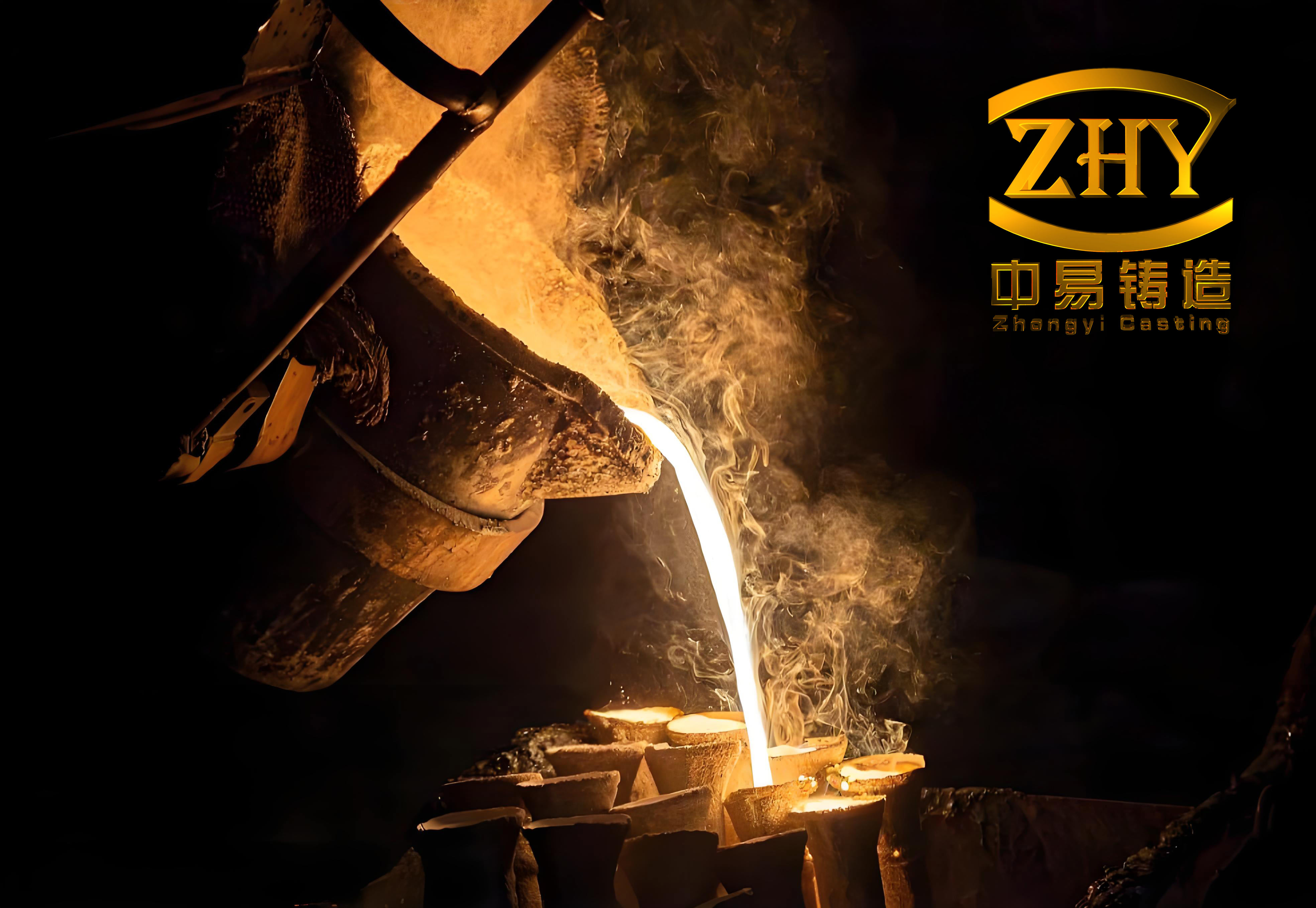
The material selected for this endeavor is a nickel-based cast superalloy, developed from a Russian predecessor. Its composition is engineered for exceptional high-temperature strength and stability up to approximately 1050°C, making it ideal for turbine stationary components. A key to its performance lies in a carefully balanced chemistry, featuring high tungsten content for solid solution strengthening and a deliberate absence of costly rare elements. The specific chemical composition we worked with is detailed in the table below, which was crucial for subsequent melting and quality control procedures in our precision lost wax casting campaign.
| Element | Content Range | Primary Function |
|---|---|---|
| Ni | Balance | Matrix |
| Cr | 8.00 – 9.50 | Oxidation Resistance |
| Co | 9.00 – 10.50 | Solid Solution Strengthener |
| W | 9.50 – 11.00 | Major Solid Solution Strengthener |
| Al | 5.10 – 6.00 | γ’ Forming Element |
| Ti | 2.00 – 2.90 | γ’ Forming Element |
| Mo | 1.20 – 2.40 | Solid Solution Strengthener |
| C | 0.13 – 0.20 | Carbide Former |
| Nb | 0.80 – 1.20 | Carbide & γ’ Former |
| B | ≤ 0.035 | Grain Boundary Strengthener |
| Zr | ≤ 0.04 | Grain Boundary Strengthener |
The foundational step in any precision lost wax casting process is the creation of a dimensionally accurate wax pattern. For a part of such intricate geometry, a monolithic wax injection using a single, immensely complex die was deemed impractical and fraught with risk for dimensional inconsistency. We pioneered a modular approach, which became the cornerstone of our precision lost wax casting strategy. The overall wax pattern was deconstructed into logical sub-components—primarily, individual vane segments, the inner ring/cone assembly, and the outer ring/flange assembly. Each module was injected using dedicated, simpler dies on a precision wax injection machine. The true challenge and innovation lay in the subsequent assembly. We engineered a bespoke, multi-point fixture system that allowed for the exact positioning and bonding of these wax modules. This fixture guaranteed that every one of the numerous vanes was located identically relative to the inner and outer rings, ensuring critical parameters like vane spacing, profile accuracy, and throat area were held within a tolerance band of 1-2%. This module-and-assemble methodology is a hallmark of advanced precision lost wax casting for complex parts, separating it from more rudimentary pattern-making techniques.
The transition from a perfect wax pattern to a robust ceramic shell is a delicate phase. The shell must faithfully replicate the wax’s surface finish while withstanding the thermal and mechanical shocks of dewaxing, firing, and metal pouring. Our shelling sequence was designed for maximum strength and dimensional fidelity. The primary coat, responsible for surface finish, utilized a zircon flour refractory in a silica sol binder. The subsequent backup coats, building the shell’s structural bulk, employed a fused alumina-based slurry, again with silica sol. The relationship between coat thickness, number of layers (n), and resulting shell strength (σ_shell) can be conceptually modeled, though actual values are empirically derived:
$$ \sigma_{\text{shell}} \propto \sum_{i=1}^{n} (E_i \cdot t_i) $$
where \(E_i\) represents the effective modulus of the i-th ceramic layer and \(t_i\) its thickness. We typically applied between 7 to 10 coats, with rigorous drying intervals exceeding 12 hours to prevent shell cracking from trapped moisture. Dewaxing was performed using high-pressure steam, a process that, while efficient, can induce micro-cracks. We implemented a quality check by infiltrating the fired shells with a dye penetrant; any shell showing significant crack indication was repaired using a patching slurry of silica sol and alumina before being cleared for casting. This meticulous attention to shell integrity is non-negotiable in high-reliability precision lost wax casting.
With a sound shell ready, the focus shifted to the metallurgical heart of the operation: the gating system design and the casting parameters. The gating system is not merely a conduit for molten metal; it is the primary tool for controlling solidification dynamics, feeding shrinkage, and minimizing thermal stress. Initial trials using a top-gated system with multiple inlets succeeded in filling the thin vanes but failed to adequately feed the massive thermal masses at the junctions between the inner cone/ring and the outer ring/vanes. These regions, labeled as Zones A and B in our analysis, consistently exhibited severe shrinkage porosity, as the liquid metal paths from the top gates froze off before these heavy sections finished solidifying. The solution was a radical redesign of the feeding strategy. We introduced dedicated feeder heads (risers) and in-gates directly attached to these problematic hot spots. The goal was to ensure directional solidification toward these feeders. A simplified thermal model guiding this design considers Chvorinov’s Rule, where the local solidification time \(t_f\) is proportional to the square of the volume-to-surface area ratio \((V/A)^2\):
$$ t_f = C \left( \frac{V}{A} \right)^2 $$
Here, \(C\) is a constant dependent on mold material and metal properties. For Zone A (inner cone/ring junction), the \((V/A)^2\) ratio is high, indicating a slow solidification rate requiring a dedicated feeder. By attaching a feeder with an even higher thermal mass, we ensured it remained liquid longest, effectively feeding the shrinkage in Zone A. The final gating layout, therefore, became a hybrid system: top gates for vane filling and strategic side/bottom gates for feeding thick sections. This optimized system, a critical achievement in our precision lost wax casting project, virtually eliminated gross shrinkage defects.
| Process Stage | Parameter | Optimized Range / Value | Rationale |
|---|---|---|---|
| Alloy Melting | 母合金 Melting Atmosphere | Vacuum | Prevent oxidation of reactive elements (Al, Ti) |
| Wax Pattern | Assembly Tolerance | < 2% on critical dimensions | Ensures final casting meets net-shape goal |
| Ceramic Shell | Number of Layers | 7 – 10 | Balances strength (resists metal static pressure) and permeability (allows gas escape) |
| Casting | Alloy Pouring Temperature (T_p) | 1430 – 1500 °C | Balances fluidity (high T) with minimized grain growth & segregation (low T) |
| Mold Pre-heat Temperature (T_m) | 850 – 950 °C | ||
| Solidification | Critical Feeding Parameter (CFP)* | CFP > 1 for all sections | Ensures feed paths remain open longer than section solidification time |
*CFP is a derived parameter: \( \text{CFP} = t_{f,\text{feeder}} / t_{f,\text{section}} \), requiring >1 for soundness.
The final act of the precision lost wax casting sequence is the pouring of the superalloy itself. The alloy was double-melted—first into a master heat compositionally verified against Table 1, and then remelted in a smaller vacuum induction furnace for casting. The interplay between pouring temperature (\(T_p\)) and mold temperature (\(T_m\)) is perhaps the most critical dynamic duo in determining final quality. Our experimental matrix explored various combinations, and the results crystallized into a clear process window. Excessively high temperatures (\(T_p > 1500°C, T_m > 950°C\)) led to excellent fluidity and complete filling but promoted coarse grain structures, extensive microporosity, and a heightened risk of hot tearing due to prolonged liquid presence and increased thermal stress. Conversely, low temperatures (\(T_p < 1430°C, T_m < 850°C\)) caused premature freezing, resulting in cold shuts and unfilled thin vane sections—an unacceptable outcome for a precision lost wax casting component where every aerodynamic surface must be pristine. The optimal window, \(T_p = 1430-1500°C\) and \(T_m = 850-950°C\), struck the perfect balance. It provided sufficient superheat for complete mold filling while promoting a sufficiently rapid and controlled solidification to minimize shrinkage and segregation. The thermal gradient (\(G\)) and growth rate (\(R\)) during solidification in this window favored the formation of a sound, equiaxed grain structure with well-developed γ/γ’ microstructure, as confirmed by post-casting metallography.
Mathematically, the effect of superheat (\(\Delta T = T_p – T_{liquidus}\)) on fluidity length (\(L_f\)) can be approximated by:
$$ L_f \approx k \cdot \Delta T \cdot \sqrt{t_{flow}} $$
where \(k\) is a constant encompassing alloy and mold properties, and \(t_{flow}\) is the available flow time before freezing starts. Our optimized \(T_p\) ensured \(\Delta T\) was large enough for \(L_f\) to exceed the mold’s longest flow path. Simultaneously, the solidification cooling rate, influenced by \(T_m\), affects dendritic arm spacing (\(\lambda\)), a key microstructural parameter:
$$ \lambda = a \cdot (\dot{T})^{-n} $$
where \(\dot{T}\) is the cooling rate, and \(a\) and \(n\) are constants. The chosen \(T_m\) promoted a \(\dot{T}\) that yielded a fine \(\lambda\), enhancing the alloy’s mechanical properties. Every casting poured within this window underwent rigorous non-destructive evaluation (radiographic and penetrant inspection) followed by selective dissection for metallurgical analysis. The result was a consistent output of nozzle castings free from major defects, demonstrating the reproducibility achievable with a mastered precision lost wax casting process.
The success of this project underscores several universal principles in advanced manufacturing. First, for geometrically intricate components, decomposing the tooling and pattern-making challenge into modular, precision-controlled steps is often superior to attempting a monolithic solution. Second, gating design must be driven by a profound understanding of solidification dynamics, not just filling logistics. It requires moving beyond standard layouts to custom solutions that address specific thermal profiles. Third, process parameters like temperatures are not independent variables; they exist in a tightly coupled relationship that defines a “sweet spot” for quality. Finding this window requires systematic experimentation guided by metallurgical principles. Finally, and most importantly, every step—from wax injection to final heat treatment—must be executed with the mindset of precision lost wax casting. This term encapsulates not just a molding technique, but a holistic philosophy of control, measurement, feedback, and continuous refinement aimed at achieving net-shape integrity in the most demanding materials and geometries.
The integrally cast turbine nozzle that emerged from this rigorous process validation met all dimensional and nondestructive inspection criteria. Subsequent machining of critical interfaces was minimal, validating the “near-net-shape” claim of our precision lost wax casting approach. The ultimate validation came through prolonged ground-level engine testing, where the component performed flawlessly under simulated operational conditions, enduring the intense thermal and mechanical environments it was designed for. This endeavor stands as a comprehensive case study in pushing the boundaries of what is possible with precision lost wax casting, transforming a design of daunting complexity into a reliable, high-performance reality. The methodologies refined here—modular wax assembly, targeted feeding, and optimized thermal regimes—form a robust template for the future fabrication of other critical aerospace and power-generation components using precision lost wax casting as the enabling manufacturing technology.