
In the realm of heavy equipment manufacturing, the demand for durable and resilient components has propelled the advancement of steel casting technologies. Steel casting, as a foundational process, enables the production of complex geometries that withstand extreme operational stresses. This study delves into the heat treatment optimization for ZG25Ni2CrMoB, a boron-containing steel casting utilized in critical applications such as the driving wheels of large mining trucks. The steel casting must exhibit superior mechanical properties, including high tensile strength, exceptional hardness, wear resistance, and robust low-temperature toughness. Through meticulous control of chemical composition and innovative heat treatment strategies, we aim to achieve these performance benchmarks while mitigating risks like cracking during processing. The integration of multiple normalizing cycles and liquid-air alternating quenching forms the core of our approach, ensuring that the steel casting meets stringent requirements for heavy-duty service.
Steel casting involves pouring molten steel into molds to form intricate shapes, with subsequent heat treatments playing a pivotal role in determining final properties. For boron-enhanced steel casting, trace additions of boron significantly boost hardenability, allowing for enhanced strength without sacrificing toughness. This research focuses on refining these processes for ZG25Ni2CrMoB steel casting, leveraging alloy element synergies and precise thermal cycles. By emphasizing the term “steel casting” throughout, we highlight its centrality in manufacturing high-integrity components. The following sections elaborate on material design, heat treatment methodology, experimental results, and analytical insights, all geared toward advancing steel casting applications.
| Element | Standard Range | Internal Control Range |
|---|---|---|
| C | 0.22 – 0.30 | 0.24 – 0.30 |
| Si | 0.40 – 0.90 | 0.60 – 0.90 |
| Mn | 0.80 – 1.30 | 0.90 – 1.30 |
| P | ≤0.025 | ≤0.020 |
| S | ≤0.025 | ≤0.020 |
| Cr | 0.50 – 1.10 | – |
| Ni | 1.60 – 2.10 | – |
| Mo | 0.30 – 0.60 | – |
| Al | ≤0.06 | – |
| Cu | ≤0.40 | – |
| B | ≤0.020 | – |
| DI Value (mm) | – | 180 – 360 |
The chemical composition of steel casting is meticulously tailored to balance strength, toughness, and hardenability. Carbon content governs strength through carbide formation, while chromium and manganese enhance淬透性 and secondary hardening. Nickel contributes to both strength and low-temperature toughness, and boron, even in微量, dramatically improves淬透性 by segregating to grain boundaries. This synergy allows the steel casting to achieve high performance with leaner alloying. The DI value, a measure of淬透性, is calculated using an empirical formula that quantifies the influence of alloying elements on hardenability. For ZG25Ni2CrMoB steel casting, the DI value is derived as follows:
$$ DI = (C\% \times 0.54) \times (3.3333 \times Mn\% + 1) \times (0.7 \times Si\% + 1) \times (0.363 \times Ni\% + 1) \times (2.16 \times Cr\% + 1) \times (3 \times Mo\% + 1) \times (0.365 \times Cu\% + 1) \times (1.73 \times V\% + 1) \times (2.5 \times Zr\% + 1) \times 25.4 $$
This formula underscores the multiplicative effect of alloying elements on the淬透性 of steel casting. By maintaining the DI value between 180 and 360 mm, we ensure adequate hardenability for thick-section steel casting components, such as mining truck wheels. The internal control ranges prioritize tighter limits on carbon, silicon, and manganese to fine-tune performance, while stringent controls on harmful elements like phosphorus and sulfur minimize embrittlement risks in the steel casting.
| Property | Requirement |
|---|---|
| Yield Strength (Rp0.2, MPa) | ≥850 |
| Tensile Strength (Rm, MPa) | ≥950 |
| Elongation (A50mm, %) | ≥8 |
| Reduction of Area (Z, %) | ≥25 |
| Impact Toughness (-40°C KV8, J) | ≥20 |
| Hardness (HBW) | 300 – 360 |
The mechanical properties outlined in Table 2 represent the target benchmarks for this steel casting. Achieving these requires not only optimal chemistry but also a well-designed heat treatment regimen. Steel casting components often suffer from inherent defects like segregation and coarse as-cast structures, which can be alleviated through thermal processing. Our approach involves a multi-step heat treatment sequence: initial normalizing to homogenize the cast structure, followed by a second normalizing after rough machining to refine grains, and finally quenching and tempering to impart strength and toughness. The liquid-air alternating quenching method is employed to control cooling rates, reducing thermal stresses and preventing cracks in the steel casting.
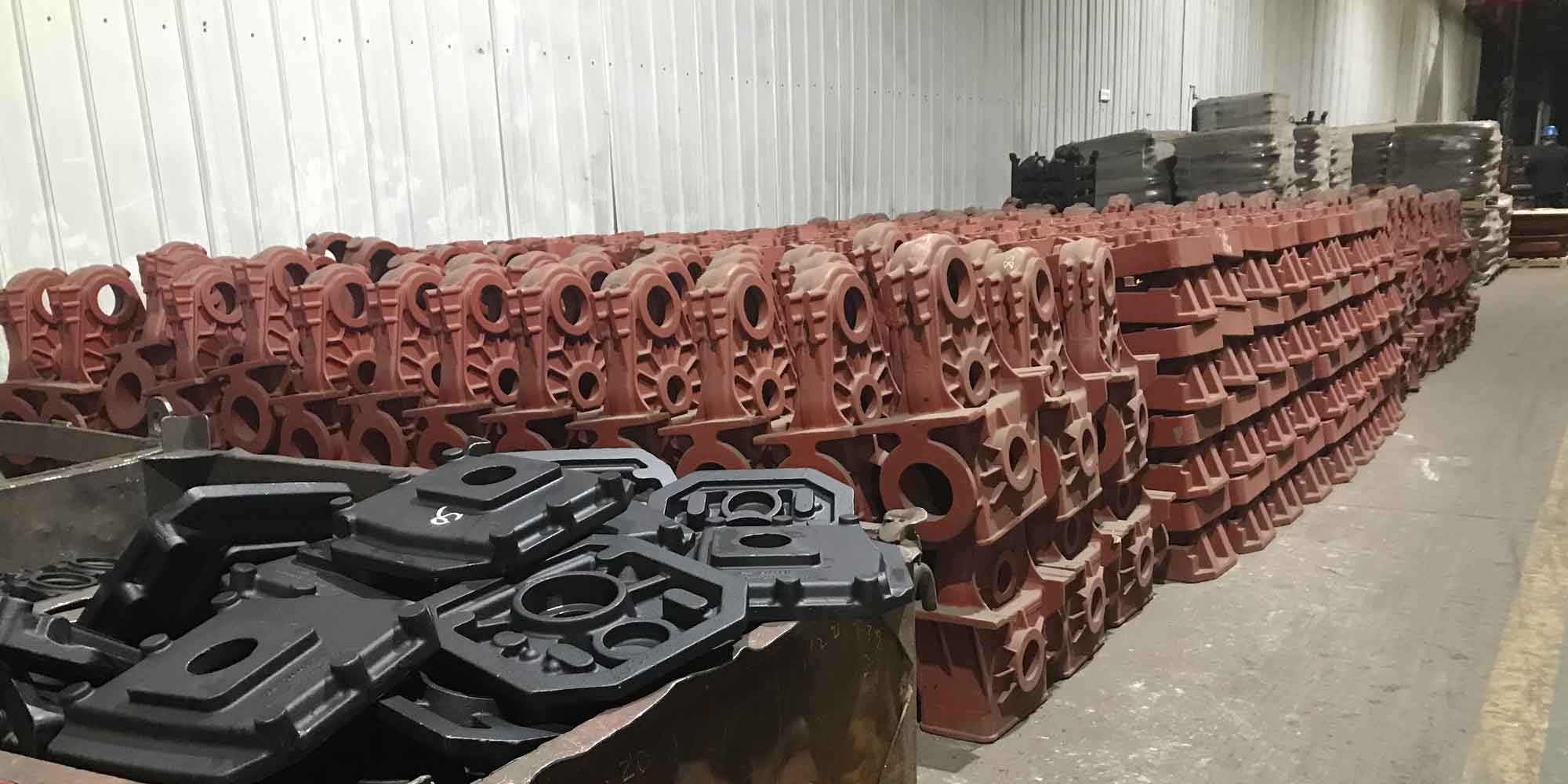
The image above illustrates a typical steel casting manufacturing facility, where precision and control are paramount. In such environments, the production of high-quality steel casting relies on advanced melting, pouring, and heat treatment techniques. For ZG25Ni2CrMoB steel casting, the process begins with electric arc furnace (EF) melting followed by ladle furnace (LF) refining to achieve precise chemistry and low impurity levels. This meticulous steelmaking ensures that the steel casting meets the stringent requirements for heavy-duty applications.
Heat treatment design for steel casting must account for phase transformations and cooling dynamics. Using computational tools, we estimated the AC1 and AC3 transformation temperatures for ZG25Ni2CrMoB steel casting. Empirical formulas, such as the following, guide these calculations:
$$ AC1 = 723 – 10.7 \times Mn\% – 16.9 \times Ni\% + 29.1 \times Si\% + 16.9 \times Cr\% + 290 \times As\% $$
These temperatures inform the selection of normalizing and quenching parameters. The heat treatment protocol, summarized in Table 3, involves multiple normalizing cycles at elevated temperatures to break down coarse cast structures and promote grain refinement. Quenching is conducted with liquid-air alternation to manage cooling rates, while tempering is performed above the脆性区 to ensure toughness retention in the steel casting.
| Step | Temperature Range (°C) | Holding Time | Cooling Method |
|---|---|---|---|
| First Normalizing | 900 – 950 | 2 – 4 hours | Air cooling |
| Second Normalizing | 900 – 950 | 2 – 4 hours | Air cooling |
| Quenching | 850 – 880 | 2 – 3 hours | Liquid-air alternating |
| Tempering | 550 – 600 | 4 – 6 hours | Air cooling |
The cooling kinetics during quenching are critical for steel casting integrity. Newton’s law of cooling provides a simplified model for heat transfer:
$$ \frac{dT}{dt} = -k (T – T_{\text{env}}) $$
Here, \( T \) is the temperature of the steel casting, \( t \) is time, \( k \) is the cooling constant, and \( T_{\text{env}} \) is the ambient temperature. By alternating between liquid and air cooling, we modulate \( k \) to avoid rapid temperature gradients that could induce cracking in the steel casting. This method is particularly effective for thick-section steel casting components, where uniform hardening is challenging.
Experimental validation involved melting several batches of ZG25Ni2CrMoB steel casting, with DI values and harmful element contents monitored closely. Tables 4 and 5 present the controlled parameters for different batches, underscoring the consistency achieved in steel casting production.
| Batch | DI Value (mm) |
|---|---|
| Batch 1 | 242 |
| Batch 2 | 233 |
| Batch 3 | 272 |
| Batch 4 | 198 |
| Element | Content |
|---|---|
| P | 0.015 |
| S | 0.010 |
| As | 0.010 |
| Sn | 0.010 |
| Sb | 0.002 |
| Pb | 0.001 |
| H (ppm) | 2 |
| N (ppm) | 40 |
| O (ppm) | 30 |
After heat treatment, mechanical properties were evaluated using attached cast test blocks, with results detailed in Table 6. All batches met or exceeded the requirements, demonstrating the efficacy of our approach for steel casting. The data reveal a correlation between DI values and mechanical performance: higher DI values tend to increase strength and hardness but may slightly reduce toughness. This trade-off is inherent in steel casting design and can be modeled using linear relationships.
| Batch | Yield Strength (MPa) | Tensile Strength (MPa) | Elongation (%) | Reduction of Area (%) | Impact Toughness (-40°C, J) | Hardness (HBW) |
|---|---|---|---|---|---|---|
| Batch 1 | 987 | 1088 | 13 | 39 | 30, 48, 26 | 348, 342, 342 |
| Batch 2 | 963 | 1072 | 14 | 44 | 38, 42, 38 | 345, 341, 338 |
| Batch 3 | 1011 | 1111 | 10 | 32 | 33, 28, 30 | 350, 345, 351 |
| Batch 4 | 911 | 1021 | 18 | 48 | 48, 46, 43 | 329, 329, 331 |
To assess homogeneity, partition sampling was performed on the steel casting body, with results in Table 7. All regions exhibited satisfactory properties, confirming that the heat treatment uniformly enhanced the steel casting. Microstructural analysis revealed a tempered sorbite structure with grain sizes of 5.0 to 6.0, contributing to the balance of strength and toughness in the steel casting.
| Region | Yield Strength (MPa) | Tensile Strength (MPa) | Elongation (%) | Reduction of Area (%) | Impact Toughness (-40°C, J) | Hardness (HBW) |
|---|---|---|---|---|---|---|
| Lug Area | 924 | 1063 | 14 | 42 | 28, 32, 34 | 338 |
| Key Area | 895 | 1022 | 11.5 | 35 | 27, 28, 26 | 335 |
| General Area | 930 | 1005 | 10 | 29 | 25, 26, 24 | 330 |
The relationship between DI value and mechanical properties can be expressed mathematically. For tensile strength \( Rm \), a positive correlation is observed:
$$ Rm = \alpha \times DI + \beta $$
Where \( \alpha \) and \( \beta \) are constants derived from regression analysis of steel casting data. Similarly, for impact toughness \( KV8 \), a negative correlation is noted:
$$ KV8 = \gamma \times DI + \delta $$
These equations highlight the compromise between strength and toughness in steel casting when adjusting hardenability. Optimizing this balance is key to producing high-performance steel casting components for demanding environments.
Further analysis involves diffusion modeling during normalizing. Fick’s second law describes homogenization in steel casting:
$$ \frac{\partial C}{\partial t} = D \frac{\partial^2 C}{\partial x^2} $$
Here, \( C \) is concentration of alloying elements, \( t \) is time, \( D \) is diffusion coefficient, and \( x \) is distance. This equation helps predict how elements redistribute during heat treatment, ensuring uniformity in the steel casting. For boron-containing steel casting, boron segregation to grain boundaries enhances hardenability but must be controlled to avoid brittleness.
Comparing ZG25Ni2CrMoB with other steel casting materials underscores its advantages. Table 8 provides a comparative overview, emphasizing the superior combination of strength and toughness in this steel casting.
| Material | Tensile Strength (MPa) | Impact Toughness (-40°C, J) | Hardenability (DI mm) |
|---|---|---|---|
| ZG25Ni2CrMoB Steel Casting | 950 – 1100 | 20 – 50 | 180 – 360 |
| Conventional Steel Casting A | 800 – 900 | 15 – 30 | 150 – 250 |
| High-Strength Steel Casting B | 1000 – 1200 | 10 – 20 | 200 – 400 |
The success of this steel casting hinges on the integration of multiple factors: precise chemistry control, DI value management, and innovative heat treatment. The liquid-air alternating quenching, in particular, addresses the cracking tendency in thick-section steel casting by moderating cooling rates. This method, combined with multiple normalizing cycles, refines microstructure and relieves stresses, resulting in a robust steel casting product.
In conclusion, ZG25Ni2CrMoB boron-containing steel casting achieves exceptional mechanical properties through a holistic approach to material design and thermal processing. The DI value serves as a critical parameter for淬透性 control, with an optimal range of 180 to 360 mm ensuring a harmony between strength and toughness. Multiple normalizing and liquid-air alternating quenching processes prevent defects while enhancing performance. This study validates the effectiveness of these strategies for producing high-integrity steel casting components, paving the way for broader applications in heavy industry. Future work may explore further refinements in alloy composition and cooling techniques to push the boundaries of steel casting capabilities.