
The selection of foundry sand is a critical determinant in the quality, surface finish, and dimensional accuracy of steel casting components. For decades, natural silica sands from specific regions, prized for their high silica (SiO₂) content, have been the backbone of refractory molding materials for steel casting. However, intensifying resource conservation policies and geographical limitations are rendering these natural sands increasingly scarce and logistically challenging. This paradigm shift necessitates a reliable, high-performance alternative. The emergence of high-roundness artificial silica sand, with its tunable properties and consistent quality, presents a transformative solution for the modern foundry, particularly in demanding steel casting applications. This article delves into the production, characteristics, and practical application of this advanced material, demonstrating its efficacy as a superior substitute for natural sands in key molding processes like shell (Croning) molding and binder jetting 3D printing for steel casting.
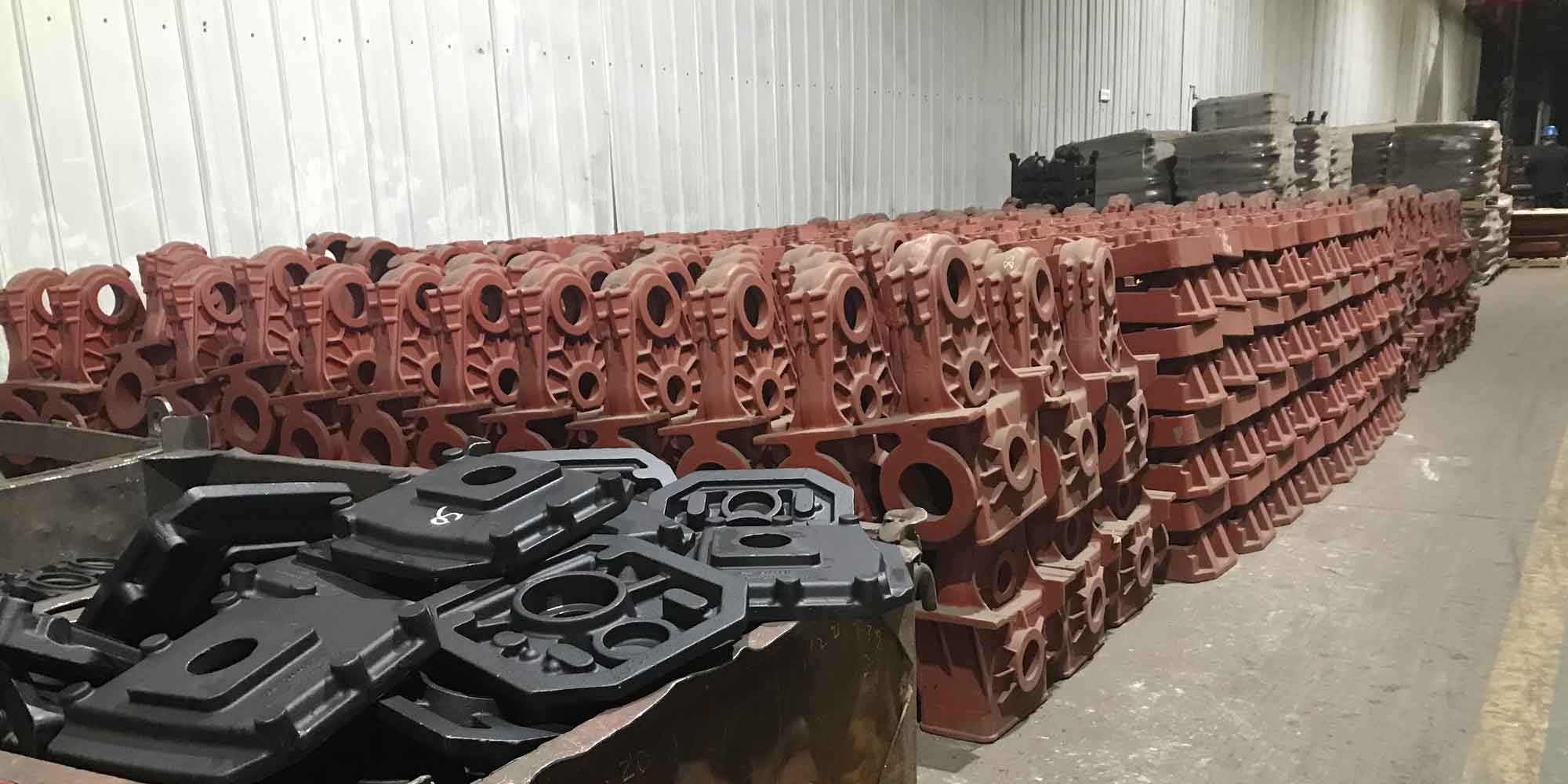
The production of high-roundness artificial silica sand is a meticulously controlled process designed to transform high-purity quartzite or quartz sandstone (SiO₂ > 98.5%) into a premium foundry aggregate. The cornerstone of this process is the “sphericalization” or “rounding” stage. Unlike mechanical crushing which produces angular, fractured grains, the advanced rounding technique suspends sand particles in a dynamic, fluidized bed of air and water. This creates a gentle, rolling motion where particles collide with each other with minimal point-load stress. This sustained, low-impact abrasion gradually wears down sharp edges and protrusions, resulting in grains with exceptionally high sphericity. A key metric for quantifying grain shape is the Angularity Factor (AF). A perfect sphere has an AF of 1.0, while typical natural sands have values ranging from 1.35 to 1.6. The rounding process allows for precise control, enabling the production of artificial sand with an AF adjustable within the range of 1.15 to 1.50. The relationship between roundness (R) and angularity factor can be approximated by the inverse square:
$$AF \approx \frac{1}{R^2}$$
Where a higher roundness (R → 1) directly results in a lower, more desirable angularity factor. This fundamental improvement in particle morphology underpins all subsequent performance benefits in steel casting molding.
The superiority of high-roundness artificial silica sand is quantifiable across a spectrum of chemical and physical properties, as detailed in the comparison table below with a premium natural silica sand commonly used for steel casting.
| Property | Unit | High-Roundness Artificial Silica Sand | Premium Natural Silica Sand (Reference) | Test Standard / Note |
|---|---|---|---|---|
| Chemical Composition | ||||
| SiO₂ | % | 99.51 | 99.50 | GB/T 2684 |
| Al₂O₃ | % | 0.11 | 0.15 | |
| Fe₂O₃ | % | 0.09 | 0.07 | |
| CaO + MgO + Na₂O | % | 0.28 | 0.27 | |
| Loss on Ignition | % | 0.15 | 0.17 | |
| Acid Demand Value | mL/(50g) | 2.52 | 1.64 | |
| Physical & Morphological Properties | ||||
| Angularity Factor (AF) | – | 1.20 – 1.27 | ~1.35 | GB/T 9442 |
| Clay Content | % | < 0.20 | < 0.15 | GB/T 2684 |
| Refractoriness | °C | > 1720 | > 1720 | GB/T 7143 |
| Derived Performance Metrics | ||||
| Bulk Density | g/cm³ | Higher | Lower | Function of roundness and packing |
| Specific Surface Area | m²/kg | Lower | Higher | Estimated from shape |
| Theoretical Resin Requirement | % wt. | Lower | Higher | For equivalent coating |
The chemical purity is comparable, ensuring adequate refractoriness for steel casting temperatures. The slightly higher acid demand value of the artificial sand is negligible in most binder systems. The pivotal advantage lies in the physical properties: the lower angularity factor directly translates to higher flowability, better packing density, and reduced binder demand. Furthermore, the artificial sand exhibits significantly lower breakdown or friability. This can be attributed to two factors: first, the rounding process eliminates pre-existing micro-cracks and a weak, weathered surface layer often found on natural grains; second, the intrinsic strength of the sourced quartzite material is high. Simulated thermal shock and attrition tests, where sands are heated to 1000°C and then mechanically tumbled, show the artificial sand retains a much larger fraction of its original coarse particles compared to natural sand, which degrades into significantly more fines. This low breakdown rate is crucial for sand reclamation systems in steel casting foundries, reducing new sand addition rates and waste.
The application of high-roundness artificial silica sand in resin-coated sand (shell molding) for steel casting yields immediate and measurable benefits. When blended into phenolic resin-coated sand using identical equipment and formulations, the artificial sand produces a shell sand with superior characteristics. The spherical grains pack more efficiently, leading to a denser, less permeable sand mass. The reduced surface area and smoother grain contours require less resin to achieve complete encapsulation, which can be modeled as a function of the specific surface area (Ss) and a coating efficiency factor (η):
$$R_{req} = k \cdot S_s \cdot \frac{1}{\eta}$$
Where \(R_{req}\) is the resin requirement, \(k\) is a constant, and \(η\) is higher for rounder grains. This often allows for a slight reduction in resin percentage while maintaining strength. The bond formed between the resin and the smooth, clean surface of the artificial grain is more uniform and robust. Comparative data for shell sands prepared from both base sands is presented below.
| Property | Unit | Shell Sand from Artificial Silica Sand | Shell Sand from Natural Silica Sand |
|---|---|---|---|
| AFS Grain Fineness Number | – | 67.88 | 68.85 |
| Tensile Strength (Ambient) | MPa | 5.43 | 4.11 |
| Flexural Strength (Ambient) | MPa | 11.5 | 7.5 |
| Flexural Strength (Hot, ~250°C) | MPa | 4.1 | 3.9 |
| Gas Evolution (850°C) | mL/g | 13.4 | 16.58 |
| High-Temperature Deformation Resistance (1000°C) | min:sec | 12:49 | 13:42 |
| Permeability | – | 85 | 82 |
| Flowability | s | ~68 | ~62 |
In practical steel casting trials, such as for a ZG50CrMo plow head component, shells made from the artificial sand exhibited excellent surface maturity, high strength, and no cracking during handling. The most notable difference was observed post-casting. After pouring at 1570-1580°C, castings produced with artificial sand shells showed significantly less sand burn-on or sintering on the surface compared to those from natural sand shells. This translates to easier cleaning, less shot blasting time, and superior final surface quality on the steel casting—a critical factor for many applications. The lower gas evolution also contributes to reduced casting defects like blows or pinholes.
The advent of binder jetting 3D printing for sand molds and cores has created a demand for sands with exceptional flowability, packing density, and consistency. High-roundness artificial silica sand is ideally suited for this additive manufacturing process in steel casting. Its spherical shape ensures reliable, smooth recoating of thin layers in the printer, which is essential for achieving precise dimensional accuracy and good surface finish in complex, printed molds for steel casting. Key specifications for 3D printing-grade artificial sand align with industry standards, emphasizing controlled grain distribution, low clay content, and specifically, a low angularity factor (AF < 1.3) and a high bulk density (> 1.35 g/cm³). The static angle of repose, a direct indicator of flowability, is typically ≤ 32° for this sand, enabling excellent layer deposition. In comparative printing tests, molds printed with high-roundness artificial silica sand demonstrated mechanical properties exceeding or matching those made from other commercial and imported 3D printing sands. Data from such evaluations is summarized below.
| Sand Type / Property | 24h Tensile Strength (MPa) | 24h Flexural Strength (MPa) | Gas Evolution (mL/g) | Benchmark Assessment |
|---|---|---|---|---|
| High-Roundness Artificial Silica Sand | 1.59 | 3.35 | 9.7 | Meets/exceeds typical requirements for printed molds in steel casting. Strength and gas evolution are critical for handling and casting quality. |
| Domestic Natural Sand (Competitor A) | 1.42 | 3.18 | 9.7 | |
| Imported Silica Sand (Competitor B) | 1.55 | 3.34 | 9.8 |
The consistent geometry and low breakdown rate of the artificial sand also ensure uniform penetration and curing of the printed binder, leading to predictable and repeatable mold strength—a paramount requirement for the production of reliable, high-integrity molds for heavy-section or high-value steel casting. Furthermore, its low thermal expansion characteristic minimizes the risk of mold wall movement or cracking during the pouring of steel casting, contributing to better dimensional fidelity.
In conclusion, the transition from natural to high-roundness artificial silica sand represents a significant technological advancement for the steel casting industry. By offering tunable particle morphology (AF 1.15-1.5), consistently high chemical purity, and demonstrably lower mechanical and thermal breakdown, this engineered material addresses both resource scarcity and performance enhancement needs. Its application in shell molding processes for steel casting results in stronger molds, reduced resin consumption, lower gas defects, and superior casting surface finish. Simultaneously, its optimal flow and packing characteristics make it a premier, domestic alternative to imported sands for the rapidly growing binder jetting 3D printing sector, enabling the production of complex, high-quality molds for advanced steel casting components. As the industry continues to prioritize quality, efficiency, and sustainability, the adoption of high-roundness artificial silica sand is poised to become a new standard in advanced molding practices for steel casting.