
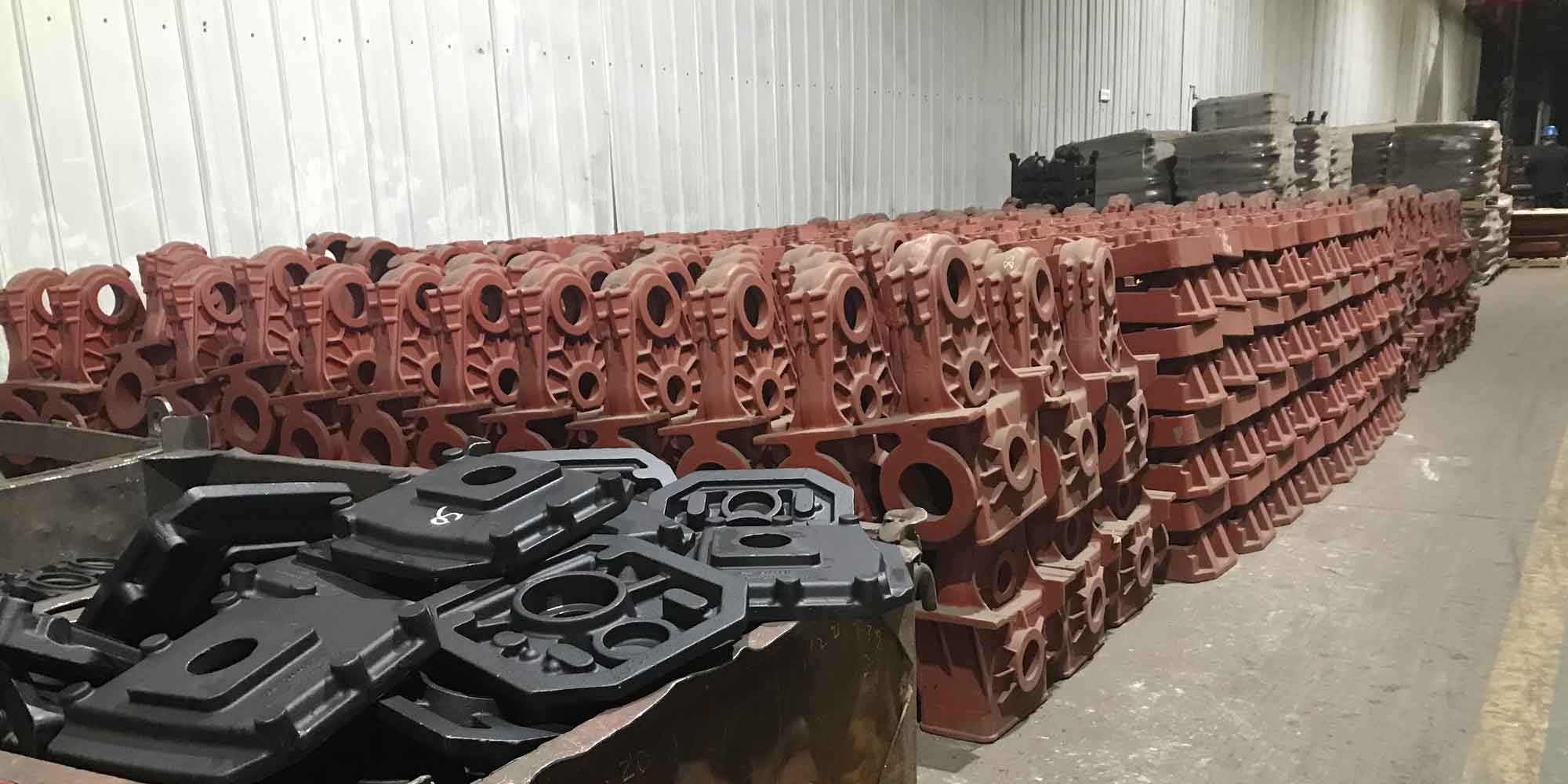
Within the demanding environment of power generation and heavy industry, thick-wall steel castings serve as the backbone for critical components such as steam turbine casings, valve bodies, and structural frames. These large-scale steel castings are prized for their ability to form complex geometries that would be impossible or prohibitively expensive to fabricate by other means. However, the very nature of the casting process, coupled with severe operational loads involving high pressure, temperature gradients, and cyclic stresses, makes these components susceptible to the initiation and propagation of defects over time. Cracks, shrinkage cavities, or areas of inadequate material integrity can develop, posing significant risks to operational safety and plant availability. Consequently, the ability to reliably repair these valuable steel castings through welding is an indispensable economic and technical necessity, extending their service life and avoiding the colossal cost of full replacement.
The repair welding of thick-section steel castings is an exercise in extreme engineering. It is fundamentally different from conventional joint welding. The process typically involves the excavation of defective material to create a cavity or groove, followed by its meticulous refilling using a multilayer, multipass welding sequence. This “buttering” or “cladding” approach within a confined, often highly restrained geometry introduces severe metallurgical and mechanical challenges. The primary concern is the development of high levels of residual stress. During welding, the intensely localized heating and subsequent rapid cooling of the deposited metal and the adjacent heat-affected zone (HAZ) of the parent steel casting create non-uniform thermal expansion and contraction. As the weld metal solidifies and cools, it attempts to shrink, but this shrinkage is resisted by the surrounding, cooler mass of the steel casting. This restraint leads to the development of internal, self-balancing tensile and compressive stresses known as welding residual stresses.
In the context of repairing a high-integrity steel casting, these residual stresses are not merely an academic concern. Tensile residual stresses, particularly those approaching or exceeding the yield strength of the material in the weld or HAZ, can have devastating consequences. They directly superimpose onto operational stresses, promoting premature fatigue failure, facilitating the growth of existing sub-critical cracks, or inducing cold cracking—a notorious risk in high-strength, low-alloy steels often used for such castings. Therefore, the overarching goal of any repair procedure for a thick-wall steel casting is not only to restore geometric integrity but, more critically, to manage and minimize the resultant residual stress field to ensure the long-term structural soundness of the component.
Traditional methods for determining a suitable repair weld procedure have relied heavily on empirical knowledge, costly and time-consuming physical mock-up trials, and extensive post-weld inspection. This trial-and-error approach is inefficient and does not guarantee an optimal outcome. The advent of sophisticated numerical simulation, specifically using the Finite Element Method (FEM), has revolutionized this field. By creating a virtual model of the steel casting and simulating the complex, transient thermo-mechanical events of the welding process, engineers can predictively analyze outcomes such as temperature history, distortion, and—most importantly for this discussion—the three-dimensional distribution of residual stresses. This virtual prototyping allows for the systematic evaluation and optimization of welding parameters before any arc is struck on the actual, valuable component.
This article presents a detailed, first-person perspective on the numerical simulation of residual stress evolution during the multilayer, multipass repair welding of a thick-wall steel casting. The focus is on elucidating the distribution patterns of these stresses and quantitatively investigating the influence of key procedural parameters, namely preheating temperature and individual weld layer thickness. The objective is to derive data-driven insights that can guide the development of robust and reliable repair protocols for these critical industrial assets.
1. Foundation of the Numerical Model: Methodology and Assumptions
To accurately capture the physics of the repair welding process for a steel casting, a sequentially coupled thermo-mechanical finite element analysis was conducted. This approach involves two separate but linked analyses: first, a transient thermal analysis computes the temperature history throughout the component as the heat source moves and deposits material; second, a mechanical analysis uses this temperature history as a loading condition to calculate the resulting stresses, strains, and deformations. The commercial finite element software ABAQUS was employed for this study due to its robust capabilities in handling non-linear, history-dependent problems.
1.1. Geometrical Representation and Material Definition
The subject of the simulation is a representative block of a thick-wall steel casting. The model dimensions are 300 mm in length and width, with a thickness of 50 mm, representing a substantial section of the component wall. A simulated defect, representing an excavated region, is defined as a rectangular cavity measuring 100 mm in length, 50 mm in width, and 20 mm in depth. This cavity is to be completely filled with weld metal. A typical V-groove preparation with an appropriate angle is modeled to facilitate multipass welding.
The base material is defined as ZG15Cr1Mo1V, a common chromium-molybdenum-vanadium cast steel used in high-temperature power plant applications. The weld filler metal is modeled with similar but slightly differentiated properties to account for its as-deposited microstructure. The thermal and mechanical properties of both the steel casting base metal and the weld metal are critical inputs and are defined as temperature-dependent functions to ensure simulation accuracy. Key properties include thermal conductivity, specific heat, density, coefficient of thermal expansion, Young’s modulus, yield strength, and Poisson’s ratio. The material behavior is modeled using an isotropic hardening rule. A summary of the primary welding parameters used in the baseline simulation is provided in Table 1.
| Parameter | Value | Description / Note |
|---|---|---|
| Base Material | ZG15Cr1Mo1V | Low-alloy heat-resistant cast steel. |
| Welding Process | Gas Tungsten Arc Welding (GTAW) | Chosen for its precision and quality. |
| Heat Input | 10 kJ/cm | A controlled input to manage dilution and HAZ. |
| Interpass Temperature | ~200 °C | Maintained to prevent rapid cooling and crack formation. |
| Preheat Temperature (Baseline) | 200 °C | Applied to the entire steel casting block before welding. |
| Welding Speed | Defined implicitly via heat source model | See Section 1.3 on the segmented heat source. |
| Number of Layers / Passes | 8 Layers / 24 Passes | Baseline configuration for filling the 20mm deep groove. |
| Layer Thickness (Baseline) | ~2.5 mm per layer | Average thickness for the deposited weld metal. |
1.2. The Birth and Death of Elements: Simulating Material Deposition
A quintessential technique for simulating additive processes like welding in FEM is the “element birth and death” method. Initially, the entire finite element mesh, including the volume representing the future weld metal within the groove of the steel casting, is created. At the start of the analysis, the elements corresponding to the unwelded cavity are “deactivated” or “killed.” This means their stiffness is multiplied by a severe reduction factor (effectively set to zero), and their contribution to the model’s mass and load capacity is removed. They exist in the model but do not interact mechanically or thermally with the active base steel casting material.
As the simulation of the welding sequence progresses, these “dead” elements are “born” or “reactivated” in groups corresponding to each individual weld pass. Their reactivation is synchronized with the application of the welding heat source for that pass. Upon birth, these elements are initially assigned the temperature of the surrounding material or the preheat temperature. They then immediately begin participating in the thermal analysis (receiving heat from the arc) and the subsequent mechanical analysis. This technique elegantly models the sequential addition of filler metal to the steel casting substrate.
1.3. Heat Source Modeling: Balancing Accuracy and Computational Efficiency
Simulating a moving arc heat source for 24 consecutive passes in a 3D model is computationally prohibitive if a finely resolved, continuously traveling heat source is used. To achieve a practical balance between accuracy and efficiency, a segmented heat source model was adopted. Instead of moving infinitesimally small increments per time step, the length of each weld pass is divided into a finite number of segments (e.g., 10 segments for a 100mm long pass).
Within each segment, the heat input is applied as a uniform volumetric heat flux (a “patch” or “bar” source) acting over a calculated dwell time. This dwell time, $$ t_{seg} $$, is derived from the original distributed heat source parameters and the welding speed. For a Goldak double-ellipsoidal heat source model, the energy input per segment can be approximated. If the total arc power is \( Q \) and the welding speed is \( v \), the heat input per unit length is \( q = \eta Q / v \), where \( \eta \) is the arc efficiency. For a segment of length \( L_{seg} \), the total energy deposited in that segment is \( E_{seg} = q \cdot L_{seg} \). If this energy is applied uniformly over the segment volume \( V_{seg} \) over a time \( t_{seg} \), the applied power density \( \dot{q}_{vol} \) is:
$$
\dot{q}_{vol} = \frac{E_{seg}}{V_{seg} \cdot t_{seg}}
$$
The dwell time for the segment is essentially the time it takes for the arc to traverse the segment length: \( t_{seg} = L_{seg} / v \). This method significantly reduces the number of solution increments required while maintaining a physically reasonable representation of the heat input process for the steel casting repair simulation.
1.4. Boundary Conditions: Heat Loss and Mechanical Constraint
The thermal analysis must account for heat dissipation from the steel casting model. Heat loss occurs via convection and radiation from all free surfaces. The convective heat loss is governed by Newton’s law:
$$
q_c = h_c (T_s – T_0)
$$
where \( q_c \) is the convective heat flux, \( h_c \) is the convective heat transfer coefficient (set to \( 15 \times 10^{-6} \) W/(mm²·°C) for still air), \( T_s \) is the surface temperature of the steel casting, and \( T_0 \) is the ambient temperature (20°C). Radiative heat loss is modeled by the Stefan-Boltzmann law:
$$
q_r = \epsilon \sigma (T_s^4 – T_0^4)
$$
where \( \epsilon \) is the emissivity (0.8 for oxidized steel), and \( \sigma \) is the Stefan-Boltzmann constant (\( 5.67 \times 10^{-14} \) W/(mm²·K⁴)).
For the mechanical analysis, a critical assumption involves restraint. The model represents a small section extracted from a much larger steel casting. Therefore, the bottom surface of the block is typically assigned a fixed boundary condition (encastre), simulating the massive restraint provided by the surrounding body of the component. This high level of restraint is a key driver for the development of significant residual stresses in the repair zone.
2. Analysis of Simulated Welding Thermal Cycles and Residual Stress Fields
2.1. Thermal History in the Steel Casting Substrate
Monitoring the thermal cycles at strategic points within the steel casting substrate provides invaluable insight into the thermal severity of the repair process. Points located near the fusion line, especially at the root of the groove, experience the most intense thermal cycles. The simulation output for such points shows a series of distinct temperature peaks, each corresponding to the deposition of a nearby weld pass.
The first weld pass laid at the root generates the highest peak temperature at these points, often exceeding the solidus temperature of the steel, indicating a brief melting and re-melting of the substrate surface. As subsequent layers are deposited further away, the peak temperatures induced at the root points diminish progressively. Crucially, the simulation also captures the controlled cooling between passes, where the temperature decays towards the maintained interpass temperature (e.g., 200°C) before the next pass is initiated. This controlled thermal history is vital for allowing hydrogen diffusion and for tempering the microstructure of previous passes, thereby reducing the susceptibility of the steel casting to cracking.
2.2. Three-Dimensional Residual Stress Distribution in the Repaired Steel Casting
After the simulation of the final weld pass and subsequent cooling to room temperature, the self-equilibrating residual stress field within the steel casting block can be examined. The results consistently show a characteristic and significant residual stress pattern.
Longitudinal Stress (parallel to the welding direction): In the transverse cross-section (perpendicular to the weld), the longitudinal stress (\( \sigma_{xx} \)) exhibits a classic “M-shaped” or “tension-inside, compression-outside” profile through the thickness. The weld metal and the immediate HAZ in the steel casting are under high tensile stress, with the maximum value often reaching or slightly exceeding the room-temperature yield strength of the material (e.g., ~400 MPa for this class of steel). This is a direct consequence of the restraint against longitudinal contraction during cooling. Moving away from the weld centerline into the bulk of the steel casting, these tensile stresses transition into compressive stresses to maintain global force equilibrium.
Along the length of the weld (longitudinal direction), the stress is predominantly tensile within the weld seam. However, near the start and end of the weld, complex triaxial stress states and stress concentrations often develop due to the ignition and extinguishment of the arc.
Transverse Stress (perpendicular to the welding direction): The transverse stress (\( \sigma_{yy} \)) distribution is more complex. In the middle section of the weld length, the transverse stress in the weld is typically tensile. This tension arises from the resistance to the transverse shrinkage of the weld groove as it cools. The magnitude is generally lower than the longitudinal stress but is still significant. At the ends of the weld repair zone, the transverse stress can become compressive due to the global bending effect induced by the longitudinal shrinkage of the weld metal.
The through-thickness stress (\( \sigma_{zz} \)) is also noteworthy, especially in thick-section welds on steel castings. Near the weld root and surfaces, it can be tensile, contributing to a triaxial stress state that is particularly detrimental for fracture toughness and can promote crack initiation.
2.3. Stress Distribution on Specific Paths: A Quantitative View
To quantify the results, stress values were extracted along predefined paths. For example, Path 1, located at the top surface of the weld, running transverse to the welding direction, clearly shows the peak tensile longitudinal stress in the final weld passes. Earlier passes show slightly lower stresses due to the tempering effect of subsequent thermal cycles. This path also confirms that the transverse stress across the weld cap remains tensile. A path lower down in the groove (Path 2) shows a similar pattern but with a slightly narrower tensile zone, indicating that the most severe stress condition often exists near the final layers and the surface of the repair on the steel casting.
3. Parametric Study: The Influence of Preheat and Layer Strategy
A primary advantage of the simulation approach is the ability to perform virtual parametric studies. Two of the most critical parameters in the repair welding procedure for a steel casting were investigated: preheat temperature and weld layer thickness/number.
3.1. The Critical Role of Preheat Temperature
Preheating the steel casting before welding serves multiple essential functions: it slows the cooling rate, facilitating hydrogen escape and allowing more time for austenite to transform into less crack-susceptible microstructures, and it reduces the temperature gradient between the weld and the cold base metal, thereby lowering thermal strains and resultant stresses.
Simulations were run with preheat temperatures of 20°C (no preheat), 100°C, 200°C (baseline), and 300°C. The impact on the residual stress field in the steel casting was profound and systematic. The key results are summarized in Table 2.
| Preheat Temperature | Peak Longitudinal Tensile Stress | Width of Tensile Zone | Overall Stress State | Practical Implication |
|---|---|---|---|---|
| 20 °C (None) | Highest (~Yield Strength or above) | Widest | High, widespread tension in weld zone. | High risk of cold cracking and poor fatigue performance. |
| 100 °C | Significantly reduced from 20°C case. | Moderately reduced. | Improved, but tensile peaks remain concerning. | Marginally acceptable for non-critical repairs; risk remains. |
| 200 °C | Markedly lower (e.g., 20-30% below yield). | Narrow, well-contained tensile zone. | Favorable; higher compressive fields in surrounding steel casting. | Optimal for most Cr-Mo-V steel castings. Balances performance and practicality. |
| 300 °C | Lowest observed. | Narrowest. | Most favorable stress distribution. | Best for stress control but costly, worsens working conditions, may affect properties. |
The trend is clear: increasing preheat temperature monotonically decreases the peak magnitude of tensile residual stress and constrains the high-tension region to a narrower band within and immediately adjacent to the weld metal. For the steel casting material in question, a preheat of 200-250°C appears to be the most rational compromise. It achieves a substantial reduction in stress severity compared to no preheat, moving the peak values safely below the yield strength, without incurring the excessive cost, operational difficulty, and potential negative metallurgical effects (e.g., excessive grain growth) associated with very high preheat temperatures like 300°C.
3.2. Optimizing the Welding Sequence: Layer Thickness and Pass Strategy
The second parameter study focused on the welding procedure itself: how should the groove volume in the steel casting be partitioned into layers and passes? The total heat input for filling the cavity is roughly constant, but its distribution in time and space varies with the layer strategy. Three strategies were compared, as outlined in Table 3.
| Strategy | Layer Thickness | Number of Layers / Passes | Peak Tensile Stress | Character of Stress Field | Recommendation |
|---|---|---|---|---|---|
| A (Fine) | ~2.0 mm | 10 Layers / ~29 Passes | Lowest | Narrowest tensile zone. Most uniform distribution. | Optimal for stress control. Preferred for highest-integrity repairs. |
| B (Baseline) | ~2.5 mm | 8 Layers / 24 Passes | Moderate | Intermediate tensile zone width. | Good balance of control and productivity. |
| C (Coarse) | ~3.0 mm | 7 Layers / ~19 Passes | Highest | Widest tensile zone. | Higher risk. May be used where restraint is lower or for less critical areas. |
The mechanism behind this trend is related to the thermal cycles. A finer layer strategy (Strategy A) uses more passes, each with a lower volumetric heat input per pass. This results in a smaller volume of metal being heated to very high temperatures at any given time. The thermal gradient is less severe, and the tempering effect of subsequent passes on previous ones is more frequent and effective. Consequently, the cumulative locked-in strain and resultant residual stress are lower. Although Strategy A requires more individual weld passes—increasing labor time—the benefit in terms of achieving a superior, lower-stress repair in a critical steel casting is often justified. The coarser strategy (Strategy C) introduces larger, hotter weld pools that impose greater localized strain on the surrounding steel casting, leading to higher final residual stresses.
4. Synthesis and Conclusions for Repair Practice
The numerical simulation of the multilayer, multipass repair welding process provides a powerful lens through which to understand and optimize procedures for thick-wall steel castings. Based on the comprehensive thermo-mechanical analysis conducted in this study, several concrete conclusions and recommendations can be formulated to guide welding engineers and metallurgists.
First, preheat is non-negotiable for the repair welding of restrained, low-alloy steel castings like ZG15Cr1Mo1V. Its role in mitigating residual stresses is quantitatively proven by the simulation. The results strongly advocate for a preheat temperature in the range of 200°C to 250°C for this class of material. This range effectively depresses peak tensile residual stresses below the material’s yield strength, significantly reducing the risk of cold cracking and improving the fatigue life of the repaired component, without venturing into the domain of impractical or counterproductive high temperatures.
Second, the welding sequence itself is a powerful tool for stress management. When repairing a high-value steel casting, the goal should not merely be to fill the cavity quickly. A strategic approach favoring finer weld layers (e.g., 2.0 – 2.5 mm thickness) and a higher number of passes is demonstrably superior for residual stress control. This “many small passes” strategy leverages the intrinsic heat treatment effect between passes and minimizes the intensity of any single thermal shock to the steel casting substrate. While more time-consuming, this approach yields a more reliable and durable repair with a more favorable residual stress profile, characterized by lower peak magnitudes and a more confined tensile stress region.
Third, the residual stress state is inherently three-dimensional and complex. The simulation reveals that the repair zone, especially the final layers, exists in a state of biaxial or triaxial tension. This underscores the importance of post-weld heat treatment (PWHT) for critical repairs, a step that was not simulated in this study but is a logical extension. PWHT is specifically designed to relax these harmful tensile stresses through controlled thermal soaking and is often specified for major repairs on steel castings operating under high stress.
In conclusion, the application of advanced finite element simulation, employing techniques like element birth/death and segmented heat sources, transforms the repair welding of thick-wall steel castings from an art based on experience into a science-driven engineering discipline. By enabling the virtual testing of preheat schedules and weld procedures, it allows for the development of optimized repair protocols that ensure the structural integrity and extended service life of these vital industrial components. The key takeaways—sufficient preheat and a fine-layer welding strategy—provide a clear, simulation-validated pathway for achieving low-stress, high-quality repairs on critical steel castings.