
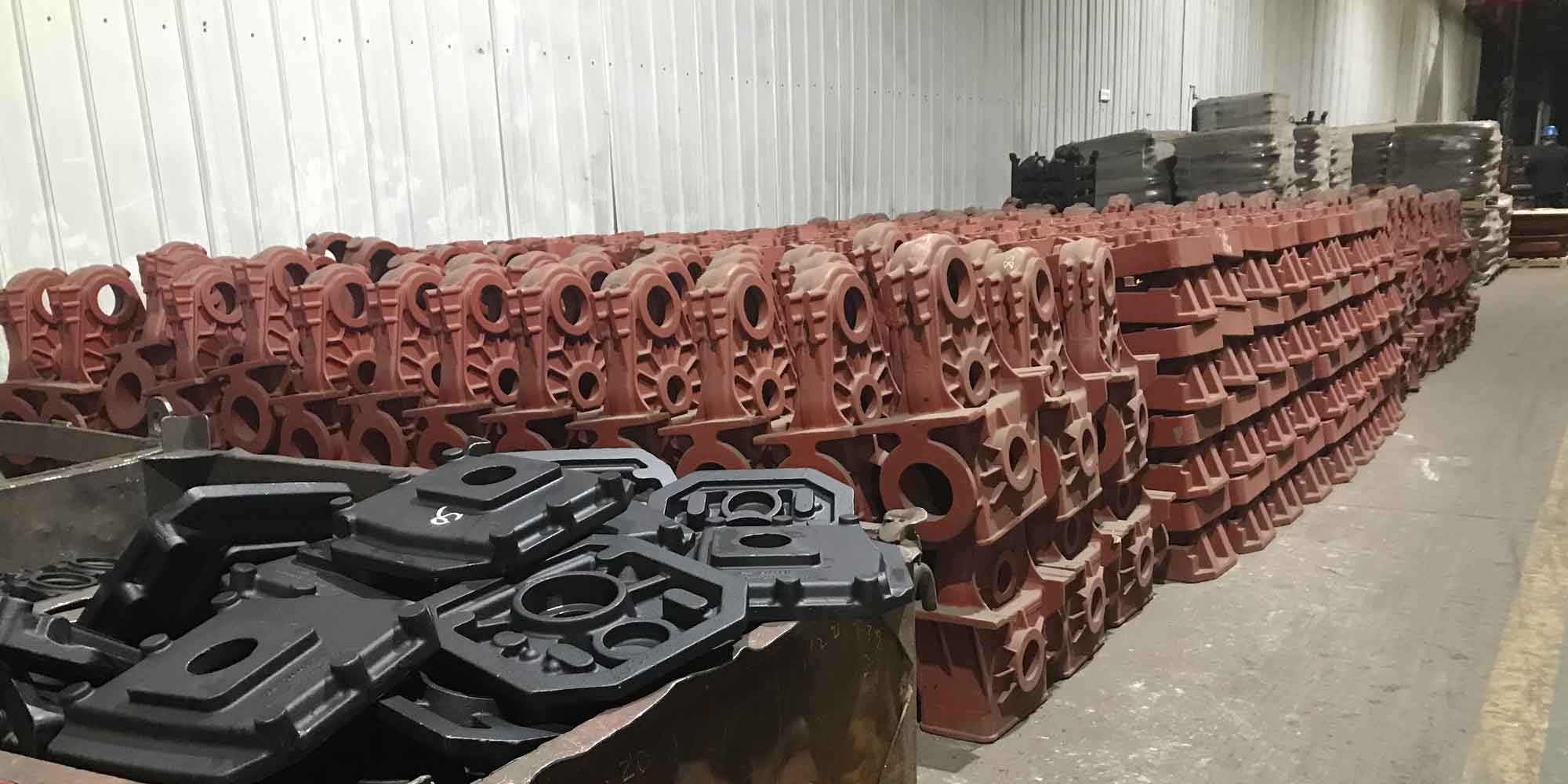
In modern structural engineering, particularly for large-span spatial structures such as stadiums, airport terminals, railway stations, exhibition halls, and opera houses, the integrity and performance of connection joints are paramount. Among various joint types, steel casting nodes have gained widespread application due to their superior mechanical properties and architectural flexibility. As an engineer specializing in advanced structural analysis, I have extensively studied these components, and in this article, I will delve into the finite element analysis (FEA) of a complex umbrella-shaped steel casting support joint system, emphasizing the critical role of steel casting technology. Steel casting allows for the fabrication of intricate, monolithic nodes that mitigate issues prevalent in traditional welded connections, such as residual stresses from multi-member intersections and welding notches. The inherent advantages of steel casting include enhanced stiffness, integrity, excellent fatigue and seismic resistance, and adaptability to complex architectural forms. However, the irregular geometry and diverse loading conditions of these nodes pose significant design challenges, as there are no universal design standards. Consequently, reliance on experimental testing and sophisticated numerical simulations, like finite element analysis, becomes essential to obtain design parameters, stress distributions, and ultimate bearing capacities.
The core benefit of steel casting lies in its manufacturing process, where molten steel is poured into molds to create seamless, integrated components. This monolithic construction eliminates weak points associated with welds, ensuring uniform stress transfer and reducing stress concentrations. The material properties of steel castings can be tailored to meet specific demands, often using grades like G20Mn5 or similar, with yield strengths typically ranging from 300 MPa to 420 MPa. To quantify the stress state in such nodes, engineers often employ the von Mises yield criterion, which is fundamental in assessing whether a material will yield under complex multi-axial stress conditions. The von Mises equivalent stress, $\sigma_{vm}$, is calculated as:
$$ \sigma_{vm} = \sqrt{\frac{1}{2}\left[(\sigma_1 – \sigma_2)^2 + (\sigma_2 – \sigma_3)^2 + (\sigma_3 – \sigma_1)^2\right]} $$
where $\sigma_1$, $\sigma_2$, and $\sigma_3$ are the principal stresses. For steel casting nodes, ensuring that $\sigma_{vm}$ remains below the material yield strength under design loads is crucial for safety. Additionally, in composite systems involving steel-reinforced concrete columns, the interaction between steel casting, steel reinforcement, and concrete must be meticulously analyzed to prevent failures like cracking or buckling.
To illustrate the application of finite element analysis in verifying steel casting node designs, I consider a representative large-scale stadium project with a steel canopy structure. The canopy features radial steel beams supported by umbrella-shaped steel casting nodes connected to steel-reinforced concrete columns. This configuration is common in modern sports arenas, where long cantilevers (up to 27 meters) and complex geometries are required. The steel casting nodes in this system are subjected to substantial and multi-directional forces, including axial loads, bending moments, and shear, due to the canopy’s self-weight, live loads, wind, and thermal effects. Given the absence of standardized design methods for such intricate steel castings, a detailed nonlinear finite element analysis is performed to assess stress distributions, deformation behavior, and ultimate load-bearing capacity. The analysis follows a holistic approach, treating the steel casting node as a “micro-structure” within the global system, using envelope forces from overall structural calculations to define boundary conditions and loading scenarios.
| Component | Material Grade | Yield Strength (MPa) | Elastic Modulus (GPa) | Poisson’s Ratio |
|---|---|---|---|---|
| Steel Casting Node | G20Mn5 (or equivalent) | 300 | 200 | 0.3 |
| Steel Beam and Bracing | Q345 (or equivalent) | 345 | 200 | 0.3 |
| Reinforcement Steel | HRB400 (or equivalent) | 360 | 200 | 0.3 |
| Base Plate | High-strength steel | 420 | 200 | 0.3 |
| Concrete (Column) | C50 | Compressive: 32.4* | 34.5 | 0.2 |
*Note: Concrete compressive strength is given as characteristic value; tensile strength is typically 2-3 MPa for C50.
The finite element modeling process begins with accurate geometric representation. Using CAD software like SolidWorks, the precise geometry of the umbrella steel casting node and the composite column is created, including all tubular branches, stiffeners, and embedded steel sections. This model is then imported into ABAQUS, a powerful FEA software, for meshing and analysis. The mesh comprises tetrahedral elements (C3D4) for the steel casting and concrete to capture complex stress gradients, and truss elements (T3D2) for reinforcement bars. Contact interactions are critical: the interface between steel and concrete is defined with “hard” contact in the normal direction and a penalty friction formulation in the tangential direction (coefficient = 0.4), while reinforcement is embedded within the concrete using the embedded element technique to ensure deformation compatibility. Boundary conditions simulate real-world restraints; the base of the steel-reinforced concrete column is fully fixed, and coupling constraints are applied at the ends of each branch to enforce planar section behavior during loading.
Loading is applied based on the most unfavorable load combination derived from global structural analysis, which often includes dead load (D), live load (L), wind load (W), and temperature effects (T). For instance, a combination like $1.2D + 0.98L + 0.84W + 1.4T$ might be used, with wind loads informed by wind tunnel tests. The forces and moments at each branch of the steel casting node are extracted from the global model. A summary of such loads for a typical umbrella node is shown in Table 2, where $F_x$, $F_y$, $F_z$ are forces in global directions, and $M_x$, $M_y$, $M_z$ are moments.
| Branch ID | $F_x$ (kN) | $F_y$ (kN) | $F_z$ (kN) | $M_x$ (kN·m) | $M_y$ (kN·m) | $M_z$ (kN·m) |
|---|---|---|---|---|---|---|
| 1 | 364 | -100 | 179 | 97 | 1777 | -930 |
| 2 | -1615 | 172 | 42 | -214 | 512 | 1633 |
| 3 | -3950 | 0 | 225 | 25 | -2924 | -8 |
| 4 | 1267 | -23 | 73 | 174 | -887 | 446 |
Under these design loads, the elastic stress analysis of the steel casting node reveals that maximum stresses occur at the intersections of tubular branches, particularly where stress concentration is inherent. For the steel casting material, the equivalent stress must satisfy the criteria outlined in technical specifications for steel castings, such as the Chinese code CECS 235:2008, which stipulates that the calculated equivalent stress $\sigma_{zs}$ should not exceed $\beta_f f / \gamma_{RE}$, where $f$ is the design strength, $\gamma_{RE}$ is the seismic adjustment factor (taken as 1.0 for non-seismic design), and $\beta_f$ is an amplification factor depending on stress state (1.2 for pure compression, 1.0 for pure tension, 1.1 otherwise). The equivalent stress $\sigma_{zs}$ is computed similarly to von Mises stress. In the analyzed case, the maximum $\sigma_{vm}$ in the steel casting is 242.3 MPa, with principal stresses all compressive at critical locations, so $\beta_f = 1.2$. Assuming a design strength $f = 235$ MPa for the steel casting grade, the allowable stress is $1.2 \times 235 / 1.0 = 282$ MPa, which is greater than 242.3 MPa, indicating compliance. Furthermore, the entire steel casting remains in the elastic range, with no plastic yielding, affirming the design’s safety under service conditions.
For the steel-reinforced concrete column, the analysis shows that concrete experiences tensile stresses in localized regions, primarily due to bending moments transferred from the steel casting node. The maximum principal tensile stress in concrete is around 3.18 MPa, which exceeds the tensile strength of C50 concrete (approximately 2.64 MPa). This necessitates reinforcement detailing, such as closer stirrup spacing or additional steel mesh, to control cracking. The reinforcement steel, however, exhibits stresses well below yield, with a maximum of 176.3 MPa versus a yield strength of 360 MPa. The displacement of the steel casting node is also within limits; for instance, the maximum nodal displacement is 9.09 mm, which is less than $L/125$ for a cantilever analogy (where $L$ is a reference length), satisfying serviceability requirements.
To evaluate the ultimate bearing capacity of the steel casting node, a separate nonlinear FEA is conducted with progressively increased loads until failure. The load is scaled by a factor $\lambda$ relative to the design load. As $\lambda$ increases, plastic zones initiate at the intersections of branches, particularly in Branch 4, which is identified as the most critical member. The load-displacement curve for Branch 4 is plotted, showing the relationship between load multiplier and vertical displacement. According to design codes, the ultimate load should be at least three times the design load for safety. In this analysis, the ultimate load multiplier $\lambda_{ult}$ is found to be 3.22, meaning the steel casting node can withstand over three times the design load before failure, thus meeting the safety factor requirement. The progression of plasticity can be summarized as: at $\lambda = 1.24$, elastic behavior dominates; at $\lambda = 2.29$, yielding begins at branch intersections; at $\lambda = 3.08$, plastic regions expand significantly but without collapse. This demonstrates the robust reserve strength of steel casting nodes when properly designed.
Crack width in the concrete column is also assessed using standard formulas from codes like ACI 318 or GB 50010. The maximum crack width $w_{max}$ is calculated based on stress in reinforcement, bar diameter, and concrete cover. For the critical section, using the basic load combination, $w_{max}$ is computed to be less than 0.2 mm, which is acceptable for durability and serviceability under normal environmental conditions. The formula often takes the form:
$$ w_{max} = k \cdot \frac{\sigma_s}{E_s} \cdot \left( \frac{c + d}{\rho_{eff}} \right)^{1/3} $$
where $k$ is a coefficient, $\sigma_s$ is steel stress, $E_s$ is modulus of elasticity, $c$ is cover, $d$ is bar diameter, and $\rho_{eff}$ is effective reinforcement ratio. For the analyzed column, with $\sigma_s = 176.3$ MPa and appropriate parameters, $w_{max}$ is within limits.
The advantages of steel casting in such applications are manifold, and they can be summarized quantitatively. Table 3 contrasts steel casting nodes with conventional welded nodes for key performance metrics.
| Parameter | Steel Casting Node | Welded Node |
|---|---|---|
| Residual Stress | Minimal (monolithic casting) | High (due to welding heat) |
| Fatigue Life | Superior (smooth transitions) | Lower (notch effects) |
| Construction Complexity | Simplified on-site (fewer welds) | High (precision welding required) |
| Design Flexibility | High (complex shapes achievable) | Limited by weldability |
| Typical Safety Factor | >3.0 (as shown in FEA) | Often 2.0-2.5 |
In conclusion, the finite element analysis of complex umbrella-shaped steel casting support joints demonstrates their reliability and safety in large-span spatial structures. The steel casting technology enables the creation of nodes that withstand high-stress multi-axial loading while maintaining elastic behavior under design conditions. Through detailed modeling of material nonlinearities, contact interactions, and realistic boundary conditions, FEA provides a robust tool for verifying designs where standardized methods are lacking. The case study, though anonymized, illustrates that steel casting nodes exhibit sufficient ultimate strength (with load factors exceeding 3.0) and controlled deformations, ensuring structural integrity. For engineers, this approach offers a reference for similar projects involving intricate steel casting components. Future advancements in steel casting alloys and additive manufacturing may further enhance these benefits, but current practices, validated by rigorous FEA, already establish steel casting as a cornerstone in modern structural engineering for iconic and demanding constructions.
Throughout this analysis, the term steel casting has been emphasized to highlight its pivotal role. From material selection to performance validation, steel casting proves indispensable for nodes requiring high durability, complex geometry, and efficient load transfer. As structural forms evolve towards greater spans and aesthetics, the reliance on advanced steel casting solutions will only grow, supported by sophisticated analytical methods like finite element analysis.