
In modern industrial applications, steel casting serves as a cornerstone for producing durable components in sectors such as mining, construction, and heavy machinery. The quest for enhanced wear resistance and mechanical performance in steel casting has led to the exploration of microalloying strategies, with niobium (Nb) emerging as a key element due to its grain-refining and strengthening capabilities. This study focuses on the impact of Nb microalloying on quasi-bainitic wear-resistant steel casting, examining how varying Nb concentrations influence microstructure evolution, mechanical properties, and wear behavior. Through comprehensive experimentation and analysis, I aim to elucidate the mechanisms by which Nb optimizes the performance of steel casting, providing insights for developing advanced materials in the steel casting industry.
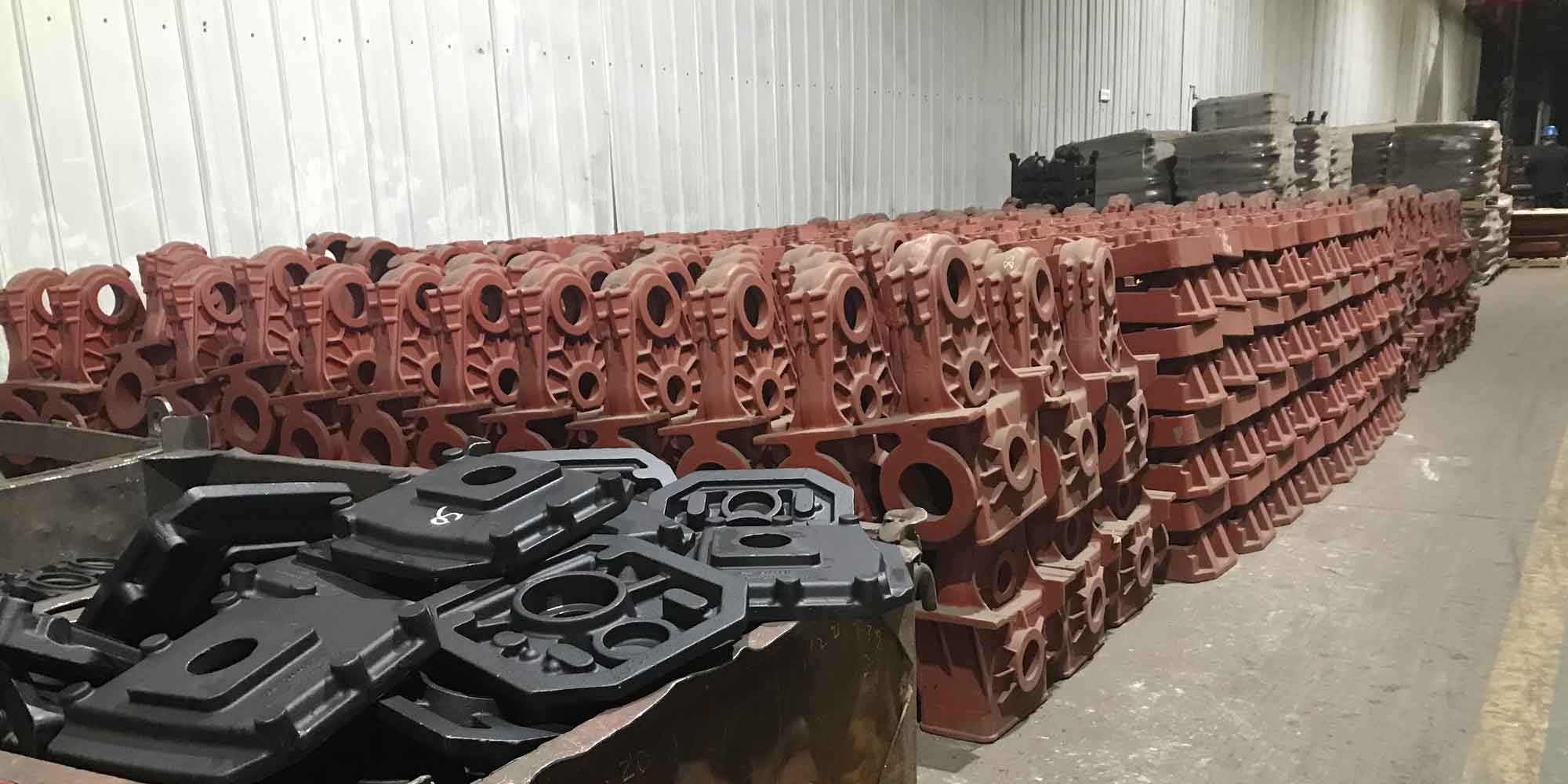
The foundation of this research lies in designing steel casting alloys with a base composition tailored for quasi-bainitic transformation. The chemical compositions, as detailed in Table 1, were meticulously controlled to assess the role of Nb in steel casting. These alloys were produced via vacuum induction melting, a common method in high-quality steel casting manufacturing, ensuring minimal impurities and homogeneous microstructures. The addition of Nb, ranging from 0% to 0.062%, was intended to investigate its effects on grain boundary pinning and precipitation hardening in steel casting.
| Steel Casting Designation | C | Si | Mn | P | S | Cr | V | B | Nb |
|---|---|---|---|---|---|---|---|---|---|
| 0Nb | 0.253 | 1.463 | 2.038 | 0.008 | 0.008 | 0.912 | 0.165 | 0.0050 | — |
| 0.02Nb | 0.261 | 1.488 | 2.050 | 0.009 | 0.008 | 0.905 | 0.167 | 0.0056 | 0.024 |
| 0.03Nb | 0.259 | 1.485 | 2.052 | 0.008 | 0.007 | 0.918 | 0.167 | 0.0053 | 0.032 |
| 0.06Nb | 0.261 | 1.487 | 2.025 | 0.008 | 0.007 | 0.915 | 0.162 | 0.0063 | 0.062 |
Heat treatment is critical in steel casting to achieve desired microstructures. The process involved austenitizing at 965°C for 1 hour, followed by isothermal quenching at 360°C in a salt bath for 2 hours, and air cooling. This regimen promotes the formation of quasi-bainite, a microstructure comprising bainitic ferrite and retained austenite, which is highly valued in wear-resistant steel casting. The transformation kinetics for bainite formation in steel casting can be described using the Avrami equation, which models phase evolution over time. For these steel casting alloys, the bainite transformation fraction $f_B$ as a function of isothermal holding time $t$ is given by:
$$ f_B(t) = 1 – \exp\left(-k_B t^{n_B}\right) $$
where $k_B$ and $n_B$ are constants dependent on Nb content. This equation highlights that bainite initiation requires minimal incubation but extended completion times, a characteristic exploited in steel casting to optimize microstructure. Additionally, the effect of Nb on delaying $\gamma \to \alpha$ transformation can be incorporated into the kinetic model, enhancing the precision of steel casting process design.
Microstructural analysis revealed that all steel casting samples exhibited a quasi-bainitic structure, with lath-like bainitic ferrite bundles and blocky retained austenite. The addition of Nb promoted the growth of these bundles, making them longer, wider, and more numerous, as observed in scanning electron microscopy. This microstructural refinement is crucial for improving the toughness and wear resistance of steel casting. Furthermore, prior austenite grain size was significantly refined by Nb addition, as quantified in Table 2. The grain refinement mechanism in steel casting involves Nb carbonitride precipitates pinning grain boundaries during austenitization, which can be modeled using the Zener drag equation. The pinning pressure $P_z$ exerted by precipitates of radius $r$ and volume fraction $f_v$ is:
$$ P_z = \frac{3 f_v \gamma}{2 r} $$
where $\gamma$ is the grain boundary energy. For steel casting with Nb microalloying, this pressure inhibits grain growth, leading to finer austenite grains that enhance mechanical properties.
| Steel Casting Designation | Minimum Grain Size (μm) | Maximum Grain Size (μm) | Average Grain Size (μm) |
|---|---|---|---|
| 0Nb | 63.01 | 191.64 | 120.81 |
| 0.02Nb | 48.67 | 203.08 | 113.48 |
| 0.03Nb | 60.74 | 182.41 | 98.43 |
| 0.06Nb | 50.52 | 143.99 | 87.65 |
The relationship between average grain size $d$ and Nb content [Nb] in steel casting can be approximated by a linear regression model derived from the data in Table 2. Using least-squares fitting, the equation is:
$$ d = 120.81 – 533.33 \cdot [\text{Nb}] $$
where $d$ is in micrometers and [Nb] is in weight percent. This formula demonstrates a grain size reduction of approximately 27.4% at 0.062% Nb, underscoring the effectiveness of Nb microalloying in refining steel casting microstructures. Such refinement is pivotal for achieving balanced properties in steel casting components subjected to abrasive environments.
Mechanical properties of the steel casting alloys were comprehensively evaluated, with results summarized in Table 4. The data indicate that Nb addition generally decreases hardness but improves impact energy, yield strength, tensile strength, and ductility. For instance, at 0.024% Nb, the steel casting exhibited an optimal combination of high impact energy (42.6 J) and tensile strength (1326 MPa). The enhancement in strength can be attributed to multiple mechanisms, including grain refinement described by the Hall-Petch equation:
$$ \sigma_y = \sigma_0 + k_y d^{-1/2} $$
where $\sigma_y$ is the yield strength, $\sigma_0$ is the friction stress, $k_y$ is the strengthening coefficient, and $d$ is the grain diameter. For steel casting, this equation predicts increased yield strength with decreasing grain size, as observed with Nb addition. Additionally, precipitation strengthening from NbC or Nb(C,N) precipitates contributes to strength through the Orowan mechanism:
$$ \Delta \sigma_p = \frac{0.8 G b}{\lambda} $$
where $\Delta \sigma_p$ is the strength increment, $G$ is the shear modulus, $b$ is the Burgers vector, and $\lambda$ is the inter-precipitate spacing. In steel casting, these precipitates form during heat treatment, further augmenting performance.
| Steel Casting Designation | Hardness (HV0.1) | Impact Energy (J) | Retained Austenite (%) | Side Expansion (%) | Yield Strength (MPa) | Tensile Strength (MPa) | Reduction of Area (%) | Yield Ratio | Strength-Ductility Product (MPa·%) |
|---|---|---|---|---|---|---|---|---|---|
| 0Nb | 472.3 | 19.3 | 5.6 | 53 | 820 | 1310 | 4.8 | 0.63 | 6288 |
| 0.02Nb | 420.4 | 42.6 | 8.4 | 67 | 826 | 1326 | 7.7 | 0.62 | 10210 |
| 0.03Nb | 427.9 | 38.2 | 9.1 | 62 | 806 | 1355 | 5.6 | 0.60 | 7588 |
| 0.06Nb | 455.1 | 22.3 | 6.3 | 55 | 795 | 1430 | 5.4 | 0.56 | 7722 |
The role of retained austenite in steel casting cannot be overstated. It contributes to toughness through transformation-induced plasticity (TRIP) effects, where under stress, retained austenite transforms to martensite, absorbing energy and hindering crack propagation. The volume fraction of retained austenite $V_{RA}$ influences hardness and wear resistance, as approximated by:
$$ HV = HV_0 – \beta \cdot V_{RA} $$
where $HV$ is the measured hardness, $HV_0$ is the base hardness of bainitic ferrite, and $\beta$ is a material constant. For steel casting with 0.024% Nb, the higher retained austenite content (8.4%) correlates with lower hardness but improved impact energy, demonstrating the trade-offs in steel casting design. Moreover, the strength-ductility product, calculated as tensile strength multiplied by reduction of area, peaks at 10210 MPa·% for 0.02Nb steel casting, indicating superior overall performance for applications requiring both strength and formability in steel casting components.
Wear resistance is a critical metric for steel casting used in abrasive environments. Wear tests conducted under controlled conditions revealed that Nb microalloying significantly reduces wear rate, as shown in Table 3. The steel casting with 0.024% Nb exhibited the lowest wear rate of 0.104%, highlighting the synergy between refined microstructure and enhanced toughness. The wear rate $W$ can be empirically related to hardness $H$ and fracture toughness $K_{IC}$ through a power-law equation:
$$ W = \frac{k}{H^a \cdot K_{IC}^b} $$
where $k$, $a$, and $b$ are constants derived from experimental data. For steel casting, this model suggests that optimizing both hardness and toughness via Nb microalloying minimizes material loss during abrasion. The wear mechanisms observed in steel casting include micro-cutting, plastic deformation, and delamination, with Nb addition reducing groove depth and crack propagation due to grain refinement and retained austenite stabilization.
| Steel Casting Designation | Wear Rate (%) |
|---|---|
| 0Nb | 0.131 |
| 0.02Nb | 0.104 |
| 0.03Nb | 0.111 |
| 0.06Nb | 0.113 |
To further quantify the impact of Nb on steel casting performance, I developed a comprehensive model integrating microstructural parameters. The overall yield strength $\sigma_y^{\text{total}}$ of Nb-microalloyed steel casting can be expressed as the sum of various contributions:
$$ \sigma_y^{\text{total}} = \sigma_0 + \sigma_{\text{gb}} + \sigma_{\text{ss}} + \sigma_{\text{precip}} + \sigma_{\text{disloc}} $$
where $\sigma_0$ is the lattice friction stress, $\sigma_{\text{gb}}$ is the grain boundary strengthening term ($k_y d^{-1/2}$), $\sigma_{\text{ss}}$ is solid solution strengthening from elements like Si and Mn, $\sigma_{\text{precip}}$ is precipitation strengthening from Nb carbides, and $\sigma_{\text{disloc}}$ is dislocation strengthening. For steel casting, this multi-component approach allows precise tailoring of properties through Nb content adjustment. For example, at 0.024% Nb, the balance between $\sigma_{\text{gb}}$ and $\sigma_{\text{precip}}$ maximizes toughness without compromising strength, a key consideration in steel casting for dynamic loads.
The transformation behavior of steel casting is also influenced by Nb through its effect on phase stability. The martensite start temperature $M_s$ can be estimated using empirical formulas that account for alloying elements. For these steel casting alloys, $M_s$ decreases with increasing Nb content, promoting retained austenite formation. A simplified linear model is:
$$ M_s = M_s^0 – \sum_i k_i x_i $$
where $M_s^0$ is the base martensite start temperature for pure iron, $k_i$ are coefficients for alloying elements, and $x_i$ are their concentrations. In steel casting, lower $M_s$ due to Nb enhances retained austenite volume, which improves TRIP effects and wear resistance. This interplay underscores the importance of compositional control in steel casting manufacturing.
In terms of industrial applications, the findings from this study have direct implications for steel casting producers. By incorporating Nb microalloying, steel casting components such as crusher liners, mill balls, and excavator teeth can achieve longer service life through improved wear resistance and fracture toughness. The optimal Nb content of 0.024% identified here offers a guideline for alloy design in steel casting, balancing cost and performance. Additionally, the heat treatment protocols developed can be scaled for large-scale steel casting production, ensuring consistent microstructure and properties across batches.
To summarize, Nb microalloying profoundly affects quasi-bainitic steel casting by refining prior austenite grains, promoting quasi-bainite growth, and enhancing mechanical and wear properties. The quantitative relationships established through tables and formulas provide a framework for optimizing steel casting alloys. Future work could explore synergistic effects of Nb with other microalloying elements like Ti or Mo in steel casting, or investigate the impact of cooling rates on microstructure evolution. As the demand for high-performance steel casting grows, such research will continue to drive innovation in material science and engineering.
In conclusion, this study demonstrates that Nb microalloying is a powerful tool for advancing steel casting technology. Through meticulous experimentation and modeling, I have shown how Nb content influences key parameters in steel casting, from grain size to wear rate. The integration of empirical data with theoretical formulas, such as the Hall-Petch and Avrami equations, enriches our understanding of steel casting behavior. Ultimately, these insights contribute to the development of superior steel casting materials that meet the rigorous demands of modern industry, ensuring durability and efficiency in critical applications.