
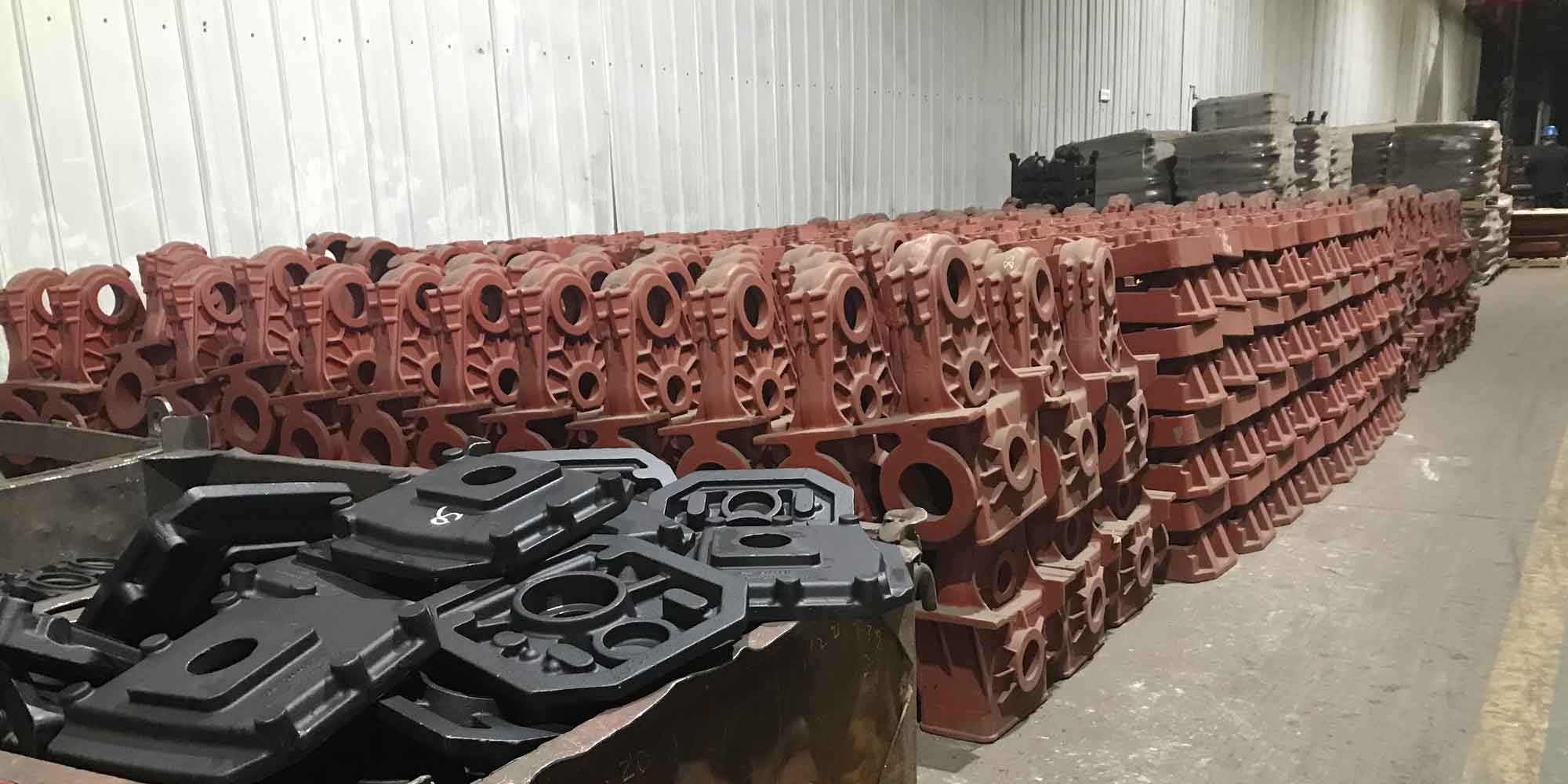
The production of large steel castings, typically defined as individual castings with a rough weight exceeding 5 tons, serves as a critical foundation for major national industries. These components are essential for the manufacturing of heavy-duty equipment in power generation, transportation, petrochemicals, and defense sectors. The quality and reliability of these large steel castings directly impact the performance and safety of entire systems, making their manufacturing capability a significant indicator of a nation’s heavy industrial development. In recent years, to meet escalating domestic and international demand, Chinese foundries have undertaken substantial investments in facility upgrades, with a particular focus on advancing molding and core-making technologies. The selection of the appropriate molding process is paramount, as it profoundly influences final product quality, production efficiency, operational costs, and environmental footprint. The evolution from traditional methods to modern binder systems represents a central theme in the ongoing technological advancement within China’s heavy steel casting industry.
The primary molding processes employed for large steel castings in China can be broadly categorized into silicate-based systems and synthetic resin systems. Silicate systems, primarily based on sodium silicate (water glass), include CO2-hardening, ester-hardened, and heat-hardened variants. The dominant resin systems are self-setting furan resin sand and alkaline phenolic resin sand. Each technology presents a distinct set of characteristics, advantages, and challenges, leading to varied adoption across different enterprises based on their specific product mix, quality requirements, and cost structures.
Performance Characteristics: A Comparative Analysis
The fundamental properties of the sand mixtures directly dictate their suitability for producing large steel castings. The following table provides a consolidated comparison of the key attributes, advantages, and limitations associated with sodium silicate sand and synthetic resin sand systems.
| Category | Sodium Silicate Sand | Synthetic Resin Sand |
|---|---|---|
| Primary Composition | Base sand, Sodium Silicate binder, Hardener (CO2 or ester). | Base sand, Synthetic Resin binder (Furan or Alkaline Phenolic), Catalyst. |
| Key Advantages |
|
|
| Key Limitations |
|
|
| Typical Application Focus | Steel castings with high hot-tearing sensitivity, complex thin sections, lower-margin products like pump and valve bodies. Where environmental odor is a primary concern. | High-value, precision steel castings where dimensional control and surface finish are critical. Products with lower hot-tearing sensitivity or where techniques to mitigate it are established. |
The inherent limitations of traditional CO2-sodium silicate sand, notably its dismal collapsibility and the consequential difficulties in shakeout and cleaning, historically presented major bottlenecks. This led many foundries to explore synthetic resin systems. However, the initial adoption of furan resin sand for steel castings revealed its own set of challenges, particularly a pronounced tendency to induce hot cracks in steel castings due to its high hot strength and limited thermal deformation capability. While process adjustments could mitigate this, the problem often persisted inconsistently, causing some foundries to revert to silicate systems. The subsequent introduction of alkaline phenolic resin sand, with its improved high-temperature plasticity, offered a promising alternative for crack-prone steel castings, albeit at a higher cost and with more demanding reclamation requirements.
Process Characteristics and Selection for Large Steel Castings
The production of large steel castings possesses distinct characteristics that heavily influence molding technology selection. Compared to iron, molten steel has poorer fluidity, is more prone to oxidation, and experiences greater total shrinkage (liquid, solidification, and linear). This is especially true for alloy steels containing elements like Cr, Mo, and V. Consequently, large steel castings often require higher pouring temperatures and faster filling rates to ensure sound filling and avoid defects like cold shuts and excessive surface oxide layers. This operational requirement directly impacts mold material selection. It is common practice to use highly refractory chromite or zircon sand for the mold facing (the sand in direct contact with the molten steel) backed by less expensive silica sand. This composite approach provides the necessary thermal resistance at the metal interface while managing overall costs for the large sand mass required for a major steel casting.
The shift towards resin-bonded sands in China’s heavy casting sector is driven by multiple factors beyond just casting quality. Increasingly stringent national environmental regulations have made the disposal of thousands of tons of waste foundry sand economically and ecologically unsustainable. Resin sand systems, particularly furan, offer significantly higher sand reclamation rates (often >90%), enabling a near-closed-loop production system that minimizes solid waste. While the initial binder cost is higher, the reduced new sand consumption, lower cleaning and finishing labor, and decreased waste disposal costs contribute to a favorable total cost-of-ownership for many operations. The superior dimensional accuracy also reduces machining allowances, saving metal and machining time for these massive steel castings.
The choice among the three modern contenders—ester-hardened silicate sand, furan resin sand, and alkaline phenolic resin sand—is not universal. It involves a careful trade-off analysis based on product portfolio. Furan resin sand is renowned for its operational simplicity, excellent strength, and the best sand reclamation economics. Alkaline phenolic resin sand is specifically valued for producing crack-sensitive steel castings, such as complex thin-walled valve bodies and stainless steel components, due to its “soft” behavior at high temperatures. Ester-hardened sodium silicate sand offers a middle ground with lower binder cost and better environmental friendliness during production than furan, but continues to grapple with challenges in consistent high-efficiency sand reclamation and reliable collapsibility for very heavy sections.
Industrial Application Scenarios and Practical Insights
The practical application of these technologies across China’s heavy industry landscape offers valuable insights. Several major enterprises have undertaken significant technological transformations, each selecting a path aligned with their core products.
Case A: Shift to Ester-Hardened Silicate Sand
One major heavy machinery manufacturer, historically reliant on CO2-silicate sand, transitioned to ester-hardened silicate sand for its super-large steel casting production (e.g., castings weighing over 400 tons). The drivers were the need for improved environmental performance over the old system and better sand properties. The change yielded measurable benefits: enhanced dimensional accuracy and surface quality of the steel castings, and a significant reduction in cleaning labor due to better collapsibility compared to the traditional method. While sand reclamation remains more challenging than with resin systems, the use of thermal reclamation has allowed a sand reuse rate of around 70%, substantially reducing new sand consumption and waste. The overall economic assessment for this plant favored ester-silicate sand, considering the lower binder cost and reduced downstream finishing costs for their specific range of massive steel castings.
Case B: Commitment to Furan Resin Sand
A specialized large steel casting facility, established with a focus on high-value components for the power generation industry, adopted furan resin sand from its inception. This decision was based on extensive international benchmarking, where furan resin is the dominant process for such steel castings. Their production experience confirms key advantages: exceptional dimensional stability, superb surface finish on steel castings, and efficient, mechanized sand reclamation achieving over 90% reuse. The plant has successfully produced complex, high-integrity steel castings up to 150 tons. To manage the hot-tearing tendency inherent with furan resins, they employ meticulous process engineering including optimized gating and risering, the use of ceramic exothermic toppings, and controlled mold cooling. Their success demonstrates that with sophisticated process control, the drawbacks of furan resin can be effectively managed for a wide range of large steel castings.
Case C: Pioneering Alkaline Phenolic Resin Sand
Another leading national heavy machinery group pioneered the large-scale adoption of alkaline phenolic resin sand for critical steel castings like turbine cylinders and hydroelectric turbine components (runners, crowns). This technology was selected specifically to address the hot crack susceptibility in these large, often alloyed, steel castings. The “soft” molding wall behavior at high temperature is crucial for producing these sound, defect-critical components. The company has successfully cast stainless steel hydro turbine parts exceeding 80 tons in weight and massive rolling mill housings. While acknowledging the higher resin addition levels (typically 1.6-1.8%) and the more complex reclamation process compared to furan, the plant considers the superior quality and reliability for their flagship products to justify the investment. This case highlights the technology’s role in enabling the domestic production of the most demanding large steel castings.
Technical and Economic Analysis: A Cost Model Perspective
A critical factor in process selection is the comprehensive cost analysis. A simplified comparative model for binder system cost per ton of molding sand can be illuminating. The following parameters and formula provide a framework. Note: This model focuses on direct binder and new sand costs. It excludes capital depreciation, energy, labor, cleaning costs, and scrap rates, which can vary significantly by plant and product.
Model Parameters:
- \( C_b \): Unit cost of binder (RMB/ton).
- \( C_c \): Unit cost of catalyst (RMB/ton).
- \( C_n \): Unit cost of new sand (RMB/ton). Assume \( C_n = 300 \).
- \( A_b \): Binder addition ratio (%).
- \( A_c \): Catalyst addition ratio, expressed as a percentage of binder weight (%).
- \( R_r \): Sand reclamation/reuse rate (%). The new sand consumption rate is \( (1 – R_r) \).
The total direct cost per ton of sand (\( TC \)) can be estimated as:
$$ TC = (A_b \times C_b) + (A_b \times \frac{A_c}{100} \times C_c) + ((1 – R_r) \times C_n) $$
Applying the Model with Typical Industry Data:
| Cost Component | Furan Resin Sand | Ester-Hardened Silicate Sand | Alkaline Phenolic Resin Sand |
|---|---|---|---|
| Binder Cost (\(A_b \times C_b\)) | 1.0% × 12,000 = 120 RMB | 3.0% × 1,200 = 36 RMB | 1.8% × 11,000 = 198 RMB |
| Catalyst Cost (\(A_b \times \frac{A_c}{100} \times C_c\)) | 1.0% × (40/100) × 4,000 = 16 RMB | 3.0% × (13/100) × 17,000 ≈ 66 RMB | 1.8% × (25/100) × 17,000 ≈ 77 RMB |
| Subtotal (Binder System) | 136 RMB | 102 RMB | 275 RMB |
| New Sand Cost (\( (1 – R_r) \times C_n \)) | (1 – 0.90) × 300 = 30 RMB | (1 – 0.70) × 300 = 90 RMB | (1 – 0.70) × 300 = 90 RMB |
| Estimated Total Direct Cost (TC) | 166 RMB | 192 RMB | 365 RMB |
| Additional Note | + Thermal Reclamation Energy Cost (~22 RMB) |
This model clearly illustrates the trade-offs: Alkaline phenolic resin sand has the highest direct binder cost. Furan resin sand shows a competitive total due to its excellent reclamation rate minimizing new sand expense. Ester-hardened silicate sand has low binder cost but is burdened by higher new sand consumption and, if thermal reclamation is used, added energy cost. This direct cost analysis must then be integrated with the previously discussed factors of final steel casting quality (scrap/rework rates), cleaning efficiency, environmental compliance costs, and the specific technical requirements of the steel castings being produced to arrive at a truly optimal decision for a given foundry.
Conclusion and Future Trajectory
The landscape of molding technology for large steel castings in China is characterized by a coexistence of multiple advanced binder systems, each holding a significant market share based on historical development and product specialization. Ester-hardened sodium silicate sand, furan resin sand, and alkaline phenolic resin sand have all proven capable of producing massive, high-tonnage steel castings successfully.
However, the overarching industrial trend clearly points towards the growing dominance of resin sand processes, particularly in facilities focused on high-precision, high-value-added, and export-oriented steel castings. This shift is propelled by the synergistic drivers of superior final product quality (dimensional accuracy and surface finish), the economic and environmental imperative of high-rate sand reclamation, and the overall improvements in production efficiency. The choice between furan and alkaline phenolic resin often hinges on the specific hot-tearing susceptibility of the steel casting geometries being manufactured, with alkaline phenolic providing a technical solution for more crack-prone designs at a higher operational cost.
Ultimately, the selection of a molding process for large steel castings is a strategic decision that requires a holistic evaluation. Foundries must conduct a detailed analysis weighing direct and indirect costs, the specific quality and performance demands of their steel casting products, the capital investment required for sand preparation and reclamation equipment, and increasingly stringent environmental regulations. The experiences of leading Chinese enterprises demonstrate that there is no single “best” technology, but rather an optimal technology for a given product mix and operational context. The continued evolution of binder chemistries, reclamation technologies, and process control systems will further refine the capabilities and economics of producing these critical large steel castings in the years to come.