
In my extensive experience within the steel casting industry, resin sand molding has emerged as a relatively advanced and widely adopted process for producing high-quality large steel castings. The operational aspects during sand usage directly impact the surface quality of steel castings and indirectly influence the costs associated with post-casting repair processes such as welding. Proper operational methodologies can significantly enhance the surface integrity of steel castings, thereby ensuring overall product quality and stabilizing quality requirements throughout the steel casting production cycle. This article delves into the intricacies of sand selection, application techniques, and anti-sanding measures, with a focus on optimizing steel casting outcomes.
The foundation of any successful steel casting operation lies in the meticulous selection and handling of molding sands. In steel casting, sands are broadly categorized into face sand and backing sand, each serving distinct functions based on material composition and performance characteristics. Face sand, primarily composed of chromite sand, is mixed with liquid binders and applied directly to the mold surface. It is designed to withstand high temperatures, provide excellent hardness upon curing, and offer thermal insulation properties. Due to the high cost of chromite sand, it is typically used only in areas that come into direct contact with molten steel during steel casting processes. The thickness of face sand is usually controlled between 50 mm to 70 mm, with a higher proportion of liquid binders to ensure surface hardening strength.
Backing sand, on the other hand, is made from silica sand mixed with liquid binders. It is used to fill the space behind the face sand and within the flask, providing structural support and additional insulation. Backing sand has a high recyclability rate and is more cost-effective compared to face sand. The amount of liquid binder used in backing sand is lower than in face sand, as it only requires sufficient strength for support. Recycled sands, known as regenerated chromite sand and regenerated silica sand, are commonly used in steel casting production to maintain sustainability and cost efficiency. To compensate for the loss of properties and strength during the regeneration process, new sand is added—typically 5% for regenerated silica sand and 20% for regenerated chromite sand. This practice stabilizes sand quality and ensures consistent steel casting results.
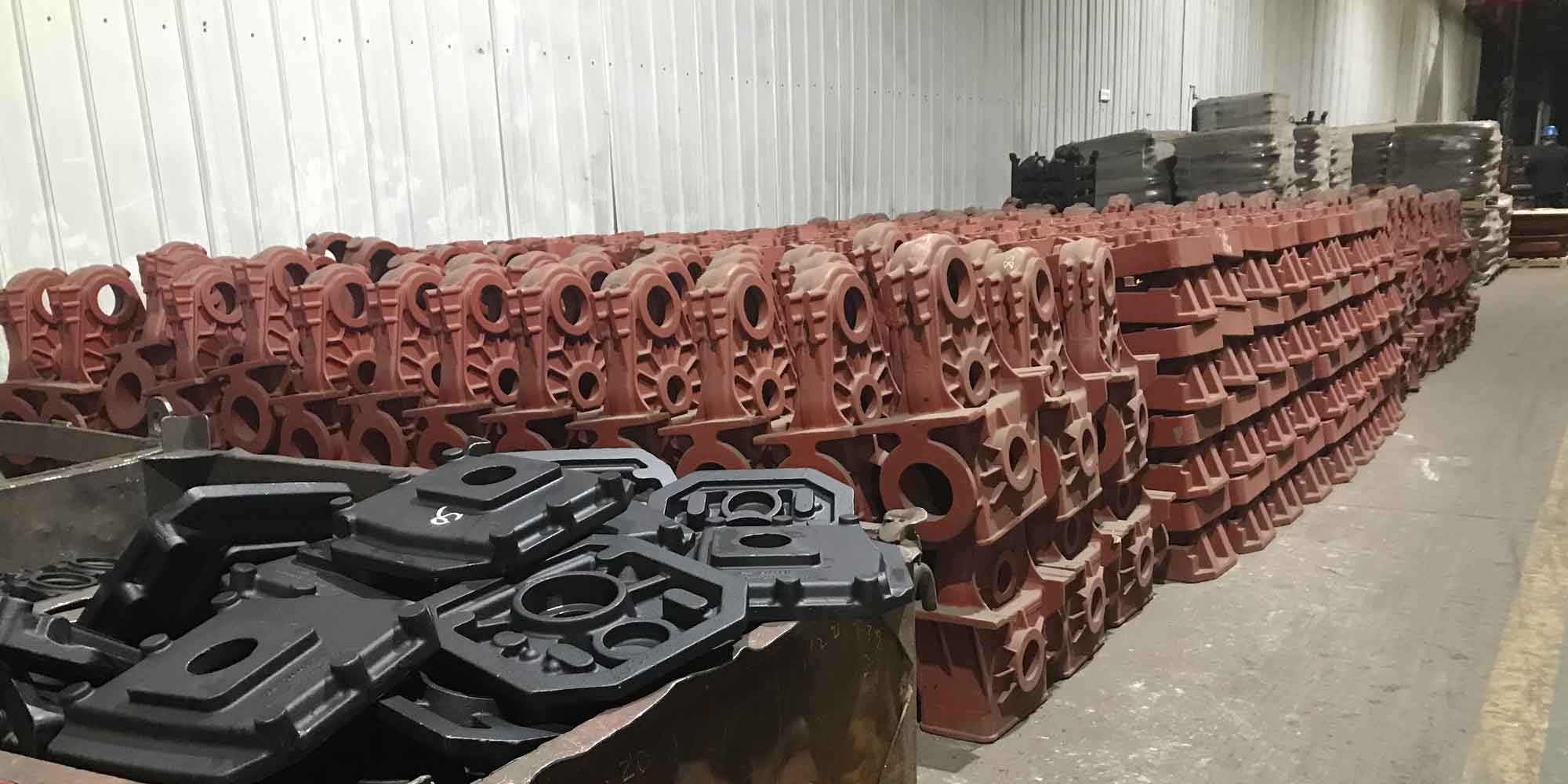
To better understand the differences between face sand and backing sand in steel casting, the following table summarizes their key properties and applications:
| Sand Type | Primary Material | Binder Content | Thickness Range | Key Functions | Recyclability | Typical Use in Steel Casting |
|---|---|---|---|---|---|---|
| Face Sand | Chromite Sand | High | 50–70 mm | High strength, heat resistance, insulation | Moderate (with new sand addition) | Direct contact with molten steel |
| Backing Sand | Silica Sand | Low to Moderate | Variable (filling space) | Support, insulation, cost-efficiency | High (with new sand addition) | Structural backing and flask filling |
The operational methodology for applying molding sand is critical in steel casting production. The process involves covering the mold surface with sand, allowing it to harden, and then removing the mold to form a usable sand core. For semi-finished sand cores, strict requirements are imposed on sand strength and surface quality. Therefore, sand application must adhere to standardized procedures. Since face sand directly contacts molten steel in steel casting, its strength and surface quality are paramount. Proper techniques minimize defects such as sand adhesion (burn-on or penetration) in the final steel casting, reducing subsequent repair costs and ensuring timely delivery. Below are the key operational steps and control points for face sand application in steel casting:
- Thickness Control: The face sand thickness must be maintained between 50 mm and 70 mm to ensure adequate thermal resistance and strength in steel casting.
- Compaction Density: The compactness of face sand should exceed 88 HR (measured using a dry hardness tester). This parameter is crucial for preventing voids and ensuring uniform strength in steel casting molds.
- Compaction Techniques: Compaction primarily relies on manual patting by operators using their hands. For areas inaccessible to hands, specialized compaction tools are employed. The goal is to achieve uniform density throughout the face sand layer in steel casting molds.
- Sand Flow Management: During sand application, avoid directing sand flow directly onto the mold surface to prevent damage and adhesion issues. Instead, apply sand gently and spread it evenly.
- Incremental Application and Compaction: Apply sand in small amounts and compact frequently to ensure all areas are thoroughly compacted. This “less flow, more compaction” approach prevents weak spots or virtual pits that could lead to sand adhesion defects in steel castings.
These operational guidelines are designed to control the surface quality of steel castings, ultimately reducing rework costs and ensuring production schedules. In large steel casting production, compaction remains a manual skill-dependent process, as automation is not yet fully feasible. The operator’s expertise directly influences the quality of the final steel casting. While the above methods are applicable to general steel castings, complex geometries and high-alloy steel castings require additional measures due to their unique challenges. High-alloy steel castings often involve higher pouring temperatures and more alloying elements, leading to severe sand adhesion issues. Based on my experience in steel casting, the following anti-sanding measures have proven effective for high-alloy steel castings:
- Increased Face Sand Thickness: For high-alloy steel castings, increase the face sand thickness from 50–70 mm to 100–200 mm to enhance high-temperature resistance.
- Use of Chills and Inserts: Place chills or insulating materials in areas prone to sand adhesion during compaction. These accelerate cooling and solidification, reducing the risk of sand penetration in steel castings.
- Vent Ropes: Incorporate vent ropes during sand application to facilitate the rapid expulsion of combustible gases from the sand, thereby lowering sand temperature and minimizing adhesion in steel casting.
- Enhanced Coating Application: For localized areas susceptible to sand adhesion, apply multiple coats of refractory paint to achieve a coating thickness of 1 mm to 1.5 mm. This improves thermal resistance and prevents metal penetration in steel castings.
To quantify the relationship between compaction density and sand strength in steel casting, we can use empirical formulas. For instance, the compactness (C) measured in HR units correlates with the compressive strength (σ) of the sand mold. A simplified linear model can be expressed as:
$$ \sigma = k \cdot C + b $$
where σ is the compressive strength (in MPa), C is the compactness (in HR), and k and b are material-specific constants derived from experimental data in steel casting. For typical chromite-based face sands used in steel casting, k may range from 0.05 to 0.1 MPa/HR, and b from 0.5 to 1 MPa, depending on binder composition and sand grain size.
Furthermore, the thermal conductivity (λ) of the sand mix plays a vital role in preventing sand adhesion in steel casting. The effective thermal conductivity can be estimated using a mixture rule:
$$ \lambda_{\text{eff}} = \phi_{\text{sand}} \lambda_{\text{sand}} + \phi_{\text{binder}} \lambda_{\text{binder}} + \phi_{\text{air}} \lambda_{\text{air}} $$
where φ represents the volume fraction of each component, and λ denotes their respective thermal conductivities. In steel casting, optimizing λ_eff helps manage heat transfer, reducing the likelihood of sand fusion. For high-alloy steel castings, where pouring temperatures exceed 1600°C, face sand with low thermal conductivity (e.g., chromite sand with λ ≈ 1–2 W/m·K) is preferred to insulate the mold.
Another critical aspect in steel casting is the control of sand reclamation. The addition of new sand to regenerated sands can be modeled to maintain consistent properties. Let R be the regeneration efficiency (percentage of sand recovered), and let N be the percentage of new sand added. The effective property P of the mixed sand can be expressed as:
$$ P = R \cdot P_{\text{reg}} + N \cdot P_{\text{new}} $$
where P_reg and P_new are the properties of regenerated and new sand, respectively. For steel casting, properties such as grain size distribution, acid demand value, and loss on ignition are monitored. The table below provides typical values for these parameters in steel casting sands:
| Parameter | Face Sand (Chromite) | Backing Sand (Silica) | Regenerated Sand | Target for Steel Casting |
|---|---|---|---|---|
| Grain Size (AFS) | 50–70 | 40–60 | 45–65 | Uniform distribution |
| Acid Demand Value (ml) | 5–10 | 2–5 | 3–8 | < 10 |
| Loss on Ignition (%) | 1.5–3.0 | 0.5–1.5 | 1.0–2.5 | < 3.0 |
| Compressive Strength (MPa) | 1.5–2.5 | 0.8–1.5 | 1.0–2.0 | > 1.0 |
In steel casting, sand adhesion is a relatively controllable defect, but it can occur due to factors such as casting geometry, thermal gradients, and sand properties. By adjusting resin and hardener ratios, along with new sand addition rates, we can achieve a stable sand system that effectively reduces sand adhesion. This improves the surface finish of steel castings, decreases cleaning workload, and indirectly enhances overall quality. For instance, the incidence of sand adhesion defects in steel castings can be reduced by up to 50% through optimized sand management, as observed in production trials.
To further elaborate on compaction techniques in steel casting, consider the energy input during manual patting. The work done (W) per unit area during compaction can be approximated by:
$$ W = \int F \, dx \approx F_{\text{avg}} \cdot d $$
where F_avg is the average force applied by the operator, and d is the displacement of the sand layer. In steel casting, ensuring consistent W across the mold surface is key to uniform density. Training programs for operators often emphasize maintaining a force of 50–100 N per pat, with a displacement of 5–10 mm, depending on sand type.
For high-alloy steel castings, additional mathematical models can be applied to predict sand adhesion risk. The Niyama criterion, commonly used for shrinkage porosity, can be adapted to assess sand penetration in steel casting. The modified criterion (N_s) for sand adhesion is:
$$ N_s = \frac{G}{\sqrt{T}} $$
where G is the temperature gradient (in K/mm) and T is the solidification time (in s). Lower N_s values indicate a higher risk of sand adhesion in steel castings. By simulating casting processes, we can identify critical zones and implement preventive measures, such as increased sand thickness or chills.
In conclusion, the quality of steel castings is profoundly influenced by sand molding practices. Through careful selection of face and backing sands, rigorous compaction methods, and tailored anti-sanding strategies for high-alloy grades, manufacturers can achieve superior surface quality and dimensional accuracy in steel castings. The integration of empirical formulas, material property tables, and operational protocols forms a comprehensive framework for excellence in steel casting production. As the industry evolves, continuous improvement in sand technology and operator training will further enhance the reliability and efficiency of steel casting processes, ensuring that steel castings meet the ever-increasing demands of modern engineering applications.
Finally, it is worth noting that sustainability in steel casting is gaining prominence. Sand reclamation not only reduces costs but also minimizes environmental impact. By optimizing regeneration cycles and new sand additions, steel casting foundries can maintain a closed-loop system that conserves resources. Future research may focus on developing advanced binders and sands with even better thermal and mechanical properties, further pushing the boundaries of what is possible in steel casting. The journey toward perfecting steel casting is ongoing, and each innovation brings us closer to flawless, high-performance components for critical industries.