
In my extensive experience within the foundry industry, the production of thick and large steel castings presents significant challenges, particularly regarding defect formation. Among these, porosity defects are a pervasive issue that can severely compromise the mechanical integrity, service life, and safety of critical components used in machinery, chemical plants, and energy sectors. This article, drawn from firsthand practical involvement, delves into a comprehensive analysis of porosity defects in such steel castings and outlines effective preventive strategies. The focus will remain steadfast on the intricacies of steel casting processes, and I will employ tables and mathematical formulations to encapsulate key data and theoretical principles. The keyword ‘steel casting’ will be frequently reiterated to emphasize the core subject matter.
The fundamental process of steel casting involves pouring molten steel into a mold cavity to form a desired shape upon solidification. For heavy-section steel castings, the prolonged solidification time and complex thermal gradients create an environment ripe for defect formation. Porosity, specifically, refers to the presence of gas pockets or voids within the cast structure. These can be subsurface or surface-breaking, often appearing as smooth-walled cavities. The economic and operational repercussions of scrapping or repairing large steel castings due to porosity are substantial, driving the need for deep process understanding and control.
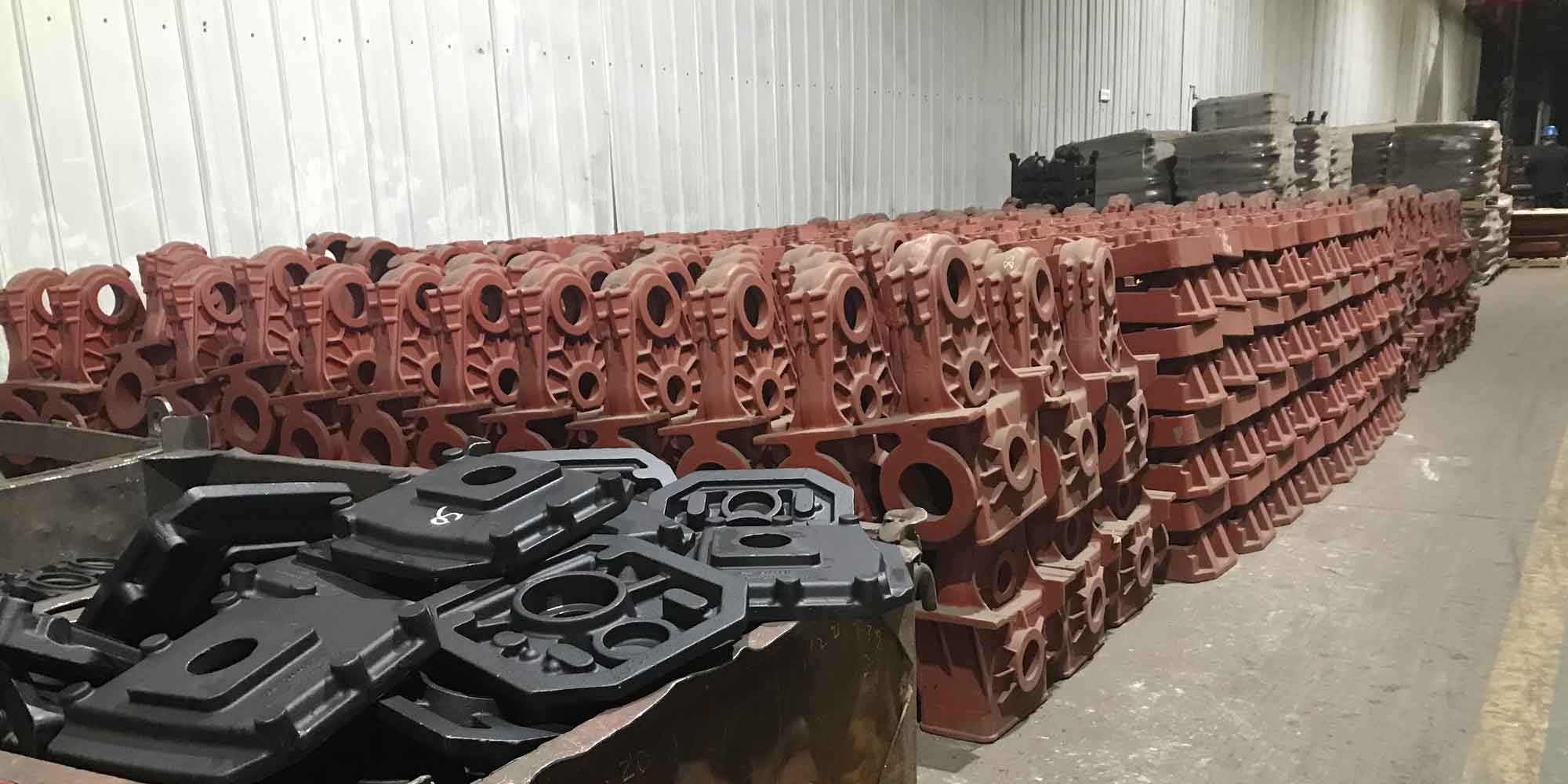
I recall a specific project involving two types of cylindrical steel castings, both with a nominal weight exceeding 4.8 tonnes. The primary material specification was ZG40CrNiMoA, a high-strength, high-toughness alloy steel commonly selected for demanding applications. The initial casting process utilized a furan resin sand molding system with a bottom-gating design. Despite adherence to standard procedures, post-casting inspection revealed dense clusters of porosity on the external surfaces, particularly near the riser regions. The defects were characterized by smooth, oxidized walls and penetrated approximately 20 mm into the casting body, with planar dimensions ranging from 80 to 150 mm. This immediate visual evidence pointed towards a significant process-systemic flaw rather than an isolated incident.
A macro-analysis of these defects indicated they were primarily invasive blowholes. This type of porosity in steel castings originates from gases generated within the mold or core that fail to escape before the metal surface solidifies (forms a skin). In thick steel castings, the extended solidification time of the surface layer means the molten metal remains in a liquid or semi-solid state for longer, allowing gas pressure from the mold to potentially deform the still-soft metal surface. Once the casting fully cools, these deformed regions solidify as permanent cavities. The location near the riser was a key clue, as this area often experiences different thermal and pressure dynamics compared to other parts of the steel casting.
To understand the root cause, a micro-analysis of the gas-generation mechanism is essential. The use of furan resin-bonded sand is common in steel casting for its excellent dimensional accuracy and shakeout properties. However, during the pouring of high-temperature steel, the resin and its catalyst undergo intense thermal decomposition and combustion. The series of chemical reactions at the mold-metal interface are primary sources of gas. Let’s formalize these reactions, which are critical for any engineer working with resin-sand steel casting processes.
The complete and incomplete combustion of carbonaceous materials from the resin can be represented as:
$$ \text{C} + \text{O}_2 \rightarrow \text{CO}_2 $$
$$ 2\text{C} + \text{O}_2 \rightarrow 2\text{CO} \quad \text{(under oxygen-deficient conditions)} $$
The subsequent oxidation of carbon monoxide proceeds as:
$$ 2\text{CO} + \text{O}_2 \rightarrow 2\text{CO}_2 $$
Furthermore, the decomposition of organic compounds in the binder and the sulfonic acid catalyst releases additional gases such as hydrogen ($\text{H}_2$), sulfur dioxide ($\text{SO}_2$), and water vapor ($\text{H}_2\text{O}$). These can be summarized by representative equations:
$$ \text{R–SO}_3\text{H} \xrightarrow{\Delta} \text{CO} + \text{SO}_2 + \text{H}_2\text{O} $$
$$ \text{CH}_4 \rightarrow \text{C} + 2\text{H}_2 $$
$$ \text{C}_n\text{H}_{2n+2} \rightarrow n\text{C} + (n+1)\text{H}_2 $$
$$ 2\text{H}_2 + \text{O}_2 \rightarrow 2\text{H}_2\text{O} $$
$$ \text{S} + \text{O}_2 \rightarrow \text{SO}_2 $$
The total gas volume $V_{gas}$ generated per unit volume of sand can be conceptually modeled as a function of temperature $T$ and resin content $c_r$:
$$ V_{gas} = k \int_{T_{pour}}^{T_{max}} f(c_r, T) \, dT $$
where $k$ is a proportionality constant related to sand permeability, and $f(c_r, T)$ describes the rate of gas generation. In a poorly vented mold for a heavy steel casting, the local gas pressure $P_{gas}$ may exceed the metallostatic pressure $P_{metal}$ at the interface, leading to gas invasion. This can be expressed as:
$$ P_{gas} = \frac{nRT}{V} > P_{metal} = \rho g h $$
Here, $n$ is moles of gas, $R$ is the gas constant, $T$ is temperature, $V$ is the local void volume, $\rho$ is steel density, $g$ is gravity, and $h$ is the height of the metal head above the point of invasion. When this inequality holds, porosity forms.
The chemical composition of the steel itself also plays a role in gas solubility. For the ZG40CrNiMoA steel casting alloy, the standard composition range is provided in Table 1. Elements like hydrogen and nitrogen have varying solubility in liquid versus solid steel; during solidification, these gases can precipitate and contribute to micro-porosity if not properly managed during melting.
| Element | C | Si | Mn | P | S | Cr | Ni | Mo | Cu |
|---|---|---|---|---|---|---|---|---|---|
| Min | 0.35 | 0.20 | 0.50 | – | – | 0.60 | 1.20 | 0.15 | – |
| Max | 0.42 | 0.40 | 0.80 | 0.030 | 0.025 | 0.90 | 1.50 | 0.25 | 0.25 |
Based on this analysis, the problem in our steel casting trial was multi-faceted: excessive gas generation from the resin sand in thick sections, inadequate mold venting to allow gas escape, and possibly secondary contributions from dissolved gases in the steel melt. The solution required a holistic approach targeting both the molding and melting stages of the steel casting process.
The preventive measures I implemented and refined can be categorized into molding process optimization and melting process enhancement. Table 2 summarizes the core interventions and their intended physical/chemical effects.
| Measure Category | Specific Action | Primary Mechanism | Key Parameter Change |
|---|---|---|---|
| Molding Process Optimization | Change from bottom gating to stepped gating with a top feeder feed. | Reduces dynamic pressure at base, promotes directional solidification towards riser, introduces hot metal to riser. | Gating ratio adjusted; added ingate at ~150mm below riser top. |
| Addition of external chills on the cylindrical outer surface. | Increases local cooling rate, hastens surface solidification (skin formation), reduces time window for gas invasion. | Chill thickness: 200mm; Sand cushion: 40mm. | |
| Replacement of solid “bun” core with a vented through-core. | Provides a dedicated escape path for gases generated inside the core cavity. | Central vent hole diameter: ~20mm. | |
| Melting Process Enhancement | Arc furnace refining coupled with ladle argon bubbling. | Reduces dissolved gas content (H₂, N₂) and non-metallic inclusions in the liquid steel. | Argon bubbling time ≥ 3 minutes post-tap. |
Let’s elaborate on the molding optimizations. The original bottom-gating system, while simple, creates high metallostatic pressure at the base of the steel casting, which can force metal into mold irregularities and compress gases, potentially trapping them. By shifting to a stepped gating system, the metal is introduced at multiple heights. The critical modification was adding an ingate directed into the riser’s hot spot. This serves a dual purpose: it lowers the effective pressure head at the mold bottom and delivers the hottest metal from the ladle directly to the riser, maintaining its thermal efficacy as a sink for feeding and for gas bubble floatation. The thermal gradient $\frac{dT}{dx}$ is improved, favoring sound solidification.
The application of external chills is a calculated method to manipulate the solidification profile. For a steel casting with a section thickness $D$, the solidification time $t_s$ according to Chvorinov’s rule is proportional to the square of the volume-to-surface area ratio:
$$ t_s = k_s \left( \frac{V}{A} \right)^2 $$
By attaching a high-conductivity chill (e.g., steel or copper), we effectively increase the local surface area $A$ for heat extraction and modify the constant $k_s$ for that region. This drastically reduces $t_s$ for the chilled surface, causing it to solidify quickly and form an impenetrable barrier to mold gases. The chill design must balance rapid extraction against causing thermal stresses; a thickness of 200mm was found sufficient for this specific steel casting geometry.
The core venting is a straightforward but vital step. Darcy’s law for gas flow through a porous medium illustrates the importance of providing a low-resistance path:
$$ Q = \frac{-k A}{\mu} \frac{dP}{dx} $$
where $Q$ is the volumetric flow rate, $k$ is the permeability of the sand, $A$ is the cross-sectional area, $\mu$ is the gas viscosity, and $\frac{dP}{dx}$ is the pressure gradient. By drilling a vent hole, we significantly increase the effective permeability $k$ for that path, allowing gases from the core’s interior to escape directly to the atmosphere rather than migrating towards the solidifying steel casting interface.
On the melting front, the goal is to supply the cleanest possible liquid metal for the steel casting operation. The arc furnace process allows for effective oxidation and slagging off of impurities. However, dissolved gases, particularly hydrogen, are a persistent threat. Hydrogen solubility in liquid steel $S_{H}$ is much higher than in solid steel, described by Sieverts’ law:
$$ S_{H} = K_{H} \sqrt{P_{H_2}} $$
where $K_{H}$ is the temperature-dependent equilibrium constant, and $P_{H_2}$ is the partial pressure of hydrogen at the metal surface. During solidification, the excess hydrogen precipitates, potentially forming pin-hole porosity. Argon bubbling via a porous plug in the ladle is an effective degassing technique. The argon bubbles ($\text{Ar}$) act as scavengers. As they rise through the melt, dissolved gases like hydrogen diffuse into the bubbles due to the negligible partial pressure of those gases inside the argon bubble. The process can be modeled by mass transfer equations. The reduction in hydrogen content $[H]$ over time $t$ with bubbling can be approximated by:
$$ \frac{d[H]}{dt} = -K_{L} a \left( [H] – [H]_{eq} \right) $$
where $K_{L}$ is the mass transfer coefficient, $a$ is the specific interfacial area between argon and steel, and $[H]_{eq}$ is the equilibrium concentration (near zero for argon purging). A bubbling time of over three minutes was established as a process standard for these heavy steel castings to ensure sufficient degassing.
The synergy of these measures was put to the test in subsequent production runs. I oversaw the casting of components using the revised methodology. The results were markedly different. The steel castings produced exhibited clean, sound surfaces upon shakeout. No visible porosity clusters were observed in the previously problematic zones. After standard heat treatment and machining, the final components required no weld repair or remediation for gas-related defects. The internal quality, verified through non-destructive testing, was also satisfactory. This successful outcome validated the systematic approach to porosity prevention in heavy-section steel casting.
To provide a more quantitative framework for process control, Table 3 outlines key monitored parameters and their target values for producing sound, heavy steel castings using the optimized furan resin sand process.
| Process Stage | Parameter | Target Value / Condition | Rationale |
|---|---|---|---|
| Mold Making | Resin & Catalyst Addition Level | 1.0-1.2% resin, 30-40% catalyst (of resin weight) | Minimize gas generation while maintaining adequate strength. |
| Mold Making | Sand Permeability | >120 AFS (American Foundry Society units) | Ensure inherent mold venting capacity. |
| Mold Making | Coating Thickness (Alcohol-based) | 1.5 – 2.0 mm minimum | Provide a refractory barrier, reduce metal-mold interaction. |
| Gating Design | Effective Gating Ratio (Sprue:Runners:Ingates) | 1.0 : 1.2 : 1.5 (approximate, system dependent) | Control fill velocity, minimize turbulence and air entrainment. |
| Chill Design | Chill Factor (Chill Surface Area / Casting Surface Area) | 0.2 – 0.4 for critical thick sections | Achieve desired local solidification rate modification. |
| Melting & Pouring | Pouring Temperature | Liquidus + 40-70°C (material dependent) | Avoid excessive superheat (more gas solution) or premature freezing. |
| Melting & Pouring | Ladle Argon Bubbling Time | ≥ 180 seconds post-refining | Ensure effective reduction of dissolved hydrogen and nitrogen. |
| Melting & Pouring | Final Hydrogen Content in Melt | < 2.5 ppm (parts per million) ideally | Minimize hydrogen-induced porosity risk. |
In conclusion, the battle against porosity in heavy steel castings is won through a comprehensive understanding of the underlying physics and chemistry. From my practical engagement, the integration of optimized gating to control fluid dynamics and thermal gradients, strategic use of chills to accelerate surface solidification, meticulous core venting, and rigorous melt degassing forms a robust defense system. Each heavy steel casting project may require slight adjustments, but the principles remain constant: manage gas generation from the mold, facilitate its escape, and minimize gas content in the steel melt. Continuous monitoring and adaptation of these parameters, as summarized in the tables and guided by the fundamental equations, are essential for consistently producing high-integrity, reliable steel castings for critical applications. The journey from defective to sound steel castings underscores the importance of a holistic, analytical approach in modern foundry practice.