
The manufacturing of large, heavy-section steel castings presents unique challenges in maintaining consistent and specified mechanical properties. While the chemical composition and standard heat treatment cycles are often designed to meet minimum strength and ductility requirements, certain failure modes can emerge unexpectedly, leading to a significant and unacceptable loss of plasticity. This phenomenon, often characterized by brittle fracture surfaces with distinctive morphological features, can compromise the integrity of critical components. I will explore in depth the root causes, underlying mechanisms, and effective solutions for such ductility failures, with a particular focus on the often-underestimated role of hydrogen. The term ‘steel casting’ will be central to our discussion, as the specific solidification and microstructure of a steel casting make it uniquely susceptible to certain embrittlement mechanisms compared to wrought products.
A classic case involves a large shell component produced from a standard-grade carbon steel casting, analogous to ZG230-450. Following a conventional normalization and tempering heat treatment, tensile specimens extracted from the actual casting body revealed a severe degradation in ductility. The strength properties satisfied the specifications, but the elongation and reduction of area were drastically lower than the required minima. The fracture surface of the broken tensile specimen was predominantly flat and exhibited minimal necking. Most strikingly, the gray metallic substrate was dotted with numerous bright, reflective “white spots” or flaky features. This macroscopic appearance is a hallmark of certain embrittlement phenomena and serves as the starting point for a rigorous failure analysis.
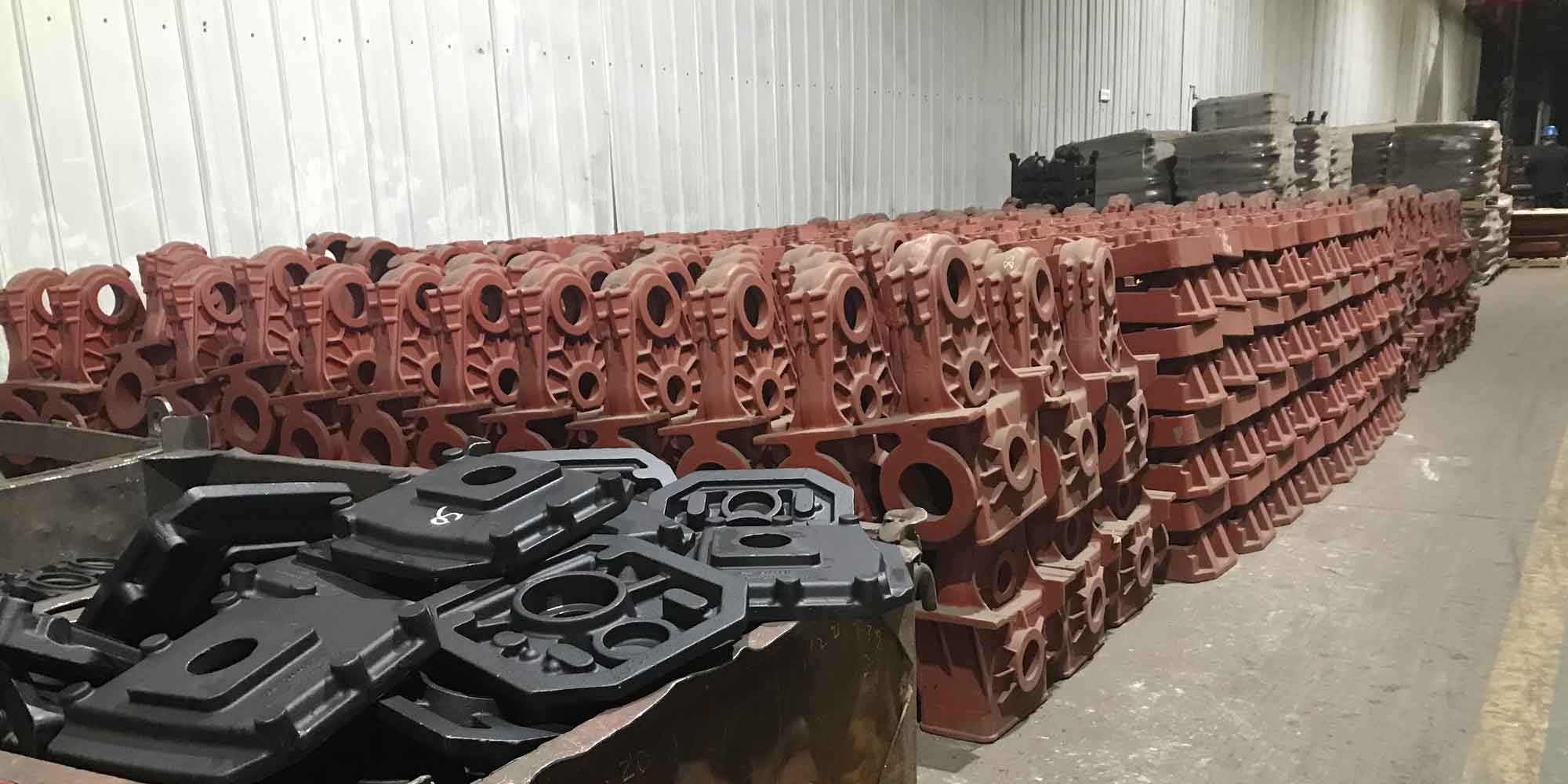
The production of a sound steel casting begins with meticulous control over every stage, from melt chemistry to final heat treatment. The presence of internal defects like shrinkage porosity or gas pockets, while often acceptable within certain limits for a steel casting, can become potent initiation sites for fracture when combined with embrittling agents. The challenge is particularly acute for large-section steel castings where solidification times are long, and the diffusion distance for harmful elements is significant.
Initial Investigation: Ruling Out Common Culprits
The first step in diagnosing the low ductility of the steel casting is to systematically eliminate the typical root causes through standard metallurgical examination.
Chemical Composition Analysis
Verification of the alloy composition is fundamental. The material must conform to the grade specification, with special attention to residual elements like phosphorus and sulfur, which are notorious for impairing toughness. Analysis via optical emission spectrometry confirmed the steel casting’s chemistry was well within the specified limits for a standard carbon casting grade, with impurity levels notably low.
| Element | C | Mn | Si | P | S | Cr+Ni+Mo |
|---|---|---|---|---|---|---|
| Specification Max | 0.30 | 0.90 | 0.60 | 0.035 | 0.035 | See Note |
| Analyzed Value | 0.24 | 0.28 | 0.30 | 0.005 | 0.001 | All < 0.1 |
Note: Combined residual elements were within acceptable limits. Composition was not the cause of failure.
Microstructural and Inclusion Assessment
The microstructure and cleanliness of the steel are critical for ductility. A sample from the fractured tensile specimen was examined.
Non-Metallic Inclusions: Microscopic examination at 100x magnification revealed a relatively clean steel casting. The inclusion content, rated according to standard charts, was low for all types (A, B, C, D). No excessive clusters of oxides, sulfides, or silicates were present that could account for the drastic loss in plasticity.
Grain Size and Matrix Structure: After etching, the prior-austenite grain structure was evaluated. The grain size was measured to be in the range of ASTM 4-5, which is typical and acceptable for a normalized steel casting. The matrix consisted of ferrite and pearlite, with some heterogeneity expected in a large casting but no overt pathological structures like excessive Widmanstätten patterns or massive grain boundary films.
The results from these initial tests were paradoxical: the steel casting had acceptable chemistry, reasonable cleanliness, and a fairly normal microstructure. Yet, its ductility was catastrophically low. This directs the investigation towards more subtle, often gaseous, contributors.
The Critical Role of Hydrogen in Steel Casting Embrittlement
Hydrogen is a pervasive and insidious element in ferrous metallurgy. Its small atomic radius allows it to diffuse readily within the iron lattice, leading to behaviors that are uniquely damaging, especially in large components like heavy steel castings.
Hydrogen Solubility and Trapping
Hydrogen solubility in iron is highly temperature-dependent. It is much more soluble in liquid iron than in solid iron. During the solidification of a steel casting, hydrogen in excess of the solid solubility limit is rejected at the solid-liquid front. The kinetics of this process can be described by simplified diffusion equations. Fick’s first law gives the flux of hydrogen, J:
$$ J = -D \frac{\partial C}{\partial x} $$
where $D$ is the diffusion coefficient for hydrogen in iron, $C$ is the hydrogen concentration, and $x$ is the distance. During cooling, the decreasing solubility forces hydrogen to seek locations where it can precipitate as molecular H₂ gas. These locations include:
- Interstitial sites in the lattice.
- Dislocations and grain boundaries.
- Interfaces around non-metallic inclusions.
- Pre-existing micro-voids, shrinkage porosity, and micro-shrinkage inherent to the steel casting process.
The last point is crucial for understanding hydrogen behavior in castings versus forgings. A steel casting possesses a network of micro-porosity and tiny cavities from solidification shrinkage. These act as “hydrogen traps.” At elevated temperatures, hydrogen atoms diffuse and accumulate in these voids. Upon cooling, they combine to form hydrogen molecules (H₂). The pressure inside these micro-voids, $P_{H_2}$, can be estimated using the ideal gas law, considering the volume of the void, $V$, the amount of hydrogen, $n$, and temperature, $T$:
$$ P_{H_2} = \frac{nRT}{V} $$
For a fixed amount of trapped hydrogen, as temperature decreases, the pressure would drop proportionally if the volume were constant. However, in a confined metal cavity, the volume is nearly constant, and the actual pressure is governed by the thermodynamics of hydrogen solution and recombination. The key is that this internal pressure can reach extremely high values, on the order of thousands of atmospheres, sufficient to initiate and propagate cracks.
Mechanisms of Hydrogen Embrittlement
Two primary theories explain how hydrogen leads to brittle fracture:
1. Hydrogen Pressure Theory: This theory directly applies to the observed “white spots.” As molecular hydrogen pressure builds within micro-voids in the steel casting, it generates immense internal tensile stresses. When these localized stresses, combined with an applied external stress (like during a tensile test), exceed the cohesive strength of the metal, a micro-crack initiates. The crack propagates by linking these high-pressure voids, creating the characteristic bright, faceted fracture appearance. The “white spot” is essentially an internal surface created by this hydrogen-induced cleavage or quasi-cleavage.
2. Hydrogen-Enhanced Decohesion (HEDE) Theory: This theory posits that dissolved hydrogen (atomic form) segregates to regions of high triaxial stress, such as crack tips or notch roots. The presence of hydrogen weakens the metallic bonds at the atomic level, reducing the energy required for cleavage. This makes the steel casting more susceptible to brittle fracture under lower applied stresses than it would be without hydrogen.
The actual failure in a large steel casting likely involves a combination of both mechanisms: pressure buildup provides the initiation sites, while dissolved hydrogen ahead of the crack tip facilitates propagation.
Quantifying the Hydrogen Threat
The susceptibility of a steel casting to hydrogen embrittlement is not a simple yes/no condition but a function of hydrogen content, stress state, microstructure, and temperature. A generalized susceptibility curve can be conceptualized. The ductility metrics (Elongation, Reduction of Area) plummet after a critical hydrogen concentration threshold is exceeded. For many low-strength steels, significant embrittlement can be observed at hydrogen contents as low as 4-5 parts per million (ppm).
Gas analysis of the failed tensile specimen from the case study provided definitive evidence:
| Gas | Hydrogen (H₂) | Oxygen (O₂) | Nitrogen (N₂) |
|---|---|---|---|
| Content (ppm) | 9.78 | 65 | 78 |
| Typical Allowable Limit (for reference high-quality forging)* | ≤ 1.5 – 2.0 | ≤ 35 | ≤ 70 |
*While a steel casting has different standards, the hydrogen level of 9.78 ppm is exceptionally and unequivocally high, explaining the complete loss of ductility.
Sources of Hydrogen in the Steel Casting Process
Understanding how hydrogen enters the metal is key to prevention. The primary sources during the production of a steel casting are:
| Process Stage | Hydrogen Source | Mechanism of Pickup | Mitigation Factor |
|---|---|---|---|
| Raw Materials & Charge | Rust (Fe₂O₃·nH₂O), damp scrap, alloys | Reduction of water molecules in the arc or induction furnace: H₂O → [H] + [O] | Use of dry, clean charge materials; preheating. |
| Atmosphere / Melting | Furnace atmosphere humidity, burner combustion products | Dissociation of water vapor at the molten steel surface. | Control of furnace atmosphere; use of dry air/fuel. |
| Mold & Core Materials | Chemically bonded sands (e.g., phenolic urethane, silicate), green sand moisture | Thermal decomposition of binders releasing hydrogen, reaction of molten steel with water vapor. | Use of low-moisture/low-hydrogen binders; adequate mold/core drying/baking. |
| Ladle & Pouring | Damp ladle linings, refractory, transfer troughs | Outgassing of residual moisture upon contact with molten steel. | Thorough pre-heating/ drying of all refractories to >600°C. |
| Environmental Conditions | High ambient air humidity (e.g., rainy season) | Increased partial pressure of water vapor in the environment, leading to higher absorption at all liquid/solid interfaces. | Environmental control in melting/pouring bays; scheduling critical pours for low-humidity periods. |
The case study’s failure occurred during a period of high humidity and rainfall, which is a major exacerbating factor. The relationship between atmospheric humidity and final hydrogen content in the steel casting can be semi-empirical. The partial pressure of water vapor, $p_{H_2O}$, directly influences the equilibrium concentration of hydrogen, $[H]$, at the metal surface according to Sieverts’ Law for diatomic gas dissolution:
$$ [H] = K \sqrt{p_{H_2}} $$
Where $K$ is the temperature-dependent solubility constant. Since the furnace atmosphere is in equilibrium with moisture, higher ambient humidity increases $p_{H_2O}$, which correlates to a higher effective $p_{H_2}$, leading to greater hydrogen pickup by the liquid steel casting.
Comprehensive Mitigation and Remediation Strategies
Addressing hydrogen embrittlement in steel castings requires a two-pronged approach: prevention during manufacture and remediation after casting via thermal processing.
Preventive Measures During Manufacturing
1. Melt Practice & Ladle Metallurgy: Implement practices to minimize hydrogen pickup and promote removal.
– Use pre-heated, low-moisture charge.
– Employ argon purging or vacuum degassing if feasible for critical steel castings.
– Consider using basic slag practices which can help in reducing hydrogen.
– Ensure ladles, tundishes, and pouring systems are thoroughly dried and pre-heated to a dull red heat (>600°C).
2. Mold/Core Technology: Select binder systems with low hydrogen potential. For chemically bonded sands, ensure adequate curing. For greensand, control moisture content strictly. Core baking is essential for large or complex cores.
3. Environmental Control: Where possible, control the humidity in the melting and pouring areas, especially for high-integrity steel castings.
Remedial Heat Treatment: The “Dehydrogenation” Process
When prevention falls short, or when high hydrogen levels are detected, a dedicated dehydrogenation heat treatment is mandatory, especially for large-section steel castings where diffusion times are long. This is analogous to the “soaking” or “hydrogen diffusion” treatment used for large forgings, but tailored for cast microstructure.
The governing principle is Fick’s second law for diffusion in one dimension from a plate:
$$ \frac{\partial C}{\partial t} = D \frac{\partial^2 C}{\partial x^2} $$
The solution for a plate of thickness $2L$ with an initial uniform concentration $C_0$ and surface concentration held at zero (perfect sink) involves a Fourier series. A useful approximation for the time, $t$, required to reduce the average hydrogen concentration to a fraction of its original value is proportional to the square of the section thickness:
$$ t \propto \frac{(Thickness)^2}{D} $$
This square-law relationship is critical: Doubling the section size of a steel casting quadruples the required dehydrogenation time.
For the failed large shell steel casting, the successful remediation heat treatment cycle was as follows:
| Process Step | Temperature | Time (Hold) | Cooling | Metallurgical Objective |
|---|---|---|---|---|
| Re-Normalization | 900 ± 10 °C | 8 hours | Forced air cool | Refine grain structure, dissolve carbides, put hydrogen back into solution for diffusion. |
| High-Temperature Tempering (Dehydrogenation) | 650 ± 10 °C | 48 hours | Furnace cool to 250°C, then air cool | Maximize hydrogen diffusion coefficient (D is highest at elevated T without phase change). Long hold time allows H to diffuse to surface and escape. |
The results were conclusive. After this extended treatment, tensile specimens from the same steel casting body showed full recovery of ductility:
| Property | Yield Strength (MPa) | Tensile Strength (MPa) | Elongation (%) | Reduction of Area (%) |
|---|---|---|---|---|
| Requirement | ≥ 230 | ≥ 450 | ≥ 22 | ≥ 32 |
| As-Tested (Post-Dehydrogenation) | 261 | 488 | 30.3 | 52.5 |
The fracture surface transformed from a flat, white-spotted brittle appearance to a fully ductile, dimpled “cup-and-cone” morphology.
Implications for Quality Assurance in Steel Casting Production
This analysis underscores critical points for manufacturers and consumers of heavy steel castings:
1. Specification of Test Coupons: There is a significant difference between testing a separately cast coupon and testing a sample extracted from the casting body itself. The separately cast coupon, due to its smaller section size, can often dissipate hydrogen more readily during standard heat treatments or may trap it in less detrimental ways. The body of a large steel casting is the true indicator of hydrogen risk. Specifications for critical applications should mandate body testing for mechanical properties.
2. Hydrogen Awareness: Hydrogen embrittlement is not exclusive to high-strength steels or forgings. Low and medium-strength carbon steel castings are susceptible if hydrogen content is sufficiently high. The belief that casting porosity “safely” absorbs hydrogen is dangerously misleading; it simply changes the manifestation from classical subsurface “flake” formation to a generalized, severe loss of plasticity with white-spot fractures.
3. Proactive Monitoring: For critical steel castings, especially those produced in high-humidity conditions, periodic gas analysis (LECO or similar) for hydrogen should be incorporated into the quality plan. A simple, approximate calculation can determine if the hydrogen level is in a danger zone. The fracture toughness, $K_{IC}$, of a material can be severely degraded by hydrogen. An empirical relationship shows how the apparent toughness decreases with increasing local hydrogen concentration, $C_H$, at the crack tip:
$$ K_{IC}(C_H) \approx K_{IC}(0) – m \cdot C_H $$
where $K_{IC}(0)$ is the hydrogen-free toughness and $m$ is a material-dependent constant.
Conclusion
The catastrophic loss of ductility in large carbon steel castings, as evidenced by brittle fracture surfaces adorned with bright white spots, is a direct and severe consequence of excessive hydrogen content. This condition, a form of hydrogen embrittlement, arises from the interplay between hydrogen pickup during melting and molding processes—often exacerbated by humid environments—and its subsequent trapping and pressurization within the micro-porosity inherent to the steel casting solidification structure. Standard chemical and microstructural analyses may fail to identify this issue, making direct gas analysis for hydrogen a critical diagnostic tool.
The remediation pathway is well-defined but demanding: a thermal cycle combining re-austenitization with a prolonged high-temperature tempering (dehydrogenation) hold, with time dictated by the square of the section thickness. For prevention, rigorous control of charge materials, mold/core dryness, refractory conditioning, and atmospheric humidity is paramount. Ultimately, recognizing that a steel casting, despite its apparent porosity, is highly vulnerable to hydrogen-induced plasticity loss is the first step toward ensuring the reliability and safety of these essential industrial components. This understanding must inform every stage, from the initial specification and melting practice to the final heat treatment and quality verification of the finished steel casting.