
As a researcher in the field of materials science, I have always been fascinated by the role of steel casting in industrial applications, particularly in components subjected to severe wear conditions. Steel casting processes enable the production of complex shapes with tailored properties, making them ideal for parts like ball mill liners in mining equipment. The economic impact of abrasive wear is substantial, with industrialized nations facing costs up to 1–4% of their GDP due to material degradation. Therefore, optimizing the performance of wear-resistant steel casting through alloy design and heat treatment is crucial. In this study, I investigate how different cooling methods after tempering affect the mechanical properties and microstructure of a chrome-molybdenum wear-resistant steel casting. The goal is to enhance the hardness-toughness balance, which directly influences service life in abrasive environments.
Steel casting involves pouring molten steel into molds to form specific geometries, and subsequent heat treatments like quenching and tempering are essential for achieving desired microstructures. For wear-resistant steel casting, elements such as chromium, molybdenum, vanadium, and niobium are often added to form hard carbides that improve abrasion resistance. However, the cooling rate after tempering can significantly alter carbide precipitation and matrix stability, impacting overall performance. This research focuses on a steel casting with 0.63% carbon content, subjected to quenching and tempering, followed by oil cooling, air cooling, or furnace cooling. I aim to analyze the effects on hardness, impact toughness, and impact abrasive wear resistance, using advanced characterization techniques to link microstructure to properties.
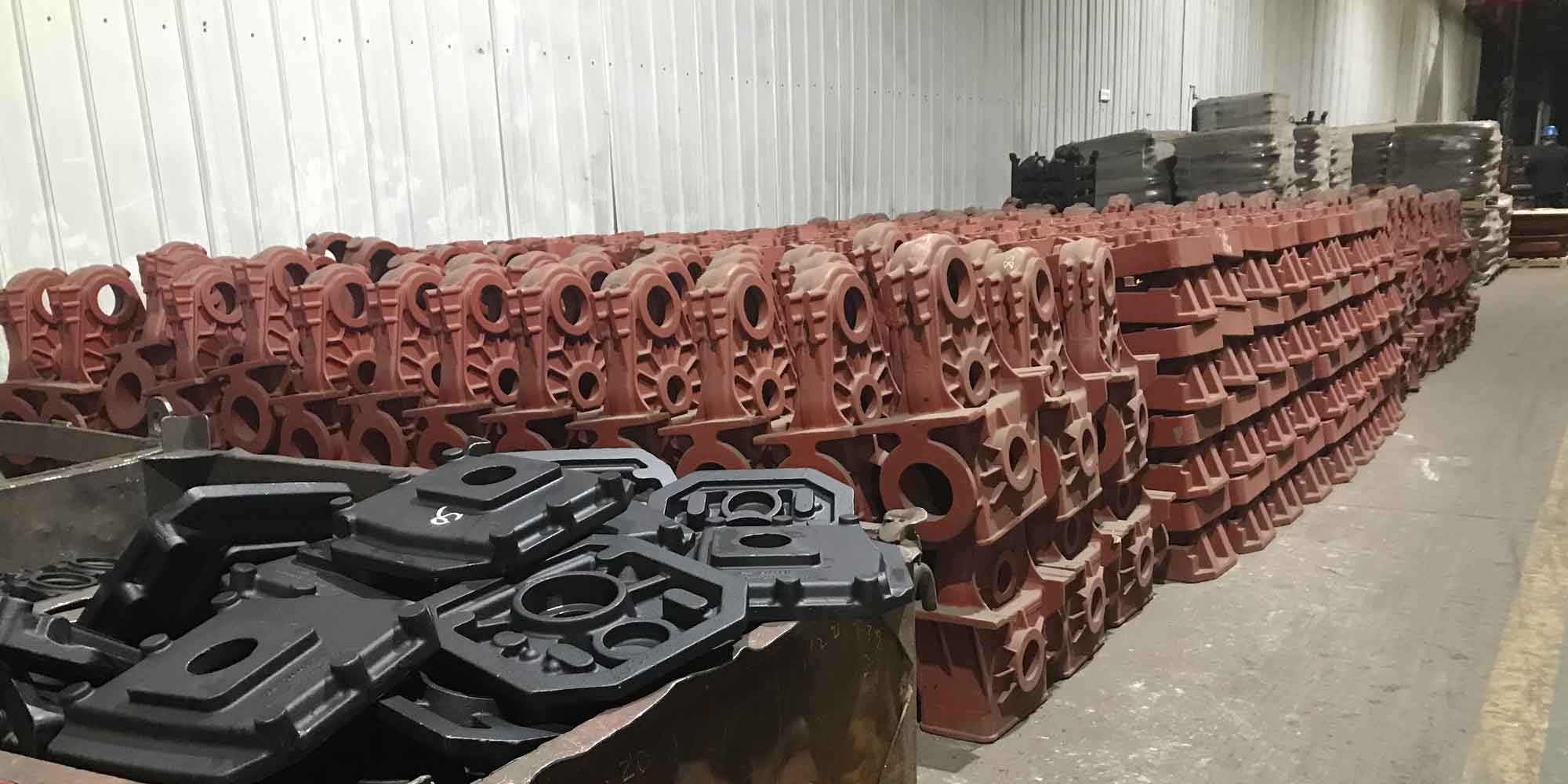
The steel casting used in this study was produced via a 10 kg medium-frequency induction furnace and sand-cast into standard Keel blocks. This steel casting process ensures uniformity and allows for precise control over composition. The chemical composition, determined through spectroscopy, is presented in Table 1. Key alloying elements include carbon for hardness, chromium and molybdenum for hardenability and carbide formation, and vanadium and niobium for fine carbide precipitation. Such compositions are typical in high-performance steel casting for mining applications.
| Element | C | Si | Mn | Cr | Mo | V | Nb | Ti | P | S |
|---|---|---|---|---|---|---|---|---|---|---|
| Content | 0.63 | 1.49 | 1.79 | 1.73 | 0.34 | 0.12 | 0.023 | 0.019 | 0.028 | 0.011 |
Heat treatment is critical in steel casting to achieve optimal properties. The samples were cut into 22 mm × 22 mm × 60 mm specimens and subjected to the following process: austenitization at 860°C for 1 hour, followed by fog quenching to room temperature. This rapid cooling promotes martensite formation, which is essential for high hardness. Subsequently, tempering was conducted at 550°C for 2 hours to relieve internal stresses and improve toughness. After tempering, three cooling methods were applied: oil cooling (fast), air cooling (moderate), and furnace cooling (slow). The cooling rates can be approximated using Newton’s law of cooling: $$ \frac{dT}{dt} = -k(T – T_{\text{env}}) $$ where \( T \) is temperature, \( t \) is time, \( k \) is the cooling rate constant, and \( T_{\text{env}} \) is the environmental temperature. For steel casting, \( k \) varies with medium: oil cooling has the highest \( k \), leading to faster temperature drop.
To evaluate the steel casting, I performed mechanical tests and microstructural analysis. Hardness was measured using a Rockwell hardness tester with a 150 kg load, averaging ten readings per sample. Impact toughness was assessed via standard Charpy unnotched impact tests on a JB-500B semi-automatic impact machine. For wear resistance, an MLD-10 impact abrasive wear tester was employed with 1.5 J impact energy, 200 impacts per minute, and quartz sand (8–16 mesh) as abrasive. Weight loss was measured to calculate wear rate. Microstructure was examined using optical microscopy and scanning electron microscopy (SEM), with samples etched in 2% nitric alcohol. Elemental distribution was analyzed via electron probe microanalysis (EPMA) to identify carbide compositions.
The microstructure of steel casting after different cooling methods is pivotal in determining properties. All samples exhibited tempered sorbite, a mixture of ferrite and fine carbides, with some retaining martensitic lath morphology. This is common in steel casting subjected to tempering, as martensite decomposes into stable phases. However, SEM revealed differences in carbide precipitation. Oil-cooled steel casting had fewer spherical carbides (200–300 nm in size) compared to air-cooled and furnace-cooled variants. This can be attributed to the rapid cooling inhibiting further carbide formation during cooling. The volume fraction of carbides \( V_c \) can be estimated using the Avrami equation for precipitation: $$ V_c = 1 – \exp(-kt^n) $$ where \( k \) and \( n \) are constants dependent on cooling rate. For slower cooling, \( n \) increases, leading to higher \( V_c \).
EPMA results for oil-cooled steel casting showed that carbides are rich in chromium, vanadium, niobium, and carbon, forming hard MC-type carbides (e.g., NbC, VC). These carbides contribute to wear resistance but can embrittle the matrix if excessive. Silicon and manganese were primarily dissolved in the ferrite matrix, providing solid solution strengthening. The hardness data, summarized in Table 2, indicate no significant variation among cooling methods, with average Rockwell hardness around 50 HRC. This suggests that tempered sorbite formation is similar, but carbide distribution differs.
| Cooling Method | Hardness (HRC) | Impact Absorption Energy (J) | Wear Loss After 2 Hours (g) |
|---|---|---|---|
| Oil Cooling | 50.2 ± 0.5 | 45.3 ± 2.1 | 0.85 ± 0.05 |
| Air Cooling | 50.1 ± 0.6 | 38.7 ± 1.8 | 0.72 ± 0.04 |
| Furnace Cooling | 49.8 ± 0.7 | 32.4 ± 1.5 | 0.78 ± 0.06 |
Impact toughness varied notably, with oil-cooled steel casting showing the highest energy absorption (45.3 J), followed by air-cooled (38.7 J) and furnace-cooled (32.4 J). This correlates with carbide count: fewer carbides in oil-cooled samples reduce stress concentrators, enhancing toughness. Fracture surfaces analyzed via SEM revealed quasi-cleavage patterns for all cooling methods, but oil-cooled specimens had smaller cleavage facets, indicating more energy dissipation during crack propagation. The fracture toughness \( K_{IC} \) can be related to impact energy \( E \) through empirical models: $$ K_{IC} \propto \sqrt{E} $$ suggesting higher toughness for oil-cooled steel casting.
Wear resistance is crucial for steel casting in abrasive environments. The wear loss over time, plotted in Figure 1, shows that all samples experienced increasing weight loss with duration, but air-cooled steel casting exhibited the lowest wear after 2 hours (0.72 g), followed by furnace-cooled (0.78 g) and oil-cooled (0.85 g). This trend can be explained by the balance between hardness and toughness. Air cooling provides optimal carbide precipitation for abrasion resistance without excessive embrittlement. Wear mechanisms, observed via SEM, included micro-cutting, plastic deformation, and abrasive embedding. Oil-cooled samples had larger embedded abrasive zones due to higher toughness, while air-cooled ones showed predominant micro-cutting, indicating effective material removal resistance.
The wear rate \( W \) can be modeled using the Archard equation: $$ W = \frac{K \cdot L \cdot H^{-1}}{A} $$ where \( K \) is a wear coefficient, \( L \) is load, \( H \) is hardness, and \( A \) is apparent contact area. For steel casting, \( H \) is similar across samples, but \( K \) varies with microstructure. Air-cooled steel casting likely has a lower \( K \) due to favorable carbide distribution. Additionally, impact wear involves dynamic loading, where toughness plays a role in resisting crack propagation. The wear volume \( V_w \) over time \( t \) can be expressed as: $$ V_w = \int_0^t \dot{W} \, dt $$ with \( \dot{W} \) depending on impact frequency and abrasive properties.
Further analysis of carbide kinetics reveals that cooling rate affects precipitate size and spacing. For steel casting, the intercarbide spacing \( \lambda \) influences yield strength \( \sigma_y \) via the Orowan mechanism: $$ \sigma_y = \sigma_0 + \frac{Gb}{\lambda} $$ where \( \sigma_0 \) is friction stress, \( G \) is shear modulus, and \( b \) is Burgers vector. Oil cooling reduces \( \lambda \) due to finer carbides, potentially increasing strength but not significantly affecting hardness in this case. However, excessive carbides in slower cooling can act as crack initiators, reducing toughness. This underscores the importance of controlled cooling in steel casting heat treatment.
In practical terms, steel casting for ball mill liners requires a synergy of properties. My findings suggest that air cooling after tempering offers the best compromise for wear-resistant steel casting, balancing hardness, toughness, and abrasion resistance. This cooling method allows sufficient carbide precipitation to enhance wear resistance while maintaining adequate toughness to prevent brittle fracture. For industrial steel casting processes, optimizing cooling rates can reduce energy costs and improve component longevity. Future work could explore alloy modifications, such as increasing niobium content for finer carbides, or using computational models to predict microstructure evolution.
To summarize, steel casting performance is highly dependent on post-tempering cooling methods. Through this study, I have demonstrated that oil cooling improves impact toughness by minimizing carbide formation, air cooling optimizes wear resistance, and furnace cooling leads to inferior toughness. All methods produce tempered sorbite, but carbide distribution varies. These insights can guide heat treatment protocols for steel casting in mining and other heavy industries, ultimately reducing wear-related costs. The integration of advanced steel casting techniques with tailored heat treatments will continue to drive innovation in material science.