
In the manufacturing industry, steel castings are critical components used in various applications, such as hydraulic equipment, where high strength, durability, and precision are required. The production of high-quality steel castings involves complex processes, including casting and heat treatment, which can be optimized through numerical simulation to reduce costs and improve efficiency. In this article, I will discuss how numerical simulation techniques, particularly using software like ProCAST, can be applied to analyze and validate the casting and heat treatment processes for steel castings. This approach allows for predictive analysis of defects, microstructure, and mechanical properties, ultimately ensuring that the final steel casting meets stringent performance standards. By sharing insights from a case study on a pin hole seat steel casting, I aim to highlight the benefits of simulation in enhancing the reliability and economy of steel casting production.
The foundation of any steel casting process lies in the design of the casting system, which includes the gating, risering, and venting arrangements. For the pin hole seat steel casting, which is a key part in hydraulic systems, the material specification is ASTM A148 Grade 115/95, with chemical composition as shown in Table 1. This steel casting must exhibit high tensile strength, yield strength, elongation, and hardness, while being free from internal defects like shrinkage porosity. To achieve this, numerical simulation is employed to model the casting process, starting with the 3D geometry creation in software like Pro/E. The model is then imported into ProCAST for meshing and analysis. The mesh generation involves creating volume elements that represent the casting, mold, and gating system, as illustrated in the simulation setup. Key parameters, such as pouring temperature, pouring speed, and interfacial heat transfer coefficients, are defined based on practical experience. For instance, the pouring temperature is set between 1560°C and 1580°C, and the heat transfer coefficient between the steel casting and sand mold is typically around 500 W/(m²·K). These inputs enable the simulation to predict the solidification behavior and identify potential defect zones.
| Element | Composition Range (%) |
|---|---|
| C | 0.28-0.33 |
| Mn | 0.70-0.90 |
| P (Max) | 0.035 |
| S (Max) | 0.035 |
| Si (Max) | 0.60 |
| Ni | 0.40-0.70 |
| Cr | 0.40-0.60 |
| Mo | 0.15-0.25 |
| Al | 0.02-0.08 |
The solidification simulation in ProCAST uses finite element analysis to solve the heat transfer equations. The governing equation for heat conduction during casting is given by the Fourier law, expressed as: $$ \rho C_p \frac{\partial T}{\partial t} = \nabla \cdot (k \nabla T) + Q $$ where \( \rho \) is the density, \( C_p \) is the specific heat capacity, \( T \) is the temperature, \( t \) is time, \( k \) is the thermal conductivity, and \( Q \) represents any internal heat source, such as latent heat release during phase change. For steel casting, the latent heat of solidification is a critical factor, and it is modeled using the enthalpy method. The simulation results are analyzed using direct shrinkage analysis and solidification fraction methods. In the case of the pin hole seat steel casting, the direct analysis showed that shrinkage defects were concentrated in the riser zones, indicating effective feeding. The solidification fraction method further confirmed that the use of insulating risers ensured proper compensation, with no defects in the casting body. This validates the gating system design for this steel casting, as risers of dimensions 160 mm × 200 mm × 300 mm were sufficient to prevent porosity.
Beyond casting, heat treatment is essential for achieving the desired mechanical properties in steel castings. For the pin hole seat steel casting, a quenching and tempering process is applied, with quenching in water to form martensite. Numerical simulation of heat treatment using ProCAST’s module allows for prediction of microstructure evolution and hardening depth. The heat treatment curve involves heating to austenitizing temperature, holding, and then rapid cooling. The simulation parameters include heat transfer coefficients between the steel casting and the furnace, air, and quenching medium. For example, during heating, the coefficient is set to 125 W/(m²·K), while during quenching in water, it is set to 5000 W/(m²·K). These values are derived from empirical data and influence the accuracy of the simulation. The temperature field during quenching is calculated using the heat conduction equation with boundary conditions accounting for convection and radiation. The cooling rate \( \frac{dT}{dt} \) is critical for phase transformations, and it can be estimated from the simulation to predict the formation of martensite. The volume fraction of martensite \( V_m \) after quenching can be modeled using the Koistinen-Marburger equation: $$ V_m = 1 – \exp(-k(M_s – T)) $$ where \( k \) is a material constant, \( M_s \) is the martensite start temperature, and \( T \) is the temperature during cooling. For this steel casting, the simulation predicted that the martensite content in the sampling location reached approximately 80%, with pearlite around 20% in thermal center regions, indicating adequate hardenability.
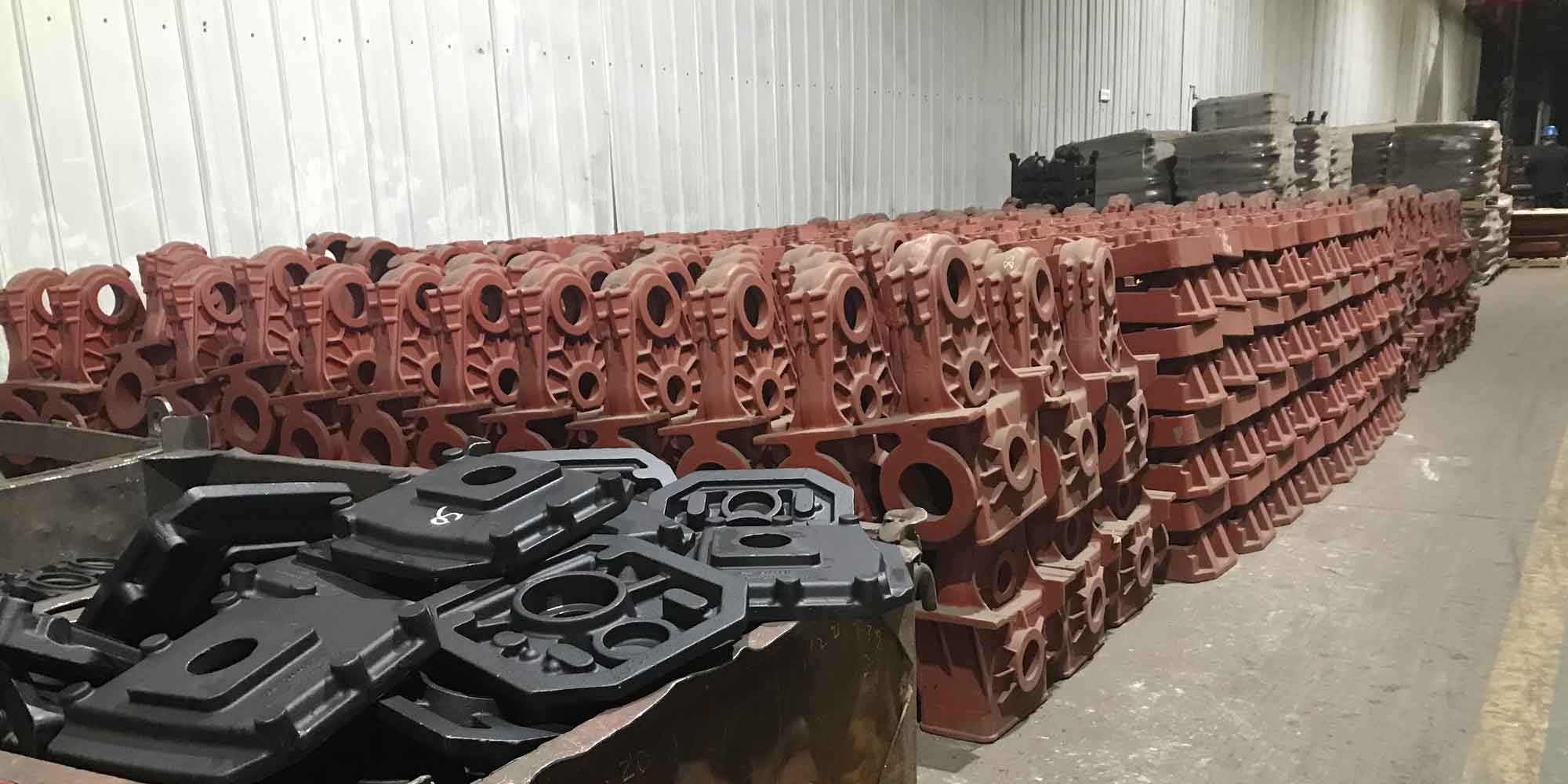
To quantify the simulation results, multiple tracking points are selected within the steel casting geometry to monitor temperature variations over time. Table 2 summarizes the temperature data at key points during the quenching process, showing consistent cooling rates across different sections. This uniformity ensures that the steel casting achieves homogeneous microstructure, which is vital for mechanical performance. The mechanical properties predicted from the simulation, such as tensile strength and hardness, align with the ASTM standards. For instance, the simulated tensile strength exceeded 800 MPa, and hardness ranged from 235 to 302 BHN, meeting the requirements for this steel casting. The use of numerical simulation thus provides a reliable forecast of the final properties, reducing the need for extensive physical trials.
| Tracking Point | Initial Temperature (°C) | Temperature After Quenching (°C) | Cooling Rate (°C/s) |
|---|---|---|---|
| Point 1 (Surface) | 850 | 50 | 200 |
| Point 2 (Core) | 850 | 100 | 150 |
| Point 3 (Riser Zone) | 850 | 80 | 180 |
| Point 4 (Sampling Location) | 850 | 60 | 190 |
The validation of simulation results is crucial for confidence in the process. For the pin hole seat steel casting, actual castings were produced based on the simulated design and subjected to destructive testing and radiographic inspection. The results confirmed the absence of shrinkage defects, with internal density matching the predictions. Mechanical tests on samples from the steel casting body showed properties as listed in Table 3, which comply with the ASTM A148 Grade 115/95 specifications. This demonstrates that numerical simulation can accurately guide the production of high-integrity steel castings, saving both time and resources. The cost reduction is significant, as simulation minimizes the number of trial runs needed to optimize the process.
| Property | Standard Requirement | Actual Test Result |
|---|---|---|
| Tensile Strength (MPa) | >792 | 978 |
| Yield Strength (MPa) | >655 | 880 |
| Elongation (%) | >15 | 15.5 |
| Hardness (BHN) | 235-302 | 295 |
In addition to the casting and heat treatment simulations, it is important to consider the broader implications for steel casting manufacturing. Numerical simulation enables the exploration of various scenarios, such as different gating designs or quenching media, without physical experimentation. For example, changing the riser size or using alternative insulating materials can be modeled to assess their impact on defect formation. The heat transfer during quenching can be analyzed using computational fluid dynamics (CFD) coupled with thermal analysis, though current software like ProCAST has limitations in simulating fluid flow in quenching baths. This highlights areas for future improvement in steel casting simulation. Moreover, the integration of artificial intelligence and machine learning with simulation data could further enhance predictive accuracy for steel casting processes, leading to smarter manufacturing systems.
From a practical perspective, the benefits of numerical simulation for steel castings extend beyond defect prediction. It aids in optimizing material usage, reducing energy consumption, and improving sustainability. For instance, by simulating multiple casting layouts in a mold, foundries can maximize yield and minimize scrap. The environmental impact of steel casting production can also be assessed through life cycle analysis integrated with simulation tools. As the demand for high-performance steel castings grows in industries like aerospace, automotive, and energy, the role of simulation becomes increasingly vital. It allows for rapid prototyping and customization, enabling manufacturers to respond quickly to market needs while maintaining quality standards for steel castings.
In conclusion, numerical simulation of casting and heat treatment processes is a powerful tool for advancing steel casting technology. Through the case study of the pin hole seat steel casting, I have shown how simulation with ProCAST can validate gating systems, predict microstructure, and ensure mechanical properties. The use of tables and formulas helps summarize key data and physical principles, such as heat conduction and phase transformation kinetics. While there are limitations, such as material database inaccuracies and simplified quenching models, the overall outcomes demonstrate significant cost and time savings. As simulation software evolves, it will continue to drive innovation in steel casting manufacturing, making processes more efficient and reliable. For any foundry producing steel castings, adopting numerical simulation is a strategic step toward competitiveness and excellence in today’s industrial landscape.
To further elaborate on the technical aspects, let’s delve into the mathematical models used in simulation for steel castings. The solidification process involves solving the energy equation with phase change, which can be represented as: $$ \frac{\partial}{\partial t}(\rho h) + \nabla \cdot (\rho \vec{v} h) = \nabla \cdot (k \nabla T) + S_h $$ where \( h \) is enthalpy, \( \vec{v} is velocity (for fluid flow during filling), and \( S_h \) is the source term for latent heat. For most steel casting simulations, the filling phase is often neglected in solidification analysis, focusing instead on thermal effects. The latent heat release is modeled using the lever rule or Scheil equation, depending on the solidification mode. For the steel casting in discussion, the carbon content influences the peritectic reaction, and simulation accounts for this through material property databases. The microstructure simulation during heat treatment uses phase field models or Johnson-Mehl-Avrami-Kolmogorov (JMAK) kinetics for transformations. For martensite formation, the equation mentioned earlier is applied, but for diffusional transformations like pearlite, the JMAK equation is used: $$ X = 1 – \exp(-k t^n) $$ where \( X \) is the transformed fraction, \( k \) is a rate constant, \( t \) is time, and \( n \) is the Avrami exponent. These models enable detailed prediction of the steel casting’s final properties.
Furthermore, the economic impact of simulation on steel casting production cannot be overstated. Traditional trial-and-error methods involve significant material waste and prolonged development cycles. With simulation, the number of physical prototypes is reduced, leading to savings in raw materials, energy, and labor. A comparative analysis can be presented in Table 4, showing the cost breakdown for conventional versus simulation-based approaches for steel castings. This highlights why more foundries are investing in simulation technology for steel casting projects. As the industry moves toward Industry 4.0, the integration of simulation with digital twins and IoT sensors will enable real-time monitoring and adjustment of steel casting processes, further enhancing quality and efficiency.
| Aspect | Conventional Method | Simulation-Based Method |
|---|---|---|
| Development Time | 4-6 weeks | 1-2 weeks |
| Material Cost per Trial | $500-$1000 | $100-$200 (software usage) |
| Defect Rate | 10-20% | 5-10% |
| Energy Consumption | High due to multiple melts | Reduced through optimization |
In summary, the journey from design to finished steel casting is complex, but numerical simulation simplifies it by providing insights into every step. For the pin hole seat steel casting, the combination of casting and heat treatment simulations ensured a defect-free product with superior mechanical properties. As I reflect on this process, it is clear that simulation is not just a tool but a transformative approach for the steel casting industry. By embracing these technologies, manufacturers can produce steel castings that meet the highest standards of performance and reliability, driving innovation across sectors. The future of steel casting lies in the continuous improvement of simulation methods, making them more accessible and accurate for diverse applications.