
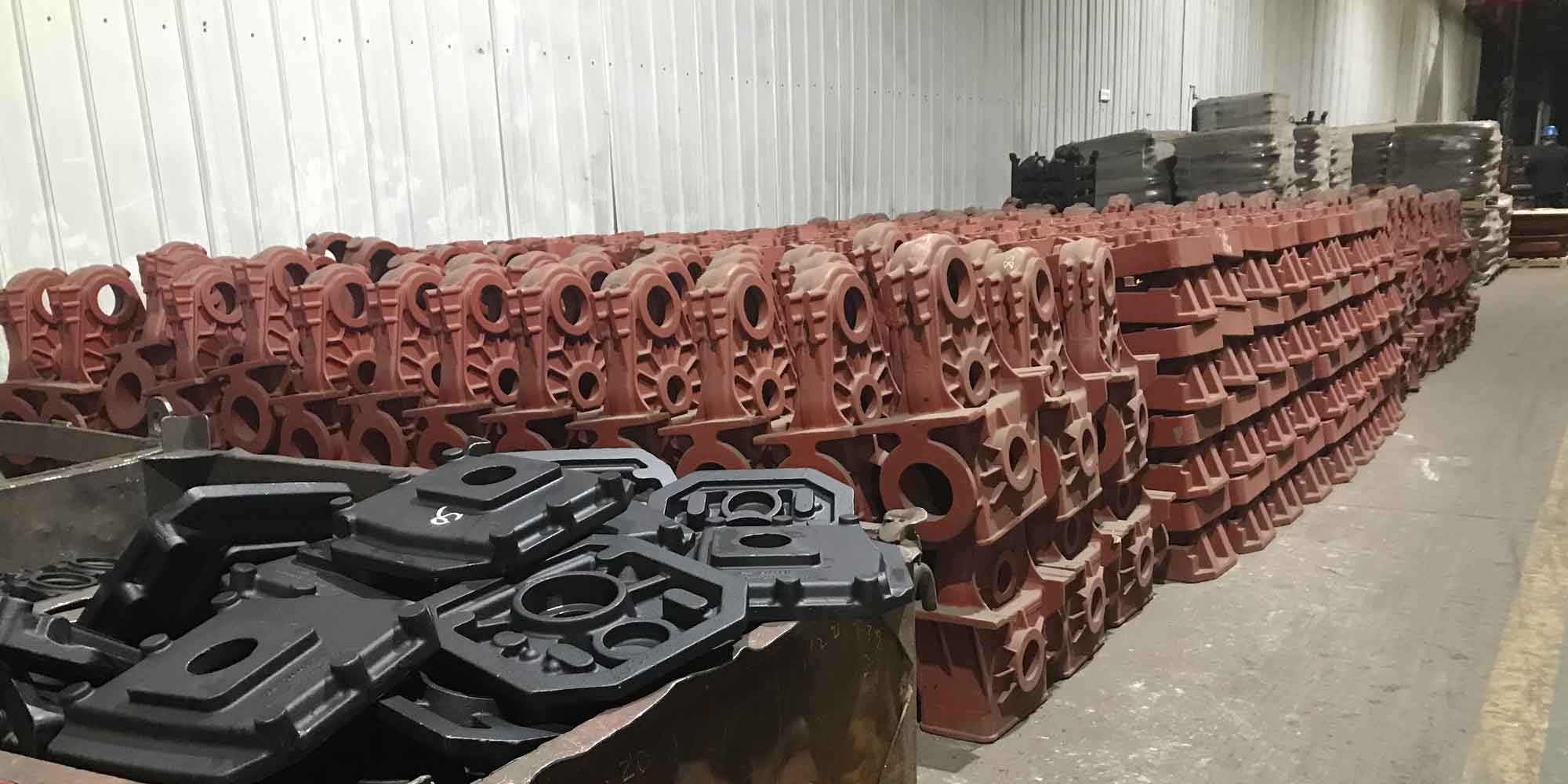
In the realm of railway vehicle manufacturing, the integrity and performance of welded structures are paramount, especially for critical components like bogie frames that endure cyclic loads during service. As an engineer and researcher deeply involved in materials science and welding technology, I have focused on evaluating the suitability of advanced steel casting materials for such applications. Among these, G20Mn5 steel casting, a low-carbon low-alloy cast steel per European standard EN 10293, has garnered attention due to its favorable weldability, crack resistance, and balanced mechanical properties. This steel casting is extensively utilized in locomotive parts such as motor end covers, suspension ribs, and bogie brackets, where reliability under dynamic stresses is essential. In this comprehensive study, I explore the microstructure, hardness, tensile properties, and high-cycle fatigue performance of butt joints fabricated using metal active gas (MAG) arc welding on 8 mm thick G20Mn5 steel casting plates. The aim is to assess whether the welded joints meet the stringent design requirements for railway components, thereby contributing to safer and more efficient transportation systems. Throughout this article, I will emphasize the role of steel casting in modern engineering, highlighting how its inherent characteristics influence weld quality and longevity.
The base material employed was G20Mn5 steel casting, with a nominal composition as per EN 10293-2005, offering a yield strength of 295 MPa, tensile strength of 520 MPa, and elongation of 30%. The filler metal was ER50-6 welding wire with a diameter of 1.2 mm, selected for its compatibility with low-alloy steels. The chemical compositions of both materials are summarized in Table 1, illustrating the careful matching required to ensure sound welded joints in steel casting applications.
| Material | C | Si | Mn | P | S | Ni | Cu |
|---|---|---|---|---|---|---|---|
| G20Mn5 Steel Casting | 0.17–0.23 | ≤0.60 | 1.00–1.60 | ≤0.02 | ≤0.02 | ≤0.80 | — |
| ER50-6 Welding Wire | 0.06–0.15 | 0.80–1.15 | 1.40–1.85 | ≤0.025 | ≤0.035 | ≤0.50 | — |
Welding was performed using a YD-500GL MAG welding machine with direct current power supply. The joint configuration involved a single-side two-pass technique on V-groove butt joints, as detailed in the methodology. To mitigate deformation and cold cracking—common concerns in steel casting welding—preheating to approximately 100°C was applied, and interpass temperature was controlled at 160°C. The welding parameters included an arc voltage of 22–25 V and a current of 220 A, optimized through preliminary trials to achieve defect-free joints. This process underscores the meticulous approach needed when joining steel casting components, where thermal management is critical to preserve material properties.
Upon visual and radiographic inspection per ISO 17636-1-2013, the welded joints exhibited excellent surface formation without discernible defects like lack of fusion or penetration, qualifying them per ISO 10675-1-2013 Grade I standards. This initial quality assessment is crucial for steel casting welds, as internal flaws could compromise fatigue life under operational loads. The macro-examination revealed a well-defined joint comprising the base metal (BM), heat-affected zone (HAZ), and weld zone (WZ), with the HAZ further subdivided into incomplete normalized zone (INZ), normalized zone (NZ), and overheated zone (OZ). These regions result from the complex thermal cycles during welding, which alter the microstructure of the steel casting differently based on peak temperatures and cooling rates.
Microstructural analysis was conducted using optical microscopy on polished and etched cross-sections. The base metal of the G20Mn5 steel casting consisted of equiaxed ferrite and pearlite, typical for normalized low-carbon steels. Moving towards the weld, the INZ showed partially transformed structures where pearlite decomposed into carbide and coarse ferrite, while the NZ displayed refined grains due to complete austenitization and subsequent transformation. The OZ, adjacent to the fusion line, exhibited coarse grains with constituents like granular bainite, acicular ferrite, and minor pearlite, indicative of overheating. At the fusion line itself, a mixture of low-carbon martensite, upper bainite, and granular bainite was observed, signifying rapid cooling. The weld zone featured columnar grains with proeutectoid ferrite along boundaries and granular bainite within grains, attributed to the filler metal composition and solidification dynamics. This microstructural gradient, summarized in Table 2, highlights the heterogeneous nature of welded steel casting joints, which directly impacts mechanical behavior.
| Region | Microstructural Characteristics | Grain Size Trend |
|---|---|---|
| Base Metal (BM) | Equiaxed ferrite and pearlite | Uniform |
| Incomplete Normalized Zone (INZ) | Partially transformed ferrite and decomposed pearlite | Moderate refinement |
| Normalized Zone (NZ) | Refined ferrite and pearlite | Significant refinement |
| Overheated Zone (OZ) | Coarse granular bainite, acicular ferrite, pearlite | Coarsening |
| Fusion Line | Low-carbon martensite, upper bainite, granular bainite | Severe coarsening |
| Weld Zone (WZ) | Columnar grains with proeutectoid ferrite and granular bainite | As-cast structure |
Hardness profiling across the joint was performed using a Rockwell hardness tester with a load of 980 N. The results, plotted as a function of distance from the weld center, revealed a distinct pattern: hardness increased from the base metal towards the fusion line, peaked at approximately 70 HRB near the fusion zone, then decreased within the weld zone to about 55–60 HRB. The base metal hardness averaged 50–55 HRB. This trend can be modeled using a piecewise function to represent the varying microstructural hardness in steel casting welds. For instance, the hardness \( H(x) \) at a distance \( x \) from the weld center might be approximated by:
$$ H(x) = H_{BM} + \Delta H \cdot e^{-k|x – x_0|} $$
where \( H_{BM} \) is the base metal hardness, \( \Delta H \) is the peak hardness increase, \( k \) is a decay constant, and \( x_0 \) is the location of peak hardness (fusion line). This equation captures the asymmetry and localization of hardening effects in welded steel casting components. The elevated hardness at the fusion line correlates with the martensitic and bainitic structures, which enhance strength but may reduce toughness, a critical consideration for fatigue resistance.
Tensile tests were conducted on specimens extracted transverse to the weld, following GB/T 2651-2008. The stress-strain curves demonstrated consistent behavior between duplicates, with the joint exhibiting higher strength but lower ductility compared to the base steel casting. Quantitative data are presented in Table 3. The joint’s tensile strength averaged 565.5 MPa, significantly exceeding the base metal’s 520 MPa, while elongation averaged 16.9%, lower than the base metal’s 30%. This strength-ductility trade-off is typical in welded joints due to microstructural heterogeneities; the hardened HAZ and weld zone contribute to strength, but strain localization in softer regions limits overall elongation. For steel casting applications, this implies that while welded joints can bear higher static loads, their deformation capacity under impact must be carefully evaluated.
| Sample | Yield Strength (MPa) | Tensile Strength (MPa) | Elongation (%) |
|---|---|---|---|
| Joint #1 | 308 | 568 | 16.7 |
| Joint #2 | 316 | 563 | 17.1 |
| Average (Joint) | 312 | 565.5 | 16.9 |
| Base Metal (Reference) | 295 | 520 | 30.0 |
To assess dynamic performance, high-cycle fatigue tests were performed under stress ratio R = 0.1, with run-out defined at 10^7 cycles. The stress-life (S-N) data for both base metal and welded joints were analyzed per IIW recommendations, fitting Basquin’s equation:
$$ S = \sigma_f’ (2N_f)^b $$
where \( S \) is stress amplitude, \( N_f \) is cycles to failure, \( \sigma_f’ \) is fatigue strength coefficient, and \( b \) is fatigue exponent. The fitted parameters, derived using maximum likelihood estimation, are summarized in Table 4. At 5×10^6 cycles and 50% survival probability, the fatigue strength of the welded joint was approximately 238 MPa, comparable to the base steel casting’s 244 MPa. For 97.5% survival probability, values were 207 MPa and 208 MPa, respectively. This indicates that the MAG welding process did not degrade the high-cycle fatigue resistance of the G20Mn5 steel casting, a vital outcome for railway components subjected to vibrational loads. All fatigue failures originated in the HAZ, likely at stress concentrators near microstructural transitions, underscoring the HAZ as the critical region in steel casting welds.
| Material | Fatigue Strength at 5×10^6 Cycles (50% Survival) (MPa) | Fatigue Strength at 5×10^6 Cycles (97.5% Survival) (MPa) | Fatigue Strength Coefficient \( \sigma_f’ \) (MPa) | Fatigue Exponent \( b \) |
|---|---|---|---|---|
| Welded Joint | 238 | 207 | 850 | -0.102 |
| Base Steel Casting | 244 | 208 | 870 | -0.098 |
The microstructural observations and mechanical data collectively explain the joint’s performance. The hardness peak at the fusion zone arises from phase transformations during rapid cooling, which can be quantified using continuous cooling transformation (CCT) diagrams for steel casting alloys. For G20Mn5, the cooling rate in MAG welding promotes bainite and martensite formation, increasing hardness but also residual stresses. The tensile strength enhancement is attributable to grain refinement in the NZ and precipitation hardening in the weld, while reduced elongation stems from incompatibility between soft ferritic regions and hard phases. Fatigue behavior is governed by the weakest link, often the HAZ, where coarse grains and residual stresses facilitate crack initiation. However, the comparable fatigue strengths suggest that proper welding parameters can mitigate these issues, preserving the integrity of steel casting structures.
From an engineering perspective, these findings validate the use of MAG welding for G20Mn5 steel casting in bogie frames and similar components. The joint meets design requirements for static strength and fatigue resistance, crucial for railway safety. However, attention must be paid to post-weld heat treatment if toughness is critical, as the hardened HAZ could be susceptible to brittle fracture under low temperatures. Future work could explore optimized welding parameters, such as lower heat input or pulsed MAG, to further homogenize the microstructure and enhance toughness in steel casting welds.
In conclusion, this investigation demonstrates that MAG welded joints of G20Mn5 steel casting exhibit satisfactory microstructure and mechanical properties for railway applications. The joint’s hardness distribution, tensile strength, and fatigue performance align with operational demands, affirming the viability of this steel casting and welding combination. As steel casting continues to evolve with advances in alloy design and processing, understanding its weldability remains essential for expanding its use in critical infrastructure. I recommend ongoing monitoring of welded joints in service, coupled with non-destructive evaluation, to ensure long-term reliability. This study contributes to the broader knowledge base on steel casting welding, offering insights that can inform standards and practices in the transportation industry.