
In the pursuit of enhancing braking performance and operational safety for electric multiple units, we have embarked on a comprehensive research and development initiative focused on steel casting brake discs. This project aims to upgrade traditional cast iron brake discs by leveraging advancements in steel casting materials, specifically for use in trailers and control cars of power-centralized electric units like the CR200J. The primary goal is to ensure long-term, efficient service under demanding braking conditions, where almost all braking energy is absorbed by the discs due to the reliance on pure air braking systems. Through meticulous material analysis, structural optimization, simulation, and extensive testing, we have developed a novel alloy steel casting brake disc that meets the stringent requirements of high-speed rail operations at speeds up to 160 km/h and axle loads below 18 tons. This article details our first-person perspective on the entire development process, emphasizing the critical role of steel casting in achieving superior performance.
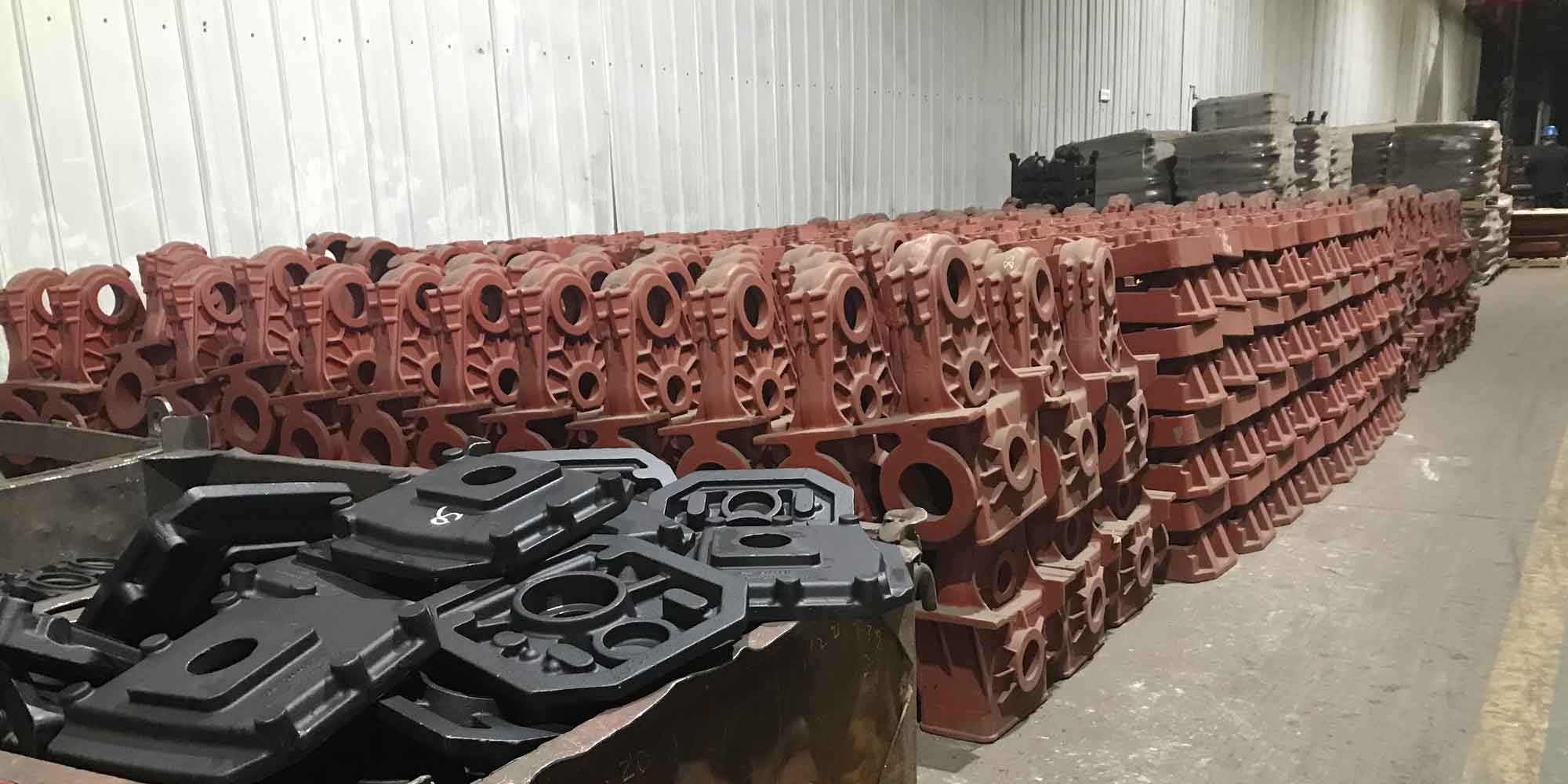
The foundation of our work lies in the material science of steel casting. We selected a low-carbon nickel-chromium-molybdenum alloy steel for the disc body, a choice driven by its exceptional combination of properties suitable for high-stress friction applications. The chemical composition is meticulously designed: nickel (Ni) enhances strength at both ambient and elevated temperatures while maintaining ductility and corrosion resistance; chromium (Cr) improves hardness, wear resistance, and oxidation resistance; and molybdenum (Mo) refines grain structure, increases hardenability, and suppresses temper brittleness. Through controlled melting and casting processes, followed by normalization and quenching-tempering treatments, we achieved a fine, uniform sorbite microstructure. This structure, characterized by its dense and homogeneous nature, provides an optimal balance of strength and toughness, which is crucial for withstanding the thermal and mechanical shocks during braking. The steel casting process ensures consistent quality and integrity, as illustrated below.
To quantify the material properties, we conducted extensive mechanical and thermal tests. The results are summarized in the following tables and formulas. The tensile strength, yield strength, and elongation were measured across a temperature range from -50°C to 600°C, demonstrating remarkable stability. For instance, the tensile strength ($\sigma_t$) can be modeled as a function of temperature ($T$) using empirical equations derived from our data: $$\sigma_t(T) = A – B \cdot T + C \cdot T^2$$ where $A$, $B$, and $C$ are material constants. Similarly, the impact energy ($E_i$) shows minimal variation at low temperatures, indicating excellent toughness. The hardness of the steel casting consistently exceeded 36 HRC, ensuring durability against wear. Thermal properties, including average linear expansion coefficient ($\alpha$) and thermal conductivity ($k$), were also characterized. These parameters are critical for predicting thermal stresses during braking, as described by the heat conduction equation: $$\frac{\partial T}{\partial t} = \alpha \nabla^2 T + \frac{q}{\rho c_p}$$ where $q$ is heat flux, $\rho$ is density, and $c_p$ is specific heat. The fatigue behavior was evaluated through S-N curves, revealing a fatigue limit of 278 MPa and high-cycle fatigue resistance up to 500 MPa for over $10^5$ cycles, which aligns with the cyclic loading in real-world operations.
| Temperature (°C) | Tensile Strength (MPa) | Yield Strength (MPa) | Elongation (%) | Impact Energy (J) |
|---|---|---|---|---|
| -50 | 850 | 720 | 15 | 45 |
| 20 | 820 | 700 | 16 | 48 |
| 600 | 750 | 650 | 14 | 40 |
| Temperature (°C) | Average Linear Expansion Coefficient (10^-6/°C) | Thermal Conductivity (W/m·K) |
|---|---|---|
| 100 | 12.5 | 42 |
| 300 | 13.2 | 38 |
| 500 | 13.8 | 35 |
The structural design of the brake disc was optimized based on mature cast iron disc architectures, with a focus on reliability and efficiency. The disc comprises a steel casting disc body, a hub, positioning pins, a pressure ring, and fasteners, all assembled into a cohesive unit. The disc body features elliptical columnar cooling fins, which enhance heat dissipation while minimizing aerodynamic drag during running—a key consideration for reducing traction power losses. This design leverages the inherent advantages of steel casting, such as its ability to form complex shapes with high precision, ensuring consistent performance across mass production. The connection between the disc body and hub is secured via the pressure ring and bolts, providing robust mechanical integrity under cyclic thermal loads. We employed finite element analysis (FEA) to validate the design, considering factors like stress concentration and thermal deformation. The governing equation for stress analysis incorporates thermal effects: $$\sigma_{total} = \sigma_{mechanical} + \sigma_{thermal}$$ where $\sigma_{thermal} = E \alpha \Delta T$, with $E$ as Young’s modulus and $\Delta T$ as temperature difference. This approach ensures that the steel casting structure can withstand operational demands without failure.
Simulation calculations were performed to assess the performance of the steel casting brake disc under extreme conditions, specifically two consecutive emergency brakings from 160 km/h. Using finite element software, we modeled the transient temperature and stress fields. The input parameters included a disc load of 9,000 kg, braking deceleration of 0.85 m/s², and environmental temperature of 20°C. The heat generation during braking is given by: $$Q = \mu P v$$ where $\mu$ is the friction coefficient, $P$ is the brake pressure, and $v$ is the velocity. The simulation results indicated a maximum friction pair temperature of 357°C, well below the 550°C stability limit for steel casting and powder metallurgy pads. The maximum thermal stress in the disc body was 388 MPa, which is significantly lower than the yield strength of the material at elevated temperatures (exceeding 750 MPa). The maximum displacement was only 0.123 mm, confirming minimal thermal distortion. These outcomes validate the suitability of steel casting for high-energy braking applications. The temperature distribution can be approximated by: $$T(x,t) = T_0 + \frac{Q}{k} \sqrt{\frac{\alpha t}{\pi}} e^{-\frac{x^2}{4\alpha t}}$$ where $T_0$ is initial temperature and $x$ is depth from the surface. This analytical model aligns with our FEA results, providing confidence in the steel casting’s thermal management capabilities.
| Parameter | First Emergency Braking | Second Emergency Braking |
|---|---|---|
| Maximum Friction Pair Temperature (°C) | 269 | 357 |
| Maximum Disc Stress (MPa) | 289 | 388 |
| Maximum Disc Displacement (mm) | 0.062 | 0.123 |
To experimentally verify the performance, we conducted 1:1 brake dynamic tests on a dedicated test rig. The steel casting brake disc was paired with powder metallurgy pads, and tests were carried out under various conditions: dry and wet environments, different disc loads (simulating empty and loaded vehicles), and speeds up to 180 km/h. Key test scenarios included single-stop braking, consecutive emergency brakings, and high-load gradient braking (simulating a 20‰ slope at 160 km/h for 40 km). The friction coefficient ($\mu$) was monitored throughout, demonstrating excellent stability and repeatability. For example, during consecutive emergency brakings, the average friction coefficient remained around 0.33, with instantaneous values showing minimal fluctuation. The disc temperature reached 375°C, consistent with simulation predictions. The high-load gradient test resulted in a maximum temperature of 576°C, but the friction coefficient decay was gradual and acceptable, proving the steel casting’s resilience under sustained thermal loads. The energy dissipation per braking event can be calculated as: $$E_{brake} = \frac{1}{2} m v^2 \eta$$ where $m$ is mass, $v$ is initial velocity, and $\eta$ is efficiency. Our tests confirmed that the steel casting disc effectively absorbs this energy without degradation.
| Test Condition | Initial Speed (km/h) | Average Friction Coefficient | Maximum Disc Temperature (°C) | Braking Distance (m) |
|---|---|---|---|---|
| Dry, Loaded (9t), Single Emergency | 160 | 0.327 | 257 | 1287 |
| Dry, Loaded (9t), Consecutive Emergency | 160 | 0.337 | 375 | 1257 |
| Dry, Loaded (9t), Gradient Braking | 160 | 0.375 | 576 | 40017 |
| Wet, Loaded (9t), Single Emergency | 160 | 0.310 | 240 | 1350 |
Fatigue testing was performed to evaluate long-term reliability, with over 1,000 braking cycles conducted on the test rig. The tests focused on high-speed emergency stops (140 km/h, 160 km/h, and 180 km/h) under dry conditions with a disc load of 9 tons. After completion, the steel casting brake disc exhibited no signs of failure: fasteners remained tight, and the friction surface showed no significant thermal cracks or wear. This endurance demonstrates the robustness of steel casting under repetitive thermal cycling. The fatigue life can be modeled using the Coffin-Manson relation: $$N_f = C (\Delta \epsilon_p)^{-b}$$ where $N_f$ is cycles to failure, $\Delta \epsilon_p$ is plastic strain range, and $C$ and $b$ are constants derived from material tests. Our results indicate that the steel casting disc far exceeds the required cycle count, ensuring a prolonged service life with minimal maintenance.
Following laboratory tests, the steel casting brake discs underwent comprehensive on-vehicle trials. A prototype electric unit equipped with these discs was subjected to type tests and over 200,000 km of operational assessment on mainlines, including high-speed sections (144-160 km/h) and loaded conditions. The discs performed flawlessly throughout, with no issues reported in braking efficiency or safety. Post-trial inspections revealed no looseness in fasteners, no visible thermal cracks, and negligible wear on the friction surfaces. This real-world validation underscores the practicality of steel casting for mass adoption in rail vehicles. The performance metrics align with theoretical predictions, such as the wear rate model: $$W = K P v t$$ where $W$ is wear volume, $K$ is wear coefficient, $P$ is pressure, $v$ is speed, and $t$ is time. The low wear observed confirms the superior durability of steel casting compared to traditional materials.
In conclusion, our research and development efforts have successfully culminated in the creation of an advanced steel casting brake disc for power-centralized electric unit trailers. The steel casting material, with its optimized chemical composition and microstructure, delivers exceptional mechanical, thermal, and fatigue properties. The disc design, validated through simulation and extensive testing, meets all operational requirements for speeds up to 160 km/h and axle loads below 18 tons. The integration of steel casting not only enhances braking performance and safety but also extends service life, reducing maintenance overheads. Future work will focus on further refining the steel casting process to reduce costs and exploring applications in even higher-speed rail systems. The success of this project highlights the transformative potential of steel casting in advancing railway braking technology, paving the way for more efficient and reliable rail transport worldwide.