
In my extensive experience integrating additive manufacturing into foundry operations, the transition of 3D sand printing technology from prototyping to full-scale, heavy-section steel casting production represents one of the most significant advancements. The inherent complexity, high pouring temperatures, and stringent quality requirements of steel castings, particularly large ones, impose unique demands on the entire molding system. This system is fundamentally built upon the triad of base sand, binder, and coating. While much literature exists on 3D printing for non-ferrous or cast iron applications, the specific formulation for robust steel casting production requires a dedicated, empirical approach. The choice of base sand is not merely a cost consideration; it directly governs the thermal dynamics of solidification, the mechanical integrity of the mold during pouring, and ultimately, the surface finish and dimensional accuracy of the final casting. This article synthesizes practical insights and experimental data on selecting and optimizing base sands and binders for 3D printed molds used in demanding steel casting applications.
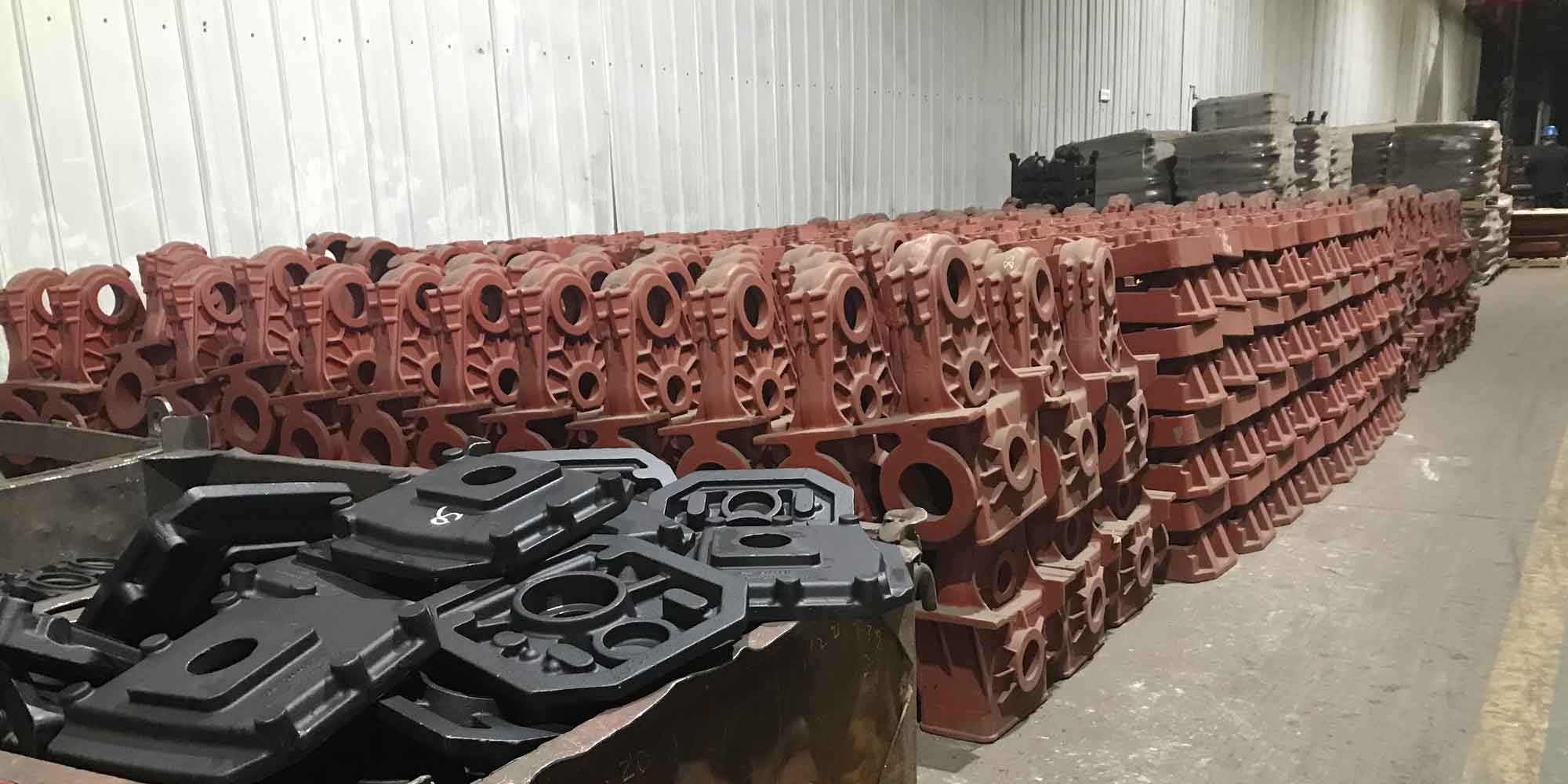
The core challenge in steel casting using 3D printed molds stems from the extreme thermal load. Pouring temperatures for steel typically range from 1,550°C to 1,600°C and above, introducing a massive thermal shock to the sand mold. This environment tests the refractory nature of the base sand, the high-temperature strength of the binder bridge, and the thermal stability of the coating system. Traditional foundry sands like silica sand are abundant and low-cost, but their performance at these temperatures, especially in large steel casting sections where heat retention is prolonged, can lead to issues like burn-on and penetration. Furthermore, the 3D printing process itself—a binder-jetting technique—adds another layer of complexity. The sand must flow freely for recoating, exhibit good packing density, and react predictably with the liquid binder to form a precise, strong green body. Therefore, the ideal sand for 3D printing in steel casting must satisfy a dual mandate: excellent printability and superior high-temperature performance.
The two primary base sands investigated for this purpose are high-silica sand and ceramsite (spherical) sand. High-silica sand, defined here as having a SiO₂ content ≥98%, is the traditional workhorse. Ceramsite sand is an engineered, spherical ceramic sand often based on aluminosilicate materials. Their fundamental properties create a critical trade-off analysis for the steel casting engineer.
| Property | High-Silica Sand (SiO₂≥98%) | Ceramsite Sand (Alumino-Silicate) | Impact on Steel Casting Process |
|---|---|---|---|
| Particle Shape & Angularity | Angular / Sub-angular | Spherical | Angular sands interlock, giving higher green strength but poorer flowability. Spherical sands flow excellently for 3D printing recoating. |
| Acid Demand Value (ADV) | Variable, can be high | Typically very low | High ADV consumes acid catalyst in furan systems, affecting curing speed and final strength. Crucial for process control. |
| Refractoriness (Sintering Point) | ~1,710°C (for pure SiO₂) | Typically >1,800°C | Directly related to burn-on resistance. Ceramsite often has a higher theoretical refractoriness. |
| Thermal Conductivity (λ) | Higher | Lower | Higher conductivity (silica) promotes faster heat dissipation from the steel casting, influencing solidification mode and feeding. | Thermal Expansion | High, with abrupt phase change at 573°C | Lower and more linear | Silica sand’s expansion can contribute to veining or rat-tailing defects in steel castings if not properly accommodated. |
| Density (Bulk) | ~1.5 – 1.6 g/cm³ | ~1.7 – 2.0 g/cm³ | Affects mold weight, handling, and the absolute heat capacity per unit volume. |
| Cost | Low (Baseline) | 3x – 5x Higher | A major operational consideration for large-volume steel casting production. |
The binder system is the other half of the equation. For 3D sand printing, two main chemical families are prevalent: furan resins (acid-catalyzed) and phenolic resins (often thermally cured). Their selection influences not only the printing process parameters but also the high-temperature behavior of the mold facing the molten steel.
| Parameter | Furan Resin (Acid-Cured) | Thermal Phenolic Resin | Implication for Steel Casting Production |
|---|---|---|---|
| Curing Mechanism | Chemical reaction at room temperature | Thermal activation (e.g., microwave, heated bed) | Furan allows simpler printer design. Phenolic curing requires integrated heating, affecting printer complexity and layer time. |
| Typical Binder Addition | 0.8 – 1.2% | 1.0 – 1.5% | Directly impacts gas evolution and final material cost per mold for the steel casting. |
| Green Strength (Tensile) | 1.2 – 1.8 MPa | 1.3 – 2.0 MPa | Sufficient for both to handle post-print handling and core assembly for complex steel castings. |
| High-Temperature Strength (1000°C) | 0.5 – 1.0 MPa | 1.2 – 1.8 MPa | Phenolic resins generally provide better mold wall stability during the critical early stages of steel solidification, reducing metal penetration risk. |
| Gas Evolution | High (12-18 mL/g) | Low to Medium (7-12 mL/g) | Lower gas from phenolic systems can be beneficial for reducing porosity risks in thick-section steel castings, but requires adequate venting in both cases. |
| Compatibility with Sand | Sensitive to sand ADV and moisture. | Generally less sensitive to sand chemistry. | Furan process control is tighter, especially with variable silica sands. Phenolic offers more forgiveness. |
The interaction between sand and binder defines the printability. The goal is to achieve a high packing density and uniform binder distribution for maximum strength and surface finish. The packing density of a sand bed, critical for mold strength, can be approximated for spherical particles, but angular sands like silica are more complex. The final strength of the printed mold is a function of the binder’s adhesive properties and the number of inter-particle bonds. For angular silica sand, the number of contact points is higher than for spherical ceramsite sand at the same compaction level, which can lead to higher initial green strength for a given binder percentage, as shown in the simplified model below.
$$ \text{Green Strength} \propto N_c \cdot S_b $$
Where \( N_c \) is the number of inter-particle contact points per unit volume (higher for angular sand) and \( S_b \) is the strength of the cured binder bridge. However, the flowability, crucial for the recoater blade in 3D printing, is inversely related to inter-particle friction, favoring spherical sands. This is quantified by the angle of repose or, more fundamentally, by the flow function derived from shear cell testing. A sand with poor flowability leads to non-uniform layers, reducing the overall density and strength of the printed steel casting mold. In practice, optimizing printer parameters like layer thickness, roller speed, and vibration frequency is essential to maximize the density of angular silica sands to bridge this performance gap.
Empirical studies consistently show that 3D printed molds using furan resin exhibit superior surface fidelity and dimensional accuracy for intricate steel casting cores. The room-temperature curing provides immediate stability. In contrast, thermal phenolic systems, during the heating phase, can cause localized over-curing or “browning” at the surface, leading to a slightly friable layer that may affect the as-printed surface finish. This necessitates careful control of heating parameters.
The ultimate test for any mold system in steel casting is its performance during and after pouring. A key high-temperature property is sintering resistance. When a sand mold sinters, it forms a solid, fused mass that is extremely difficult to remove from the steel casting surface, leading to catastrophic cleaning costs. Pure silica sand has a high sintering point, but its performance can be degraded by impurities or fluxes. Ceramsite sand, while having a high nominal refractoriness, can sometimes exhibit lower sintering resistance in certain chemical environments created by binder decomposition. Experiments where printed samples are heated to 1600°C and held confirm that high-purity silica sand often retains a more friable structure post-heating than some ceramsite blends, indicating less low-temperature fusion. However, this raw sand test tells only part of the story for actual steel casting production.
In practice, every mold for steel casting is protected by a refractory coating. A well-applied zirconia-based coating of sufficient thickness (1.2mm or more) effectively shields the base sand from direct contact with the steel melt. Under this protective barrier, the difference in sintering behavior between high-silica and ceramsite sands becomes markedly less pronounced. The dominant removal mechanism shifts from sintered sand breakdown to the thermal spalling of the coating and the mechanical breakdown of the sand behind it due to thermal stress. Here, the thermal expansion mismatch between the coating and the sand, as well as the sand’s thermal shock resistance, play a role. Interestingly, ceramsite sand molds often show cleaner, easier coating peel-off, likely due to their more spherical shape providing a less mechanical key for the coating and their different thermal contraction behavior.
Perhaps the most profound impact of base sand choice on steel casting quality is not on surface finish, but on solidification dynamics. The thermal properties of the mold material directly control the rate of heat extraction from the solidifying steel. This is governed by Fourier’s law of heat conduction. The rate of heat flux \( q \) from the steel casting into the mold is:
$$ q = -k \cdot \frac{dT}{dx} $$
where \( k \) is the thermal conductivity of the mold material (sand/binder composite) and \( dT/dx \) is the temperature gradient. Silica sand typically has a higher thermal conductivity (\( k_{silica} \)) than ceramsite sand (\( k_{ceramsite} \)).
$$ k_{silica} > k_{ceramsite} $$
Consequently, a silica sand mold will extract heat faster than a ceramsite sand mold. This has a direct impact on the solidification time of a steel casting, which can be approximated by Chvorinov’s rule:
$$ t = B \cdot \left( \frac{V}{A} \right)^n $$
where \( t \) is solidification time, \( V \) is volume, \( A \) is surface area, \( n \) is an exponent (often ~2), and \( B \) is the mold constant. The mold constant \( B \) is a function of the mold material’s thermal properties:
$$ B \propto \frac{1}{\sqrt{\alpha}} $$
where \( \alpha \) is the thermal diffusivity of the mold, defined as \( \alpha = k / (\rho C_p) \), with \( \rho \) being density and \( C_p \) specific heat capacity. Given its higher \( k \), silica sand generally has a higher \( \alpha \), leading to a smaller \( B \), meaning faster solidification for an identical steel casting geometry.
This theoretical framework is borne out in simulation and practice. For a given riser size on a heavy steel casting section, a mold made from ceramsite sand (lower \( k \)) will result in a longer thermal gradient, a more pronounced pipe shrinkage in the riser, and a potentially deeper end-effect shrinkage in the casting itself, compared to the same geometry poured in a silica sand mold. This necessitates a reassessment of feeding rules when changing base sands. A riser that is adequate for a steel casting in silica sand may be undersized for the same steel casting in ceramsite sand, leading to internal shrinkage porosity. The following table summarizes this critical engineering trade-off.
| Decision Factor | Favors High-Silica Sand | Favors Ceramsite Sand | Engineering Consideration for Steel Casting |
|---|---|---|---|
| Direct Material Cost | Strongly Favors Cost is 1/3 to 1/5 of ceramsite. |
High cost is a significant barrier for large molds. | For massive steel castings requiring tens of tons of sand, silica offers overwhelming cost advantage. |
| Mold & Core Printability | Good, but requires optimized parameters for density. | Favors Excellent flow ensures consistent layer density and surface finish. |
For extremely complex, thin-walled cores in a steel casting, ceramsite may offer reliability. |
| High-Temp Behavior (Bare Sand) | Favors Higher sintering resistance in pure form. |
May sinter at lower temps depending on composition. | Less critical if a robust coating system is guaranteed. |
| Mold/Coatings Collapsibility | Moderate. Coating removal can be more difficult. | Favors Often exhibits cleaner peel-off, reducing cleaning cost for the steel casting. |
Important for internal passages and complex geometries in the steel casting where cleaning access is limited. |
| Thermal Dynamics (Solidification) | Faster cooling. Promotes directional solidification. | Slower cooling. Extends feeding range but requires larger risers. | Critical for soundness. Feeding system (risers, chills) must be redesigned based on sand choice for the specific steel casting. |
| Overall Process Robustness | High, given lower cost and predictable thermal properties. | High for printability, but thermal effects must be managed. | Silica sand offers a lower-risk, well-understood baseline for most steel casting applications. |
Therefore, the selection pathway for base sand in 3D printed steel casting molds becomes a multi-variable optimization problem. A practical guideline based on the synthesis of this data is proposed:
1. Primary Recommendation for Most Large Steel Castings: High-purity silica sand (SiO₂ ≥98%) combined with a compatible binder (furan or thermal phenolic) and a mandatory, well-controlled application of a high-refractoriness coating (e.g., zircon) of adequate thickness (≥1.2mm). This combination provides the best balance of low cost, high sintering resistance, and predictable thermal performance for producing sound steel castings. The faster cooling can be an advantage for grain refinement and may reduce required riser volume in some cases.
2. Consider Ceramsite or Blended Sands When:
* The steel casting design includes exceptionally complex, fragile cores where supreme printability and flowability are paramount to ensure mold integrity.
* The post-casting cleaning process is a major bottleneck, and the improved collapsibility/peel-off of ceramsite molds justifies the significant material cost increase.
* A specific solidification profile is desired (e.g., extremely slow cooling for a specific metallurgical structure), and the thermal properties of ceramsite are explicitly calculated into the feeding design.
In conclusion, the successful adoption of 3D sand printing for premium steel casting manufacture hinges on a deep understanding of the materials science behind the mold. There is no universal “best” sand. The high-purity silica sand emerges as the robust, cost-effective baseline for the majority of large steel casting applications when paired with the appropriate binder and a robust coating system. Its thermal properties promote faster solidification, which must be accounted for in feeding design, but this is a manageable engineering task. Ceramsite sand offers niche advantages in printability and cleanability but at a substantial cost premium and with significant implications for solidification modeling. The future lies in continued refinement of silica sand-binder systems for 3D printing and the development of hybrid or graded mold solutions, where a facing layer of specialized sand protects the steel casting surface while a backing of standard silica sand manages cost and bulk thermal behavior. This nuanced, application-driven approach to material selection is key to unlocking the full potential of additive manufacturing for the production of high-integrity steel castings.