
As a researcher deeply involved in the evolution of foundry technologies, I have witnessed firsthand the transformative impact of additive manufacturing, particularly Three-Dimensional Printing (3DP) sand moulding, on the production of complex and high-integrity components. The traditional casting industry faces immense pressure to adapt to demands for cleaner production, intelligent manufacturing, and rapid prototyping. Among various rapid prototyping techniques for sand moulds, the 3DP process, or binder jetting, stands out for its efficiency in forming large-scale moulds and cores, absence of thermal stress during fabrication, and exceptional suitability for flexible, rapid, and intelligent production systems. This study focuses specifically on the application of this technology for manufacturing medium to large stamping die components via steel casting. The ability to produce robust, high-precision sand moulds without traditional patterns is a game-changer for high-mix, low-volume production typical of tooling and die applications.
The core principle of the 3DP process for sand involves selectively depositing a liquid binder onto a thin layer of sand particles using an inkjet print head, bonding them together layer by layer to form the final mould geometry. This digital, tool-less process eliminates the need for physical pattern equipment, dramatically reducing lead time and cost for prototype and small-batch steel casting. For high-grade automotive stamping dies, which require excellent surface finish, dimensional accuracy, and internal soundness, traditional methods like full-mould casting often fall short. Our research aimed to bridge this gap by systematically evaluating the properties of 3DP-printed sand moulds and developing a tailored process for successful steel casting application.
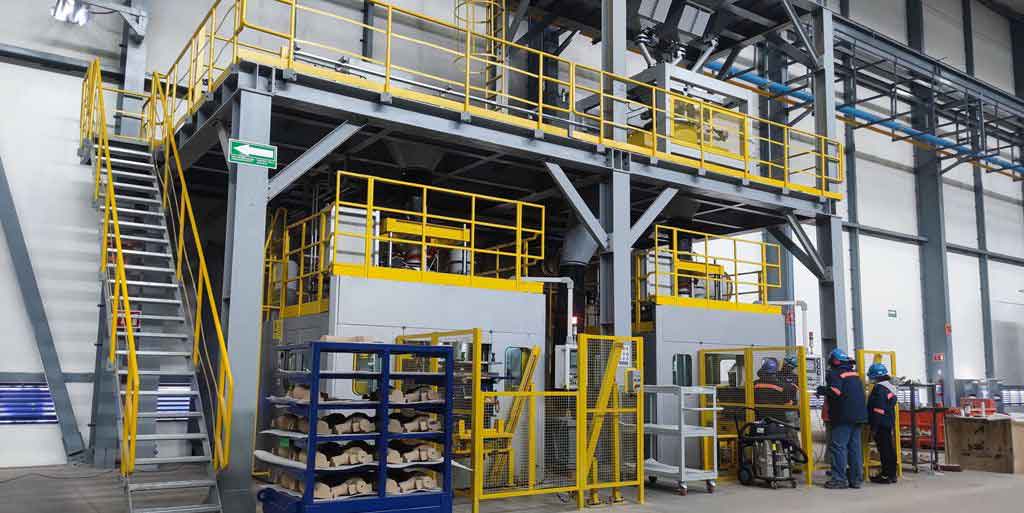
The transition to advanced methods is crucial, as the pursuit of quality in steel casting for demanding applications must address both material and process innovations. The following sections detail our methodology, experimental findings, and the practical implementation of 3DP sand moulding for a critical stamping die component.
1. Materials and Experimental Methodology
Our investigation began with the careful selection and characterization of base materials, followed by a structured experimental plan to understand the influence of key printing parameters on mould properties critical for steel casting.
1.1 Foundry Sand and Binder System
The primary material was a silica sand specifically designated for steel casting applications. Chemical composition analysis confirmed its high purity, essential for withstanding the high temperatures of molten steel.
| Component | SiO₂ | Al₂O₃ | Fe₂O₃ | TiO₂ | MgO | CaO |
|---|---|---|---|---|---|---|
| Content (wt.%) | 98.63 | 0.67 | 0.10 | 0.11 | 0.09 | 0.15 |
Particle size distribution analysis revealed a D₅₀ of 270 µm. Morphologically, the sand particles exhibited a typical multi-angular quartz shape, which contributes to good interlocking and mould strength. The binder system comprised a furan resin and a benzenesulfonic acid-based catalyst (hardener). The resin acts as the adhesive, while the catalyst initiates and accelerates the curing reaction upon contact.
1.2 3DP Printing Parameters and Property Evaluation
A commercial 3DP system was employed with fixed machine parameters: print head voltage at 90V, temperature at 35°C, and traversal speed at 0.459 m/s. The key variable parameters under investigation were:
- Layer Thickness (LT): Affects resolution, build time, and layer bonding.
- Catalyst Addition (CA): Expressed as a weight percentage of the sand. Governs curing speed and final strength.
- Resin Addition (RA): Expressed as a weight percentage of the sand (determined via burn-off tests). Directly controls the quantity of binder bridges between sand grains.
We designed three sets of single-factor experiments to isolate the effect of each parameter on fundamental mould properties. The measured responses were:
- Tensile Strength: Measured on standard “dog-bone” specimens at three conditions: 1-hour after printing, 24-hour after printing (room temperature cure), and after a 20-minute bake at 100°C. Crucial for mould handling and resisting metalostatic pressure during steel casting.
- Gas Permeability: Measured using a standard permeability meter. Vital for allowing gases generated during the pour to escape, preventing defects like blows or pores in the steel casting.
- Gas Generation: Measured using a gas evolution meter, recording the total volume of gas released per gram of mould material when heated. Must be controlled to minimize gas-related defects.
The experimental matrix is summarized below:
| Study Focus | Layer Thickness (mm) | Catalyst Addition (%) | Resin Addition (%) |
|---|---|---|---|
| Tensile Strength | 0.30, 0.35, 0.40 | 0.40 | 1.46 |
| 0.30 | 0.40, 0.50, 0.60 | 1.82 | |
| 0.30 | 0.50 | 1.46, 1.82, 2.18 | |
| Gas Permeability | 0.30, 0.35, 0.40 | 0.40 | 1.46 |
| 0.30 | 0.40, 0.50, 0.60 | 1.46 | |
| 0.30 | 0.50 | 1.46, 1.82, 2.18 | |
| Gas Generation | 0.30, 0.35, 0.40 | 0.40 | 1.82 |
| 0.30 | 0.50 | 1.46, 1.82, 2.18 |
Based on the results from these tests, an optimal parameter set was selected for the final sand mould design and steel casting trial of an automotive stamping die component.
2. Results and Analysis: The Science Behind the Sand
The experimental data revealed clear and significant trends, providing a scientific basis for optimizing 3DP sand moulds for steel casting.
2.1 Tensile Strength: Building a Robust Mould
Tensile strength is arguably the most critical mechanical property for a sand mould, especially for heavy-section steel casting where metallostatic forces are substantial. Our findings can be modeled conceptually. The strength (σ_t) arises from the bonding bridges between sand grains. It can be considered a function of the number and cross-sectional area of these bridges per unit area.
$$ \sigma_t \propto N_b \cdot A_b \cdot \tau_b $$
Where:
$N_b$ = Number of effective binder bridges per unit area,
$A_b$ = Average cross-sectional area of a binder bridge,
$\tau_b$ = Shear strength of the cured binder material.
Effect of Layer Thickness (LT): With constant CA (0.4%) and RA (1.46%), tensile strength decreased as LT increased from 0.30 mm to 0.40 mm. Several factors contribute to this relationship:
1. Reduced Binder Density: For a fixed RA (weight%), a thicker layer means a larger volume of sand per layer, leading to a lower volumetric concentration of resin.
2. Weaker Inter-layer Bonding: The binder must penetrate deeper to bond with the previous layer. Incomplete penetration creates a plane of weakness.
3. Lower Powder Bed Density: Thicker layers often result in a less densely packed powder bed, increasing porosity and reducing the contact points between grains where bridges can form.
The 0.30 mm LT specimens showed nearly identical 24-hour and baked strengths, indicating near-complete curing at room temperature.
Effect of Catalyst Addition (CA): With constant LT (0.30 mm) and RA (1.82%), strength initially benefited from faster curing but decreased with excessive catalyst (0.6%). An optimal CA ensures complete cross-linking of the resin. Excess acid catalyst can degrade the polymer network, reducing $\tau_b$. Notably, at 0.6% CA, the baked strength was lower than the 24-hour strength, suggesting over-catalyzation led to network breakdown upon further heating.
Effect of Resin Addition (RA): With constant LT (0.30 mm) and CA (0.5%), strength increased monotonically with RA. This is the most direct relationship: more resin increases $N_b$, $A_b$, and the thickness of the binder film coating the sand grains. At the maximum tested RA of 2.18%, the baked tensile strength reached 1.70 MPa, which is more than adequate for most steel casting applications. The data consistently showed that a post-print bake enhances the curing reaction, leading to higher strength compared to 1-hour tests.
2.2 Gas Permeability: Ensuring Venting for Sound Steel Casting
Permeability (P) dictates how easily gases can escape through the mould wall. It is governed by the pore structure according to the Carmen-Kozeny type equation:
$$ P \propto \frac{\phi^3}{(1-\phi)^2 \cdot S_0^2} $$
Where:
$\phi$ = Porosity (volume fraction of voids),
$S_0$ = Specific surface area of the sand grains.
Effect of Layer Thickness: Permeability increased with LT. This is directly linked to a decrease in powder bed density, which increases the overall porosity ($\phi$) of the printed structure. Larger inter-particle voids create easier pathways for gas flow.
Effect of Catalyst Addition: Permeability increased with CA. This was attributed to two mechanisms: a slight decrease in powder bed density with higher CA content, and more complete resin curing creating a more rigid, open network of bonded grains that resists compaction, maintaining higher $\phi$.
Effect of Resin Addition: Permeability decreased as RA increased. While LT and CA were constant (maintaining a similar initial $\phi$), the increased resin volume fills the interstitial pores between sand grains, reducing the effective porosity ($\phi$) and narrowing the gas flow channels. All tested combinations yielded permeability values greater than 400, which is exceptionally high and highly favorable for steel casting, ensuring rapid venting of moisture and decomposition gases.
2.3 Gas Generation: Minimizing Internal Defects
The total gas volume (V_g) released from a unit mass of mould material is primarily a function of the organic binder content and its decomposition characteristics.
$$ V_g \approx m_{resin} \cdot \alpha_{resin} + m_{catalyst} \cdot \alpha_{catalyst} $$
Where $m$ is the mass and $\alpha$ is the specific gas yield of each component.
Effect of Layer Thickness: No significant correlation was found between LT and gas generation within the tested range (0.30-0.40 mm). While LT affects resin concentration per volume, the test measures gas per unit mass, normalizing this effect. The small LT variation resulted in negligible differences in mass-specific resin content.
Effect of Resin Addition: A strong linear correlation was observed. Gas generation increased directly with RA, as the resin is the primary source of volatile compounds. At the optimal RA of 2.18%, the maximum gas generation was 14.6 mL/g. This value is considered manageable in steel casting practice, especially when coupled with the very high permeability measured, which allows these gases to escape rapidly without entrapping them in the solidifying metal.
The following table synthesizes the optimization findings:
| Property Target | Key Influencing Parameter | Trend | Optimal Choice for Steel Casting |
|---|---|---|---|
| High Tensile Strength | Resin Addition (RA) | Strong positive correlation | Higher RA (~2.18%) |
| High Gas Permeability | Layer Thickness (LT) | Positive correlation | Sufficient LT balance (0.30mm ok) |
| Controlled Gas Generation | Resin Addition (RA) | Positive correlation; must be balanced with strength need | RA=2.18% gives acceptable level |
| Curing Efficiency | Catalyst Addition (CA) | Optimum exists; excess reduces strength | Moderate CA (~0.4-0.5%) |
Based on this comprehensive analysis, the parameters selected for the production mould were: LT = 0.30 mm, CA = 0.4%, RA = 2.18%. This combination promises high strength (>1.7 MPa), very high permeability (>400), and controlled gas generation (14.6 mL/g), creating a robust foundation for quality steel casting.
3. From Digital Model to Cast Steel Component
With the material properties validated, the focus shifted to leveraging the unique design freedoms of 3DP for an actual automotive stamping die steel casting. The chosen component was a medium-to-large die section requiring high dimensional accuracy.
3.1 Casting and Mould Design Philosophy
The digital design process for 3DP sand moulds fundamentally differs from traditional pattern-based design. We employed strategies that are impractical or impossible with conventional methods:
- Integrated Cores: Complex internal sand cores were designed as monolithic parts of the main mould halves. This eliminates core-print locating errors, assembly gaps, and potential shifting during pouring, directly enhancing the dimensional accuracy of the final steel casting.
- Conformal & Lightweight Mould Structures: The external walls of the mould block were designed to follow the general contour of the casting with a near-constant wall thickness, rather than as a massive rectangular block. Non-critical, bulky sections of the mould were hollowed out in a controlled cellular or ribbed structure. This “lightweighting” reduces sand and binder consumption by up to 40-60%, slashing material cost and printing time without compromising mould strength where it matters.
- Zero Draft Angles: Since there is no physical pattern to withdraw from the sand, draft angles are unnecessary. This allows for perfectly vertical walls in the mould cavity, translating to more accurate and often lighter castings, as excess metal for draft is eliminated.
- Optimized Gating System: The sprue, runners, and ingates were digitally designed with smooth, optimized transitions and printed as an integral part of the cope and drag. This ensures precise replication and optimal metal flow for the steel casting.
- Innovative Marking Solution: A common challenge with 3DP sand is achieving sharp, raised identification markings or logos on the casting surface. Instead of printing shallow, easily eroded text in sand, we designed negative text (recessed into the mould cavity) and used a special process to pre-place solid, high-resolution inserts into the powder bed during printing. This hybrid approach yielded perfectly clear and durable markings on the final steel casting.
3.2 Casting Trial and Results
The moulds were printed using the optimized parameters. The upper and lower mould halves featured integral cores, lightweight structures, and precise pin-and-bushings for alignment. A standard casting alloy steel was melted and poured into the assembled 3DP sand mould.
The result was a fully-formed stamping die section with the following characteristics:
- Complete Structural Integrity: The mould withstood the thermal and mechanical shock of pouring, with no evidence of erosion, metal penetration, or mould wall failure.
- Excellent Dimensional Fidelity: The casting accurately reproduced the complex geometry, including thin walls and intricate core-defined features. The benefit of integrated cores was evident in the precise internal dimensions.
- Superior Surface Quality: The as-cast surface was clean, with sharp contours and no veining or rat-tails. Comparison with standard surface roughness scales indicated a surface finish (Ra) between 15 and 25 µm, which is excellent for an as-cast steel casting of this size and complexity.
- Sound Internal Quality: Non-destructive testing and subsequent machining revealed no significant gas porosity, shrinkage cavities, or sand inclusions. The combination of high mould permeability and controlled gas generation effectively prevented such defects.
This successful trial unequivocally demonstrated the viability of 3DP sand moulding for producing high-integrity, near-net-shape components for steel casting applications.
4. Broader Implications and the Future of Steel Casting with Additive Manufacturing
The successful application detailed here is a microcosm of a larger industrial shift. The advantages of 3DP for sand moulding extend beyond this single case and promise to reshape aspects of steel casting production, particularly for high-value, complex parts.
Supply Chain and Lead Time Compression: The elimination of pattern design, fabrication, and storage collapses weeks or months of lead time into days. This enables rapid prototyping, faster design iterations, and on-demand manufacturing of spare parts or tooling, revolutionizing logistics for capital-intensive steel casting products.
Unprecedented Design Complexity: Engineers are now free to design parts based on functional requirements (topology optimization, conformal cooling channels) rather than manufacturability constraints imposed by pattern withdrawal. This can lead to lighter, stronger, and more efficient components. The ability to cast monolithic structures that were previously assembled from multiple pieces is a key advantage for steel casting in demanding applications.
Digital Inventory and Mass Customization: Instead of physical patterns occupying warehouse space, a digital library of mould designs can be maintained. Any design can be summoned and printed on demand, facilitating mass customization without the cost penalty of traditional tooling. This is particularly relevant for the tool and die industry, where each steel casting is often unique.
Sustainability Benefits: Lightweighting the mould structures directly reduces the consumption of raw sand and binder. Furthermore, the printed sand can often be reclaimed and reused in subsequent printing cycles after the casting is shaken out, supporting circular economy principles within the foundry. While the binder is organic, its precise, drop-on-demand application minimizes waste compared to traditional mixing methods.
Challenges and Research Frontiers: Widespread adoption faces challenges. The capital cost of industrial-scale 3DP printers is significant. Material properties, while sufficient, still require optimization for extreme conditions like heavy-section steel casting or certain alloy systems. Post-processing, such as removing loose sand from deep cavities or applying refractory coatings, needs efficient, automated solutions. Future research is directed towards:
1. Developing new, high-temperature binder systems for even more demanding steel casting applications.
2. Multi-material printing within a single mould (e.g., varying permeability or chilling properties in different zones).
3. Tight integration of process simulation (solidification, stress) with the printing path planning to pre-compensate for distortion.
4. Advancing artificial intelligence for in-process monitoring and defect prediction during the print.
5. Conclusion
This investigation into the application of Three-Dimensional Printing for sand mould fabrication has conclusively established its technical and practical merits for high-performance steel casting. Through systematic parameter study, we demonstrated that 3DP can produce sand moulds with tensile strength exceeding 1.70 MPa, gas permeability over 400, and controlled gas generation around 14.6 mL/g—a combination of properties that robustly meets the demanding requirements of alloy steel casting.
The core advantages of the technology are transformative: it is inherently tool-less, enabling the production of moulds for complex parts without any pattern cost or delay; it allows for integrated mould-core structures, eliminating assembly errors and boosting dimensional precision; it facilitates lightweight, conformal mould designs that save material and energy; and it operates on a fully digital workflow, enabling rapid iteration and mass customization.
The successful casting trial of an automotive stamping die component serves as a concrete validation. The process delivered a high-integrity steel casting with excellent surface finish, dimensional accuracy, and internal soundness. Furthermore, innovative design techniques solved ancillary challenges like achieving sharp casting markings.
In conclusion, 3DP sand moulding is not merely a rapid prototyping tool but a mature, production-ready manufacturing technology for single-piece and small-batch steel casting. It represents a pivotal step towards the intelligent, flexible, and sustainable foundry of the future. As material systems advance and printer capabilities grow, the scope of printable castings will expand, further solidifying additive manufacturing’s role as a cornerstone technology for advanced steel casting.