
This article details our comprehensive industrial research on the application of environmentally friendly self-assembled monolayer (SAM) technology as a direct replacement for traditional pickling and phosphating processes in the surface pretreatment of steel casting components. The detrimental economic impact of metallic corrosion is a global challenge, with annual losses estimated between 1.5% to 2.4% of the gross national product in many nations. For critical industrial components like steel castings, which often form the structural backbone of machinery, effective surface pretreatment is paramount to ensure longevity and reliability. Traditionally, the pickling and phosphating process has been the industry standard. However, this method generates significant environmental liabilities, including toxic sludge, heavy metal contamination (e.g., zinc, manganese, nickel), high water consumption, and substantial waste treatment costs. The search for a viable, high-performance, and green alternative is therefore not just a technical improvement but an environmental and economic imperative.
Self-assembled monolayer technology has emerged over recent decades as a promising frontier in organic ultrathin film science. For metallic corrosion protection, SAMs offer a fundamentally different approach. The formation process is spontaneous: a steel casting part is immersed in a dilute solution containing active molecules with a specific affinity for the metal surface. These molecules spontaneously organize and chemisorb onto the substrate, forming a dense, highly ordered, and often hydrophobic film. This nanoscale film acts as a formidable barrier, significantly inhibiting the diffusion and migration of corrosive agents (like O2 and H2O) towards the metal surface. The product central to our study, an eco-friendly metal derusting and cleaning solution designated YSL-103, is engineered to perform dual functions. It effectively removes oxides and rust from steel castings while simultaneously facilitating the in-situ formation of a protective SAM. This integrated “clean-and-protect” methodology presents a compelling alternative to the multi-stage, polluting pickling-phosphating line. Its operational simplicity—requiring no special equipment and capable of uniformly coating geometrically complex steel castings—positions it as a potent temporary corrosion inhibitor and a foundational layer for subsequent coatings.
The core of our work involved a direct, side-by-side comparative analysis between the novel SAM-based pretreatment using YSL-103 and the conventional pickling-phosphating process. The evaluation was conducted across three critical axes: environmental impact, corrosion-inhibiting performance on steel castings, and the effect on final paint quality. All testing was performed under real-world industrial conditions to ensure practical relevance.
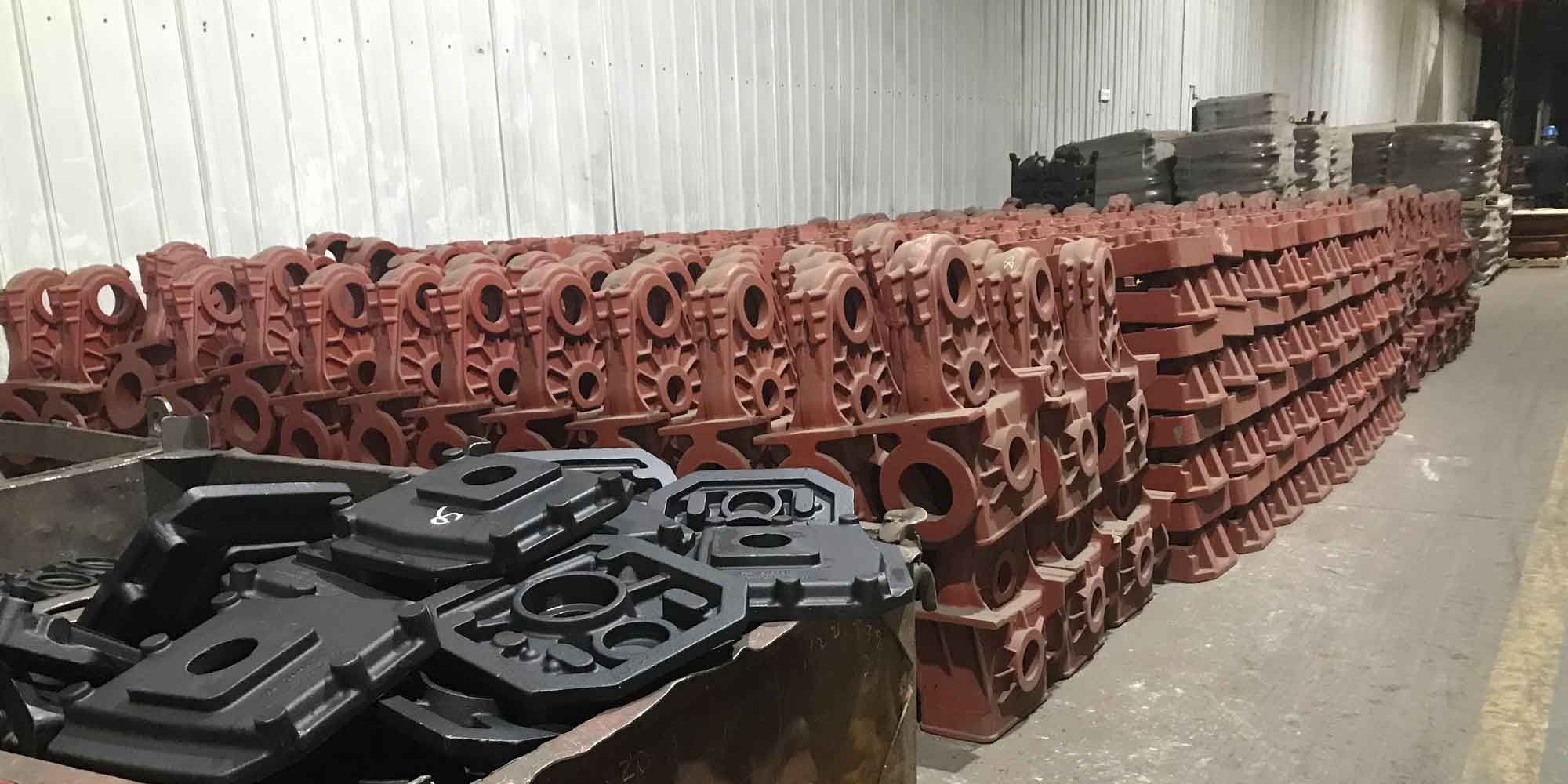
1. Theoretical Foundations and Mechanism of SAM Protection for Steel Castings
The superior performance of SAMs on steel casting surfaces can be attributed to their unique formation mechanism and structural properties. The active molecules in formulations like YSL-103 are typically amphiphilic, featuring a head group with a strong affinity for iron oxides and the underlying iron matrix (e.g., phosphonic acids, silanes), and a long alkyl tail. Upon immersion, the head groups covalently bond to the active sites on the steel casting surface, displacing water and other contaminants. The interaction energy can be conceptually described by an adsorption isotherm, such as the Langmuir model:
$$ \theta = \frac{K C}{1 + K C} $$
where $\theta$ is the fractional surface coverage, $C$ is the concentration of the active molecule in solution, and $K$ is the equilibrium constant for adsorption. A high $K$ value indicates strong chemisorption, leading to a dense, stable film on the steel casting substrate.
The organized monolayer drastically alters the surface properties. The packed alkyl chains create a hydrophobic interface, significantly increasing the water contact angle. The effectiveness of this barrier in reducing corrosion current ($i_{corr}$) can be related to the pore resistance ($R_p$) of the film using a simplified form of the Stern-Geary equation:
$$ i_{corr} = \frac{B}{R_p} $$
where $B$ is the Stern-Geary constant. A high-quality SAM on a steel casting yields a very high $R_p$, thereby minimizing $i_{corr}$. The film’s effectiveness also depends on its thickness ($d$) and dielectric constant ($\epsilon$), influencing the overall charge transfer resistance.
2. Comparative Experimental Methodology and Results
2.1 Environmental Impact Assessment
The environmental burden of a pretreatment process is primarily assessed through the pollutant load of its effluent. We conducted a standardized wastewater quality analysis comparing spent YSL-103 solution and conventional phosphating bath effluent. The key parameters were Chemical Oxygen Demand (COD, indicating organic pollutant levels), Total Phosphorus (P, a major eutrophication agent), and Ammonia Nitrogen (NH3-N). Lower values signify a smaller environmental footprint.
| Test Parameter | Eco-Friendly SAM Solution (YSL-103) Effluent (mg/L) | Conventional Phosphating Bath Effluent (mg/L) | Environmental Advantage |
|---|---|---|---|
| Chemical Oxygen Demand (COD) | 836 | 900 | ~7% lower organic load |
| Total Phosphorus (P) | 56.3 | 100 | ~44% reduction in phosphorus |
| Ammonia Nitrogen (NH3-N) | 12.3 | 15 | ~18% lower ammonia content |
The data conclusively shows that the SAM-based process using YSL-103 generates effluent with measurably lower concentrations across all three critical pollutants. The most significant reduction is in Total Phosphorus, a direct consequence of eliminating phosphate-based chemicals from the pretreatment sequence for steel castings. This translates to lower waste treatment costs and a substantially reduced environmental impact.
2.2 Corrosion Protection Performance on Steel Castings
We evaluated the bare-metal corrosion protection offered by the SAM film versus traditional phosphating on identical steel casting components (engine connecting rods and cylinder heads). Two application variants of the YSL-103 process were tested against the full conventional process.
| Process | Step Sequence | Key Agent / Condition | Time (min) | Temperature |
|---|---|---|---|---|
| SAM Process A | Alkaline Degrease → Ultrasonic + YSL-103 → Dry | YSL-103, pH 1-3 | 5 (in ultrasonic) | Ambient |
| SAM Process B | Alkaline Degrease → YSL-103 Immersion → Dry | YSL-103, pH 1-3 | 7 | Ambient |
| Conventional Process | Degrease → Rinse → Acid Pickle → Rinse → Surface Condition → Phosphating → Rinse → Dry | Multiple acids, phosphates, accelerators | 20-30+ (total) | 30-80°C (varied) |
The treated steel casting components were stored under ambient indoor conditions (average temperature ~29°C, average humidity ~60% RH) and monitored daily for rust initiation.
| Pretreatment Process | First Sign of Corrosion on Steel Castings | Observation Period | Performance Conclusion |
|---|---|---|---|
| SAM Process A (Ultrasonic Assist) | No rust observed after 40 days | 40 days | Excellent protection |
| SAM Process B (Immersion Only) | No rust observed after 40 days | 40 days | Excellent protection |
| Traditional Phosphating | Visible rust in holes/crevices after 4 days | 4 days | Poor temporary protection |
The results are unequivocal. The self-assembled monolayer formed by YSL-103 provided exceptional temporary corrosion protection for the steel castings, maintaining a pristine surface for over 40 days in a moderately aggressive environment. In stark contrast, the phosphated steel castings showed susceptibility to rusting within just a few days. Furthermore, the SAM process is dramatically simpler and faster, requiring fewer steps and operating at ambient temperature, which translates to significant energy savings and higher throughput for steel casting pretreatment lines.
The protective efficacy can be modeled by considering the film as a capacitor and resistor in parallel. The charge transfer resistance ($R_{ct}$) for a steel casting with a good SAM is several orders of magnitude higher than that of a phosphated or bare surface. The time to failure ($t_f$) in a humid environment can be approximated by a relationship involving the SAM’s barrier properties and the environmental conditions:
$$ t_f \propto \frac{R_{ct} \cdot \theta}{P_{H_2O}} $$
where $\theta$ is the surface coverage (ideally ~1 for a perfect SAM) and $P_{H_2O}$ is the water vapor pressure. The high $R_{ct}$ and $\theta$ values for a well-formed SAM on steel castings directly explain the extended protection time observed.
2.3 Post-Painting Physical Properties
A critical industrial requirement is that any new pretreatment must not adversely affect the quality and adhesion of the final paint layer. We processed various steel casting components (connecting rods, cylinder heads, flanges) using both the SAM (Process A) and conventional phosphating protocols, followed by identical electrostatic powder coating and curing cycles. The finished parts were subjected to standard paint quality tests.
| Performance Metric | Test Method / Standard | Steel Castings with SAM Pretreatment (YSL-103) | Steel Castings with Conventional Phosphating | Result |
|---|---|---|---|---|
| Paint Adhesion | Cross-cut Tape Test (ASTM D3359) | 0 (Best): No detachment of coating squares | 0 (Best): No detachment of coating squares | Equivalent, Excellent |
| Gloss | Glossmeter Measurement at 60° | 15.5 – 17.8 GU | 15.7 – 17.8 GU | Equivalent, Within Spec (≤25 GU) |
| Color Difference (ΔE) | Spectrophotometry vs. Standard | Negligible, visually imperceptible | Negligible, visually imperceptible | Equivalent |
The data confirms that the eco-friendly SAM layer on steel castings provides an equally effective substrate for paint adhesion as the traditional zinc phosphate coating. The mechanical interlocking and potential chemical bonding between the paint and the organic SAM film are sufficient to achieve the highest adhesion rating. Furthermore, the visual and gloss properties of the final painted steel casting components are indistinguishable between the two pretreatments, meeting all industrial specifications.
The adhesion strength ($F_{adh}$) can be related to the surface energy of the pretreated steel casting ($\gamma_s$) and the paint ($\gamma_p$), and their interfacial energy ($\gamma_{sp}$), as per the Dupre equation:
$$ W_{adh} = \gamma_s + \gamma_p – \gamma_{sp} $$
where $W_{adh}$ is the work of adhesion. A well-formed SAM modifies $\gamma_s$ to be optimally compatible with the paint, promoting a low $\gamma_{sp}$ and thus a high $W_{adh}$, explaining the excellent results.
3. Discussion and Industrial Implications for Steel Casting Manufacturers
The transition from acid-based pickling and phosphating to an eco-friendly self-assembled monolayer technology represents a paradigm shift in the surface engineering of steel castings. The advantages are multi-faceted and align with modern sustainable manufacturing goals.
Environmental & Economic Benefits: The elimination of phosphate, heavy metals, and strong mineral acids (like hydrochloric or sulfuric acid) from the process flow drastically reduces hazardous waste generation and simplifies wastewater management for steel casting foundries and finishing shops. The ambient temperature operation of the SAM process cuts energy consumption significantly compared to heated degreasing and phosphating stages. The reduction in process steps (from 7-8 to 2-3) saves space, water, and labor, leading to a lower total cost of ownership.
Technical Performance: As demonstrated, the SAM film offers superior temporary corrosion protection for steel castings, which is crucial for parts in storage or in transit between processing and final assembly. Its performance as a paint base is equivalent to phosphating, ensuring no compromise in product quality. The technology is versatile and can be applied to complex-geometry steel castings via simple immersion, ensuring complete coverage.
Challenges and Future Outlook: While this study focused on specific steel casting alloys, further research is warranted to optimize SAM formulations for a broader range of ferrous and non-ferrous metals. The long-term durability of the SAM-paint system under extreme operational conditions (e.g., high temperature, prolonged UV exposure, chemical splash) warrants extended field trials. However, the foundational principle is robust. Continued development in molecular design—such as creating multi-functional SAMs with built-in inhibitors or enhanced compatibility with diverse paint chemistries—will further expand the applicability of this technology.
4. Conclusion
Our industrial-scale investigation provides compelling evidence that environmentally friendly self-assembled monolayer technology, exemplified by the YSL-103 solution, is a technically superior and environmentally responsible alternative to traditional pickling and phosphating for the pretreatment of steel casting components. It excels in all three evaluated criteria: it generates less polluted effluent, provides significantly better corrosion inhibition for bare steel castings, and serves as an equally effective substrate for high-quality paint finishes. The process is simpler, faster, and more energy-efficient. We conclude that the adoption of this SAM-based pretreatment is a viable and highly advantageous pathway for the steel casting industry, offering a concrete step towards greener manufacturing without sacrificing performance. As this technology matures, it is poised to instigate a significant transformation in the field of metallic corrosion protection and sustainable surface treatment.