
As a practitioner in the field of casting, addressing the persistent challenge of hot cracking in steel castings has been a central focus of my work. Sand casting, accounting for approximately 80% of all castings produced, is the predominant method. For steel castings, the primary sand systems are clay-bonded sand, silicate-bonded sand, and resin-bonded sand. Each offers distinct advantages and disadvantages in application. Based on extensive practical experience with various self-setting sands like ester-hardened silicate, furan resin, and Pepset resin, I aim to explore the formation mechanisms and practical solutions for hot cracks in steel castings produced with these molds.
The selection of mold material profoundly influences the casting’s quality and defect propensity. The table below summarizes the key characteristics of common sand systems used for steel castings.
| Sand Type | Key Advantages | Key Disadvantages |
|---|---|---|
| Clay Sand (Green) | Lowest cost, high productivity, easy automation, good collapsibility. | Lower dimensional accuracy, surface finish; prone to defects like scabs and blows. |
| Silicate Sand (CO2) | Good working environment, low cost, low hot cracking tendency. | Poor collapsibility and shakeout, difficult sand reclamation, lower surface quality. |
| Silicate Sand (Ester-Hardened) | Improved collapsibility vs. CO2, good dimensional accuracy, low hot cracking tendency. | Reclamation performance decreases over time, limited bench life. |
| Furan Resin Sand (Acid-Cured) | Excellent dimensional accuracy and surface finish, good collapsibility & reclamation. | Fumes during molding/pouring, poor high-temperature deformability, high hot cracking tendency. |
| Alkaline Phenolic Resin Sand (Ester-Cured) | Lower N, P, S content reduces cracking vs. furan; low odor. | Higher cost, more difficult reclamation than furan sand. |
| Phenolic Urethane Resin Sand (Amine-Cured) | Good bench life, flowability, fast curing, easy shakeout. | High cost, fumes during coremaking, high N content can cause pinholing. |
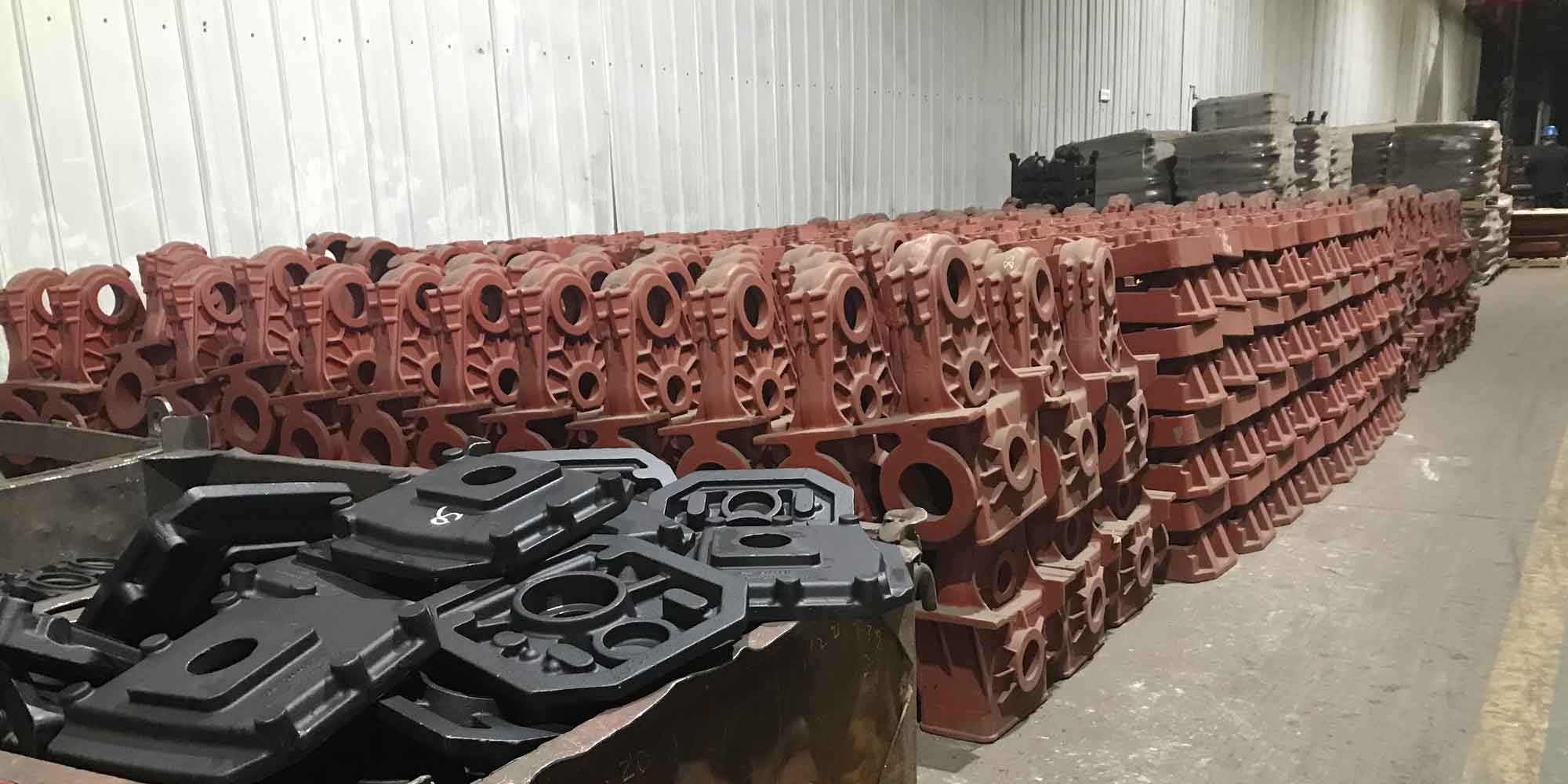
The choice of sand system is critical because its inherent properties—thermal conductivity, deformability at high temperature, collapsibility, and interfacial reactivity—directly impact the solidification dynamics and stress development within the steel casting. The performance comparison in the following table highlights why certain sands are more prone to inducing cracks in steel castings.
| Property / Sand Type | Clay Sand (Green) | Silicate Sand (Ester) | Furan Resin Sand | Alkaline Phenolic Sand |
|---|---|---|---|---|
| Thermal Conductivity | High | Moderate to High | Low | Low to Moderate |
| High-Temp Deformability (Yield) | Good | Very Good | Poor | Moderate |
| Collapsibility | Excellent | Fair to Good | Excellent* (at low temp) | Good |
| Surface Sulfur Pickup | Negligible | Negligible | Significant | Low |
| Hot Tearing Tendency for Steel Castings | Low | Low | High | Moderate |
*Note: While furan sand collapses easily at room temperature, its carbonized matrix at high temperature is rigid, offering poor yield during solidification shrinkage.
Fundamental Mechanisms of Hot Crack Formation in Steel Castings
The formation of hot cracks in steel castings is not merely a result of shrinkage; it is a consequence of stress development acting upon a vulnerable microstructure during the final stages of solidification. A pivotal concept is the role of bifilms—double oxide films entrapped during turbulent filling or surface contraction of the molten metal. These bifilms often entrain slag, sand, or gases, creating perfect, stress-concentrating initiation sites for cracks within the mushy zone.
The process can be described as follows: As the steel casting solidifies, a dendritic network forms. Interdendritic liquid remains, and the steel casting undergoes thermal contraction. This contraction is resisted by the mold’s rigidity (especially pronounced in resin sands), cores, or even the casting’s own geometry. This generates tensile strain within the semi-solid steel casting skeleton. The bifilms, acting as pre-existing flaws, are particularly susceptible to being pulled apart under this strain. If the localized tensile stress ($\sigma$) exceeds the cohesive strength of the partially solidified material at that temperature, a micro-crack initiates at the bifilm. This crack can then propagate along interdendritic paths, which are enriched with residual liquid and low-melting-point phases. If this tear is not healed by the inflow of fresh liquid metal (i.e., inadequate feeding), it becomes a permanent hot crack.
This mechanism underscores that the propensity for hot cracks in steel castings depends on two main factors: the magnitude of the tensile strain/stress developed and the resistance of the solidifying material to crack initiation and propagation. The susceptibility can be modeled. One influential approach is a modified Crack Susceptibility Coefficient (CSC), which incorporates strain considerations:
$$ CSC = \frac{\alpha \cdot \Delta T \cdot L \cdot A}{l^2} \cdot \frac{t_V}{t_R} $$
Where:
$\alpha$ = coefficient of thermal expansion
$\Delta T$ = effective solidification range
$L$ = length of the contracting section of the steel casting
$A$ = grain size
$l$ = length of the hot spot (stress concentration zone)
$t_V$ = vulnerable time period when the grain boundaries are weak
$t_R$ = time available for stress relaxation via liquid flow
This formula reveals critical insights for preventing cracks in steel castings. A high CSC indicates high susceptibility. Key levers for reduction include:
- Minimizing the contraction length ($L$).
- Reducing grain size ($A$).
- Avoiding sharp thermal gradients and stress concentrators (minimizing $l$).
- Adjusting alloy composition to reduce the effective freezing range ($\Delta T$) and the $t_V/t_R$ ratio.
For thin-section steel castings, the situation is especially critical. Their rapid cooling leads to a high $t_V/t_R$ ratio, making them extraordinarily sensitive to hot tearing. For instance, calculations for a low-alloy steel like ZG18CrNiMo show a significantly higher CSC for a 10mm wall thickness compared to a 50mm wall.
How Mold Sand Properties Exacerbate Cracking in Steel Castings
The mold material directly influences terms in the CSC equation and the crack initiation environment.
1. Thermal Conductivity & Cooling Rate: Furan resin sand has low thermal conductivity, leading to slower cooling of the steel casting. This results in larger grain size ($A$), which increases CSC. Slower cooling also prolongs the time the steel casting spends in the vulnerable mushy state, effectively influencing $t_V$.
2. High-Temperature Deformability (Yield): This is arguably the most critical property difference. Silicate sands develop a viscous, yielding “soft zone” above 800°C, accommodating the shrinkage of the steel casting. In contrast, furan resin sand forms a rigid, carbonized skeleton with high hot strength and minimal deformation, imposing high restraint and thus generating high tensile stress ($\sigma$). The ranking for deformability is: Furan ≤ Pepset ≤ Alkaline Phenolic ≤ Silicate sand.
3. Interfacial Reaction & Surface Quality: Acid-cured furan resins break down during pouring, releasing SO₂/SO₃ gases. These can react with the steel casting surface to form low-melting-point FeS/MnS eutectics (melting point ~975°C). This sulfur enrichment further widens the effective solidification range ($\Delta T$) at the surface, prolonging the time the grain boundaries are weak and providing easy paths for crack propagation. This phenomenon is less prevalent with silicate or alkaline phenolic sands.
A Comprehensive Strategy to Prevent Hot Cracks in Steel Castings
Preventing hot cracks in steel castings requires a holistic approach targeting both the stress/strain development and the material’s resistance. Solutions must be tailored to the specific sand system used.
A. Metallurgical & Melt Quality Control
- Minimize Harmful Elements: Strictly control S and P levels, as they form low-melting-point films. Ensure effective deoxidation to minimize oxide bifilm formation.
- Optimize Composition: Within specification limits, adjust alloys to reduce the effective freezing range ($\Delta T$). Maintain adequate Mn/S ratio to form harmless MnS rather than FeS.
- Melt Cleanliness: Minimize the generation and entrainment of oxides and slag to reduce the population of crack-initiating bifilms.
B. Casting & Gating Design
- Reduce Contraction Length ($L$): Strategically place feeders (risers) not just for feeding but to act as “thermal soft points” that divide a long contracting section into shorter, less susceptible segments.
- Promote Uniform Cooling & Sequential Solidification: Design the thermal geometry to avoid isolated hot spots. Use directional solidification towards feeders.
- Eliminate Stress Concentrators: Use generous radii, avoid sharp re-entrant angles, and employ curved sections to absorb strain.
- Gating for Minimal Turbulence: Design systems to fill the mold smoothly (e.g., stepped, tapered, or vertical gates) to prevent oxide entrainment. A well-designed system preserves melt quality.
C. Foundry Practice & Process Optimization
- Feeder Design: Ensure adequate feed metal volume and pressure to heal incipient tears. Isolate hot spots with feeders.
- Strategic Use of Chills: External chills (especially plate chills) are highly effective for local heat extraction. They accelerate solidification at hot spots, reducing $l$ and refining grain size ($A$). They move the vulnerable region quickly past the cracking temperature. However, chills also impose constraint, so placement is critical to avoid creating new strain concentrations.
- Padding & Cooling Fins: Use strengthening ribs or cooling fins (as part of the casting design) to both stiffen thin sections and act as heat sinks.
- Special Sands in Critical Areas: Use chromite, zircon, or cerabeads sand in mold/core sections adjacent to high-risk areas. These sands have higher thermal conductivity, promoting faster cooling.
- Pouring Temperature: A lower pouring temperature reduces total contraction liquid and can refine grains but may impair feeding ability. An optimal balance must be found for the specific steel casting geometry and sand type.
D. Mold & Core Optimization
- Improve Mold Yield:
- For resin sands, minimize resin content to reduce post-cure strength.
- Add combustibles (e.g., wood flour, polystyrene beads) to cores to create collapse points.
- Use hollow core designs or shell molds/cores to reduce mass and rigidity.
- Reduce the mold-to-metal ratio (smaller flask sizes) where possible.
- Minimize Mechanical Restraint: Use flexible core prints, remove rigid reinforcing bars (chaplets) from hot spots, and loosen flask clamps after pouring.
- Control Mold-Metal Reaction (for Resin Sands):
- Use low-sulfur or sulfur-free hardeners.
- Apply effective refractory coatings (e.g., zircon-based) to act as a barrier against sulfur penetration.
- Ensure excellent mold/core venting to allow gaseous decomposition products to escape.
- Implement efficient sand reclamation to control the buildup of sulfates in the return sand.
Conclusion
Effectively mitigating hot cracks in steel castings requires a deep understanding of the interplay between the casting alloy’s solidification behavior, the casting’s geometric design, and the specific properties of the sand mold employed. The mechanism is fundamentally driven by strain concentration on weak points in the mushy zone, often initiated by entrapped oxides. Resin sands, particularly furan, present a significant challenge due to their poor thermal conductivity and, most importantly, their lack of high-temperature yield, which imposes severe restraint on the contracting steel casting. This is compounded by potential surface sulfur pick-up. Conversely, silicate sands offer better yield but pose other challenges like collapsibility.
The path to sound steel castings lies in a systematic, multi-pronged strategy. This involves controlling the metallurgy to strengthen the solidifying skeleton, designing the casting and gating to minimize strain and promote sound feeding, and tailoring the mold materials and practices to reduce constraint and adverse reactions. For thin-walled steel castings produced in resin sand, the process is exceptionally sensitive. Success depends on a holistic analysis of each specific case, the careful implementation of combined countermeasures, and stringent process control on the foundry floor.