
The production of large steel castings is a complex process where the design and implementation of effective sand mold and sand core venting systems are paramount. As a practitioner deeply involved in the manufacturing of critical components like turbine frames and cylinders, I have observed that inadequate gas evacuation is a primary source of defects such as blowholes, surface pitting, and even catastrophic failures like metal penetration and eruptions during pouring. This article consolidates years of practical experience and systematic study into the principles, design methodologies, and application techniques for optimizing the exhaust process in sand molds and cores for large steel castings. A robust ventilation system is not merely an auxiliary feature but a fundamental requirement for ensuring the internal soundness, surface quality, and overall structural integrity of the final casting.
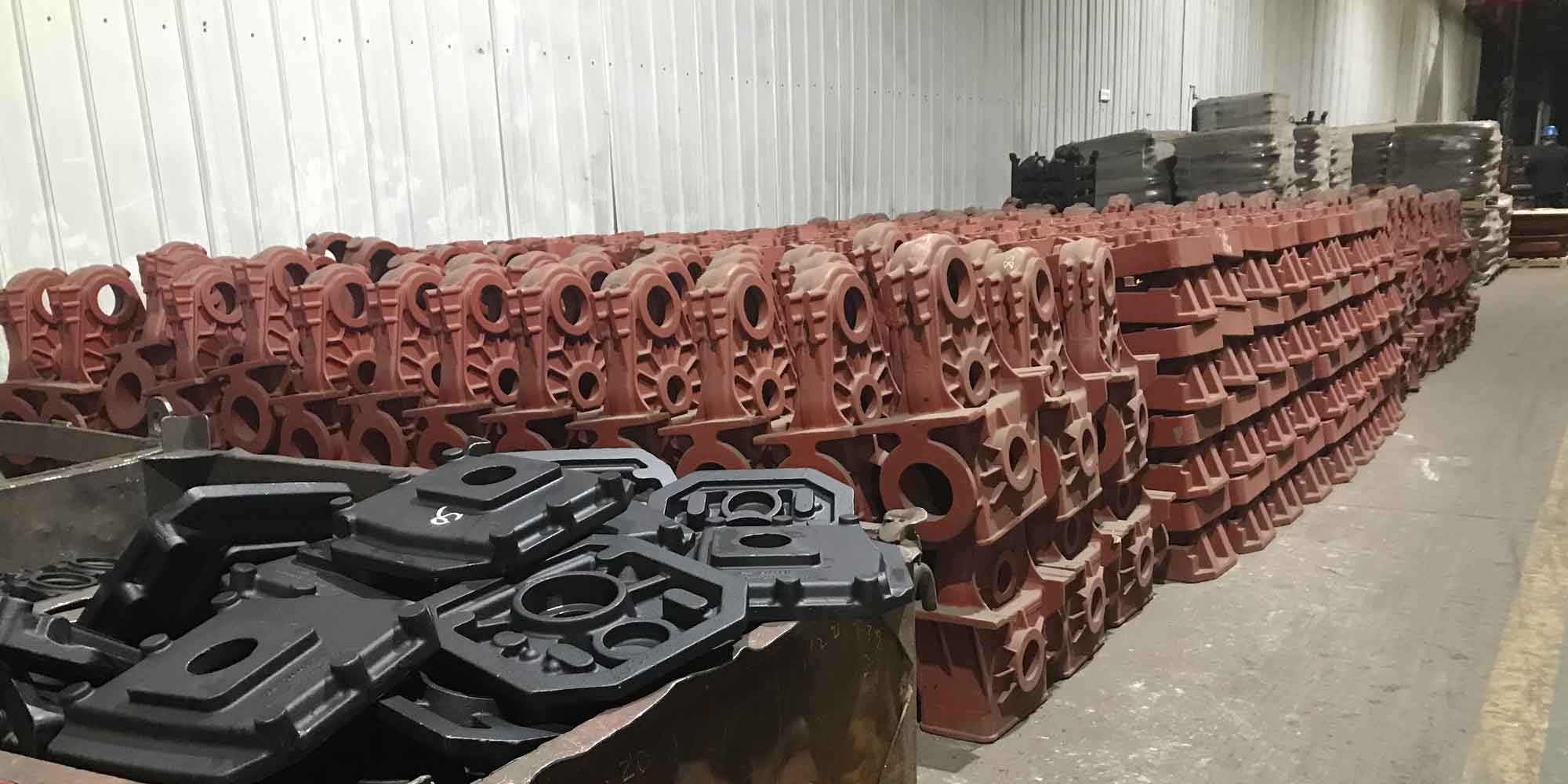
The fundamental challenge stems from the massive gas generation when molten steel, at temperatures exceeding 1500°C, contacts the mold assembly. The sources are twofold: the volatile components within the molding materials themselves and the residual moisture. For alkaline phenolic resin-bonded sand, commonly used for its excellent flowability and dimensional stability, the resin decomposes, and any water present vaporizes explosively. The gas volume generated can be substantial. If not channeled away efficiently, the resulting pressure can force gases into the solidifying metal, creating defects, or cause dangerous back-pressure in the mold cavity. Therefore, a scientific approach to ventilation encompasses control at the source, strategic pathway design, and validated operational procedures.
1. Controlling the Source of Gases in Mold and Core Materials
The first line of defense against gas-related defects is to minimize the total gas volume generated. This requires strict control over the raw and auxiliary materials used in preparing the sand mixtures for both molds and cores.
1.1 Foundry Sand Parameters
The quality of the base sand directly impacts gas evolution and mold permeability. Key parameters must be monitored and controlled, as summarized in the table below for incoming sand quality.
| Parameter | Control Standard | Impact on Steel Castings |
|---|---|---|
| Grain Fineness (AFS) | 30-50 mesh | Finer grains reduce inter-particle voids, decreasing permeability and increasing the likelihood of gas entrapment in steel castings. |
| Loss on Ignition (LOI) | ≤ 0.3% | High LOI indicates volatile organics or clay, leading to higher gas generation which can cause porosity in steel castings. |
| Clay Content | ≤ 0.2% | Clay fills pores, drastically reducing sand permeability and hindering gas escape from the mold for steel castings. |
| Moisture Content | ≤ 0.2% | Residual moisture is a direct source of steam; its vaporization is a major cause of gas pressure during the pour of steel castings. |
Furthermore, the use of reclaimed sand demands caution. Repeated thermal cycling and mechanical attrition during reclamation increase fineness (higher AFS number) and LOI due to the accumulation of charred resin coatings. This “fines build-up” can severely compromise the permeability of the sand system. For critical steel castings requiring superior surface finish, reducing the percentage of reclaimed sand or employing new sand is often necessary.
1.2 Binder Content Optimization
The organic resin binder is a primary gas generator. Its content is a critical trade-off: insufficient resin weakens the mold, risking erosion or collapse, while excess resin increases gas generation and reduces collapsibility, potentially causing hot tearing in steel castings. For alkaline phenolic resin systems, the optimal addition level is typically around 2.0% by weight of sand. This can be expressed as:
$$ W_r = 0.02 \times W_s $$
where $W_r$ is the weight of resin and $W_s$ is the weight of sand. Maintaining this ratio is crucial for achieving the necessary strength with minimized gas potential for steel castings.
1.3 Drying Process and Validation
Even with low-moisture sands, applied coatings (paints or washes) introduce water that must be removed. Incomplete drying is a frequent, yet avoidable, source of gas defects in steel castings. Molds and cores must undergo a controlled drying cycle post-coating. Large molds may use mobile dryers, while cores and critical molds are oven-dried. The cycle involves a preheating phase to gradually raise temperature, a high-temperature holding phase for thorough moisture removal, and a cooling phase. The goal is to achieve a sufficient dry depth without causing surface sintering or cracking.
Effectiveness must be verified empirically. Using a resistance meter (megohmmeter), the dry depth is measured by inserting probes. A standard criterion is a dry depth (where resistance falls below 10 MΩ) of at least 40 mm. This ensures that the immediate surface layer, which experiences the most intense heat, is effectively dehydrated before the steel casting process begins.
$$ R(z) < 10\text{ MΩ} \quad \text{for} \quad z \geq 40 \text{ mm} $$
where $R(z)$ is the electrical resistance at depth $z$. Additionally, molds should be poured as soon as possible after drying (“hot molding”) to prevent moisture reabsorption from the atmosphere, which is especially critical in humid environments.
2. Fundamental Principles and Design of Venting Pathways
Once gas generation is minimized, the focus shifts to providing low-resistance escape routes for the gases that are inevitably produced. This involves designing interconnected networks within the mold assembly.
2.1 Flask Vent Holes
For flask-molded steel castings, the flask itself is integral to the venting system. Vent holes must be drilled in the side walls and bottom plates of the flask. These holes act as final exits for gases collected within the sand mass. Their design is a balance: too few or too small holes restrict flow, while too many or too large holes weaken the flask structure. A proven guideline is that the total area of vent holes should constitute 3-5% of the respective flask wall or plate area.
$$ A_{vents} = (0.03 \text{ to } 0.05) \times A_{flask-wall} $$
These holes also serve as conduits for connecting internal venting materials (like ropes or pipes) to the outside atmosphere.
2.2 Pre-Ignition and Gas Extraction
A critical safety and quality procedure performed immediately before pouring is the ignition of gas outlets. A pipe with small holes spaced 300-500 mm apart is connected to a natural gas supply and laid near the main vent exits from the mold and core. The gas is ignited, creating a flame at each hole. As pouring commences, this establishes a strong thermal draft, actively pulling gases from the mold cavity and sand mass. This proactive extraction significantly reduces back-pressure, minimizes “boiling” or “spitting” at the ingates, and safely combusts flammable and toxic gases released from the resin binder, thereby improving the working environment and the quality of the steel castings.
3. Applied Venting Strategies for Specific Large Steel Castings
The application of venting principles must be tailored to the geometry and molding method of the component. Here, we explore strategies for common large steel castings like frames and cylinders.
3.1 Foundation Bed Venting for Frame Castings
Frame castings are often produced in deep pit molds. The foundation bed, a massive sand base, can trap enormous volumes of gas if not properly vented. Through extensive comparative trials on steel castings, three methods were evaluated: the Straw Bag + Pipe method, the Slag + Straw Bag + Pipe method, and the Vent Rope + Pipe method. Performance was assessed based on ease of implementation, duration of post-pour gas flame, and incidence of dangerous “back blows” or eruptions during pouring.
| Venting Method | Construction Labor & Speed | Post-Pour Flame Duration | Observed “Back Blows” | Mechanism & Efficiency |
|---|---|---|---|---|
| Straw Bag + Pipe | Medium / Medium | 1-5 days | Highest Frequency | Gas escapes only through carbonized straw layer; limited, uneven collection. |
| Slag + Straw Bag + Pipe | High / Slowest | 5-10 days | Medium Frequency | Slag layer provides some permeability; gas collection improved but still limited. |
| Vent Rope + Pipe | Low / Fastest | 10-15 days | Lowest Frequency | Hollow, mesh-walled ropes provide dedicated, high-capacity channels; excellent gas collection and flow. |
The Vent Rope + Pipe method proved superior. The plastic vent rope is laid in a grid pattern (400-600 mm spacing) at intervals of 200-300 mm sand height. All ropes are connected to vertical exhaust pipes placed around the pit’s perimeter. The key to success is preventing rope displacement during sand raining. A practical solution is bundling four strands of rope together with tape at 600 mm intervals, creating a stable, high-cross-section vent channel. The gas flow capacity can be conceptually related to the total cross-sectional area of the vent channels:
$$ Q \propto n \cdot A_r $$
where $Q$ is the gas flow rate, $n$ is the number of rope bundles, and $A_r$ is the effective cross-sectional area per bundle. This method has become standard for foundation beds in large steel castings like machine frames, ensuring safe, quiet pours and sound castings.
3.2 Core and Mold Venting for Cylinder Castings
Cylinder castings present a different challenge: complex internal geometries formed by numerous large cores, all completely surrounded by molten metal. The gas yield per unit mass of core sand is high. For these high-integrity steel castings, a multi-layered venting approach is essential.
Cylinder Mold Wall Venting: Similar to the foundation bed, the mold walls (cope and drag) are vented using vent ropes placed in layers. A typical specification is to place rope grids every 500 mm of sand thickness, keeping the rope approximately 150-200 mm from the pattern face. Each layer should have at least eight exit points evenly distributed around the flask.
Cylinder Main Core Venting: The main body core requires internal venting layers. A network of permeable channels is created using “hay bundles” (loosely packed straw or similar material) arranged about 300 mm from the core’s working surface. These bundles are interconnected and led to central vertical vents made of larger hay bundles or perforated pipes that extend to the parting line. After molding, additional vent holes are manually poked from the parting line down towards these channels, creating low-resistance paths to the surface. During pouring, strong, sustained flames from these vents indicate effective operation, crucial for the quality of these heavyweight steel castings.
Forced Exhaust for Complex Cores: In box-shaped or other steel castings with intricate cores where natural buoyancy-driven venting is insufficient, forced extraction can be employed. Here, the vent pipes from core assemblies are connected to a header pipe fitted with a compressed air nozzle angled at approximately 30°. The fast-moving air jet creates a local negative pressure (Bernoulli’s principle), actively sucking gases from the cores.
$$ P_{static} + \frac{1}{2}\rho v^2 = \text{constant} $$
The high-velocity air ($v$) at the nozzle outlet reduces the local static pressure ($P_{static}$), pulling gas from the connected core vents. This technique significantly reduces the residence time of gases near the solidifying metal in challenging steel castings.
3.3 Venting for Rotational Symmetry Castings
For castings like conical sections made with inverted patterns, the direction of venting is critical. Venting a core through its bottom (drag side) is hazardous. The high metallostatic pressure increases the risk of metal penetration into the vent path (“metal runout”), which can block vents or cause a breakout. The priority rule is: Top venting > Side venting > Bottom venting. In practice for such steel castings, a vertical vent pipe is pre-embedded in the drag sand at one corner, connected to the core print during molding. After roll-over, this pipe is extended above the cope. This provides safe, upward venting, eliminating the risk of dangerous runouts during the pour of these steel castings.
4. Theoretical Considerations and Quantitative Analysis
While empirical knowledge is vital, underpinning the practice with theory allows for prediction and optimization. The flow of gases through porous sand and designed channels can be analyzed.
Permeability and Gas Flow: The permeability of the sand mixture, often tested via standard samples, dictates the ease of gas flow through the sand mass itself. Darcy’s law gives a fundamental relationship for flow through a porous medium:
$$ Q = \frac{k A \Delta P}{\mu L} $$
where:
- $Q$ is the volumetric gas flow rate.
- $k$ is the intrinsic permeability of the sand (dependent on grain size, distribution, and binder).
- $A$ is the cross-sectional area for flow.
- $\Delta P$ is the pressure difference driving the flow.
- $\mu$ is the dynamic viscosity of the gas.
- $L$ is the length of the flow path.
This equation highlights why controlling sand parameters (to maintain a high $k$) and providing short, large-area vent paths (low $L$, high $A$) are essential to manage the pressure $\Delta P$ within the mold for steel castings.
Gas Generation Rate: The total gas volume $V_g$ produced from a unit mass of sand can be estimated based on binder content and moisture. While complex in detail, a simplified expression is:
$$ V_g \approx \alpha W_r + \beta W_m $$
where $W_r$ and $W_m$ are the weights of resin and moisture per unit sand volume, and $\alpha$ and $\beta$ are coefficients representing specific gas yields. The venting system must be designed to handle this volumetric rate $dV_g/dt$ released during the pour and solidification of steel castings.
Pressure Buildup: Inadequate venting leads to a pressure buildup $\Delta P$ in isolated pockets. This pressure must be less than the metallostatic pressure $P_m = \rho g h$ at that point to prevent metal penetration into the sand, and less than the bubble rupture pressure to prevent gas invasion into the steel casting. The condition for safety is:
$$ \Delta P_{gas} < \min(P_m, P_{rupture}) $$
A well-designed vent system ensures $\Delta P_{gas}$ remains minimal by providing ample flow capacity $Q$.
5. Conclusion and Integrated Philosophy
The development of reliable venting technology for large steel castings is a synthesis of material science, process engineering, and practical craftsmanship. It begins with stringent control at the source—selecting and managing sands and binders to minimize gas evolution. It is followed by the intelligent design of passive and sometimes active venting networks that provide easy egress for gases, respecting the principles of fluid dynamics and the specific geometry of the casting. Finally, it is cemented by disciplined operational practices, such as thorough drying validation and pre-pour ignition.
The evolution from traditional methods like straw and slag to systematic vent rope grids and forced extraction represents a significant advancement in the quality and safety of producing large, complex steel castings. By viewing the mold and core assembly not just as a shape-defining tool but as a managed environment with a critical gas-phase component, foundries can consistently achieve sound, high-integrity steel castings. This holistic approach to ventilation system optimization is a cornerstone of modern, reliable heavy steel casting manufacture, directly contributing to reduced scrap rates, enhanced worker safety, and the production of components capable of withstanding the demanding service conditions for which they are designed.