
The pursuit of high-integrity, dimensionally precise, and cost-effective manufacturing methods has long driven innovation in the foundry industry. Among various techniques, Lost Foam Casting (LFC), also known as Full Mold Casting, stands out as a process often termed “green” due to its potential for minimal waste and environmental impact. Its advantages in achieving excellent dimensional accuracy and reducing machining allowances have led to widespread adoption, particularly for ferrous alloys. However, the application of this seemingly ideal process for producing steel castings has been historically plagued by a persistent and critical defect: surface and subsurface carburization. This issue has severely limited the use of LFC for critical, high-quality steel castings requiring strict chemical composition control, especially for low-carbon grades.
The root cause of carburization lies in the very heart of the process: the expendable foam pattern. During pouring, molten steel vaporizes the pattern, leading to its thermal decomposition. The gaseous decomposition products must escape through the coating into the sand bed, governed by the system’s vacuum. If these products contain excessive carbon-rich compounds, they can interact with the solidifying metal front, leading to carbon pickup in the final casting. This compromises mechanical properties, corrosion resistance, and weldability. Another related issue is “back-pressure” or “back-spurt,” where gases are generated too rapidly, causing violent reactions and potential safety hazards during pouring.
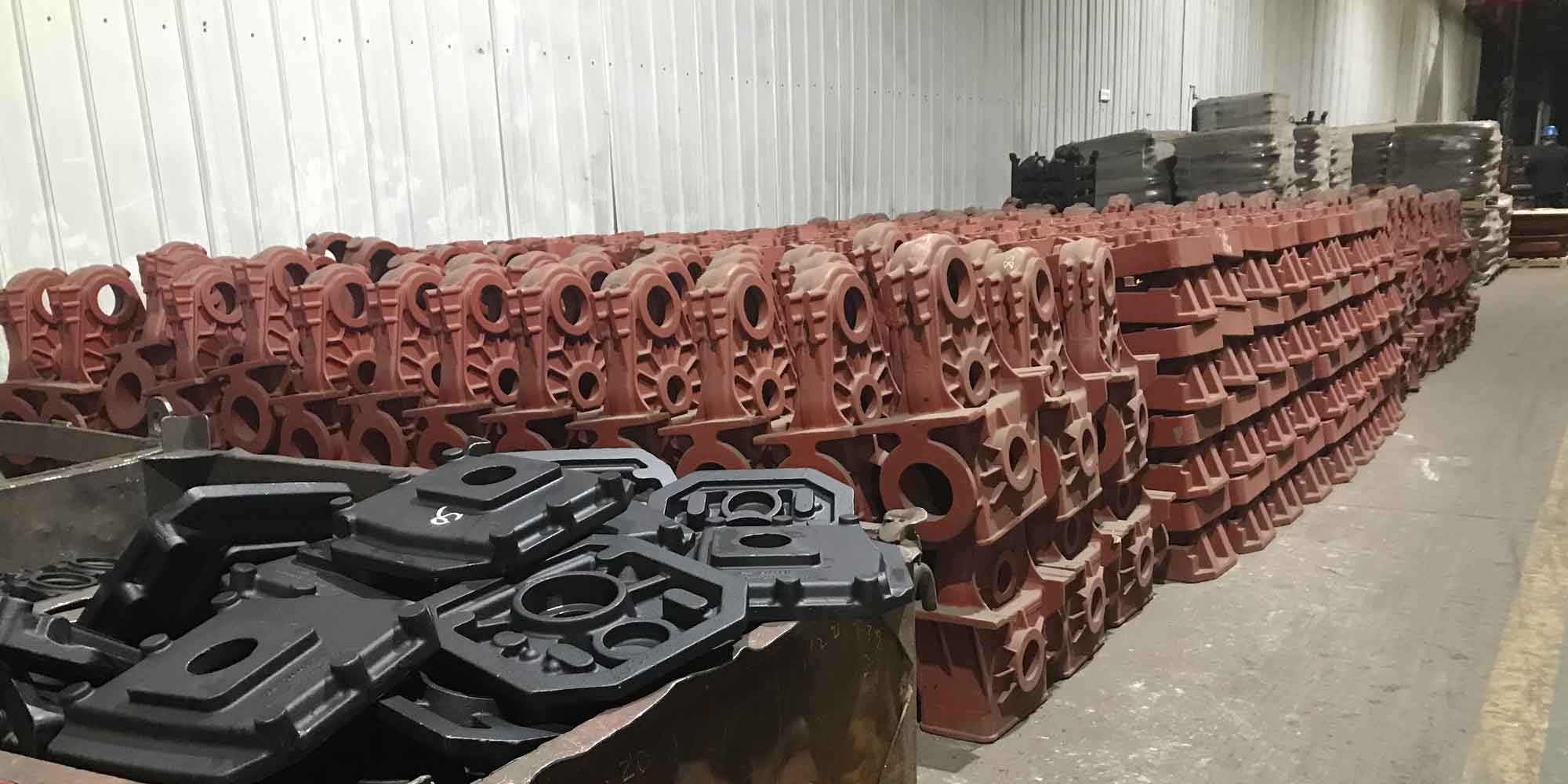
Faced with these challenges, producers of steel castings have explored alternative methods. One such method is the “burn-out and pour” or “shell” technique, where the foam pattern is intentionally combusted within the mold before metal introduction. While this can reduce gas generation during pouring, it introduces significant complexity, cost, and new sources of inconsistency. The process requires thicker, stronger coatings to maintain mold integrity after burnout, increases production cycle time, and can still leave behind carbonaceous residues from incomplete combustion. This makes it unsuitable for reliable, high-volume production of quality steel castings.
Therefore, the ideal solution remains true full mold casting—where the pattern is vaporized solely by the molten metal—but with a pattern material engineered to minimize carbon potential and control gas evolution. This article details the industrial application and efficacy of such a material: a novel Expandable Methyl Methacrylate-based (EMB) bead, developed specifically to enable the direct pouring of high-quality, low-carbon steel castings via the Lost Foam process.
The Chemical Origin of Gas and Carbon in Pattern Materials
To engineer a solution, one must first understand the source of the problem. Traditional LFC patterns are primarily made from Expandable Polystyrene (EPS) or Styrene-Methyl Methacrylate (MMA) co-polymers. Their chemical composition dictates their decomposition behavior.
- Expandable Polystyrene (EPS): Composed of 100% styrene monomers. The styrene molecule contains a benzene ring, a highly stable aromatic structure. Upon pyrolysis, it tends to decompose via a “condensation” pathway, forming dense, carbon-rich tars and soots (polyaromatic hydrocarbons). This is a primary source of free carbon available for pickup by steel castings. The gas generation from pure styrene pyrolysis is also significant and can be rapid.
- Common Co-polymer (e.g., 70% MMA / 30% Styrene): An improvement over EPS, it reduces styrene content. Methyl Methacrylate (MMA) decomposes via a “scission” pathway, primarily yielding smaller gaseous molecules like carbon monoxide (CO), carbon dioxide (CO2), and water vapor (H2O), along with negligible carbonaceous residue. However, the remaining 30% styrene still contributes a substantial carbon potential.
- Blowing Agent (Pentane): Present in all expandable beads, pentane is a volatile hydrocarbon. During pouring, it vaporizes and can combust or crack, contributing to the total gas volume and a minor amount of carbon.
The carbon potential ($C_{pot}$) of a pattern material can be conceptually modeled as a function of its styrene content and the yield of carbon from its decomposition:
$$ C_{pot} \propto f(S_{wt\%}, Y_C) $$
where $S_{wt\%}$ is the weight percentage of styrene in the polymer and $Y_C$ is the carbon yield coefficient from styrene pyrolysis (which is high relative to MMA).
Introducing the EMB Material: A Paradigm Shift in Composition
The novel EMB material is formulated to radically alter this chemical dynamic. Its core innovation is a reversed monomer ratio compared to standard co-polymers:
| Material Type | Methyl Methacrylate (MMA) Content | Styrene Content | Primary Decomposition Products | Inherent Carbon Potential |
|---|---|---|---|---|
| EPS | 0% | 100% | Gases + Heavy Carbon Tars/Soot | Very High |
| Common Co-polymer | ~70% | ~30% | Gases + Moderate Carbon Residue | High |
| EMB Material | ~90% | ~10% | Predominantly Gases (CO, CO₂, H₂O) | Very Low |
By reducing the styrene content to approximately 10%, the EMB material drastically cuts the primary source of carbon available for pickup by the solidifying steel castings. The dominant MMA component ensures that the majority of the pattern vaporizes into relatively inert gases. The theoretical carbon contribution from the EMB pattern can be estimated as a simple linear function based on styrene content, leading to a calculated carbon input several times lower than that from traditional co-polymer materials.
Furthermore, the EMB beads are engineered with a specialized “locking agent” for the pentane blowing agent. This agent stabilizes the pentane within the unexpanded bead but allows for its rapid and complete diffusion out during the pre-expansion and aging stages. The result is a foam pattern with exceptionally low residual pentane content (below 3%) at the time of pouring. This minimization of volatile hydrocarbons is crucial for controlling the total gas generation rate ($\dot{V}_{gas}$) and preventing violent back-spurt incidents, which is expressed as:
$$ \dot{V}_{gas}(t) = \dot{V}_{poly}(t) + \dot{V}_{pentane}(t) $$
Where $\dot{V}_{poly}$ is the gas generation rate from polymer decomposition and $\dot{V}_{pentane}$ is from residual pentane. EMB technology minimizes the $\dot{V}_{pentane}(t)$ term, promoting a smoother, more controlled gas evolution profile.
Industrial Application & Comparative Analysis: EMB vs. Common Co-polymer
The practical validation of EMB technology was conducted through a controlled production trial focused on a 25Mn steel casting (specified carbon content: 0.25%). The target component was a structural bracket. The process was meticulously compared against the standard process using a common MMA/Styrene co-polymer.
Process Parameters & Setup
Patterns for both materials were produced using standard LFC practices. The EMB patterns exhibited excellent surface finish and were processed at a slightly higher pre-expansion density (28 g/L) compared to the common co-polymer (24 g/L), indicating good structural stability. A dedicated refractory coating for steel castings was applied. A critical advantage observed was that the EMB process, using true full-mold casting, required a coating thickness of only ~1.6 mm. In contrast, the “burn-out and pour” method, often necessitated by problematic materials, typically requires 2.5-3.0 mm coatings for strength, directly increasing material cost and drying time.
| Process Stage | EMB (Full-Mold Casting) | Common Co-polymer (Full-Mold Casting) | “Burn-Out & Pour” Process |
|---|---|---|---|
| Pattern Material | EMB (90% MMA / 10% Styrene) | Standard Co-polymer (~70/30) | Typically EPS or Co-polymer |
| Pre-Expansion Density | 28 g/L | 24 g/L | Variable |
| Coating Thickness Required | ~1.6 mm | ~1.6 mm (but often leads to defects) | >2.5 mm |
| Pouring Method | Direct Pour (Pattern present) | Direct Pour (Pattern present) | Pour into Empty Cavity |
| Key Challenge | Controlling inherent carbon pickup | Severe carburization & back-spurt | Mold stability, cycle time, residual carbon |
Melting, Pouring, and Results
The base 25Mn steel was melted to a target carbon content of approximately 0.20-0.21%. The pouring temperature was maintained between 1580-1610°C. Both sets of molds were poured under identical conditions: a vacuum pressure of 0.05-0.07 MPa and a fill time of 55 seconds. During pouring, the common co-polymer molds exhibited noticeable back-spurt events, while the EMB molds showed only minimal reaction.
After shakeout and cleaning, spectroscopic chemical analysis was performed on samples taken from three critical locations on each casting: the top (near the riser), middle, and bottom. The results unequivocally demonstrated the superiority of the EMB material for producing consistent, low-carbon steel castings.
| Sample (Material – Location) | Carbon Content (wt%) | Carbon Increase (ΔC, wt%) | Carbon Increase (ΔC, points)* |
|---|---|---|---|
| Base Metal | 0.200 | – | – |
| EMB – Top | 0.220 | +0.020 | +2.0 |
| EMB – Middle | 0.238 | +0.038 | +3.8 |
| EMB – Bottom | 0.202 | +0.002 | +0.2 |
| Base Metal | 0.212 | – | – |
| Common Co-polymer – Top | 0.296 | +0.084 | +8.4 |
| Common Co-polymer – Middle | 0.320 | +0.108 | +10.8 |
| Common Co-polymer – Bottom | 0.256 | +0.044 | +4.4 |
* Points = 0.01 wt% C (e.g., +3.8 points = +0.038 wt% C)
Data Interpretation and Significance
The data reveals a stark contrast. The steel castings produced with the EMB pattern showed a remarkably uniform and low level of carburization. The maximum carbon increase was only 0.038 wt% (3.8 points), and the final carbon content at all measured points remained well within the 0.25% specification for 25Mn steel. The carburization was consistent, indicating a controlled and uniform decomposition process.
In contrast, steel castings from the common co-polymer suffered severe and non-uniform carburization. The carbon increase ranged from 0.044 to 0.108 wt%, with the middle section exceeding the specification limit at 0.320% C. This non-uniformity poses a major problem for heat treatment and final mechanical properties. The higher average and peak carbon values directly correlate to the higher styrene content of the common co-polymer, confirming the theoretical model of carbon potential.
The success of the EMB material can be summarized by a modified carbon balance equation at the metal-pattern interface:
$$ C_{casting} = C_{melt} + \alpha \cdot S_{wt\%} – \beta $$
Where $C_{casting}$ is the final carbon content, $C_{melt}$ is the base metal carbon, $S_{wt\%}$ is the effective styrene-derived carbon available at the interface, and $\alpha$ is an interaction coefficient. The term $\beta$ represents any potential decarburization effects (typically small). For EMB, the low $S_{wt\%}$ value ensures that $C_{casting}$ remains close to $C_{melt}$, fulfilling the essential requirement for producing precision steel castings.
System-Wide Benefits and Future Outlook
The adoption of EMB material transcends solving the carburization defect; it enables a more robust, economical, and streamlined Lost Foam process for steel castings.
- Process Simplification & Cost Reduction: It validates the true full-mold casting approach, eliminating the complex, costly, and unreliable “burn-out and pour” step. This reduces coating consumption, energy for drying thicker coatings, and total cycle time.
- Improved Yield and Consistency: The virtual elimination of back-spurt and severe carburization scrap directly boosts production yield. The chemical consistency of the EMB beads leads to more predictable and repeatable casting outcomes, which is paramount for industrial production of critical steel castings.
- Quality Enablement: It opens the door for Lost Foam Casting to be used for a wider range of low-carbon and alloy steel castings where composition control is non-negotiable, including those for pressure-containing, structural, and dynamically loaded applications.
In conclusion, the root cause of carburization in Lost Foam steel castings has been conclusively traced to the carbon-rich decomposition products of styrene-based pattern materials. The development and industrial application of the novel EMB material, with its inverted monomer ratio (90% MMA / 10% Styrene), provides an effective and practical engineering solution. By minimizing the primary carbon source and controlling gas evolution, this material enables the direct, full-mold casting of high-quality, low-carbon steel castings with minimal carburization and process instability. This breakthrough addresses a long-standing limitation, paving the way for the expanded use of the efficient and precise Lost Foam process in the production of high-performance steel castings. Future work will focus on further optimizing the EMB formulation for different steel grades and expanding its application to large-scale, high-volume production runs.