
In the industrial landscape, wear-resistant materials serve as critical components in grinding equipment across sectors such as metallurgy, mining, building materials, power generation, and chemical processing. Among these, steel castings, particularly those designed for durability, are extensively utilized in the liners of various ball mills and autogenous mills. The quest for cost-effective and high-performance alternatives to traditional materials like medium- and high-manganese steels, high-chromium white cast irons, or nickel-hard cast irons has driven innovation in the development of advanced steel castings. These conventional options often suffer from high wear rates and elevated costs, prompting a shift toward novel alloy designs that leverage the strengthening effects of carbon, the hardenability enhancements from minor alloying elements, and the beneficial roles of rare earth modifications. In this study, we focus on a self-designed high-carbon low-alloy wear-resistant steel casting, investigating how varying heating temperatures influence its microstructural evolution and mechanical properties. Our aim is to provide foundational insights that can guide industrial-scale production of such steel castings, ensuring an optimal balance between strength, toughness, and wear resistance while keeping manufacturing expenses in check. The significance of steel castings in heavy machinery cannot be overstated; they form the backbone of equipment subjected to intense abrasive and impact loads, and optimizing their performance through heat treatment is a key engineering challenge.
We begin by detailing the material preparation and experimental methodology. The steel castings were melted in a medium-frequency induction furnace, with a deliberate compositional design centered on cost-effective silicon and manganese as base elements, supplemented with chromium, molybdenum, vanadium, and copper to enhance hardenability and hardness. A trace amount of rare earth was incorporated for its known effects in purifying, modifying, and alloying steel castings. The chemical composition, measured by mass percentage, is summarized in Table 1. This formulation aims to maximize the hardening contribution from carbon while utilizing alloying elements to improve淬透性 (hardenability) and淬硬性 (hardenability), alongside稀土 (rare earth) effects that refine microstructure and enhance properties in steel castings.
| Element | C | Si | Mn | P | S | Cr | Mo | V | Cu | Re | Fe |
|---|---|---|---|---|---|---|---|---|---|---|---|
| Content (wt.%) | 0.736 | 0.714 | 0.735 | 0.0212 | 0.013 | 2.01 | 0.187 | 0.106 | 0.15 | 0.0005 | Bal. |
The melting procedure involved charging scrap steel and carbon enhancer first, followed by sampling above 1500°C to verify composition. Upon confirmation, alloying elements were added sequentially: ferromolybdenum, high-carbon ferrochromium, ferromanganese, ferrosilicon, and copper plate. After complete dissolution, a second sample was taken for chemical analysis. When the composition met specifications, the melt was deoxidized with aluminum, tapped at 1620°C, and treated with a cleaner containing rare earth modifier via ladle inoculation. The steel was then poured into water glass sand molds to produce standard keel specimens at a pouring temperature exceeding 1530°C. This casting process is typical for producing high-integrity steel castings intended for demanding applications.
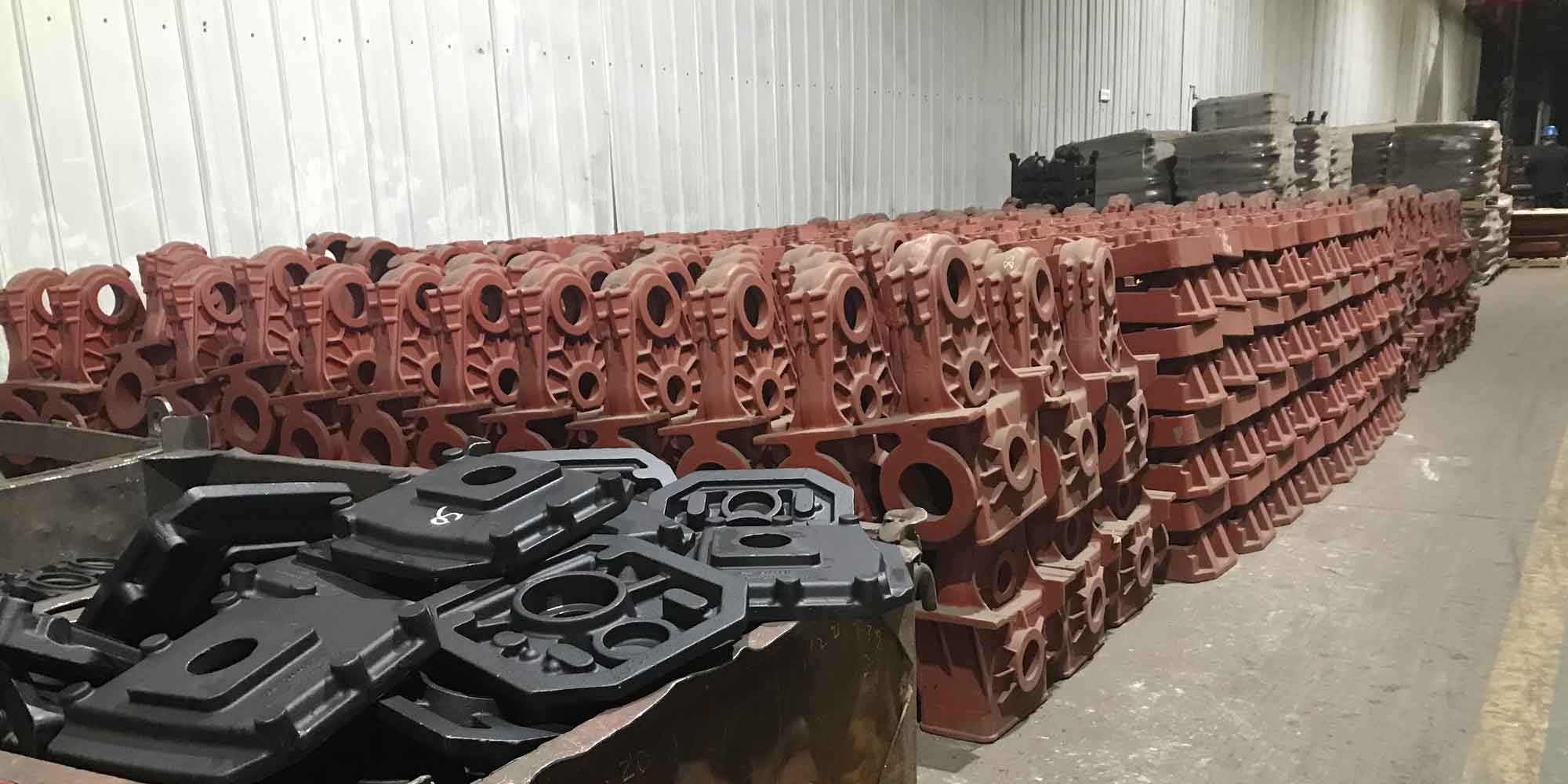
After casting, the specimens were cut into 40 mm × 50 mm × 70 mm blanks and subjected to a homogenization annealing at 1050°C for 4 hours using a high-temperature box-type resistance furnace. This step aims to alleviate segregation and prepare the steel castings for subsequent heat treatment. The core of our experiment involves varying the heating temperature during the heat treatment process. We employed a medium-temperature heat treatment furnace to heat the samples at temperatures ranging from 860°C to 940°C, holding for 2 hours, followed by intermittent controlled air cooling (a novel cooling strategy designed to control transformation kinetics) and stress-relief tempering at 550°C for 2 hours. The heat treatment schedule is illustrated schematically, but essentially, it involves austenitizing at the specified temperature, controlled cooling to room temperature, and tempering. The heating temperature range was selected to encompass typical austenitizing conditions for such steel castings while exploring potential optimizations. Table 2 outlines the heat treatment parameters applied to the steel castings in this study.
| Sample ID | Austenitizing Temperature (°C) | Holding Time (h) | Cooling Method | Tempering Temperature (°C) | Tempering Time (h) |
|---|---|---|---|---|---|
| A1 | 860 | 2 | Intermittent Controlled Air Cooling | 550 | 2 |
| A2 | 880 | 2 | Intermittent Controlled Air Cooling | 550 | 2 |
| A3 | 900 | 2 | Intermittent Controlled Air Cooling | 550 | 2 |
| A4 | 920 | 2 | Intermittent Controlled Air Cooling | 550 | 2 |
| A5 | 940 | 2 | Intermittent Controlled Air Cooling | 550 | 2 |
Post heat treatment, the steel castings were machined into specimens for hardness testing, impact testing, and microstructural analysis. Hardness was measured using a Rockwell hardness tester, with five points taken from surface to core per sample and averaged. Impact toughness was evaluated via Charpy impact tests on standard unnotched specimens (10 mm × 10 mm × 55 mm), with three replicates averaged per condition. Fracture surfaces were examined using scanning electron microscopy (SEM) after cleaning with alcohol. For microstructural observation, samples were ground, polished, etched with 4% nital solution, and examined via optical microscopy and SEM. The interlamellar spacing of pearlite was measured from SEM images, with five fields per sample and ten measurements per field, then weighted-averaged. This comprehensive characterization allows us to correlate the heating temperature with the resulting properties and microstructure of these advanced steel castings.
The microstructural analysis reveals that across the entire heating temperature range of 860°C to 940°C, the steel castings consistently exhibit a microstructure composed of pearlite and undissolved carbides. However, the morphological details of the pearlite vary significantly with temperature. As the heating temperature increases, the pearlite colonies become coarser, and the interlamellar spacing widens. Quantitative measurements show that the average interlamellar spacing (denoted as \( S \)) increases from 0.123 µm at 860°C to 0.169 µm at 940°C. This trend can be attributed to the higher austenitizing temperatures promoting greater carbon and alloy element dissolution, which subsequently affects the transformation kinetics during cooling. At lower temperatures, the undercooling during the pearlitic transformation is larger, leading to finer pearlite. At higher temperatures, despite more complete dissolution, the austenite grain growth and reduced undercooling result in coarser pearlite. The relationship between interlamellar spacing and heating temperature (\( T \)) can be empirically modeled. For instance, a linear approximation might be:
$$ S = k_1 \cdot T + c_1 $$
where \( k_1 \) and \( c_1 \) are constants. Using the data points, we can derive a rough linear fit. Alternatively, considering metallurgical principles, the spacing often relates inversely to undercooling, but for simplicity, we present the data in Table 3. The presence of carbides, likely rich in chromium and other alloying elements, remains throughout, contributing to the wear resistance of these steel castings. This microstructural consistency underscores that the steel castings are designed to retain a pearlitic matrix with secondary hard phases, which is beneficial for abrasion resistance.
| Heating Temperature (°C) | Average Interlamellar Spacing, \( S \) (µm) | Microstructural Description |
|---|---|---|
| 860 | 0.123 | Fine pearlite + carbides |
| 880 | 0.137 | Moderately fine pearlite + carbides |
| 900 | 0.145 | Moderate pearlite + carbides |
| 920 | 0.149 | Coarse pearlite + carbides |
| 940 | 0.169 | Very coarse pearlite + carbides |
The mechanical properties of the steel castings, namely hardness and impact toughness, show distinct dependencies on the heating temperature. Hardness values, measured in HRC, exhibit a trend of initial increase followed by a decrease, with a relatively narrow range from 32.9 to 38.7 HRC. The peak hardness occurs at 920°C, reaching 38.7 HRC. This behavior can be explained by competing factors: at lower temperatures, insufficient dissolution of carbides and alloying elements may limit hardness, while at higher temperatures, coarser pearlite and larger austenite grains reduce hardness. The increase from 860°C to 920°C suggests that improved dissolution enhances hardenability and leads to a finer effective structure during transformation, but beyond 920°C, grain growth and reduced undercooling dominate, causing a drop. The hardness data are summarized in Table 4. This narrow hardness range indicates that the steel castings maintain a consistent level of hardness across the temperature range, which is advantageous for industrial processing where temperature control might have slight variations.
| Heating Temperature (°C) | Average Hardness (HRC) | Standard Deviation (HRC) |
|---|---|---|
| 860 | 32.9 | ±0.5 |
| 880 | 35.2 | ±0.4 |
| 900 | 36.8 | ±0.6 |
| 920 | 38.7 | ±0.3 |
| 940 | 34.1 | ±0.5 |
Impact absorbed energy, a critical measure of toughness for steel castings used in impact-prone environments, shows an overall declining trend with increasing heating temperature. The impact energy decreases from 140.68 J at 860°C to 66.34 J at 940°C, a reduction of approximately 52.8%. This decline is not perfectly monotonic; there is a slight fluctuation between 900°C and 920°C, but the general downward trajectory is clear. The fracture morphology transitions from a mixture of dimples and quasi-cleavage at lower temperatures to predominantly quasi-cleavage at higher temperatures, indicating a loss of ductility. The reduction in toughness is directly linked to the coarsening of pearlite and the increase in interlamellar spacing, as finer pearlite typically provides better resistance to crack propagation. Additionally, larger prior-austenite grains at higher temperatures can facilitate cleavage fracture. The impact energy data are presented in Table 5. For steel castings employed in liners and other components subjected to impact, this trade-off between hardness and toughness must be carefully managed via heat treatment optimization.
| Heating Temperature (°C) | Average Impact Absorbed Energy (J) | Fracture Morphology |
|---|---|---|
| 860 | 140.68 | Dimples + Quasi-cleavage |
| 880 | 137.34 | Dimples + Quasi-cleavage |
| 900 | 81.04 | Dimples + Quasi-cleavage |
| 920 | 78.92 | Quasi-cleavage |
| 940 | 66.34 | Quasi-cleavage |
To further elucidate the property relationships, we can consider empirical models. For instance, the hardness (\( H \)) might be expressed as a function of interlamellar spacing (\( S \)) and prior-austenite grain size (\( D \)), but given the complexity, a simplified approach correlating hardness directly with temperature (\( T \)) could be:
$$ H = a \cdot T^2 + b \cdot T + c $$
where \( a \), \( b \), and \( c \) are constants determined from the data. Similarly, impact energy (\( E \)) might inversely relate to \( S \), such as:
$$ E = \frac{k_2}{S} + d $$
with \( k_2 \) and \( d \) as constants. These formulas highlight the intricate balance in designing steel castings for optimal performance. The degradation in toughness with coarser microstructure is a classic metallurgical phenomenon, and it underscores the importance of controlling heating parameters in the heat treatment of steel castings.
Delving deeper into the discussion, the microstructural evolution in these steel castings is governed by diffusion-controlled transformations. During austenitizing, the dissolution of carbides increases the carbon and alloy content in austenite, which affects the critical cooling rates and transformation temperatures. The intermittent controlled air cooling method we applied is designed to provide a controlled cooling rate that favors pearlite formation while avoiding martensite, given the alloy composition. This cooling strategy is particularly relevant for thick-section steel castings where uniform properties are desired. The resulting pearlite morphology directly influences mechanical properties. Finer pearlite, with its larger interfacial area, impedes dislocation motion more effectively, enhancing hardness and strength. However, it also offers more barriers to crack propagation, thereby improving toughness. Conversely, coarser pearlite reduces both hardness and toughness. This duality explains the observed trends: as heating temperature rises, the interlamellar spacing increases, leading to a drop in both hardness (after a peak) and impact energy. The peak hardness at 920°C suggests an optimal dissolution state that maximizes transformation hardening before grain coarsening negates the benefits.
The role of alloying elements in these steel castings cannot be overlooked. Chromium and molybdenum enhance hardenability and promote carbide formation, contributing to wear resistance. Vanadium forms fine carbides that can pin grain boundaries, but at the heating temperatures studied, these may partially dissolve. Copper aids in solid solution strengthening. The rare earth addition, though minimal, helps refine the as-cast structure and modify inclusions, potentially improving homogeneity and toughness. In the context of steel castings, such alloy design is crucial for achieving the desired service performance without resorting to expensive elements like nickel or high molybdenum contents. The heat treatment responses documented here provide a roadmap for tailoring the properties of similar steel castings for specific applications, such as mill liners where a combination of hardness and impact resistance is paramount.
From an industrial perspective, the findings imply that for this high-carbon low-alloy wear-resistant steel casting, a heating temperature around 900-920°C might offer a good compromise, yielding hardness near 38 HRC and impact energy above 70 J. However, if maximizing toughness is critical, lower temperatures like 860°C could be preferred despite slightly lower hardness. The narrow hardness range (32.9-38.7 HRC) is advantageous for quality control in mass production of steel castings, as slight temperature variations in large furnaces would not drastically alter hardness. The controlled cooling method further ensures reproducibility. These insights are valuable for manufacturers of steel castings seeking to optimize heat treatment cycles for enhanced wear life and cost efficiency.
In conclusion, our investigation into the effect of heating temperature on high-carbon low-alloy wear-resistant steel castings reveals that microstructure and properties are highly sensitive to austenitizing conditions. Over the range of 860°C to 940°C, the steel castings maintain a pearlite-carbide microstructure, but the pearlite coarsens with increasing temperature, as quantified by interlamellar spacing growth from 0.123 µm to 0.169 µm. Hardness shows a non-monotonic trend, peaking at 920°C (38.7 HRC), while impact energy monotonically decreases from 140.68 J to 66.34 J, with fracture surfaces shifting from mixed dimple/quasi-cleavage to quasi-cleavage. These correlations underscore the trade-offs inherent in heat treating steel castings for wear applications. By carefully selecting the heating temperature, manufacturers can tailor the balance between hardness and toughness to meet specific service demands. Future work could explore the effects of cooling rate variations or tempering parameters to further optimize these steel castings. Overall, this study contributes to the broader understanding of how heat treatment parameters influence the performance of advanced steel castings, paving the way for more durable and economical solutions in the mining and processing industries.
To summarize the key relationships mathematically, we can propose the following empirical equations based on our data for these steel castings. First, the interlamellar spacing (\( S \) in µm) as a function of heating temperature (\( T \) in °C) can be approximated by a linear fit:
$$ S = 0.00115 \cdot T – 0.862 $$
This yields reasonable estimates within the tested range. Second, the hardness (\( H \) in HRC) can be modeled as a quadratic function:
$$ H = -0.0025 \cdot T^2 + 4.75 \cdot T – 2210 $$
which peaks near 920°C. Third, the impact energy (\( E \) in J) shows an exponential decay with temperature:
$$ E = 500 \cdot e^{-0.005 \cdot T} $$
These formulas, while simplified, capture the essential trends and can be useful for engineers working with similar steel castings. Ultimately, the development of high-performance steel castings relies on such detailed characterization and modeling to guide production practices, ensuring that these critical components deliver long service life under harsh operating conditions.