
The pursuit of manufacturing efficiency and cost reduction in the valve industry has led to significant design innovations. One such innovation is the integration of separate components into single, monolithic steel castings. A prime example is the combined valve bonnet and yoke assembly for gate valves, traditionally fabricated as two distinct parts bolted together. Consolidating these into one integral casting offers substantial benefits: a reduction in overall weight, elimination of machining for the mating flange surfaces, decreased bolt counts, and the use of a single mold pattern. Data indicates potential savings exceeding 12% in material costs and 8% in machining costs. Consequently, the production of these integrated steel castings has become a strategic focus for foundries aiming to enhance competitiveness.
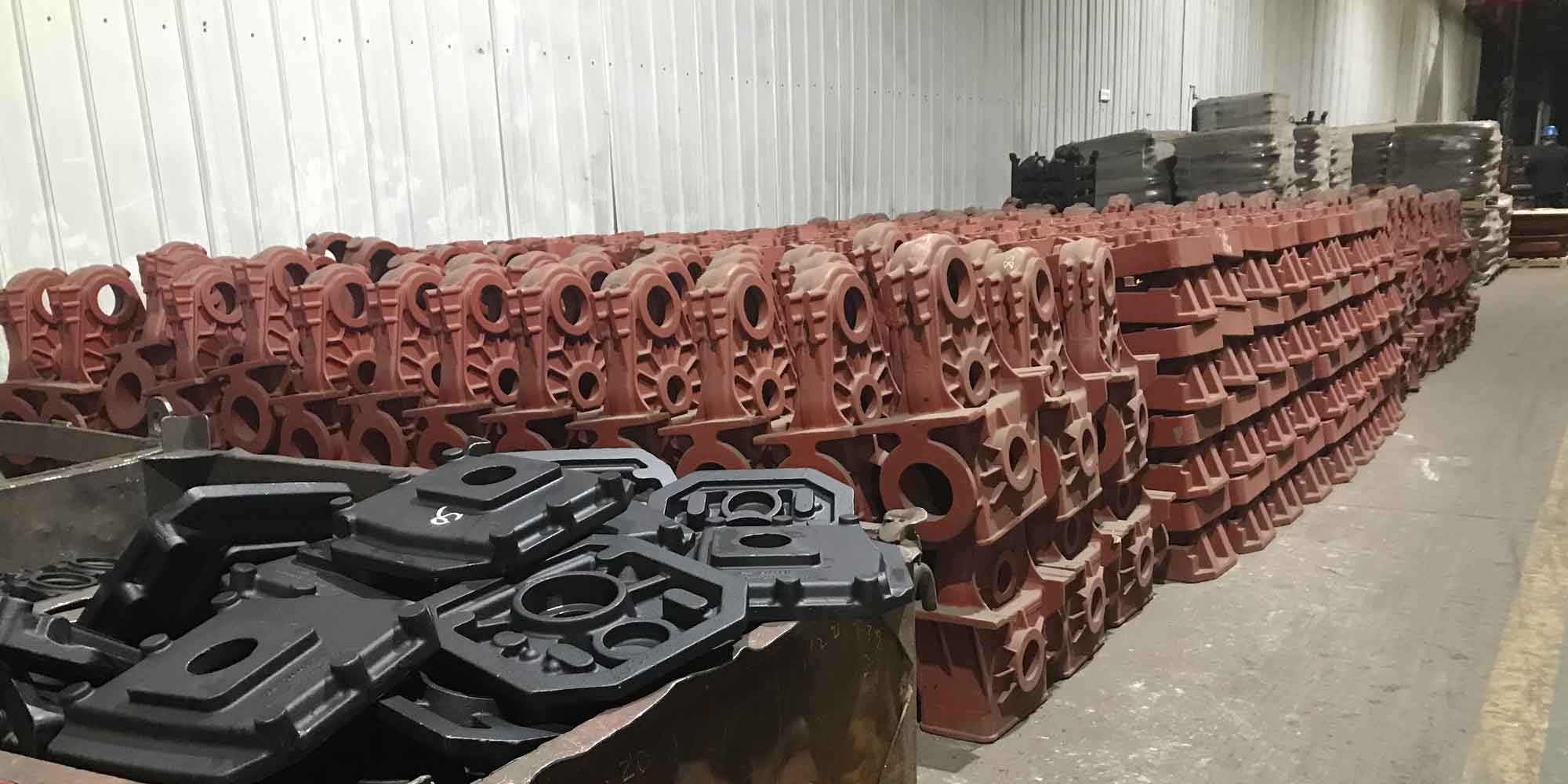
However, this design consolidation introduces formidable challenges in the foundry, primarily concerning dimensional stability and deformation control. The geometry of a combined bonnet-yoke casting is inherently complex, featuring a thick, bulky bonnet section connected to a relatively slender, elongated yoke structure. This asymmetry in mass and section modulus makes the casting highly susceptible to distortion during solidification and cooling, especially when produced via the investment casting process. The prevalent failure mode is the inward bowing or warping of the bonnet flange, often exceeding permissible machining allowances and leading to high scrap rates. This paper presents a detailed, first-person investigation into the root causes of deformation in these integral steel castings and systematically develops and validates an effective gating system solution to ensure production viability.
1. Foundry Context and Initial Process Setup
Investment casting, or the lost-wax process, is the preferred method for producing high-integrity, complex steel castings for pressure-containing parts like valves. The process involves creating a ceramic shell around a wax pattern assembly (a “tree”), followed by dewaxing, high-temperature firing, and pouring of molten metal. The ceramic shell provides an excellent surface finish and dimensional accuracy but is characterized by rapid heat extraction.
For the subject 4-inch, 150LB pressure class gate valve bonnet-yoke casting, the initial process strategy employed a conventional top-gating philosophy. The rationale for top-gating is to establish a favorable thermal gradient: the hottest metal resides in the gating channels and feeders at the top, promoting directional solidification towards these reservoirs to feed shrinkage in the casting. The gating was attached to the longitudinal top of the bonnet flange, with a sizable feeder head above it to act as a liquid metal source. The casting parameters were standard for carbon steel castings: a pouring temperature of approximately 1,600 °C and a preheated shell temperature above 350 °C to ensure fluidity and complete filling.
2. Systematic Analysis of Casting Deformation
The first production batch of 50 pieces revealed a critical issue. Post-casting inspection and initial machining operations indicated severe and systematic deformation. Machinists, using the yoke bearing housing as a datum, found that the bonnet flange face was not parallel. After removing the standard 1.5 mm machining allowance on the “gating side” of the flange, the opposite side remained uncut, indicating a warp or bow. Quantitative assessment showed that over 40% of the castings had distortions greater than 1.5 mm, with many exceeding 2 mm, rendering them unusable.
To diagnose the problem, a root-cause analysis was conducted. The consistency and pattern of the deformation—always an inward pull on the flange near the gating point—pointed to a process-induced stress rather than random handling errors (e.g., early wax pattern ejection, rough handling of green shells, or improper heat treatment loading). Measurement of wax patterns confirmed they were dimensionally sound, eliminating pattern tooling as the source.
The core hypothesis centered on solidification contraction stress. In the top-gated system, the feeder and the connecting gating channels, designed to be the heaviest sections (hot spots), are the last to solidify. As this large volume of metal transitions from liquid to solid, it undergoes significant volumetric shrinkage, described generally by the linear contraction coefficient, $\alpha$:
$$ \Delta L = L_0 \cdot \alpha \cdot \Delta T $$
where $\Delta L$ is the change in length, $L_0$ is the initial length, $\alpha$ is the coefficient of thermal contraction for the steel, and $\Delta T$ is the temperature drop through the solidification and cooling range. This contraction generates a substantial tensile stress, $\sigma$, within the partially solidified casting at the feeder neck (gate attachment point). This stress can be conceptualized as:
$$ \sigma = E \cdot \epsilon = E \cdot \frac{\Delta L}{L_0} = E \cdot \alpha \cdot \Delta T $$
where $E$ is Young’s modulus of the steel at elevated temperature (which is significantly lower than at room temperature but non-zero) and $\epsilon$ is the strain. When this contraction stress ($\sigma_{contraction}$) exceeds the effective yield strength of the casting material at that temperature ($\sigma_{y(T)}$) and the restraining force of the ceramic shell, plastic deformation (warping) occurs. The thin, rapidly cooled ceramic shell, while strong in compression, has limited resistance to the sustained tensile pull from the massive, shrinking feeder. The imbalance in the casting’s structural stiffness—the robust bonnet versus the slender yoke—further exacerbates the deformation, concentrating the strain at the more flexible bonnet-flange-to-body junction.
3. Experimental Investigation and Evaluation of Conventional Countermeasures
Two logical, conventional approaches to mitigate this stress were tested sequentially.
3.1 Experiment 1: Reduction of Pouring Temperature
Rationale: Lower superheat reduces the total heat content and the temperature range $\Delta T$ over which contraction occurs, potentially lowering the thermal stress $\sigma$.
Method: Pouring temperature was lowered from ~1,600°C to ~1,575°C. A sample batch of 10 castings was produced and measured.
Results & Analysis: The results were unsatisfactory and introduced new defects. While some castings showed slightly less warp, the improvement was inconsistent. More critically, lower fluidity led to surface defects like cold shuts and mis-runs, particularly in areas with fine details like identification letters. The fundamental mechanism of feeder contraction stress was not eliminated, only slightly attenuated. The data is summarized below, showing persistent distortion.
| Casting Sample # | Flange Width at Feeder Side (mm) | Flange Width at Opposite Side (mm) | Distortion (Δ, mm) |
|---|---|---|---|
| 1 | 241.0 | 239.5 | 1.5 |
| 2 | 241.0 | 239.0 | 2.0 |
| 3 | 240.5 | 239.5 | 1.0 |
| 4 | 241.0 | 239.0 | 2.0 |
| 5 | 242.0 | 239.5 | 2.5 |
| 6 | 240.0 | 240.0 | 0.0 |
| 7 | 240.0 | 239.5 | 0.5 |
| 8 | 241.0 | 239.0 | 2.0 |
| 9 | 240.0 | 239.0 | 1.0 |
| 10 | 240.0 | 240.0 | 0.0 |
Conclusion: This approach compromises casting integrity and is not a robust solution for these steel castings.
3.2 Experiment 2: Reduction of Feeder/Gating Mass
Rationale: If the contracting mass ($m$) is the source of stress, reducing the cross-sectional area of the feeder neck should proportionally reduce the force $F$ of contraction ($F \propto \sigma \cdot A$).
Method: The feeder and down-sprue dimensions were significantly reduced, particularly in the section adjacent to the casting. Another batch of 10 was poured at standard temperature.
Results & Analysis: Dimensional distortion showed marked improvement, validating the stress-mass relationship. However, a severe trade-off emerged: shrinkage porosity appeared in the heavier sections of the casting near the now-under-sized feeder. The feeder solidified too quickly, losing its metallostatic pressure and ability to feed the casting’s solidification shrinkage. This created internal defects, unacceptable for pressure-retaining steel castings. The data below shows better dimensional control but masks the internal quality issue.
| Casting Sample # | Flange Width at Feeder Side (mm) | Flange Width at Opposite Side (mm) | Distortion (Δ, mm) | Internal Shrinkage Noted |
|---|---|---|---|---|
| 1 | 241.0 | 240.5 | 0.5 | No |
| 2 | 241.0 | 239.0 | 2.0 | Yes |
| 3 | 240.5 | 239.0 | 1.5 | Yes |
| 4 | 242.0 | 239.5 | 2.5 | No |
| 5 | 240.0 | 239.0 | 1.0 | Yes |
| 6 | 241.0 | 240.0 | 1.0 | No |
| 7 | 240.0 | 240.0 | 0.0 | Yes |
| 8 | 240.0 | 239.0 | 1.0 | No |
| 9 | 241.0 | 239.5 | 1.5 | No |
| 10 | 241.5 | 240.0 | 1.5 | No |
Conclusion: Simply reducing feeder size shifts the problem from a geometric defect (warp) to a metallurgical defect (shrinkage), failing to produce sound steel castings.
4. Development of an Innovative Solution: The U-Channel Feeding System
The failure of conventional methods necessitated a novel approach. The core conflict was clear: a large feeder mass is needed for feeding but causes deformation; a small feeder mass reduces deformation but causes shrinkage. The solution was to decouple these two functions. The new design principle was: “Maintain adequate thermal mass for feeding, but mechanically impede its contraction force from acting on the casting.”
This was achieved by redesigning the feeder sprue to incorporate a deep, external “U-channel” or groove along its length, just below the main feeder head and adjacent to the casting attachment point. During the investment shell-building process, this U-channel is completely filled and packed with refractory stucco (sand), creating an integrated, high-strength ceramic core that is locked inside the metal feeder when poured.
The mechanism of action is twofold:
- Mechanical Interference & Stress Redistribution: The ceramic insert acts as a rigid, non-contracting body within the molten feeder. As the surrounding steel solidifies and attempts to shrink, it is physically constrained by this ceramic core. This transforms the stress state locally. Instead of a pure tensile pull on the casting, the stress is partially converted into a compression on the ceramic core and redistributed. The effective force transmitted to the vulnerable casting flange is dramatically reduced. One can model this as adding a composite constraint; the effective modulus in the contraction zone becomes a combination of steel and ceramic.
- Thermal Insulation & Improved Feeding: Paradoxically, this same ceramic core improves feeding efficiency. The refractory material insulates the central portion of the feeder, slowing its solidification. This maintains a liquid “feed path” for a longer duration, enhancing the feeder’s ability to supply liquid metal to compensate for shrinkage in the casting body, thereby preventing porosity. The thermal profile can be approximated by considering the composite heat transfer. The local solidification time $t_f$ can be related to the modulus $M$ (Volume/Surface Area). The U-channel design effectively increases the local modulus of the feeder neck by reducing its effective cooling surface area.
Furthermore, the U-channel design offers ancillary benefits for the production of high-quality steel castings:
- Improved Metal Flow: The geometry helps to calm turbulent metal entry, reducing oxide formation and sand erosion.
- Shell Reinforcement: The ceramic-filled channel reinforces the shell locally against thermal shock and mechanical stress during pouring.
4.1 Validation of the U-Channel System
A final trial batch of 10 castings was produced using the U-channel gating system, with standard pouring parameters reinstated.
Results: The outcome was definitive. All castings exhibited flange distortion within the acceptable machining allowance of 1.5 mm, with the majority showing negligible warp. Crucially, radiographic and cut-up inspection confirmed the complete absence of shrinkage porosity in the critical junctions. The system successfully resolved the core contradiction.
| Casting Sample # | Flange Width at Feeder Side (mm) | Flange Width at Opposite Side (mm) | Distortion (Δ, mm) | Internal Soundness |
|---|---|---|---|---|
| 1 | 240.0 | 240.0 | 0.0 | Sound |
| 2 | 240.5 | 240.0 | 0.5 | Sound |
| 3 | 240.5 | 240.5 | 0.0 | Sound |
| 4 | 240.5 | 240.5 | 0.0 | Sound |
| 5 | 240.5 | 240.0 | 0.5 | Sound |
| 6 | 241.0 | 240.5 | 0.5 | Sound |
| 7 | 241.0 | 240.0 | 1.0 | Sound |
| 8 | 240.0 | 240.0 | 0.0 | Sound |
| 9 | 240.0 | 240.0 | 0.0 | Sound |
| 10 | 240.5 | 240.0 | 0.5 | Sound |
5. Implementation and Quality Assurance
Upon successful validation, the U-channel gating design was implemented into full-scale production. To ensure consistent quality and prevent any out-of-specification steel castings from proceeding to costly machining operations, a dual-axis verification fixture was introduced for 100% final inspection. This simple go/no-go gauge checks both the longitudinal flatness of the bonnet flange and the lateral alignment, providing an immediate and reliable pass/fail assessment.
6. Conclusions and Broader Implications
This investigation conclusively demonstrates that deformation in complex, asymmetrical integral steel castings like valve bonnet-yokes is primarily driven by the uncontrolled contraction stress of conventional top-feeding systems. Traditional corrective measures, such as lowering pouring temperature or reducing feeder size, are inadequate as they either introduce new defects or fail to address the root cause.
The developed U-channel feeding system presents an elegant and highly effective engineering solution based on the principle of contraction force impediment. By integrating a rigid ceramic core into the feeder’s structure, it successfully:
- Mechanically blocks and redistributes the detrimental tensile stresses that cause warping.
- Simultaneously improves thermal performance to eliminate shrinkage porosity.
- Enhances overall process robustness by stabilizing metal flow and shell integrity.
The success of this methodology extends beyond the specific valve component. It provides a foundational strategy for the investment casting of any steel casting with pronounced geometrical asymmetry, thin-to-thick section transitions, or long, unsupported spans that are vulnerable to process-induced stresses. The approach underscores the importance of innovative gating design that considers not just thermal and fluid dynamics, but also the solid mechanics of the solidifying system. This case study confirms that through targeted design innovation, the significant economic and performance benefits of component integration in steel castings can be reliably realized in a production foundry environment.