
The evolution of industrial manufacturing is inextricably linked to advancements in the processing of core components. Among these, the production of large steel castings represents a critical yet challenging domain, fundamental to sectors such as nuclear power, defense, heavy machinery, and marine engineering. Traditionally, the creation of these massive components relied on resource-intensive methods involving pattern-making, molding, and extensive manual finishing, leading to prolonged lead times, high costs, and variability in quality. The imperative for modern industry is a transition from resource-intensive paradigms to technology-driven, precise, and sustainable manufacturing. This transformation is being realized through the integration of computer-aided technologies, where digital simulation and direct digital manufacturing converge. This article explores, from a first-person research and application perspective, the embodiment of moldless Computer Numerical Control (CNC) machining technology in the production of large steel castings, detailing its principles, implementation workflows, and the profound impact it has on production efficiency, precision, and environmental sustainability.
The foundational principle of moldless CNC machining for steel castings lies in the direct translation of a digital model into a physical sand mold or core, eliminating the need for a physical pattern or die. This process is a synergy of several digital technologies, creating a streamlined and intelligent workflow. The core equation governing this digital thread can be summarized as a function of design intent and manufacturing parameters:
$$
\text{Final Casting} = \mathcal{F}( \text{CAD Model}, \text{Virtual Simulation}, \text{CNC Toolpath}, \text{Material Properties} )
$$
Where \(\mathcal{F}\) represents the integrated manufacturing process. The workflow initiates with the creation of a precise three-dimensional CAD model of the desired casting. This model is not merely a drawing but a complete digital twin containing all geometric and topological data. Subsequently, casting process simulation software is employed to virtually analyze the filling, solidification, and cooling phases. This simulation predicts potential defects such as shrinkage porosity, hot tears, or inclusions, allowing for iterative optimization of the gating and risering system directly in the digital realm. The optimized digital mold geometry, derived from the inverted casting model, is then processed by CAM (Computer-Aided Manufacturing) software to generate efficient, collision-free toolpaths (\(G\)-code) for a CNC machining center specifically configured for processing bonded sand blocks.
The primary characteristics distinguishing this technology in the context of large steel castings are profound. First, it dramatically compresses the development and production cycle by removing the weeks or months required for pattern design, fabrication, and tryout. Second, it enables unprecedented geometric freedom and precision. Features such as undercuts, complex internal passages, and non-draft angles can be machined directly into the sand, which were either impossible or prohibitively expensive with traditional pattern methods. This enhances the functional performance and weight optimization of the final casting. Third, it is inherently a digital and flexible process. Design changes can be incorporated rapidly by modifying the CAD model and regenerating the toolpath, making it ideal for prototyping, low-volume production, and customized steel castings. Finally, it aligns with green manufacturing goals by reducing waste associated with pattern storage, maintenance, and disposal, and by minimizing the consumption of materials used in trial runs.
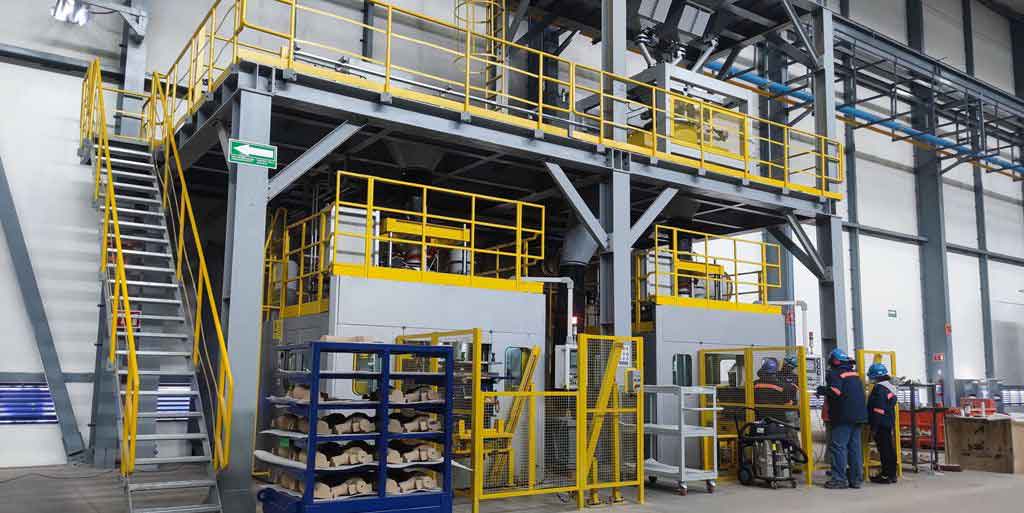
The practical embodiment of moldless CNC machining in producing a large steel casting—such as a valve body, turbine casing, or ship propeller hub—unfolds through several meticulously planned stages, each replacing a traditional step with a digital or automated counterpart.
1. Gating System Design and Process Optimization via Simulation
The initial and most critical step is the virtual design of the casting process. For a complex steel casting, multiple pouring orientation options exist, each with significant implications for quality. Consider a hypothetical large valve body with a primary flange. The digital workflow allows for the rapid evaluation of alternatives.
| Orientation | Advantages | Disadvantages | Key Simulation Parameter (Thermal Gradient \(\nabla T\)) |
|---|---|---|---|
| Flange-Up | Promotes directional solidification toward the risers; easier riser placement and feeding; top surface defects are less critical for non-functional surfaces. | Complex core support and stabilization; potential for core shift affecting dimensional accuracy. | \(\nabla T_{\text{vertical}} > 0\) (positive gradient toward riser) |
| Flange-Down | Excellent core stability and dimensional accuracy of the critical flange face; simplified mold assembly. | Difficulty in placing effective risers to feed the thick flange section; risk of shrinkage defects in critical areas; larger top surface area prone to slag entrapment. | \(\nabla T_{\text{flange}}\) may be insufficient or negative, requiring sophisticated insulating/ exothermic riser design. |
The choice is no longer based solely on experience but is guided by physics-based simulation. The solidification process is governed by the heat transfer equation:
$$
\rho c_p \frac{\partial T}{\partial t} = \nabla \cdot (k \nabla T) + \dot{q}_{\text{latent}}
$$
where \(\rho\) is density, \(c_p\) is specific heat, \(k\) is thermal conductivity, \(T\) is temperature, \(t\) is time, and \(\dot{q}_{\text{latent}}\) is the latent heat release rate during phase change. Simulation software solves this equation numerically to predict shrinkage porosity, which occurs in regions where liquid metal is isolated and cannot be fed, often indicated by a low Niyama criterion value \(N_y\):
$$
N_y = \frac{G}{\sqrt{\dot{R}}}
$$
where \(G\) is the temperature gradient and \(\dot{R}\) is the cooling rate. Regions with \(N_y\) below a critical threshold (e.g., \(1 \, \text{K}^{1/2} \text{s}^{1/2} \text{cm}^{-1}\)) are flagged as potential defect sites. Engineers iteratively modify riser size, location, and use of chills in the digital model until the simulation shows a sound, defect-free casting. This virtual validation is the cornerstone of the moldless approach, ensuring the first physical mold is production-ready.
2. Development of Molding and Core Materials for CNC Machinability
The success of directly machining a mold from a sand block depends entirely on the properties of the bonded sand mixture. Traditional foundry sands like furan resin-bonded or silicate-bonded sand may lack the necessary green strength, friability, or thermal stability after machining. Therefore, a key embodiment of this technology is the formulation of specialized composite materials. These are often phenolic urethane or epoxy-based cold-box systems, or modified inorganic binders, reinforced with specific additives to achieve:
- High Green Strength: To withstand the cutting forces without edge collapse or deformation. The compressive strength \(\sigma_c\) must exceed a minimum threshold (e.g., \(\sigma_c > 3.0 \, \text{MPa}\)).
- Controlled Friability: The sand must cut cleanly without excessive tool wear, yet the baked mold must allow for easy shakeout after casting.
- Low Elastic Recovery: To prevent the machined surface from springing back and altering the final dimensions.
- Thermal Stability: To resist erosion and deformation during the pouring of molten steel, which exceeds \(1500^\circ\text{C}\).
The development involves a systematic experimental matrix to optimize the composition:
| Base Sand (AFS GFN) | Binder System Type | Binder % | Additive (e.g., fiber, clay) | Measured Output: Compressive Strength \(\sigma_c\) (MPa) | Measured Output: Surface Finish (Ra, µm) after machining |
|---|---|---|---|---|---|
| 55 | Phenolic Urethane | 1.2 | 0.1% cellulose fiber | 4.2 | 12.5 |
| 55 | Phenolic Urethane | 1.5 | 0.1% cellulose fiber | 5.8 | 14.0 |
| 70 | Epoxy-SO₂ | 1.0 | 0.05% clay | 3.5 | 10.2 |
| 70 | Epoxy-SO₂ | 1.3 | 0.05% clay | 4.9 | 11.8 |
3. CNC Machining Strategy and Toolpath Generation for Large Molds
Machining a mold for a large steel casting often exceeds the working envelope of a standard CNC mill. Therefore, the strategy involves segmenting the digital mold into manageable blocks that are machined individually and then assembled. The process begins with creating a “negative” CAD model of the mold cavity and cores from the casting model. For a massive mold, it is divided into segments (e.g., cope, drag, and multiple core sections). The volume of sand to be removed (\(V_{\text{removed}}\)) for each segment is a critical parameter for estimating machining time:
$$
V_{\text{removed}} = V_{\text{bounding block}} – V_{\text{mold segment}}
$$
The CAM programming must account for the abrasive nature of the sand. Toolpaths are optimized for roughing and finishing. Roughing uses large-diameter indexable insert cutters with high feed rates to quickly remove bulk material, minimizing tool engagement time in the abrasive medium. The material removal rate (MRR) in roughing is crucial for productivity:
$$
\text{MRR} \approx f_z \cdot n \cdot z \cdot a_e \cdot a_p
$$
where \(f_z\) is feed per tooth, \(n\) is spindle speed (RPM), \(z\) is number of teeth, \(a_e\) is radial depth of cut, and \(a_p\) is axial depth of cut. Finishing operations use solid carbide end mills to achieve the final surface detail and accuracy. A critical aspect is the toolpath strategy for deep cavities and thin walls to avoid chatter and deflection. Trochoidal or plunge milling strategies are often employed for pockets, while constant-scallop height toolpaths ensure uniform finish on complex 3D surfaces.
4. Specialized Tooling Development for Abrasive Sand Machining
This is arguably one of the most distinct challenges and embodiments of the technology. Machining a bonded sand composite is fundamentally different from metal cutting. The primary mechanisms are brittle fracture and abrasive wear, not plastic deformation. The hard silica grains act as grinding particles, leading to rapid flank and crater wear on cutting tools. Furthermore, the process is typically dry (no cutting fluid to avoid contaminating the mold), leading to high cutting zone temperatures. Tool life (\(T\)) in such conditions often follows a modified Taylor’s tool life equation, heavily influenced by abrasiveness:
$$
V_c \cdot T^n = C_T \cdot K_{\text{abrasive}}
$$
where \(V_c\) is cutting speed, \(n\) and \(C_T\) are constants, and \(K_{\text{abrasive}}\) is a factor representing the abrasiveness of the sand composite (a function of sand grain size, hardness, and binder). To combat this, tools are engineered with specific features:
- Ultra-Wear-Resistant Coatings: Multi-layer Physical Vapor Deposition (PVD) coatings like AlTiN, AlCrN, or diamond-like carbon (DLC) provide a hard, low-friction surface.
- Optimized Geometry: High positive rake angles to reduce cutting forces, polished flutes to prevent material adhesion, and strong core design to prevent breakage during interrupted cuts common in mold machining.
- Effective Chip Evacuation: Deep, polished flutes are essential to transport the powder-like chips out of the cut to prevent re-cutting and heat buildup.
| Machining Stage | Tool Type | Diameter (mm) | Coating | Key Geometry Feature | Typical Cutting Parameters (\(V_c\) in m/min, \(f_z\) in mm) |
|---|---|---|---|---|---|
| Roughing | Indexable Insert Face Mill | 80 – 125 | AlTiN | High shear inserts | \(V_c: 300-400\), \(f_z: 0.3-0.5\) |
| Semi-Finishing | Solid Carbide End Mill (4-6 flutes) | 20 – 32 | AlCrN | Variable helix/pitch | \(V_c: 200-250\), \(f_z: 0.15-0.25\) |
| Finishing/Detailing | Solid Carbide Ball End Mill (4 flutes) | 6 – 16 | Diamond-Coated | Long reach, reduced neck | \(V_c: 150-200\), \(f_z: 0.08-0.12\) |
5. Mold Assembly, Pouring, and Quality Validation
Once all mold segments and cores are machined, they undergo standard foundry preparations: coating with refractory wash, drying, and assembly (closing). The alignment, historically dependent on pattern equipment, is now ensured by precision-machined locating surfaces or pins designed into the CAD model and executed by the CNC. The mold is then poured with molten steel. After cooling, the shakeout process reveals the raw casting. The validation phase critically compares the physical outcome with the digital prediction. Dimensional inspection via laser scanning or photogrammetry generates a point cloud data set \(\{P_{\text{actual}}\}\) which is compared to the nominal CAD surface \(\{P_{\text{nominal}}\}\). The deviation \(\delta_i\) for each point is calculated:
$$
\delta_i = | P_{\text{actual}, i} – P_{\text{nominal}, i} |
$$
A statistical analysis of \(\delta_i\) across the entire casting, often presented as a color-cated deviation map, confirms the achieved geometric accuracy. Non-destructive testing (NDT) like ultrasonic testing (UT) or radiography (RT) is performed on critical sections. The location and severity of any internal defects are compared against the zones predicted by the solidification simulation. This closed-loop feedback validates and refines the digital process chain for future productions of similar or more complex steel castings.
6. Quantitative Benefits and Industrial Impact
The integration of moldless CNC machining fundamentally redefines key performance indicators for foundries producing large steel castings.
| Performance Metric | Traditional Pattern-Based Method | Moldless CNC Machining Method | Estimated Improvement / Change |
|---|---|---|---|
| Lead Time (Pattern/Mold Fabrication) | Weeks to months | Days to weeks | Reduction of 50-80% |
| Geometric Flexibility | Limited by draft angles, parting line | Near total freedom (undercuts, zero draft) | Enables optimized, lightweight designs |
| First-Part Quality | Requires multiple pattern/tooling iterations | High success rate from virtual validation | Reduces scrap and rework by >30% |
| Cost for Low-Volume/Prototypes | Extremely high (amortized pattern cost) | Dramatically lower (cost proportional to machining time) | Makes prototyping and customization economically viable |
| Material Waste | High (pattern materials, trial sand molds) | Lower (sand is recyclable, no pattern waste) | Aligns with circular economy principles |
| Design Change Implementation | Costly and slow (modify physical pattern) | Rapid and digital (modify CAD/CAM data) | Enables agile response to engineering changes |
In conclusion, the embodiment of moldless CNC machining technology in the realm of large steel castings is comprehensive and transformative. It represents a full-stack digital manufacturing methodology, from virtual physics-based process design and optimization to the direct, flexible, and precise fabrication of the mold tooling itself. By replacing physical pattern-making with digital data and CNC material removal, it addresses the core challenges of time, cost, and complexity that have long constrained the production of these critical industrial components. The technology empowers foundries to produce higher quality, more geometrically sophisticated, and economically viable steel castings, even in low volumes, thereby accelerating innovation in the demanding sectors that rely on them. Its continued advancement, particularly in areas of hybrid manufacturing (combining additive and subtractive processes for molds) and AI-driven process optimization, promises to further solidify its role as a cornerstone of modern, agile, and sustainable heavy manufacturing.