
In the field of heavy industry, where components must endure extreme loads and harsh environments, the integrity of materials is paramount. Steel castings form the backbone of critical equipment in sectors like energy generation, metallurgy, and heavy machinery. Among the various mechanical properties used to qualify these components, toughness—the ability to absorb energy and deform plastically before fracturing—is crucial. The Charpy V-notch (CVN) impact test is the most widely adopted method for assessing this property. However, the global landscape of technical standards presents a complex picture, with significant variations in test methodologies, specimen geometries, and, most importantly, the acceptance criteria for test results. This inconsistency poses a challenge for manufacturers and purchasers of steel castings operating in international markets. In this analysis, I will delve into a detailed comparison of the key international and national standards governing CVN testing for steel castings, focusing on the technical nuances that directly impact quality assessment and conformity.
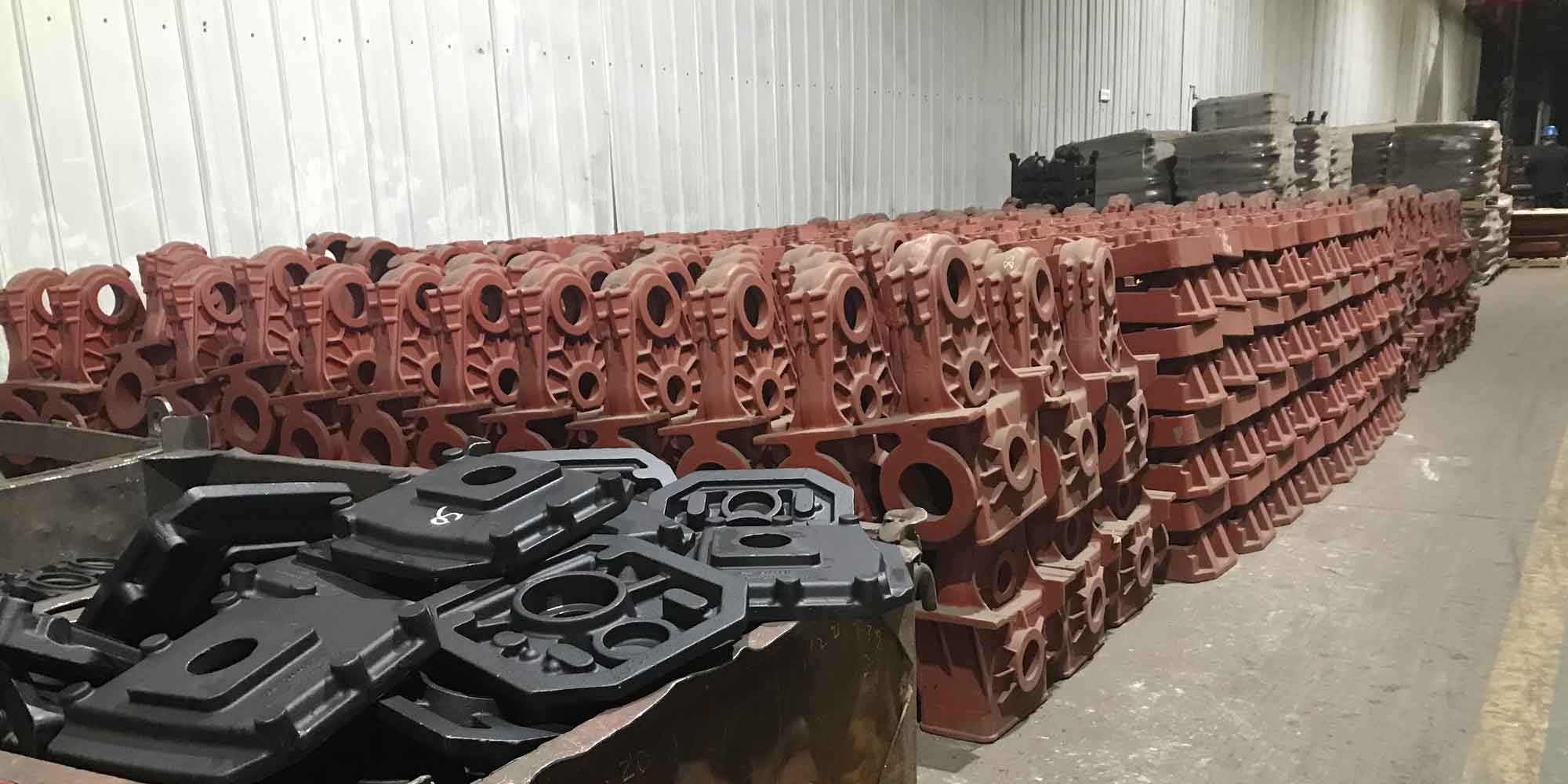
The inherent nature of the casting process, involving solidification in complex sand molds, often leads to microstructural heterogeneities, micro-shrinkage, and occasional inclusions not typically found in wrought products like forgings. Consequently, the toughness values measured for steel castings can exhibit greater statistical scatter. This fundamental characteristic underscores the importance of a robust and statistically sound framework for evaluating CVN test results. The standards we examine provide different philosophical approaches to managing this variability.
1. Foundational Test Method Standards: Specimens and Apparatus
Before examining acceptance rules, it is essential to understand the basic test parameters defined in the foundational method standards. The dimensions of the test specimen and the configuration of the test machine itself are critical variables.
1.1 Standard V-notch Specimen Dimensions
The most common specimen for Charpy impact testing of steel castings is the standard full-size specimen with a 2 mm deep V-notch. While several standards permit the use of sub-sized specimens (e.g., 7.5mm, 5mm wide) when material thickness is insufficient, the full-size specimen provides the most stable and reproducible results. A comparison of the nominal dimensions as defined by major international standards is presented below. It is critical to note that while the overall length, height, and width are universally agreed upon, the specification of the notch geometry differs subtly, particularly between ASTM and other standards.
| Parameter | ISO 148-1:2016 / GB/T 229-2007 | EN 10045-1:1990 | ASTM A370:2017 | JIS Z2242:2005 |
|---|---|---|---|---|
| Length (l) | 55 mm | 55 mm | 55 mm | 55 mm |
| Height (h) | 10 mm | 10 mm | 10 mm | 10 mm |
| Width (w) | 10 mm | 10 mm | 10 mm | 10 mm |
| Notch Angle (α) | 45° | 45° | 45° | 45° |
| Notch Root Radius (r) | 0.25 mm | 0.25 mm | 0.25 mm | 0.25 mm |
| Notch Depth (dISO) | – | – | 2 mm | – |
| Remaining Ligament Height (h – dEN/ISO) | 8 mm | 8 mm | – | 8 mm |
The key difference lies in the specification: ASTM A370 defines the notch depth (d) as 2 mm, whereas ISO, EN, and JIS define the remaining height under the notch (often called the ligament height). For a 10 mm tall specimen, these are equivalent: $$ h_{ligament} = h – d = 10 mm – 2 mm = 8 mm $$. This is a semantic distinction but one that must be clearly understood when reading specifications for steel castings.
1.2 Striker (Striking Edge) Radius
Another often-overlooked yet important parameter is the radius of the pendulum’s striker. The choice between a 2 mm and an 8 mm radius can influence the measured impact energy, particularly for lower toughness materials where the contact stress field and deformation mode are more sensitive to the striker geometry.
| Standard | Striker Radius Options | Default / Note |
|---|---|---|
| ISO 148-1:2016 / GB/T 229-2007 | 2 mm or 8 mm | Default is 2 mm if not specified. For low energies, the 2 mm radius may yield higher values. |
| EN 10045-1:1990 | 2 mm | Only the 2 mm radius is specified. |
| ASTM A370:2017 | 8 mm | Only the 8 mm radius is specified. |
| JIS Z2242:2005 | 2 mm or 8 mm | Similar to ISO. |
This divergence means that a laboratory testing steel castings to different standards must be equipped with interchangeable strikers. The purchasing specification must explicitly state the required striker radius to avoid non-conformance due to a procedural discrepancy.
2. Acceptance Criteria for Impact Energy: The Core Divergence
The most significant variations between standards, with direct commercial and technical consequences for producers of steel castings, lie in the rules for judging whether a set of impact test results is acceptable. These rules define how to handle the inherent scatter in the toughness data from cast materials.
2.1 Initial Test Evaluation (First Set of Three Specimens)
All major standards evaluate impact energy based on a set of three specimens. The criteria for acceptance combine requirements for the average energy and for the individual minimum values. Let \( KV_1, KV_2, KV_3 \) represent the impact energy values of the three specimens, and \( KV_{spec} \) represent the specified minimum value required by the material standard for the steel castings.
The acceptance rules can be expressed as logical conditions. The major international standards for steel castings stipulate the following:
ISO 4990:2015 & EN 1559-2:2014: These standards are aligned. Acceptance requires simultaneous satisfaction of three conditions:
1. The arithmetic mean of the three values meets or exceeds the specified value: $$ \overline{KV} = \frac{KV_1 + KV_2 + KV_3}{3} \geq KV_{spec} $$
2. No more than one individual value is below \( KV_{spec} \).
3. That single low value (if it exists) is not less than 70% of \( KV_{spec} \): $$ KV_{low} \geq 0.7 \times KV_{spec} $$
ASTM A370:2017: The structure is similar but with a stricter lower limit for a single low value.
1. The arithmetic mean meets or exceeds the specified value: $$ \overline{KV} \geq KV_{spec} $$
2. No more than one individual value is below \( KV_{spec} \).
3. That single low value is not less than two-thirds of \( KV_{spec} \): $$ KV_{low} \geq \frac{2}{3} \times KV_{spec} $$
Since \( \frac{2}{3} \approx 66.7\% \), this is a marginally stricter requirement than the ISO/EN 70% rule.
JIS G0307:2014: This standard presents a dual system depending on the origin of the material specification.
* For materials specified in JIS standards: Two options exist. Type 1 requires only the average to meet the specification \( (\overline{KV} \geq KV_{spec}) \), implicitly allowing two values to be below \( KV_{spec} \). Type 2 requires both the average to meet the specification and every single value to meet a separate, often lower, minimum individual value \( (KV_i \geq KV_{min}) \).
* For materials specified in ISO standards: The acceptance rule defaults to the ISO 4990 criteria detailed above.
Many Chinese national (GB) and industry (JB) standards for steel castings adopt either the ASTM A370 or the ISO 4990 model, leading to a lack of uniformity within the domestic landscape itself.
| Standard Family | Average Requirement | Number of Low Values Allowed | Minimum Individual Value Requirement |
|---|---|---|---|
| ISO 4990, EN 1559-2 | $$ \overline{KV} \geq KV_{spec} $$ | Maximum 1 | Low value $$ \geq 0.7 \times KV_{spec} $$ |
| ASTM A370 | $$ \overline{KV} \geq KV_{spec} $$ | Maximum 1 | Low value $$ \geq \frac{2}{3} \times KV_{spec} $$ |
| JIS G0307 (JIS Mat., Type 1) | $$ \overline{KV} \geq KV_{spec} $$ | Not specified (implied ≤2) | None specified |
| JIS G0307 (JIS Mat., Type 2) | $$ \overline{KV} \geq KV_{spec} $$ | 0 (All ≥ KV_min) | Every value $$ \geq KV_{min} $$ |
| Typical Chinese Standards | Follows either ISO or ASTM | Follows either ISO or ASTM | Follows either ISO or ASTM |
2.2 Retest Procedures After Initial Failure
When the initial set of three specimens fails to meet the acceptance criteria, standards provide rules for a retest. The philosophies here diverge even more dramatically, primarily concerning the sample size for retest and whether the original data is discarded or combined with the new data.
ISO 4990:2015: A single retest of three new specimens is performed. Acceptance is based on the combined data from all six specimens (initial + retest), with specific conditions on the retest set:
1. The average of all six values meets or exceeds \( KV_{spec} \): $$ \overline{KV}_{6} = \frac{\sum_{i=1}^{6} KV_i}{6} \geq KV_{spec} $$
2. All three values from the retest set individually meet or exceed 70% of \( KV_{spec} \).
EN 1559-2:2014: Also uses a three-specimen retest but with a stricter condition on the retest set:
1. The average of all six values meets or exceeds \( KV_{spec} \).
2. All three values from the retest set individually meet or exceed \( KV_{spec} \) (not 70%).
ASTM A370:2017: Employs a simpler, “fresh start” approach. The initial result is disregarded. A retest of three new specimens is conducted, and all three individual values from this new set must meet or exceed \( KV_{spec} \). The average is not considered in the retest evaluation under this standard.
JIS G0307:2014: For JIS materials, the retest logic is complex and tied to the nature of the initial failure (low average vs. low single value). It generally involves a three-specimen retest and evaluation of the combined six-specimen average, sometimes with an 85% threshold for the initial average. For ISO materials, it follows the ISO 4990 rule.
Common Chinese Standard Variants: In addition to adopting ISO or ASTM rules, a prevalent and distinct approach in Chinese standards for steel castings is the “double retest” method:
* A retest comprising six new specimens is conducted.
* For acceptance, the average of these six new values must meet \( KV_{spec} \), and no more than two of them may be below \( KV_{spec} \), with those low values not less than 70% of \( KV_{spec} \).
* This approach effectively ignores the initial result and applies a broader statistical basis (n=6) for the final decision, mirroring a common practice in forging standards.
| Standard | Retest Sample Size | Data Used for Final Decision | Key Retest Acceptance Conditions |
|---|---|---|---|
| ISO 4990 | 3 specimens | 6 specimens (Initial 3 + Retest 3) | 1. 6-spec avg ≥ KV_spec. 2. All 3 retest values ≥ 0.7*KV_spec. |
| EN 1559-2 | 3 specimens | 6 specimens (Initial 3 + Retest 3) | 1. 6-spec avg ≥ KV_spec. 2. All 3 retest values ≥ KV_spec. |
| ASTM A370 | 3 specimens | 3 specimens (Retest 3 only) | All 3 retest values ≥ KV_spec. |
| Chinese “Double Retest” (e.g., GB/T 37681) | 6 specimens | 6 specimens (Retest 6 only) | 1. 6-spec avg ≥ KV_spec. 2. Max 2 values < KV_spec, each ≥ 0.7*KV_spec. |
3. Discussion and Practical Implications for Steel Castings
The comparative analysis reveals a lack of global harmonization that directly affects the manufacturing, testing, and procurement of large steel castings. A casting produced and tested in Asia to JIS or a particular GB standard might be judged differently if evaluated under ASTM or EN rules, even if the same specified energy value is contractually required.
The choice of striker radius (2 mm vs. 8 mm), while often inconsequential for ductile steel castings, can become a contentious point for lower-toughness grades or in borderline cases. Explicit specification is necessary.
The most critical difference lies in the retest philosophy. The ASTM A370 method offers a clear but potentially stringent “second chance” where the first result is void. The ISO/EN method is more integrative, allowing recovery if the initial failure was marginal and the follow-up test is strong, though EN’s requirement for all retest values to meet the full spec is tougher than ISO’s. The Chinese “double retest” method acknowledges the inherent scatter in steel castings by using a larger sample size (n=6) for the final assessment, which provides a more statistically stable estimate of the material’s true mean toughness. This approach can be seen as a pragmatic response to the microstructural variability of cast materials.
Given the discussion on scatter, for large steel castings where the test coupon may not perfectly represent every volume of the complex casting, a statistically robust acceptance rule is prudent. The “double retest” rule, which has gained substantial traction in Chinese and some international specifications, offers such robustness. It demands consistent quality over a larger number of tests without being unduly punitive for a single statistical outlier that might arise from a localized microshrinkage pore in one specimen—a realistic scenario in castings. Therefore, when developing or revising specifications for critical steel castings, especially for applications where failure consequences are severe, serious consideration should be given to adopting a retest protocol based on a larger sample size, such as the six-specimen retest method. This provides a higher confidence level in the assessed toughness of the delivered component, aligning the quality assurance process more closely with the intrinsic characteristics of cast metallurgy.