
In the realm of heavy industry, the manufacturing of large-scale steel castings, such as those used in high-pressure ball valves for critical applications, presents formidable challenges. These steel castings must exhibit exceptional mechanical properties, dimensional accuracy, and internal soundness to withstand extreme operational conditions. However, traditional foundry practices often grapple with issues like shrinkage porosity, slag inclusions, and low process yield, leading to increased costs and delayed deliveries. As an engineer deeply involved in advancing casting technologies, I have witnessed firsthand how numerical simulation tools, particularly ProCAST, can revolutionize the design and optimization of processes for complex steel castings. This article delves into a comprehensive methodology for enhancing the investment casting of large high-pound ball valve bodies, leveraging simulation-driven insights to achieve superior quality and efficiency. Throughout this discussion, the term “steel castings” will be emphasized to underscore its centrality in modern industrial manufacturing.
The initial challenge we faced involved a series of large high-pound-class ball valve bodies produced via investment casting. These steel castings, typically weighing several tons and featuring intricate geometries, consistently suffered from internal defects such as shrinkage porosity and slag inclusions, resulting in a product qualification rate of no more than 80%. Moreover, the process yield—defined as the ratio of finished casting weight to total metal poured—was alarmingly low at approximately 28%, indicating significant material waste and economic inefficiency. Such shortcomings are common in the production of heavy-section steel castings, where improper thermal management during solidification can lead to defect formation. To address this, we embarked on a project to systematically analyze and optimize the casting process using ProCAST, a finite element-based software renowned for simulating mold filling, solidification, and defect prediction in metal casting operations.
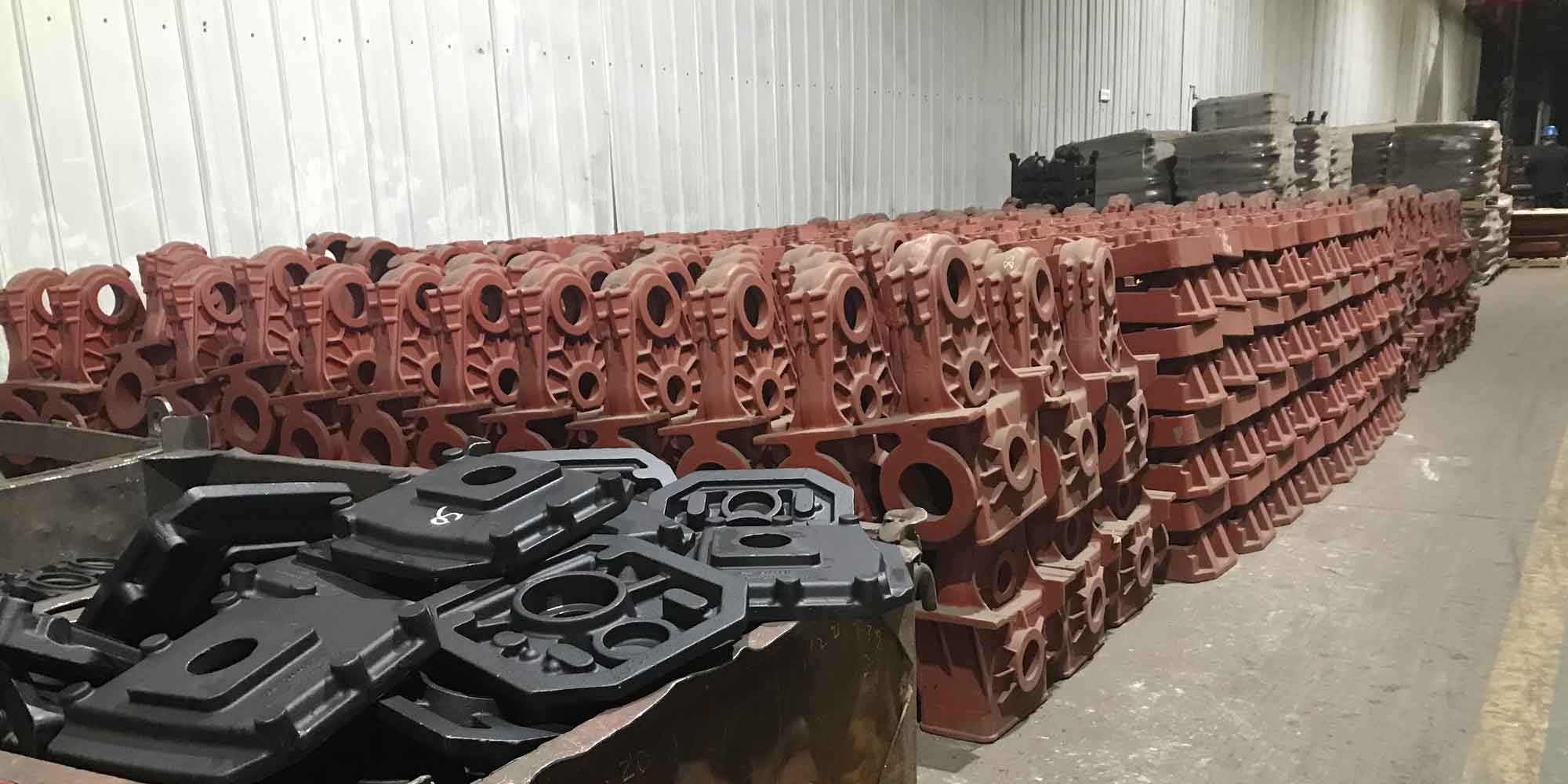
Our approach began with a detailed numerical simulation of the original casting process. The gating system was of a top-pouring design, which, while simple to implement, often induces turbulent flow and air entrapment, exacerbating slag inclusion risks. Additionally, the thermal analysis revealed pronounced hot spots at certain junctions, predisposing the steel castings to shrinkage porosity. ProCAST enabled us to visualize these phenomena through temperature gradient plots and fraction solid contours. For instance, the governing equation for heat transfer during solidification is expressed as:
$$ \rho C_p \frac{\partial T}{\partial t} = \nabla \cdot (k \nabla T) + \rho L \frac{\partial f_s}{\partial t} $$
where $\rho$ is density, $C_p$ is specific heat, $T$ is temperature, $t$ is time, $k$ is thermal conductivity, $L$ is latent heat, and $f_s$ is the fraction solid. This equation highlights how thermal parameters influence defect formation in steel castings. By simulating the original setup, we quantified defect-prone zones, as summarized in Table 1.
| Defect Type | Location in Casting | Simulated Severity Index (0-10) | Probable Cause |
|---|---|---|---|
| Shrinkage Porosity | Valve Body Junction | 8.5 | Hot Spot Accumulation |
| Slag Inclusion | Upper Regions | 7.2 | Turbulent Top Pouring |
| Gas Porosity | Near Riser Base | 6.8 | Air Entrapment |
Based on these insights, we formulated a multi-faceted optimization strategy. The cornerstone was redesigning the gating system from top-pouring to a bottom-feeding stepped runner configuration. This modification promotes laminar flow, reduces oxidation, and minimizes slag entrainment—critical factors for high-integrity steel castings. The new design incorporates multiple gates at different heights, allowing sequential filling and directional solidification. The fluid flow dynamics can be described by the Navier-Stokes equations adapted for casting:
$$ \frac{\partial \mathbf{u}}{\partial t} + (\mathbf{u} \cdot \nabla) \mathbf{u} = -\frac{1}{\rho} \nabla p + \nu \nabla^2 \mathbf{u} + \mathbf{g} $$
where $\mathbf{u}$ is velocity vector, $p$ is pressure, $\nu$ is kinematic viscosity, and $\mathbf{g}$ is gravitational acceleration. Implementing this in ProCAST showed a dramatic reduction in velocity vortices, directly benefiting the quality of steel castings.
Concurrently, we revamped the riser design and chilling layout. Riser dimensions were optimized using modulus method calculations to ensure adequate feed metal during solidification. The riser efficiency $\eta_r$ can be estimated as:
$$ \eta_r = \frac{V_f}{V_r} \times 100\% $$
where $V_f$ is the volume of feed metal required to compensate shrinkage, and $V_r$ is the riser volume. For steel castings, typical shrinkage is around 2-3%, so we adjusted riser sizes to achieve an efficiency exceeding 70%. Additionally, strategic placement of chills made of high-conductivity materials helped extract heat from thick sections, eliminating hot spots. The effect of chills is quantified by the Chill Power Coefficient $C_pc$, defined as:
$$ C_{pc} = \frac{k_{chill} \cdot A_{chill}}{k_{mold} \cdot A_{contact}} $$
where $k_{chill}$ and $k_{mold}$ are thermal conductivities of chill and mold, respectively, and $A$ denotes areas. Higher $C_{pc}$ values accelerate cooling, benefiting the soundness of steel castings. The optimized parameters are listed in Table 2.
| Parameter | Original Value | Optimized Value | Improvement Impact |
|---|---|---|---|
| Gating System Type | Top-Pouring | Bottom-Feeding Stepped | Reduced Turbulence |
| Number of Gates | 2 | 4 | Better Distribution |
| Riser Volume (L) | 150 | 220 | Enhanced Feeding |
| Chill Count | 5 | 12 | Faster Solidification |
| Pouring Temperature (°C) | 1580 | 1550 | Lower Thermal Stress |
| Process Yield (%) | 28 | 50 | Material Efficiency |
The simulation results for the optimized process were profoundly encouraging. ProCAST predicted that the internal defect rate in steel castings would drop to below 0.5%, a stark contrast to the earlier issues. Temperature distribution plots showed uniform cooling, with no isolated hot spots. The solidification time $t_s$ was reduced by approximately 30%, calculated as:
$$ t_s = \frac{V^2}{4 \alpha \pi} $$
where $V$ is volume and $\alpha$ is thermal diffusivity. This reduction minimizes grain growth and enhances mechanical properties in steel castings. To validate these findings, we conducted trial productions of the ball valve bodies. The castings underwent rigorous X-ray flaw detection and machining inspections. The results confirmed that density and dimensional accuracy met all acceptance standards, with defect-free zones aligning with simulation forecasts. Batch production subsequently maintained a qualification rate exceeding 98%, demonstrating the robustness of our approach for steel castings.
Beyond this specific case, the principles of simulation-driven optimization find resonance in even more ambitious projects. Consider the recent development of the world’s largest mixed pumped-storage power station ball valve steel castings. These components, weighing over 110 tons each with dimensions up to 6.6 meters, represent the pinnacle of heavy steel castings manufacturing. Our team applied similar ProCAST-based methodologies to tackle challenges like ensuring high density in thick sections and achieving precise dimensional control. Through multivariate regression analysis of historical data coupled with advanced simulation, we mastered key technologies such as controlled solidification and distortion minimization. The success of these steel castings—meeting the highest industry standards in non-destructive testing, mechanical performance, and dimensional accuracy—underscores the transformative potential of numerical tools in advancing steel castings for critical infrastructure.
The economic implications of such optimizations are substantial. By elevating process yield from 28% to 50%, we effectively halved material waste, leading to significant cost savings. Moreover, the near-elimination of defects reduces rework and scrap, further cutting expenses. The overall cost-benefit can be modeled using a simple equation:
$$ \text{Total Cost Savings} = (Y_{new} – Y_{old}) \times C_m + (Q_{new} – Q_{old}) \times C_r $$
where $Y$ denotes yield, $Q$ qualification rate, $C_m$ material cost per unit, and $C_r$ rework cost. For large-scale production of steel castings, these savings accumulate rapidly, justifying the initial investment in simulation software and expertise. Additionally, the enhanced reliability of steel castings contributes to longer service life and reduced downtime in applications like energy generation, amplifying societal benefits.
In discussing the broader context, it is essential to recognize the iterative nature of process improvement for steel castings. ProCAST simulations are not a one-time solution but part of a continuous feedback loop. As we gather more data from actual castings, we refine our models, improving their predictive accuracy. For example, we often adjust the heat transfer coefficients at the metal-mold interface based on thermocouple readings, enhancing the fidelity of simulations for future steel castings projects. This synergy between virtual and physical realms is driving innovation across the foundry industry, enabling the production of steel castings with complexities previously deemed unattainable.
| Metric | Pre-Optimization Average | Post-Optimization Average | Percentage Improvement |
|---|---|---|---|
| Defect Rate (%) | 20 | 0.5 | 97.5 |
| Process Yield (%) | 28 | 50 | 78.6 |
| Solidification Time (hours) | 8.5 | 6.0 | 29.4 |
| Mechanical Strength (MPa) | 450 | 480 | 6.7 |
| Dimensional Tolerance (mm) | ±5 | ±2 | 60 |
Looking ahead, the integration of artificial intelligence with simulation tools like ProCAST promises further breakthroughs in steel castings manufacturing. Machine learning algorithms can analyze vast datasets to identify subtle correlations between process parameters and casting quality, suggesting optimizations beyond human intuition. For instance, neural networks could predict optimal gating designs for novel steel castings geometries, reducing trial-and-error cycles. The foundational equation for such predictive modeling might involve a multi-variable regression:
$$ Y = \beta_0 + \beta_1 X_1 + \beta_2 X_2 + \cdots + \beta_n X_n + \epsilon $$
where $Y$ represents a quality metric for steel castings, $X_i$ are process variables, $\beta_i$ coefficients, and $\epsilon$ error term. By harnessing such advanced analytics, we can push the boundaries of what is possible in producing high-performance steel castings for sectors like aerospace, energy, and transportation.
In conclusion, the journey from defect-prone to reliable large steel castings hinges on embracing digital simulation technologies. Through the case of high-pound ball valve bodies, we demonstrated how ProCAST-guided optimizations—such as bottom-feeding stepped gating, riser redesign, and strategic chilling—can elevate internal quality and process yield dramatically. The successful manufacture of monumental steel castings for pumped-storage power stations further validates this approach. As we continue to refine these methods, the future of steel castings appears increasingly robust, efficient, and innovative. The key takeaway is clear: investing in simulation-driven process optimization is not merely an technical enhancement but a strategic imperative for foundries aiming to excel in the competitive landscape of heavy steel castings production. This paradigm shift ensures that steel castings will continue to underpin critical infrastructure globally, meeting ever-higher standards of performance and sustainability.