
The relentless pursuit of enhanced performance, precision, and cost-effectiveness in modern manufacturing places significant demands on foundry engineering. For steel castings in critical applications, these demands are particularly acute. The component in focus here is a derrick pulley, a quintessential steel casting responsible for load transfer within drilling rig systems. It must withstand extreme wear and high loads, mandating superior metallurgical integrity and dimensional accuracy. Traditional foundry practices, while reliable, often rely on empirical rules that can lead to conservative designs, resulting in low yield, excessive machining allowance, and high post-casting processing costs.
The core challenge lies in the opaque nature of the casting process itself. The flow and solidification of molten metal within a mold cavity are phenomena not directly observable during production. Consequently, rectifying defects such as shrinkage porosity or mistruns becomes a cycle of costly trial-and-error, extending lead times and consuming resources. The pivotal element in controlling these defects is the gating and risering system. An optimal riser design must efficiently feed liquid metal to compensate for volumetric shrinkage during solidification, ensuring soundness, while simultaneously minimizing the excess metal that must be removed later.
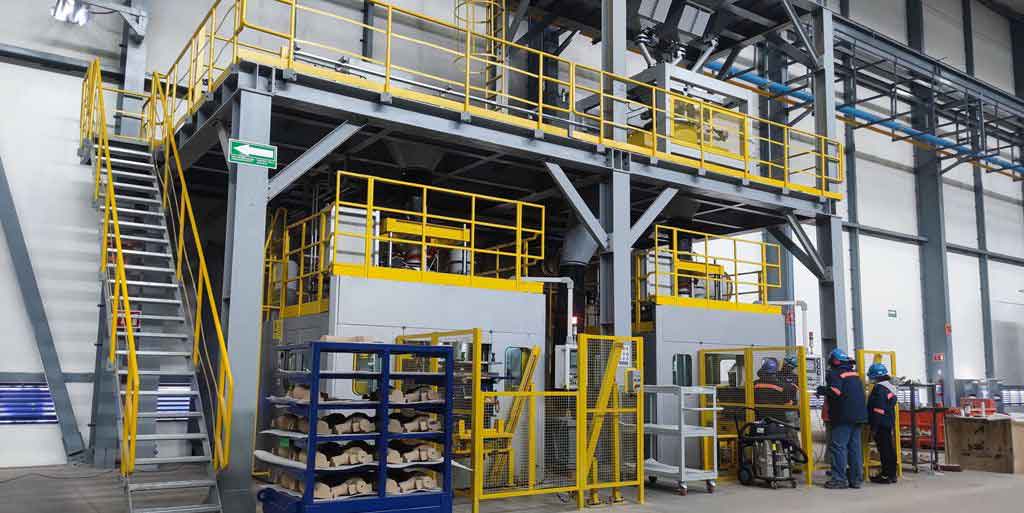
This is where advanced numerical simulation transforms the paradigm. By employing finite element analysis (FEA) software like ProCAST, we can virtually prototype the casting process. This allows for an intuitive investigation of the thermal and fluid dynamics involved, enabling the prediction of defect locations and probabilities before a single mold is made. The adoption of such simulation-driven design is crucial for developing leaner, more efficient processes for high-value steel castings.
In the context of riser design for ferrous alloys, neck-down or “knuckle” risers are well-established in iron foundries. Their design features a constricted connection to the casting, which promotes rapid freezing at the neck, isolating the riser and minimizing the heat-affected zone on the casting surface. This greatly facilitates riser removal. However, their application in casting steel castings, especially low-alloy grades, is less documented. The higher melting point and different solidification characteristics of steel present unique challenges. This study details our investigation into the feasibility and benefits of implementing neck-down heating risers for a ZG35Cr1Mo low-alloy steel casting pulley, moving from simulation to successful production.
The Problem with Conventional Practice
The traditional method for producing this pulley employed conventional side risers with large, rectangular heating sleeves. To accommodate these risers, substantial “riser pads” or “feeders” were necessary on the casting’s rim. This design philosophy, while ensuring soundness, had major drawbacks. The large contact area between the riser pad and the pulley rim resulted in several inefficiencies, as summarized below:
| Aspect | Conventional Riser Design Consequence |
|---|---|
| Yield | Low casting yield (57%). High total poured metal weight. |
| Post-Casting Processing | Extensive, difficult cutting of large riser pads. Poor cut surface quality damaging to machining tools. |
| Machining | Increased machining time and tool wear due to rough surfaces and excess material. |
| Overall Cost | Elevated manufacturing cost per unit. |
The primary objective was clear: develop a risering technique that maintains or improves the internal quality of the steel castings while drastically reducing the ancillary mass and improving separability.
Simulation-Based Process Design and Optimization
We initiated the redesign using a full 3D simulation workflow. Two distinct process layouts were modeled and analyzed: the baseline conventional design and the proposed optimized design utilizing neck-down heating risers.
| Parameter | Conventional Design | Optimized Neck-Down Riser Design |
|---|---|---|
| Casting Weight | 805 kg | 720 kg |
| Total Pour Weight | 1405 kg | 1160 kg |
| Casting Yield | 57.3% | 62.1% |
| Riser Type | Rectangular Heating Sleeve Riser with Pad | Neck-Down Heating Riser |
The fundamental difference lies in the riser-casting interface. The neck-down design eliminates the need for a large pad, creating only a small, constricted contact point. This change alone promised significant benefits in yield and cut-off labor. The critical question was whether it could provide adequate feeding for these steel castings. To answer this, we performed a comprehensive simulation analysis encompassing filling, solidification, and defect prediction.
Thermal Analysis & Solidification Sequence
The temperature field analysis is paramount for predicting shrinkage defects. The governing heat transfer during solidification can be described by the transient heat conduction equation:
$$ \rho C_p \frac{\partial T}{\partial t} = \nabla \cdot (k \nabla T) + Q_{latent} $$
where $\rho$ is density, $C_p$ is specific heat, $T$ is temperature, $t$ is time, $k$ is thermal conductivity, and $Q_{latent}$ is the latent heat source term from the liquid-solid phase change.
The simulation results for both designs showed a favorable directional solidification pattern. In both cases, the thermal gradients drove solidification from the thinner sections of the pulley rim towards the heavier hub and, crucially, towards the risers themselves. No isolated liquid pockets were predicted to form in the critical load-bearing sections. The presence of the exothermic material in the heating risers effectively delayed their solidification, maintaining them as liquid reservoirs to feed the shrinking steel castings until the very last stages. The optimized design demonstrated that the neck-down risers, despite their smaller contact area, were capable of creating the necessary thermal hierarchy to promote soundness.
Filling Pattern & Velocity Analysis
A turbulent or unbalanced fill can introduce defects like air entrapment, slag inclusion, or cold shuts. The Navier-Stokes equations for incompressible flow, coupled with the volume-of-fluid (VOF) method for tracking the free surface, govern this phase:
$$ \frac{\partial \vec{v}}{\partial t} + (\vec{v} \cdot \nabla) \vec{v} = -\frac{1}{\rho}\nabla p + \nu \nabla^2 \vec{v} + \vec{g} $$
$$ \nabla \cdot \vec{v} = 0 $$
where $\vec{v}$ is velocity, $p$ is pressure, and $\nu$ is kinematic viscosity.
The simulation of the filling process for both the traditional and optimized gating systems showed smooth, progressive filling of the mold cavity. There was no evidence of severe jetting, splashing, or vortex formation that could lead to oxide entrainment. The metal front advanced uniformly, minimizing the risk of cold shuts. This confirmed that the modification of the risering system did not adversely affect the filling characteristics of these steel castings.
Prediction of Shrinkage Porosity
The ultimate validation of a riser design is its ability to prevent macro- and micro-porosity. ProCAST uses criteria functions based on the thermal history (like the Niyama criterion) to predict areas susceptible to shrinkage. The Niyama criterion $N_y$ is often expressed as:
$$ N_y = \frac{G}{\sqrt{\dot{T}}} $$
where $G$ is the temperature gradient and $\dot{T}$ is the cooling rate at the end of solidification. Regions with a value below a critical threshold are flagged as potential shrinkage sites.
The simulation results were conclusive. Both process schemes predicted dense, sound material in the pulley’s body, especially in the critical rope-groove area. The neck-down riser system was shown to be equally effective as the traditional large-pad risers in feeding the solidification shrinkage of the steel castings. The predicted shrinkage was successfully isolated within the riser bodies themselves, which are intended to be removed. This confirmed the feasibility of the optimized design from a metallurgical quality standpoint.
Production Validation and Measured Benefits
Guided by the positive simulation results, we proceeded to modify the tooling and conduct production trials. The new molds were created incorporating the neck-down riser design. The cast steel castings were subsequently processed, machined, and subjected to non-destructive testing via magnetic particle inspection (MPI) in accordance with stringent standards.
The results from the production floor validated the virtual simulations. The pulleys exhibited excellent internal soundness with no shrinkage defects detected in the finished parts. The most visually striking and economically significant outcome was the state of the casting after riser removal. The small neck-down connection points were cleanly and quickly severed, leaving a remarkably superior surface finish on the pulley rim compared to the rough, torn surfaces left by removing the large pads of the old design.
The quantitative benefits realized from implementing the optimized process for these steel castings are summarized in the table below:
| Performance Metric | Improvement Achieved | Primary Impact |
|---|---|---|
| Casting Yield | Increase of approximately 5% (57% → 62%) | Reduced liquid metal consumption per unit. |
| Casting Weight | Reduction of ~13% (805 kg → 720 kg) | Lower material cost, less energy for melting. |
| Riser Cutting Efficiency | Improvement >40% | Dramatic reduction in labor time, gas/oxygen consumption. |
| Machining Efficiency | Improvement >30% | Reduced machining time (e.g., 90 min/part saved), lower tool wear. |
| Surface Quality | Significantly Improved | Better final product appearance, reduced need for remedial grinding. |
Theoretical and Practical Implications
The success of this project underscores a critical principle in modern casting: riser efficiency is not solely about volume, but about controlled thermal management and minimal interface geometry. The neck-down riser acts as a “thermal valve.” Its small cross-section freezes rapidly, effectively disconnecting the casting from the riser shortly after the casting itself has solidified. This phenomenon can be conceptually linked to the solidification time, approximated by Chvorinov’s rule:
$$ t_s = B \left( \frac{V}{A} \right)^n $$
where $t_s$ is solidification time, $V$ is volume, $A$ is surface area, $B$ is a mold constant, and $n$ is an exponent (typically ~2). By designing a riser neck with a very high $A/V$ ratio, its solidification time $t_{s_{neck}}$ is engineered to be shorter than that of the casting’s hot spot $t_{s_{hotspot}}$, yet longer than the feeding path it serves. For steel castings with a wide freezing range, this precise control is essential to prevent the formation of isolated mushy zones that lead to microporosity.
The integration of exothermic material in the riser further optimizes this function. The exothermic reaction provides an internal heat source, which can be modeled as an additional term in the heat equation for the riser volume, effectively increasing the local solidification time $t_s$ of the riser body, ensuring it remains liquid long enough to fulfill its feeding duty despite the restrictive neck.
From a practical standpoint, this study demonstrates that simulation technology is a powerful enabler for adopting advanced techniques from one alloy family (cast iron) to another (cast steel). It de-risks the innovation process, providing the confidence to move beyond entrenched, conservative practices. The economic gains—higher yield, lower mass, and drastically reduced secondary processing costs—directly contribute to the competitiveness and sustainability of producing such critical steel castings.
Conclusion
Through a systematic approach combining finite element simulation and production validation, we have successfully developed and implemented an optimized casting process for derrick pulleys using neck-down heating risers. The ProCAST simulations confirmed that the new design would maintain the required metallurgical soundness in the steel castings, preventing shrinkage defects. The production trials fully validated these predictions, yielding pulleys that met all quality specifications.
The transition from traditional risers with large pads to the optimized neck-down design resulted in substantial and multifaceted benefits: a 5% increase in casting yield, a 13% reduction in casting weight, a greater than 40% improvement in riser removal efficiency, and a more than 30% gain in machining productivity. This work conclusively proves the feasibility and significant advantage of applying neck-down heating riser technology to low-alloy steel castings. It establishes a replicable framework for process optimization that balances quality, cost, and efficiency, and is readily applicable to other similar rotational steel castings across the heavy machinery sector.