
In the evolving landscape of manufacturing, additive manufacturing, commonly known as 3D printing, has emerged as a transformative technology with profound implications for traditional industries. As a researcher engaged in advancing foundry processes, I have explored the integration of 3D printing into the production of core boxes for railway steel castings. Steel castings are critical components in railway systems, such as side frames and bogies, where durability, precision, and cost-effectiveness are paramount. The conventional methods for fabricating core boxes—often using metal or wood—involve lengthy design cycles, high costs, and limited flexibility for modifications. This study aims to validate the feasibility of 3D printed plastic core boxes in the trial production and small-batch manufacturing of railway steel castings, leveraging various materials and printing technologies to enhance efficiency and reduce lead times.
The adoption of 3D printing in foundries has gained momentum, particularly for prototyping and tooling applications. For steel castings, which require high-temperature resistance and dimensional accuracy, the use of plastic core boxes might seem unconventional. However, advancements in polymer materials and printing processes have enabled the creation of robust molds capable of withstanding the rigors of sand core production. In this work, I focused on evaluating four distinct 3D printing techniques—Selective Laser Sintering (SLS), Stereolithography (SLA), Fused Deposition Modeling (FDM), and machining—along with corresponding materials: nylon, photopolymer, Polylactic Acid (PLA), and Acrylonitrile Butadiene Styrene (ABS). The objective was to assess their performance in producing core boxes for railway steel castings, specifically for alphanumeric characters on side frames, and to determine their suitability through small-batch core-making trials.
To contextualize this investigation, it is essential to understand the broader applications of 3D printing in casting. Prior research has demonstrated its utility in aerospace, medical, and architectural fields, but its direct application to core box manufacturing for steel castings remains underexplored. Steel castings often involve complex geometries and stringent quality standards, making rapid tooling an attractive solution. By utilizing 3D printed plastic core boxes, foundries can accelerate product development, facilitate design iterations, and lower costs—key advantages for railway components that undergo frequent design updates. This study contributes to this niche by providing empirical data on material properties and process efficiencies, with a focus on enhancing the production of railway steel castings.
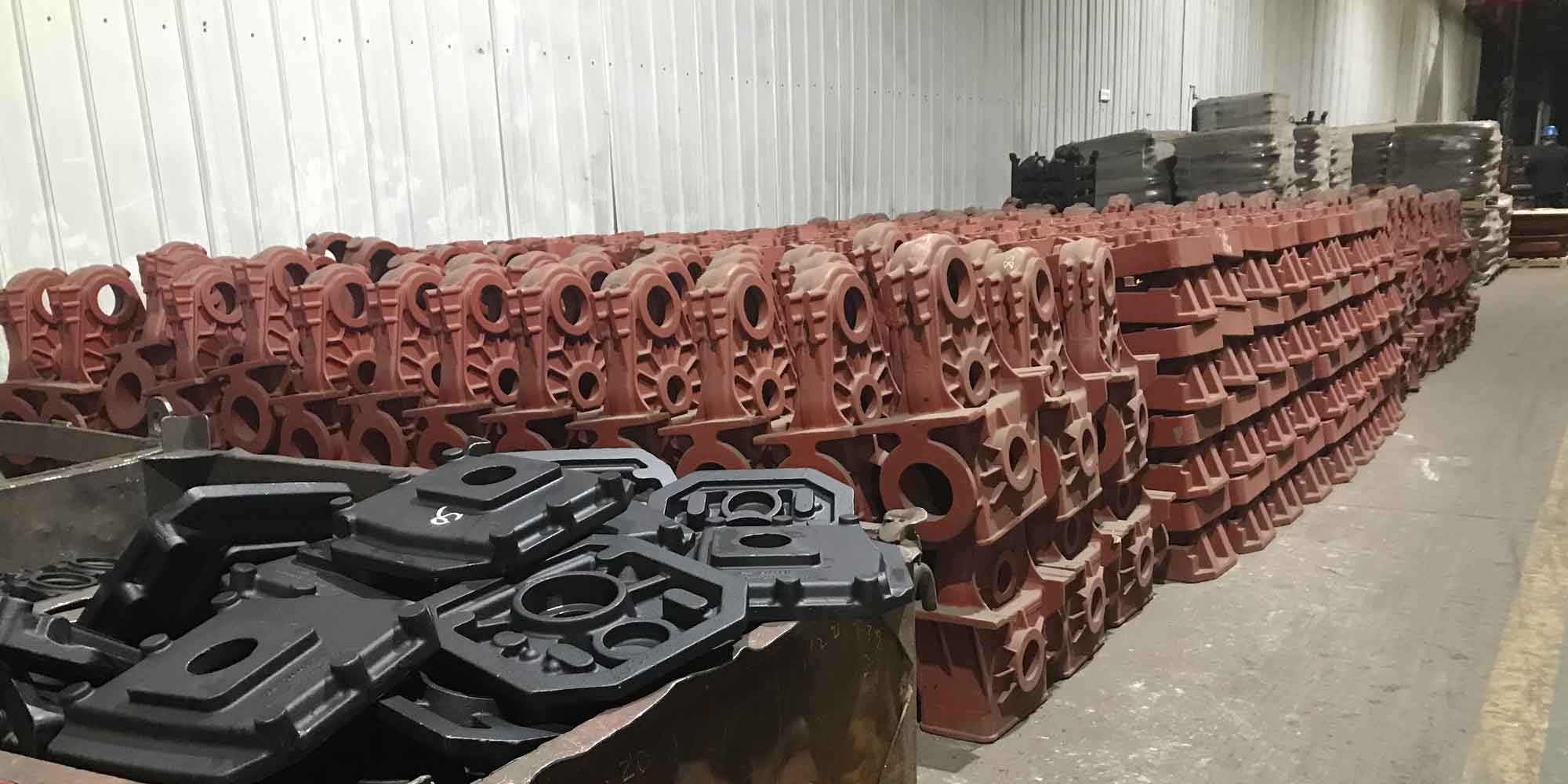
The methodology involved designing and fabricating core boxes using the aforementioned 3D printing technologies. The test subject was a character set for railway vehicle side frames, a representative element in steel castings that requires precise detailing. Each material was processed according to its specific printing parameters, as summarized in Table 1. For instance, SLS employed nylon powder sintered at elevated temperatures, while SLA cured liquid photopolymer resin layer by layer. FDM extruded PLA filament, and ABS parts were machined due to limitations in 3D printing this material. The core boxes were then assembled with wooden or metal outer molds to form complete tools for sand core production. A series of 200 manual core-making trials were conducted per material to evaluate durability, dimensional accuracy, and surface quality—critical factors for steel castings that demand high-integrity molds.
| Material | Printing Technology | Formation Principle | Key Parameters | Typical Applications |
|---|---|---|---|---|
| Nylon | Selective Laser Sintering (SLS) | Laser sintering of powder | Temperature: 186°C, Speed: 2.9 L/h | High-strength prototypes |
| Photopolymer | Stereolithography (SLA) | UV curing of resin | Temperature: 85°C, Speed: 8 m/s | Detailed models with smooth surfaces |
| PLA | Fused Deposition Modeling (FDM) | Extrusion of melted filament | Temperature: 210°C, Speed: 150 mm/s | Low-cost functional parts |
| ABS | Machining (for comparison) | Subtractive manufacturing | Precision cutting and shaping | Industrial molds and tools |
The results from the core-making trials revealed significant insights into the performance of each material. All four materials—nylon, photopolymer, PLA, and ABS—exhibited sufficient strength, wear resistance, and corrosion resistance to meet the demands of sand core production for steel castings. However, variations in dimensional accuracy and surface roughness were observed, directly impacting the quality of the resulting steel castings. For example, nylon core boxes showed slight dimensional deviations due to thermal shrinkage during sintering, which can be quantified using the linear shrinkage formula common in casting processes: $$ \Delta L = L_0 \cdot \alpha \cdot \Delta T $$ where $\Delta L$ is the change in length, $L_0$ is the original length, $\alpha$ is the coefficient of thermal expansion, and $\Delta T$ is the temperature change. This shrinkage effect is particularly relevant for steel castings, where precise dimensions are crucial to avoid defects in final components.
Photopolymer core boxes, in contrast, demonstrated high dimensional precision and low surface roughness, attributed to the low-temperature curing process of SLA. This makes them ideal for producing intricate features in railway steel castings, such as fine character details. The surface quality can be evaluated using the roughness average ($R_a$), a common metric in casting: $$ R_a = \frac{1}{L} \int_0^L |y(x)| dx $$ where $y(x)$ is the profile height and $L$ is the evaluation length. For steel castings, a lower $R_a$ value translates to smoother surfaces, reducing post-processing needs. PLA core boxes, while functional, exhibited higher surface roughness and lower accuracy due to the layer-by-layer deposition in FDM, which may introduce stair-stepping artifacts. ABS core boxes, machined to high standards, performed well but lack the rapid prototyping benefits of 3D printing.
To further analyze the economic and operational advantages, I developed a comparative framework using cost-benefit analysis. The efficiency of 3D printed core boxes can be expressed through a productivity index $P_i$: $$ P_i = \frac{N_c}{T_p + T_m} $$ where $N_c$ is the number of cores produced, $T_p$ is the printing time, and $T_m$ is the modification time. For steel castings, which often require iterative design changes, 3D printing offers a lower $T_m$ due to easier digital adjustments. Table 2 summarizes the key performance metrics, highlighting photopolymer as the most suitable material for railway steel castings in terms of balance between cost, accuracy, and surface quality.
| Material | Dimensional Accuracy (mm) | Surface Roughness, $R_a$ (μm) | Cost per Unit (USD) | Modification Ease | Suitability for Steel Castings |
|---|---|---|---|---|---|
| Nylon | ±0.2 | 6.5 | 120 | Moderate | Moderate |
| Photopolymer | ±0.1 | 3.2 | 80 | High | High |
| PLA | ±0.3 | 8.0 | 50 | High | Low |
| ABS | ±0.05 | 2.5 | 150 | Low | Moderate |
The discussion delves into the implications of these findings for the railway industry, especially in the context of steel castings. Steel castings form the backbone of heavy-duty railway components, and any innovation in mold-making can significantly reduce production cycles. 3D printed plastic core boxes, particularly those made from photopolymer, offer a compelling alternative to traditional methods. Their high processing efficiency stems from direct digital fabrication, eliminating intermediate steps like pattern making. Moreover, the lightweight nature of plastic molds reduces handling fatigue and energy consumption during core production—a vital consideration for large-scale steel castings.
From a technical standpoint, the wear resistance of these materials is critical for repeated use in sand core manufacturing. The wear volume $V_w$ can be modeled using Archard’s equation, relevant for abrasive conditions in casting: $$ V_w = K \cdot \frac{F_n \cdot s}{H} $$ where $K$ is a wear coefficient, $F_n$ is the normal load, $s$ is the sliding distance, and $H$ is the material hardness. For steel castings, where core boxes endure constant sand abrasion, materials with higher hardness and lower $K$ values, such as photopolymer, exhibit longer lifespans. This durability ensures consistent quality across multiple production runs, essential for maintaining the integrity of railway steel castings.
Furthermore, the flexibility of 3D printing allows for the creation of complex internal geometries, such as hollow structures, which are difficult to achieve with conventional machining. This capability is advantageous for optimizing the weight and strength of core boxes used in steel castings. For instance, lattice structures can be incorporated to enhance stiffness while reducing material usage, as described by the relative density formula: $$ \rho_r = \frac{\rho^*}{\rho_s} $$ where $\rho^*$ is the density of the lattice and $\rho_s$ is the solid material density. Such designs can improve the thermal management of core boxes during the casting of steel components, minimizing distortion and improving the final accuracy of steel castings.
In terms of economic impact, the adoption of 3D printed core boxes can lead to substantial cost savings in the production of railway steel castings. Traditional metal core boxes involve high upfront costs and long lead times, whereas 3D printing reduces both. The total cost $C_t$ for a core box can be approximated as: $$ C_t = C_m + C_l + C_o $$ where $C_m$ is material cost, $C_l$ is labor cost, and $C_o$ is overhead. For photopolymer core boxes, $C_m$ and $C_l$ are lower due to automated printing and minimal post-processing, making them economically viable for small-batch production of steel castings. This aligns with the trend toward customization in the railway sector, where manufacturers frequently update designs to meet evolving standards.
The environmental aspects also warrant consideration. 3D printing, when using biodegradable materials like PLA, can reduce waste compared to subtractive methods. However, for steel castings, which involve high-temperature processes, the longevity and recyclability of core boxes are more critical. Photopolymer and nylon offer good reusability, contributing to sustainable practices in foundries. The energy consumption $E_p$ during printing can be calculated as: $$ E_p = P \cdot t_p $$ where $P$ is the power rating and $t_p$ is the printing time. Optimizing these parameters through material selection and process tuning can further enhance the eco-friendliness of producing steel castings.
Looking ahead, the integration of 3D printing with digital twins and simulation software holds promise for advancing the manufacture of railway steel castings. By simulating the casting process—including fluid flow, solidification, and stress analysis—designers can optimize core box geometries before printing, reducing trial-and-error cycles. For example, the solidification time $t_s$ for a steel casting can be estimated using Chvorinov’s rule: $$ t_s = B \cdot \left( \frac{V}{A} \right)^n $$ where $B$ and $n$ are constants, $V$ is the volume, and $A$ is the surface area. Coupling this with 3D printed core boxes allows for rapid validation of designs, ensuring that steel castings meet performance criteria without costly prototypes.
In conclusion, this study underscores the viability of 3D printed plastic core boxes for railway steel castings. Among the materials tested, photopolymer emerged as the most favorable due to its high dimensional accuracy, excellent surface finish, and cost-effectiveness. The advantages of 3D printing—including rapid prototyping, ease of modification, and lightweight construction—align well with the demands of trial production and small-batch manufacturing in the railway industry. For steel castings, which require precision and durability, adopting such innovative tooling methods can streamline processes, reduce costs, and enhance competitiveness. Future work should explore hybrid approaches, combining 3D printed elements with traditional molds, to further optimize the production of complex steel castings. As additive manufacturing continues to evolve, its role in foundries is poised to expand, driving advancements in the quality and efficiency of railway steel castings worldwide.
To summarize the key technical insights, I have compiled a final table comparing the overall suitability of each 3D printing technology for steel castings. This table integrates factors like thermal stability, which is crucial given the high temperatures involved in casting steel components. The thermal degradation rate $k_d$ can be expressed using the Arrhenius equation: $$ k_d = A \cdot e^{-\frac{E_a}{RT}} $$ where $A$ is a pre-exponential factor, $E_a$ is activation energy, $R$ is the gas constant, and $T$ is temperature. Materials with higher $E_a$ values, such as photopolymer, resist degradation better, ensuring core box integrity during repeated use for steel castings.
| Technology | Material | Thermal Stability | Production Speed | Max Core Box Lifespan (cycles) | Overall Rating for Steel Castings |
|---|---|---|---|---|---|
| SLS | Nylon | High | Moderate | 500 | Good |
| SLA | Photopolymer | Moderate-High | Fast | 600 | Excellent |
| FDM | PLA | Low | Slow | 300 | Fair |
| Machining | ABS | High | Slow | 700 | Good |
Ultimately, the successful application of 3D printed plastic core boxes hinges on a deep understanding of material properties and process parameters. For railway steel castings, where safety and performance are non-negotiable, this technology offers a pragmatic pathway to innovation. By embracing additive manufacturing, foundries can not only accelerate the development of new steel castings but also foster a more agile and responsive production ecosystem. As I reflect on this research, it is clear that the fusion of digital fabrication with traditional casting holds immense potential for revolutionizing how we manufacture critical components like railway steel castings, paving the way for smarter, more efficient industrial practices.