
In the manufacturing of steel castings, surface quality is a critical factor that directly impacts product performance, aesthetic appeal, and post-processing costs. With increasing procurement standards, such as those outlined in ASTM A802/A802M for visual inspection requiring A3-grade acceptance, the demand for high-quality steel castings has intensified. Steel castings are typically poured at high temperatures, often exceeding 1,550 °C, which necessitates robust mold surface treatments to prevent defects like metal penetration and sand burning. Among these treatments, the application of refractory coatings on mold surfaces is paramount, especially for large steel castings where consistency and durability are essential. This article explores how spraying methods for alcohol-based coatings on alkaline phenolic resin sand molds affect surface hardness and, consequently, the final quality of steel castings. Through experimental analysis and data-driven insights, I aim to elucidate optimal practices that enhance the surface integrity of steel castings while mitigating common issues like softening and roughness.
The foundational material for many steel castings molds is alkaline phenolic resin sand, prized for its excellent collapsibility and dimensional stability. However, when combined with alcohol-based coatings—commonly used for their cost-effectiveness and ease of application—compatibility issues arise. Alcohol, as a solvent in these coatings, can infiltrate the sand matrix due to similarities in polarity with the resin, leading to a reduction in surface hardness. This softening phenomenon, as observed in preliminary trials, results in mold surfaces that are easily compromised, with depths of 5–7 mm being susceptible to deformation. Such degradation directly translates to poor surface quality in steel castings, manifesting as orange-peel textures that require extensive grinding, thereby increasing labor and costs. Therefore, understanding and optimizing the spraying process is vital for producing high-grade steel castings that meet stringent standards.
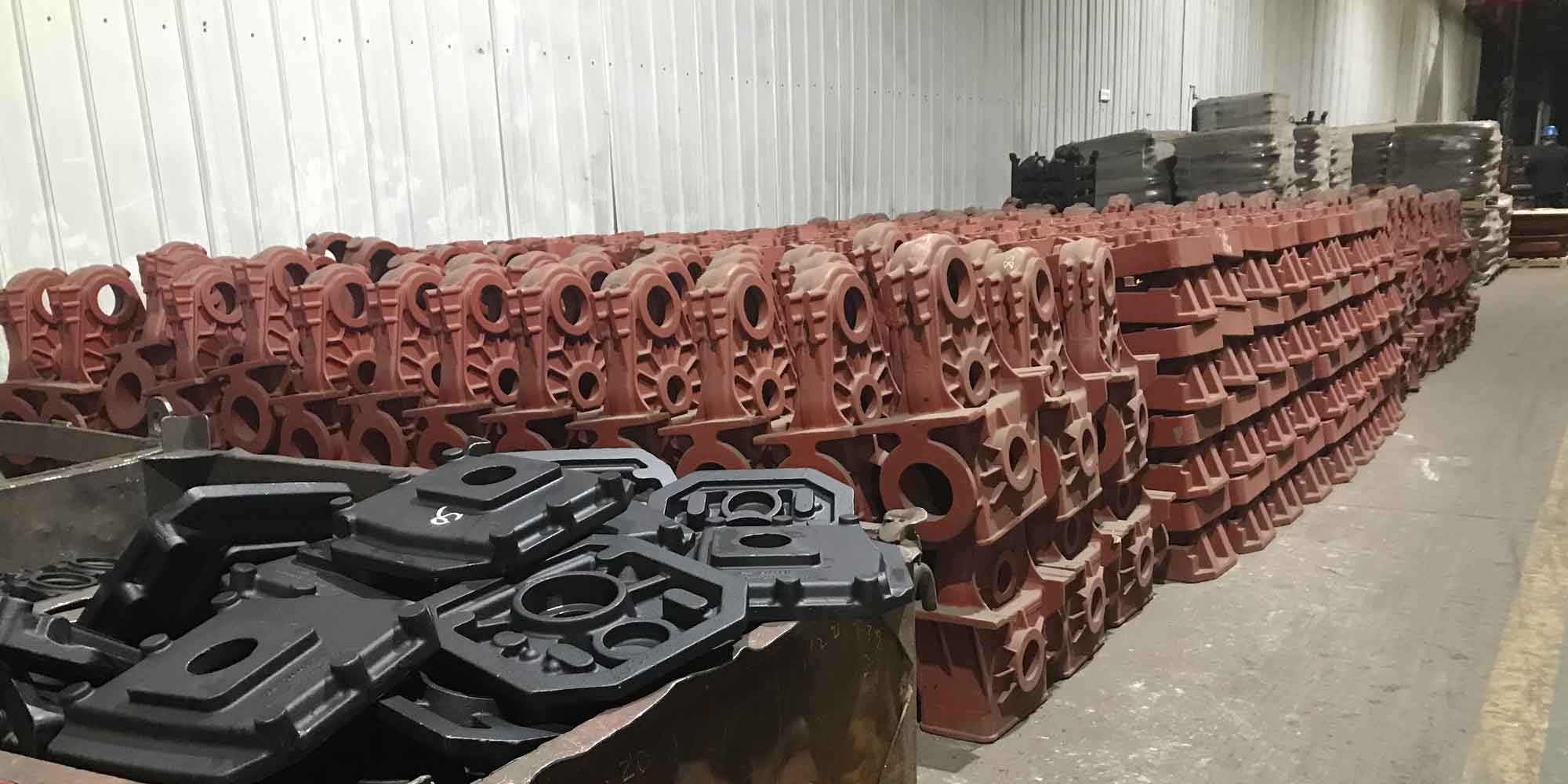
To address these challenges, I conducted a series of experiments focusing on different spraying sequences and drying intervals. The primary objective was to minimize alcohol penetration into the sand mold, thereby preserving surface hardness and ensuring superior quality for steel castings. The alcohol-based coating used was Foseco 830, with a viscosity maintained at 46–48 °Bé through continuous stirring. The mold surfaces, prepared using alkaline phenolic resin sand, had initial hardness values ranging from 90 to 92 as measured by a rebound tester, with values of 70–100 deemed acceptable for casting. The experimental design involved four distinct spraying schemes, each varying in the number of coats, drying methods, and intervals between applications. These schemes are summarized in Table 1, which outlines the step-by-step procedures for each trial.
| Scheme | First Coat | Second Coat | Third Coat | Post-Spraying Treatment |
|---|---|---|---|---|
| Scheme 1 | Spray applied immediately | Spray applied immediately after first | Spray applied immediately after second | Drying in oven after all coats |
| Scheme 2 | Spray applied, then natural air-dry for 5 min | Spray applied after drying, then immediate third coat | Spray applied | Natural air-drying after final coat |
| Scheme 3 | Spray applied, then oven-baked | Spray applied after baking, then natural air-dry for 10 min | Spray applied after drying | Natural air-drying after final coat |
| Scheme 4 | Spray applied, then natural air-dry for 10 min | Spray applied after drying, then natural air-dry for 10 min | Spray applied after drying | Natural air-drying after final coat |
The rationale behind these schemes stems from the need to control alcohol evaporation and infiltration. In Scheme 1, rapid consecutive spraying without intervals maximizes alcohol penetration, leading to severe softening. Scheme 2 introduces short drying periods to allow partial evaporation, while Schemes 3 and 4 incorporate longer intervals or baking to enhance solvent removal. Each scheme was tested on flat mold surfaces to ensure consistency, and post-spraying hardness measurements were taken at multiple points to assess uniformity. Additionally, the depth of the softened layer was recorded to quantify the impact of alcohol infiltration. These metrics are crucial for correlating spraying methods with the final quality of steel castings, as any compromise in mold hardness can result in surface defects like veining or roughness.
The results from these experiments reveal significant variations in mold surface hardness, as illustrated in Figure 1. Scheme 1 yielded the lowest hardness values, often below the acceptable threshold of 70, due to excessive alcohol saturation. This not only reduced strength but also caused blistering and cracking during oven drying, as the rapid formation of a surface crust trapped internal moisture, leading to explosive release. Such defects are detrimental to steel castings, as they transfer imperfections directly onto the metal surface. In contrast, Schemes 3 and 4 demonstrated superior hardness retention, with values closely approaching the original mold hardness. This improvement is attributed to the staged drying intervals, which allow alcohol to evaporate gradually, minimizing penetration and preserving the resin-sand bond integrity. Scheme 2 showed intermediate results, indicating that even brief drying can mitigate softening to some extent.
To quantify the relationship between spraying methods and hardness reduction, I derived a formula that models the relative hardness change. Let \( H_0 \) represent the initial mold hardness, \( H_f \) the final hardness after spraying, and \( \Delta H \) the hardness loss due to alcohol penetration. The hardness ratio \( R \) can be expressed as:
$$ R = \frac{H_f}{H_0} $$
where \( R \) approaches 1 for minimal softening. Experimental data indicate that \( R \) varies with the drying time \( t_d \) and number of coats \( n \). A simplified empirical model for alcohol-based coatings on alkaline phenolic resin sand is:
$$ \Delta H = k \cdot n \cdot e^{-\alpha t_d} $$
Here, \( k \) is a penetration constant dependent on coating viscosity and sand porosity, and \( \alpha \) is an evaporation rate constant. This equation highlights that increasing drying time \( t_d \) exponentially reduces hardness loss, aligning with the observed superiority of Schemes 3 and 4. For instance, in Scheme 3, with \( n = 3 \) and \( t_d \) including baking, \( \Delta H \) is minimized, leading to \( R \approx 0.95 \). This model underscores the importance of controlled spraying intervals for optimizing steel castings quality.
Further analysis of the softened layer depth provides insights into the mechanistic aspects of alcohol infiltration. As shown in Figure 2, Scheme 1 resulted in depths of 5–7 mm, consistent with initial observations, while Schemes 3 and 4 reduced this to 1–2 mm. This reduction is critical because shallower softening ensures that the mold surface remains rigid during metal pouring, preventing deformation that could cause irregularities in steel castings. The depth \( D \) can be correlated with the spraying parameters using a diffusion-based equation:
$$ D = \sqrt{2D_e t_p} $$
where \( D_e \) is the effective diffusivity of alcohol in the sand-resin matrix, and \( t_p \) is the total penetration time, which is influenced by drying intervals. By incorporating intermittent drying, \( t_p \) is effectively reduced, leading to smaller \( D \) values. This principle is essential for designing spraying protocols that enhance the durability of molds for steel castings.
The practical implications of these findings were validated through a production trial involving a steam turbine cylinder made of ZG15Cr2Mo1 steel, weighing 35.6 tons. Using Scheme 3—spraying with oven baking after the first coat, followed by natural drying after subsequent coats—the resulting steel casting exhibited a smooth surface free of orange-peel defects, meeting the ASTM A802/A802M A3-grade requirements. This success demonstrates that optimized spraying methods can significantly improve the surface quality of steel castings, reducing post-casting finishing efforts and enhancing overall efficiency. The consistency achieved across multiple castings further reinforces the reliability of this approach for industrial applications.
Beyond immediate applications, these results have broader implications for the manufacturing of high-performance steel castings. As industries such as energy and automotive demand tighter tolerances and better surface finishes, understanding coating interactions becomes increasingly important. For example, in sectors where steel castings are used for critical components like valve bodies or structural parts, even minor surface imperfections can compromise integrity. By adopting spraying schemes that prioritize drying intervals, foundries can produce steel castings with enhanced surface hardness, leading to fewer defects and lower rejection rates. This aligns with global trends toward sustainable manufacturing, where resource efficiency is paramount.
To further optimize the process, additional factors such as coating viscosity, ambient temperature, and sand grain size can be investigated. For instance, lower viscosity coatings may penetrate more deeply, exacerbating softening, while higher viscosity might affect spray uniformity. A comprehensive model incorporating these variables could be developed to predict hardness changes more accurately. One potential extension of the empirical formula is:
$$ \Delta H = k \cdot n \cdot \left( \frac{\mu}{\mu_0} \right)^\beta \cdot e^{-\alpha t_d} $$
where \( \mu \) is the coating viscosity, \( \mu_0 \) a reference viscosity, and \( \beta \) an experimental exponent. Such models enable tailored adjustments for specific steel castings production lines, ensuring consistent quality across diverse operating conditions.
In conclusion, the spraying method for alcohol-based coatings on alkaline phenolic resin sand molds plays a pivotal role in determining the surface quality of steel castings. Through systematic experimentation, I have demonstrated that schemes incorporating staged drying intervals—such as spraying with baking or extended natural drying—effectively reduce alcohol penetration, preserve mold surface hardness, and yield steel castings with superior surface finishes. The derived formulas and tabulated data provide a framework for implementing these practices in industrial settings. As the demand for high-quality steel castings continues to grow, adopting these optimized spraying techniques will be essential for meeting stringent standards and achieving operational excellence. Future work could explore alternative coating systems or automated spraying technologies to further enhance the consistency and efficiency of steel castings production.
The journey toward perfecting steel castings surface quality is ongoing, but with evidence-based approaches like those detailed here, manufacturers can significantly reduce defects and elevate their products. By prioritizing controlled spraying methods, the industry can ensure that steel castings not only meet but exceed expectations, driving innovation and reliability in countless applications.