
Gas porosity remains one of the most prevalent and challenging defects encountered in the production of steel castings. These defects manifest as cavities within the casting wall or on its surface, critically undermining the structural integrity, mechanical properties, and pressure tightness of the final component. In safety-critical applications, such as heavy-duty supporting wheels (often referred to as “托轮” in specific contexts) for large-scale industrial machinery, the presence of gas porosity can lead to catastrophic in-service failures. From my extensive experience in foundry engineering, addressing this issue requires a fundamental understanding of the sources, formation mechanisms, and systematic application of targeted countermeasures throughout the production process of steel castings.
The manufacturing process for steel castings involves pouring molten steel into a prepared mold cavity, typically made from sand aggregates bonded with chemical resins. During solidification, trapped gases can become encapsulated within the metal matrix. The root causes are multifaceted, originating from the mold system, the melting and metallurgical practice, or the pouring dynamics. A reactive approach—identifying and repairing defects post-casting—is costly and inefficient. Therefore, a proactive, prevention-focused strategy, grounded in a scientific analysis of porosity formation, is essential for achieving consistent, high-quality steel castings.
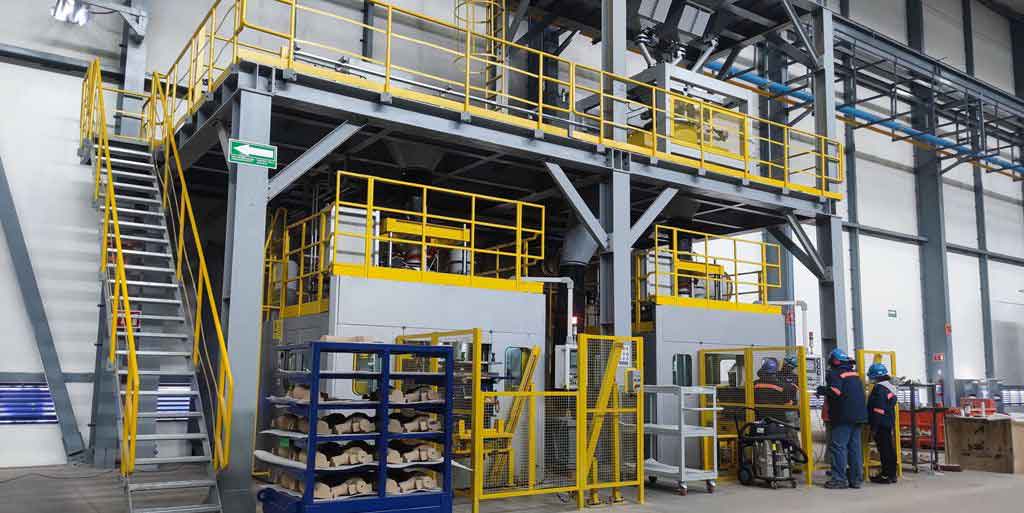
A thorough statistical analysis of defect records, similar to the data referenced in the provided text, consistently reveals that not all gas pores are created equal. They can be categorized based on the origin of the gas, which directly informs the appropriate mitigation strategy. The primary classification includes:
| Porosity Type | Primary Gas Source | Typical Morphology & Location | Approximate Incidence in Defect Analysis |
|---|---|---|---|
| Invasive (or Mold-Induced) Porosity | Gases generated from the mold/core (moisture vaporization, resin decomposition). | Large, often spherical or elongated cavities located near the mold/metal interface or in isolated pockets. Surface may be oxidized. | ~60-70% |
| Reactive (or Metal-Mold Reaction) Porosity | Gases from chemical reaction between molten steel and mold moisture/core binders. | Sub-surface pores, typically 2-10 mm below the surface. Often detected only after machining or via NDT (e.g., UT). Pinhole appearance. | ~20-30% |
| Entrapped (or Air Entrainment) Porosity | Atmospheric air卷入 (entrained) during turbulent pouring. | Large, smooth-walled cavities, often found in the upper sections of the casting or downstream from flow disruptions. | ~5-10% |
| Precipitated (or Solubility-Based) Porosity | Gases (H₂, N₂) originally dissolved in the melt, precipitating upon solidification. | Very fine, dispersed pinholes throughout the casting cross-section, sometimes in a banded pattern. Microscopic examination required. | ~1-5% |
This distribution highlights that the majority of defects in sand-cast steel castings are related to the mold system (Invasive + Reactive ≈ 90%), making it the primary area for process optimization.
Mechanistic Foundations of Porosity Formation
To develop effective preventative measures, one must understand the underlying physical and chemical principles governing each porosity type.
1. Invasive Porosity Mechanics
This defect occurs when gases generated at the mold/metal interface overcome the metallostatic pressure and penetrate the solidifying skin. The core condition for invasion is expressed by the pressure imbalance:
$$P_{gas} > P_{metal} + P_{resistance} + P_{atm}$$
Where:
- $P_{gas}$ is the pressure of gases evolving from the mold/core material,
- $P_{metal} = \rho g h$ is the metallostatic pressure ($\rho$: steel density, $g$: gravity, $h$: height of metal column above the point),
- $P_{resistance}$ is the pressure required to form a bubble nucleus at the interface (related to surface tension and pore radius $r$: $P_{resistance} = \frac{2\gamma}{r}$),
- $P_{atm}$ is the atmospheric pressure in the mold cavity.
High gas generation rates (from excessive moisture or organics), low mold permeability (preventing venting), and slow metal solidification (allowing more time for gas buildup and penetration) all favor invasive pore formation in steel castings.
2. Reactive Porosity Mechanics
This involves a redox reaction at the metal-mold interface, often with moisture. A simplified primary reaction is:
$$Fe_{(l)} + H_2O_{(v)} \rightarrow FeO_{(l/s)} + H_2_{(g)}$$
The nascent hydrogen gas can either dissolve into the steel or form molecular $H_2$ bubbles. Simultaneously, the dissolved FeO can react with carbon in the steel (if present) in a secondary reaction as the metal cools:
$$FeO + C \rightarrow Fe + CO_{(g)}$$
The combination of $H_2$ and $CO$ generation in the localized, high-viscosity boundary layer leads to the formation of sub-surface reaction pores, a significant quality risk in steel castings.
3. Entrapped Air Porosity Mechanics
This is primarily a fluid dynamics issue. Turbulent flow during pouring, often characterized by a high Reynolds number ($Re = \frac{\rho v D}{\mu}$), can create vortices that encapsulate air. If the buoyancy force driving the entrapped bubble upwards is insufficient to overcome the drag force before the metal solidifies, the bubble is trapped. The terminal velocity $v_t$ of a bubble in molten steel can be estimated using Stokes’ law for small spheres:
$$v_t = \frac{2}{9} \frac{(\rho_{steel} – \rho_{gas}) g r^2}{\mu}$$
Where $\mu$ is the dynamic viscosity of steel. This shows that larger bubbles ($r^2$) rise faster, but solidification time is the critical constraint.
4. Precipitated Porosity Mechanics
This defect is governed by gas solubility laws. The solubility of diatomic gases like hydrogen in molten steel follows Sieverts’ Law:
$$S = k \sqrt{P_{gas}}$$
where $S$ is the solubility, $k$ is the Sieverts’ constant (temperature-dependent), and $P_{gas}$ is the partial pressure of the gas above the melt. Crucially, solubility drops dramatically during the liquid-to-solid phase transition. The rejected gas forms nuclei, and the growth of a pore depends on diffusion of gas atoms to the nucleus and the opposing metallostatic pressure. The critical radius $r_c$ for a stable pore nucleus is given by:
$$r_c = \frac{2\gamma}{P_{sol} – P_{ext}}$$
where $P_{sol}$ is the supersaturated gas pressure in solution and $P_{ext}$ is the external pressure. Fine, widespread porosity forms when nucleation sites are abundant and solidification is rapid, as often seen in thin sections of steel castings.
A Systematic Framework for Porosity Prevention in Steel Castings
Based on the mechanistic understanding, a multi-pronged preventative strategy can be implemented. The following table outlines targeted actions for each porosity type, with a focus on the dominant mold-related issues.
| Target Defect | Preventative Principle | Specific Actions & Process Controls | Key Parameters & Metrics |
|---|---|---|---|
| Invasive Porosity | Reduce Gas Generation ($\downarrow P_{gas}$) |
|
|
| Enhance Gas Venting ($\downarrow P_{gas}$ at interface) |
|
|
|
| Promote Rapid Surface Solidification (Increase $P_{resistance}$) |
|
|
|
| Reactive Porosity | Eliminate Reactants (H₂O) |
|
|
| Entrapped Air Porosity | Promote Laminar Pouring & Bubble Escape |
|
|
| Precipitated Porosity | Minimize Gas Content in Melt & Control Solidification |
|
|
Integrated Process Implementation and Validation
The effectiveness of this systematic approach is not theoretical. Its implementation in a production environment for large, heavy-section steel castings—such as the supporting wheels mentioned—yields measurable improvements. A controlled shift in process parameters, as summarized in the prevention table, leads directly to a reduction in defect rates.
For instance, modifying the sand system to coarser grain and lower resin content directly reduces the gas load ($P_{gas}$). Complementing this with an engineered venting strategy using ropes ensures the generated gas has an easy escape path, preventing pressure buildup. Simultaneously, instituting a standardized mold drying protocol directly attacks the root cause of reactive porosity. When these measures are combined with optimized gating for laminar filling, the synergistic effect seals off the primary avenues for defect formation.
The outcome is consistent: castings that are sound right out of the shakeout. Subsequent non-destructive testing (e.g., ultrasonic inspection) confirms internal integrity, and machined surfaces reveal no sub-surface defects. This translates to higher yield, lower scrap and rework costs, and most importantly, reliable performance of the steel castings in demanding service conditions. The principles are universally applicable, whether casting a multi-tonne supporting wheel or a complex, thin-walled component; the specific parameters are simply scaled and tuned to the geometry and alloy of the specific steel casting.
Conclusion and Foundry Philosophy
The battle against gas porosity in steel castings is won through science-based process control, not guesswork. The key conclusions from this engineering analysis are:
- Dominant Defects are Mold-System Related: Invasive and reactive porosities typically constitute over 90% of gas defects in sand-cast steel castings, directing primary improvement efforts towards mold material design, venting, and drying.
- Prevention is Multivariate and Interconnected: A single “magic bullet” is rare. Effective strategy involves simultaneous optimization of the mold (permeability, gas generation, dryness), the melt (gas content), and the pouring process (fluidity, turbulence).
- Quantification is Critical: Moving from qualitative rules to quantitative control—measuring permeability, monitoring hydrogen levels, defining drying times and temperatures, calculating gating ratios—is what transforms art into a repeatable engineering process.
- Understanding Mechanism Drives Effective Solution: Knowing that invasive porosity is a pressure imbalance, reactive porosity a chemical reaction, and precipitated porosity a solubility phenomenon, allows for the precise targeting of countermeasures rather than applying generic fixes.
Ultimately, producing high-integrity, porosity-free steel castings is a testament to a foundry’s command over its entire process chain. By adopting the analytical framework and preventative measures outlined, foundries can achieve not only the elimination of a major defect class but also a fundamental elevation in the consistency, reliability, and quality of their steel castings portfolio.