
The pursuit of high-performance materials for demanding engineering applications is a constant driver in materials science and manufacturing. Among these, steel castings occupy a critical position due to their design flexibility, allowing for the production of complex, near-net-shape components that would be difficult or impossible to manufacture by other means. This manufacturing advantage is particularly vital in sectors such as heavy machinery, mining, energy, and maritime transport, where components are subjected to extreme stresses, abrasive wear, and often harsh environmental conditions. Consequently, there is a persistent demand to enhance the property profile of steel castings, specifically aiming for an optimal combination of high strength, good toughness (especially at low temperatures), and excellent weldability. While alloy design provides the fundamental blueprint, it is the subsequent heat treatment process that unlocks the full potential of the material’s microstructure, thereby dictating its final mechanical properties. This study, therefore, focuses on the systematic investigation of key heat treatment parameters—specifically initial quenching temperature, austenitizing (quenching) temperature, and tempering temperature—on the resulting mechanical behavior of a low-alloy steel casting. The goal is to establish process windows that yield a superior balance of strength, hardness, and toughness.
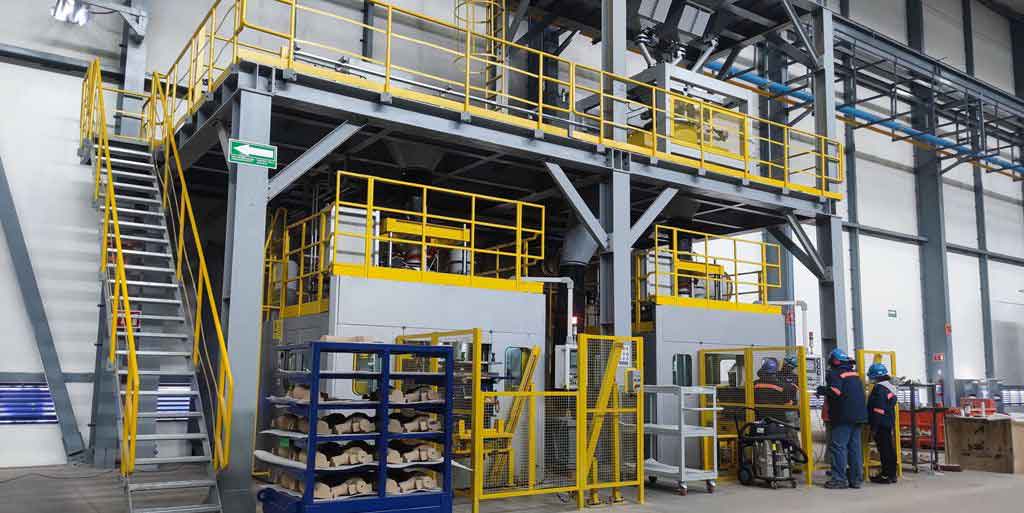
The foundation of this research is a specific low-alloy steel casting composition. The chemical makeup of the material, determined via optical emission spectrometry, is presented in Table 1. This composition is designed to provide hardenability and solid solution strengthening while maintaining good toughness.
| Element | C | Mn | Si | Cr | Ni | Mo | Nb | Ti |
|---|---|---|---|---|---|---|---|---|
| Content | 0.352 | 1.283 | 0.753 | 0.612 | 0.336 | 0.213 | 0.016 | 0.121 |
All heat treatments were conducted in a chamber electric resistance furnace using rectangular cast specimens. The experimental matrix was designed to isolate the effect of each parameter:
- Initial Quenching (Partitioning) Temperature (TIQ): Specimens were first fully austenitized and quenched to form martensite. They were then reheated to various initial quenching temperatures (200°C, 220°C, 240°C, 260°C, 280°C) and held for 5 minutes before final quenching. This step is intended to influence the stability and volume fraction of retained austenite.
- Austenitizing/Quenching Temperature (TQ): Specimens were austenitized at temperatures ranging from 820°C to 1080°C for a fixed time, followed by rapid quenching in oil.
- Tempering Temperature (TT): Following a standard quenching from 960°C, specimens were tempered at temperatures from 150°C to 600°C to study the tempering response.
Mechanical testing included tensile tests performed at a strain rate of 2 mm/min, Brinell hardness measurements (average of 5 indents), and Charpy V-notch impact tests. The microstructure was characterized using scanning electron microscopy (SEM) and transmission electron microscopy (TEM).
1. The Critical Role of Initial Quenching Temperature
The initial quenching temperature is a pivotal parameter in processes designed to stabilize retained austenite, a phase known to enhance ductility and toughness via the Transformation-Induced Plasticity (TRIP) effect. In our heat treatment sequence for the steel castings, this temperature directly controls the carbon partitioning kinetics between martensite and austenite, thereby affecting the final microstructure’s phase balance. The mechanical property response is summarized in Table 2 and can be analytically framed.
| Initial Quench Temp., TIQ (°C) | Tensile Strength, Rm (MPa) | Elongation, A (%) | Inferred Trend for Retained Austenite (RA) |
|---|---|---|---|
| 200 | ~1080 | ~11.8 | Low |
| 220 | ~1050 | ~12.5 | Increasing |
| 240 | ~1020 | ~13.8 | Increasing |
| 260 | ~995 | ~14.53 (Max) | Maximum |
| 280 | ~970 | ~13.2 | Decreasing |
The tensile strength exhibits a near-linear decline with increasing TIQ, a relationship that can be approximated by:
$$ R_m(T_{IQ}) \approx R_{m,0} – k \cdot T_{IQ} $$
where \( R_{m,0} \) is a base strength and \( k \) is a positive constant. This decrease is attributed to two concurrent phenomena: a reduction in the overall martensite content and the tempering/softening of the primary martensite during the holding stage at TIQ.
Conversely, the elongation, a key indicator of ductility, demonstrates a clear non-monotonic behavior. It rises to a distinct peak at 260°C before falling. This peak coincides with the expected maximum in the volume fraction of thermally and mechanically stabilized retained austenite. The enhanced ductility and toughness can be modeled by considering the composite effect of the martensitic matrix and the TRIP-active austenite. The incremental strain contribution from the TRIP effect, \( \Delta \epsilon_{TRIP} \), is proportional to the effective volume fraction of transformable austenite, \( f_{RA}^{eff} \):
$$ \Delta \epsilon_{TRIP} \propto f_{RA}^{eff}(T_{IQ}) $$
Thus, the total elongation reaches an optimum where the product of the austenite’s stability and its volume fraction is maximized, which for this specific steel casting composition occurs at TIQ = 260°C.
2. Optimizing the Austenitizing (Quenching) Temperature
The austenitizing temperature, TQ, prior to the final quench is fundamental as it determines the initial state of the austenite grain size, homogeneity, and dissolution of carbonitride-forming elements like Nb and Ti. For steel castings, which can have inherent microsegregation, achieving a homogeneous austenitic structure is crucial for consistent properties. The influence of TQ on a broader set of mechanical properties is detailed in Table 3.
| Quench Temp., TQ (°C) | Tensile Strength, Rm (MPa) | Hardness, HRC | Impact Toughness, KCV (J/cm²) | Fracture Toughness, KIC (MPa·m1/2) |
|---|---|---|---|---|
| 820 | 1264 | 47.1 | 64.5 | 66.3 |
| 860 | 1380 | 49.8 | 72.4 | 71.5 |
| 900 | 1485 | 52.1 | 82.0 | 76.8 |
| 940 | 1623 | 54.2 | 94.5 | 84.6 |
| 960 | 1630 | 54.2 | 96.0 | 85.0 |
| 980 | 1637 | 54.1 | 94.0 | 83.0 |
| 1030 | 1520 | 51.0 | 87.5 | 78.0 |
| 1080 | 1168 | 47.3 | 75.0 | 70.0 |
The data reveals a pronounced trend: all key properties—strength, hardness, and both measures of toughness—increase with TQ up to a critical range (940-980°C), plateau, and then deteriorate sharply at higher temperatures. This can be explained through microstructural evolution. In the ascending regime (820-940°C), increasing TQ promotes:
1. Complete dissolution of carbides and carbonitrides, enriching the austenite with alloying elements and carbon, thereby increasing hardenability and subsequent martensite strength.
2. Improved chemical homogeneity within the austenite grains of the steel castings.
3. A finer, more uniform martensitic structure upon quenching from a more homogeneous austenite.
The combined effect is captured in the general strengthening model for quenched steels:
$$ \sigma_y = \sigma_0 + \sigma_{ss} + \sigma_{gb}(d^{-1/2}) + \sigma_{ppt} $$
Where \( \sigma_0 \) is the lattice friction, \( \sigma_{ss} \) is solid solution strengthening (maximized with full dissolution), \( \sigma_{gb} \) is grain boundary strengthening (initially benefiting from refinement), and \( \sigma_{ppt} \) is precipitation strengthening (which decreases as precipitates dissolve). The simultaneous increase in toughness is atypical but can be attributed to the increased homogeneity and refinement, which delay crack initiation and propagation.
The plateau and subsequent decline above 980°C are classic symptoms of austenite grain coarsening. As TQ exceeds the optimal range, the driving force for grain growth becomes significant. The Hall-Petch relationship, \( \sigma_{gb} \propto d^{-1/2} \), indicates that strength decreases with increasing grain diameter \( d \). Coarse prior austenite grains lead to coarse martensite packets and laths, which are detrimental to both strength and, especially, toughness. Furthermore, excessive temperatures can lead to the formation of undesirable phases like allotriomorphic ferrite or upper bainite upon cooling, or increased retained austenite with lower stability. Therefore, for this family of low-alloy steel castings, the optimal austenitizing temperature window is identified as \( T_Q = 960 \pm 10 \)°C.
3. The Tempering Response: Balancing Hardness and Toughness
Tempering is the final, crucial step to relieve internal stresses from quenching and to achieve a tailored balance between strength/hardness and toughness/ductility in steel castings. The effect of tempering temperature, TT, on hardness and impact toughness after quenching from 960°C is systemically shown in Table 4 and Figure 1 (described conceptually).
| Tempering Temp., TT (°C) | Hardness, HRC | Impact Toughness, KCV (J/cm²) | Dominant Microstructural Changes |
|---|---|---|---|
| 150 (As-Quenched reference) | 55.2 | 100 | High-carbon martensite, high dislocation density. |
| 200 | 53.5 | 118 | Formation of transition carbides (ε/η), stress relief. |
| 250 | 51.0 | 125 | Continued carbide formation and recovery. |
| 300 | 48.0 | 126.5 (Peak) | Maximum toughness, likely onset of retained austenite decomposition. |
| 350 | 45.5 | 105 | Tempered martensite embrittlement (TME) zone. |
| 400 | 43.2 | 83.7 (Min) | Formation of cementite, possible impurity segregation. |
| 500 | 41.0 | 150 | Cementite spheroidization, recovery/recrystallization. |
| 600 | 40.3 | 201.7 | Full spheroidization, significant softening. |
The hardness decay with increasing TT is a direct consequence of the sequential stages of tempering: carbide precipitation, coarsening, and eventual spheroidization, coupled with dislocation annihilation (recovery). This decay often follows an exponential or power-law decay relationship:
$$ \text{Hardness}(T_T) \approx H_0 \cdot \exp(-\beta T_T) \quad \text{or} \quad H_0 – \alpha \cdot (T_T)^n $$
where \( H_0 \) is the as-quenched hardness and \( \alpha, \beta, n \) are constants.
The impact toughness behavior is more complex and non-monotonic. The initial rise (150-300°C) is due to the relief of quenching stresses and the formation of fine, coherent transition carbides that do not severely compromise toughness. The peak at ~300°C represents an optimal trade-off. The subsequent sharp drop, centered around 350-400°C, is indicative of tempered martensite embrittlement (TME), a phenomenon where the interlath precipitation of cementite films and/or segregation of tramp elements to prior austenite grain boundaries provides easy paths for crack propagation. For many engineering applications of high-strength steel castings, this temperature range is avoided. The final rise in toughness at higher tempering temperatures (400-600°C) results from extensive recovery, cementite spheroidization (removing the continuous brittle films), and the overall softening of the matrix which allows for greater plastic energy absorption during fracture. Considering the need for high strength coupled with good toughness in most applications for these steel castings, a low-temperature temper in the range of \( T_T = 200 \pm 10 \)°C is recommended to preserve much of the quenched strength while significantly improving ductility and impact resistance.
4. Microstructural Underpinnings of Superior Performance
The excellent mechanical properties achieved under the optimized heat treatment regime (960°C quench + 200°C temper) are fundamentally rooted in the refined microstructure. SEM examination reveals a predominantly fine, lath martensitic structure with no evidence of pro-eutectoid ferrite or bainite, confirming the adequate hardenability of the steel casting composition. The key feature, however, is revealed at the nanoscale by TEM. The microstructure consists of a matrix of tempered martensite laths. Critically, interlath regions are decorated with thin, film-like layers of retained austenite, typically only tens of nanometers in thickness.
This nanoscale composite microstructure is the origin of the enhanced property combination. The martensitic matrix provides the high strength and hardness. The nano-film retained austenite contributes to toughness and ductility through two primary mechanisms: First, as a ductile phase, it blunts propagating microcracks. Second, and more importantly, under applied strain, this metastable austenite can undergo a strain-induced transformation to martensite (the TRIP effect). This transformation absorbs energy and locally increases strain hardening, delaying necking and increasing uniform elongation. The stability of this austenite is perfect for this application—it is stable enough to persist during final machining or under minor loads but transforms under the high local strains ahead of a crack tip during service. The effectiveness of this mechanism can be qualitatively related to the volume fraction \( f_{RA} \) and stability of the austenite. The optimized heat treatment cycle successfully maximizes the product of these two factors for the given steel castings.
5. Conclusions and Implications for Steel Castings Production
This integrated study delineates the profound and interrelated effects of heat treatment parameters on the performance of low-alloy steel castings. The principal findings are:
- The initial quenching (partitioning) temperature is a critical lever for controlling the retained austenite fraction. An optimum exists (260°C for this alloy) that maximizes the TRIP effect, leading to a peak in elongation without excessive sacrifice of tensile strength.
- The austenitizing temperature must be carefully controlled within a narrow window (\( 960 \pm 10 \)°C) to ensure complete solute dissolution and homogeneity without triggering detrimental austenite grain coarsening, which degrades both strength and toughness.
- The tempering response shows a classical trade-off. A low-temperature temper at \( 200 \pm 10 \)°C is identified as optimal for applications requiring high strength, as it relieves quenching stresses and improves toughness while minimizing hardness loss. The embrittlement trough around 350-400°C must be avoided.
- The superior mechanical properties are a direct consequence of a nanoscale composite microstructure consisting of a tempered martensite matrix interlaced with thin films of metastable retained austenite.
For manufacturers of high-performance steel castings, this research provides a clear, validated roadmap for heat treatment process design. By precisely controlling these three temperature parameters, foundries can consistently produce components with a tailored, superior balance of strength, hardness, and toughness, meeting the stringent demands of modern engineering applications. Future work could focus on modeling the kinetics of carbon partitioning during the initial quench stage and investigating the weldability and fatigue performance of steel castings treated under this optimized regime.