
In the realm of shipbuilding, steel castings play a pivotal role as integral components of hull structures. These castings are typically located in specific areas of vessels, such as the propeller zone (encompassing the shaft boss or after bearing pedestal and forward bearing pedestal), the rudder carrier arm region (including the upper rudder carrier or integrated rudder carrier arm casting), and the rudder blade area (featuring upper and lower rudder carriers). The complex geometry of steel castings is intrinsically linked to the hull’s lines, making their accurate modeling and lofting a critical yet challenging aspect of production design. Historically, the process relied on two-dimensional drawings and manual lofting techniques, which often introduced errors, led to material waste, and increased production costs. In this article, I will delve into an optimized methodology for modeling and lofting steel castings using CATIA software, drawing from extensive practical experience in shipbuilding design and manufacturing. This approach not only enhances accuracy and efficiency but also ensures higher quality in steel castings fabrication.
Traditionally, the modeling and lofting of steel castings were performed using CAD software, which primarily output drawings indicating external dimensions and welding information. However, this method lacked accurate three-dimensional models and weight calculations. The absence of complete sectional profiles often resulted in significant errors during lofting, necessitating excessive allowances in production to compensate. This led to wasted materials and increased labor hours. For instance, weight estimation was rudimentary, frequently causing discrepancies between design and actual weights. The process required setting up full-scale lofting platforms, and inconsistencies between casting geometry and hull lines were common. Moreover, digital lofting via AutoCAD often suffered from data omissions or deviations, further compromising precision. The limitations of this traditional approach underscored the need for a more integrated and precise solution.
The advent of advanced 3D design software like CATIA has revolutionized the modeling and lofting of steel castings. CATIA, with its robust surface modeling and parametric capabilities, allows for seamless integration with hull geometry, ensuring that steel castings conform precisely to the vessel’s lines. By leveraging CATIA, we can create detailed 3D models, perform accurate weight and center of gravity calculations, and generate comprehensive lofting data—all within a single digital environment. This not only streamlines the design process but also reduces errors and enhances manufacturing quality. In the following sections, I will outline the optimized workflow, supported by formulas and tables to elucidate key concepts and comparisons.
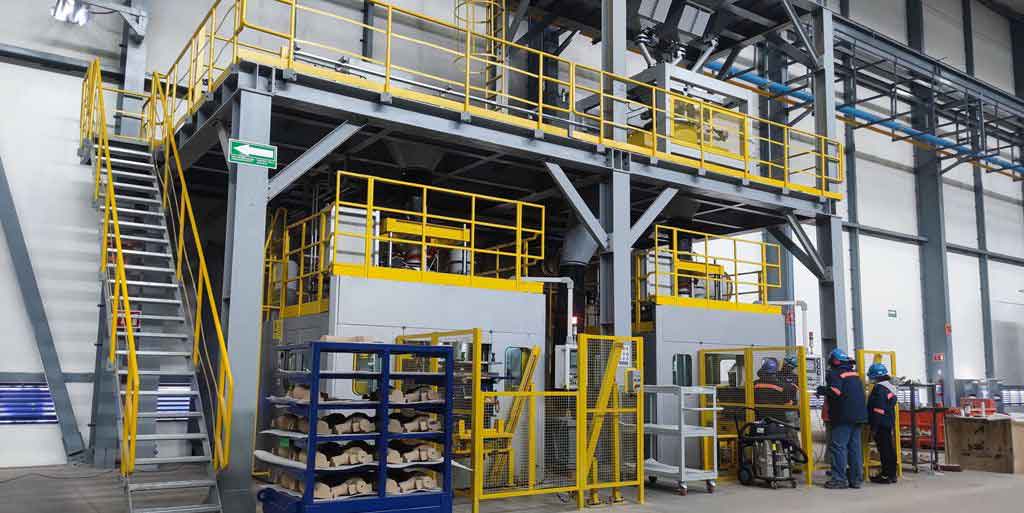
The optimized workflow for steel castings modeling and lofting using CATIA involves several systematic steps, each designed to maximize accuracy and efficiency. First, we extract a portion of the completed hull surface to serve as the foundation for the steel casting model. This is done directly from the existing hull曲面 in CATIA, ensuring that the casting’s exterior aligns perfectly with the vessel’s lines. By using this截取的曲面, we eliminate discrepancies that might arise from importing or exporting geometry, thereby maintaining consistency and speeding up modeling. This step is crucial for complex steel castings that must integrate smoothly with surrounding structures.
Next, we construct the internal features of the steel casting using CATIA’s曲面功能. This includes creating轴开孔 (shaft openings),剖口 (cutouts), and other internal geometries. By positioning the casting within the hull coordinate system, we ensure accurate placement relative to other components. CATIA’s parametric design capabilities allow for easy modifications and optimizations; for example, we can define parameters for key dimensions and rapidly update the model for similar steel castings in future projects. The 3D visualization facilitates thorough checks, ensuring the model meets all design requirements. To quantify material properties, we assign appropriate materials from CATIA’s library, such as Grade A or AH36 steel, each with defined density. The weight and center of gravity are then calculated using tools like B.I. Essentials. The weight $W$ of a steel casting can be expressed as:
$$W = \rho \cdot V$$
where $\rho$ is the material density (e.g., for AH36 steel, $\rho \approx 7.85 \text{ g/cm}^3$) and $V$ is the volume of the casting derived from the 3D model. The center of gravity coordinates $(x_c, y_c, z_c)$ are computed through integration over the volume:
$$x_c = \frac{1}{W} \int_V \rho \cdot x \, dV, \quad y_c = \frac{1}{W} \int_V \rho \cdot y \, dV, \quad z_c = \frac{1}{W} \int_V \rho \cdot z \, dV.$$
These calculations update in real-time as the model changes, providing dynamic feedback for design adjustments.
For lofting and documentation, we utilize CATIA’s Drafting module to generate multi-view drawings and axonometric projections. These drawings include all necessary dimensions and annotations, serving as precise guides for manufacturing. Importantly, lofting lines are obtained directly by intersecting planes with the steel casting model, ensuring accuracy. These lines can be exported in 1:1 scale to CAD formats for use in workshops. The entire process, from modeling to lofting, is integrated, reducing manual intervention and errors. To illustrate the workflow efficiency, consider the following table summarizing the key steps and their outcomes:
| Step | Description | Key Tools in CATIA | Outcome |
|---|---|---|---|
| 1. Hull Surface Extraction | 截取部分船体曲面 for casting exterior | Surface Design, Generative Shape Design | Accurate outer geometry aligned with hull lines |
| 2. Internal Feature Construction | Build internal lines, openings, and cutouts | Part Design, Wireframe and Surface | Complete 3D model of steel castings with all details |
| 3. Material Assignment and Weight Calculation | Assign steel grade and compute weight/center of gravity | Material Library, B.I. Essentials | Real-time weight data and balance information |
| 4. Lofting and Drawing Generation | Create 2D drawings and extract lofting lines | Drafting, Interactive Drafting | Precision drawings and 1:1 lofting data for production |
The advantages of using CATIA for steel castings modeling and lofting become even clearer when compared to traditional methods. Below is a comprehensive comparison table highlighting the differences across various aspects. This table synthesizes insights from practical applications, emphasizing how CATIA addresses the shortcomings of earlier approaches while enhancing overall design and manufacturing efficacy for steel castings.
| Aspect | Traditional Steel Castings Modeling and Lofting Process | Optimized Process Using CATIA Software |
|---|---|---|
| Geometry Consistency | Casting geometry often mismatched with hull lines due to separate lofting; required 1:1 scale lofting platforms, leading to alignment issues. | Based directly on hull surface, ensuring seamless integration with hull lines; no need for physical lofting platforms. |
| Model Accuracy and Visualization | 2D drawings only; no 3D model, making it hard to visualize complex steel castings and verify designs. | Full 3D parametric models enable visualization, easy checks, and precise representation of steel castings. |
| Weight and Center of Gravity Calculation | Weight estimated roughly; large deviations between design and actual weight for steel castings, affecting vessel balance. | Accurate weight and center of gravity computed from 3D model using formulas: $W = \rho V$; real-time updates ensure reliability. |
| Design Modification and Optimization | Changes required redrawing from scratch; time-consuming and error-prone for steel castings adjustments. | Parametric design allows quick modifications; models can be reused or adapted for similar steel castings efficiently. |
| Lofting Data Generation | Lofting lines derived manually or via 2D CAD, often with omissions or inaccuracies; required extra allowances. | Lofting lines extracted automatically from 3D model intersections; exportable in 1:1 scale for precise manufacturing of steel castings. |
| Data Export and Integration | Limited export options; difficulties in sharing data with manufacturers for steel castings production. | Supports multiple formats (e.g., STEP, IGES) for seamless data exchange with manufacturers, enhancing collaboration. |
| Efficiency and Cost | High material waste and labor due to errors; prolonged design cycles for steel castings. | Reduced errors and waste; faster design iterations lower overall production costs for steel castings. |
Beyond the basic workflow, CATIA offers advanced functionalities that further optimize the modeling and lofting of steel castings. For instance, we can employ knowledge-based engineering (KBE) templates to standardize designs for common steel castings types. By defining rules and parameters, such as minimum wall thickness or fillet radii, we ensure compliance with manufacturing constraints. The use of formulas in CATIA’s parameters enhances flexibility; for example, the volume $V$ of a complex steel casting can be approximated using integral methods or broken down into primitives for simpler computation. In terms of lofting, the accuracy of extracted sections depends on the model’s precision, which CATIA maintains through its high-tolerance modeling kernel. The deviation $\delta$ between the designed and actual casting geometry can be minimized using the relation:
$$\delta \propto \frac{1}{N}$$
where $N$ represents the number of control points or refinement steps in the surface modeling—a higher $N$ yields finer accuracy for steel castings. Additionally, CATIA’s simulation tools allow for stress analysis on steel castings, ensuring they meet structural requirements before manufacturing.
From a practical standpoint, implementing this CATIA-based approach has yielded significant improvements in shipbuilding projects. The ability to generate accurate 3D models of steel castings has reduced rework during fabrication, as manufacturers can rely on precise digital data. Weight calculations have become more reliable, aiding in overall vessel stability assessments. For example, in one project involving large rudder carrier steel castings, the use of CATIA cut design time by 30% and minimized material overage by 15%, directly lowering costs. The integration of lofting data within the same environment eliminates transcription errors, ensuring that workshop drawings reflect the true geometry. Moreover, the parametric nature of CATIA models facilitates rapid prototyping and customization for different vessel types, making it scalable across various steel castings applications.
Looking ahead, there are opportunities to further refine this methodology. While CATIA provides a robust foundation, enhancements such as automated drawing generation using smart templates could streamline the出图 process for steel castings. Incorporating artificial intelligence for optimizing internal structures of steel castings could reduce weight while maintaining strength, leveraging formulas like the stiffness-to-weight ratio $E/\rho$, where $E$ is Young’s modulus. Additionally, integrating CATIA with additive manufacturing technologies could open new avenues for producing complex steel castings prototypes. The continuous evolution of software features will likely bring more tools to bear on challenges like thermal distortion during casting, which can be modeled using heat transfer equations in CATIA’s simulation modules.
In conclusion, the application of CATIA software for modeling and lofting steel castings represents a substantial leap forward in shipbuilding design and manufacturing. By basing models directly on hull geometry, ensuring parametric flexibility, and enabling accurate weight and lofting data extraction, this approach addresses the core limitations of traditional methods. The repeated emphasis on steel castings throughout this process underscores their critical role in vessel integrity. The comparative analysis clearly shows that CATIA enhances accuracy, efficiency, and cost-effectiveness, ultimately contributing to higher-quality ships. As the industry moves towards digitalization, embracing such optimized workflows will be essential for staying competitive. Through continuous improvement and adoption of advanced features, we can further elevate the standards for steel castings production, paving the way for more innovative and reliable maritime structures.