
In recent years, the rapid development of the railway industry has emphasized passenger high-speed and freight heavy-haul operations as inevitable trends. Wheel wear, referring to any form of material loss on the wheel tread, has emerged as a critical factor affecting maintenance costs in railway systems. Wear alters the surface morphology and tread profile of wheels, changing the contact state between wheel and rail. This leads to rolling contact fatigue, where cyclic stresses cause surface and subsurface material spalling, crack initiation, and propagation, potentially resulting in derailment accidents. Therefore, studying the contact fatigue and damage of high-speed railway wheel-rail systems and proposing effective preventive measures hold significant economic and scientific value. In this context, I focus on comparing the wear and rolling contact fatigue performance of rolled steel wheels and cast steel wheels, the latter being a prominent example of steel castings used in heavy-duty applications. Steel castings, such as these wheels, are integral to infrastructure due to their versatility and durability.
My investigation involves conducting friction wear and rolling contact fatigue tests on samples from rolled steel wheels (CL60) and cast steel wheels (ZL-B), paired with U75V rail steel. The objective is to evaluate their service performance, analyzing surface morphology, cross-sectional microstructure, and subsurface hardness distribution to understand the factors influencing their differences. This study underscores the importance of material selection in railway components, particularly steel castings, which are often employed for complex geometries and cost-effectiveness.
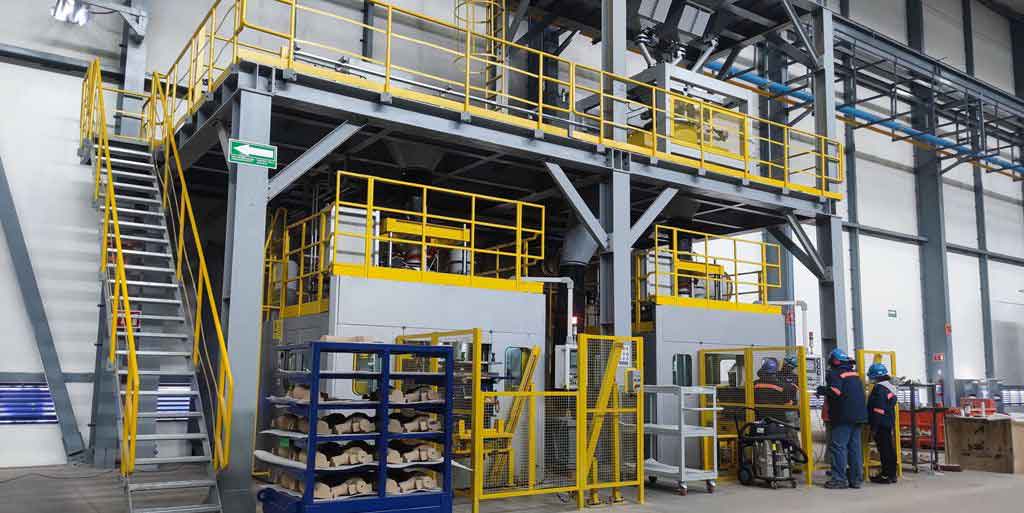
The use of advanced steel castings in railway wheels offers potential benefits in terms of manufacturing efficiency and design flexibility, but their performance under severe operating conditions must be thoroughly assessed. As a researcher, I aim to provide insights that can guide the optimization of these steel castings for enhanced safety and longevity in rail transport.
Experimental Materials and Methods
For this study, I selected rolled steel wheel CL60 and cast steel wheel ZL-B as primary specimens, with U75V rolled rail steel as the counterpart. The chemical compositions of these materials are detailed in Tables 1 and 2. The cast steel wheel, representative of high-quality steel castings, has a composition tailored for strength and wear resistance. The rail steel U75V has a chemical composition (wt%) of C: 0.71%–0.80%; Si: 0.50%–0.70%; Mn: 0.70%–1.05%; V: 0.04%–0.12%.
| C | Mn | Si | P | S | Cr | Ni | Cu |
|---|---|---|---|---|---|---|---|
| 0.55–0.65 | 0.50–0.80 | 0.17–0.37 | ≤0.036 | ≤0.040 | ≤0.30 | ≤0.30 | ≤0.25 |
| C | Mn | Si | P | S |
|---|---|---|---|---|
| 0.57–0.67 | 0.60–0.85 | >0.15% | ≤0.035 | ≤0.040 |
The original microstructure of both wheel steels consists of lamellar pearlite with a small amount of ferrite, and a minor bainite phase is present beneath the tread, with the rolled steel wheel having a higher content and depth of bainite. To assess wear performance, I sampled the wheel rims at depths of 10 mm, 22.5 mm, and 35 mm below the tread, following standard methods. Friction wear tests were conducted on a GPM-30 rolling contact fatigue testing machine, with conditions summarized in Table 3. Each depth was tested three times to account for scatter. The wear resistance of steel castings like the ZL-B wheel is crucial for long-term service, and these tests simulate real-world conditions.
| Contact Stress (MPa) | Slip Ratio (%) | Rotational Speed (r/min) | Cycle Count | Counter Material |
|---|---|---|---|---|
| 1100 | 0.75 | 800 | 5×10⁵ | U75V rolled |
For rolling contact fatigue tests, samples were taken as per standard procedures, with parameters listed in Table 4. The contact type was line contact with oil lubrication and air cooling. Stress levels ranged from 800 MPa to 1500 MPa to evaluate fatigue life. The performance of steel castings under such cyclic loading is a key concern, as fatigue failure can lead to catastrophic outcomes.
| Contact Stress (MPa) | Slip Ratio (%) | Rotational Speed (r/min) | Cycle Count | Counter Material |
|---|---|---|---|---|
| 800–1500 | 0.3 | 2000 | Until spalling | U75V rolled |
Post-test, I cleaned specimens with ethanol and measured weight loss using a precision balance. Surface morphology was examined via USB digital microscopy and scanning electron microscopy (SEM). Cross-sectional observations were made using optical microscopy and SEM, and microhardness profiles were obtained with a Vickers hardness tester under a load of 10 gf and dwell time of 15 s. The analysis focused on deformation layers and crack propagation, particularly in the steel castings, to understand their failure mechanisms.
Experimental Results and Analysis
Wear Loss
The wear loss measurements after 5×10⁵ cycles are plotted in Figure 4 (data summarized in Table 5). Wear loss increases gradually with rim depth for both wheels. However, the rolled steel wheel exhibits lower average wear loss compared to the cast steel wheel at the same depth, with reductions ranging from 5% to 44%. This indicates superior wear resistance of the rolled steel wheel. The wear behavior can be modeled using the Archard wear equation: $$W = k \cdot P \cdot v \cdot t$$ where \(W\) is the wear volume, \(k\) is the wear coefficient, \(P\) is the contact pressure, \(v\) is the sliding velocity, and \(t\) is the time. For steel castings like the ZL-B wheel, a higher \(k\) value may contribute to increased wear, possibly due to microstructural inhomogeneities inherent in casting processes.
| Depth (mm) | Rolled Steel Wheel | Cast Steel Wheel |
|---|---|---|
| 10 | 12.5 ± 0.8 | 18.2 ± 1.2 |
| 22.5 | 14.3 ± 0.9 | 20.1 ± 1.4 |
| 35 | 16.0 ± 1.0 | 22.5 ± 1.5 |
Wear Surface Macro-morphology
SEM observations of the worn surfaces at 2.5 mm depth reveal fatigue wear characterized by flaky peeling. The cast steel wheel shows more extensive and larger flaky peeling, indicating severer wear. This aligns with the higher wear loss, suggesting that steel castings may be more prone to surface degradation under cyclic stresses. The peeling mechanism involves crack initiation and propagation due to cyclic loading, which can be described by fatigue crack growth laws such as the Paris law: $$\frac{da}{dN} = C (\Delta K)^m$$ where \(da/dN\) is the crack growth rate per cycle, \(\Delta K\) is the stress intensity factor range, and \(C\) and \(m\) are material constants. For steel castings, microstructural features like porosity or inclusions could accelerate this process.
Cross-sectional Microstructure After Wear
Cross-sectional analysis shows severe plastic deformation near the surface, decreasing toward the core. In both wheels, ferrite and pearlite orient toward the surface, with ferrite developing subgrains due to lower yield strength. Pearlite exhibits reduced interlamellar spacing, and cementite lamellae twist or dissolve near the surface. The rolled steel wheel has a deeper severe plastic deformation layer (~300 μm) compared to the cast steel wheel, where spalling removes the deformed layer. This spalling is more pronounced in steel castings, likely due to weaker interfacial cohesion. The hardening from deformation can be related to the Hall-Petch equation: $$\sigma_y = \sigma_0 + k_y d^{-1/2}$$ where \(\sigma_y\) is yield strength, \(\sigma_0\) is friction stress, \(k_y\) is a constant, and \(d\) is grain size. Surface refinement enhances hardness, but in steel castings, premature spalling limits this benefit.
Subsurface Hardness Distribution After Wear
Microhardness profiles (Figure 8) show surface hardness of 570 HV for rolled steel and 440 HV for cast steel. Hardness decreases gradually to the core, converging at ~300 μm depth, indicating a deformation layer of that thickness. The lower surface hardness in cast steel wheels is attributed to spalling of the work-hardened layer. Hardening mechanisms include dislocation strengthening, grain refinement, and solid solution strengthening from dissolved cementite. For steel castings, optimizing the casting process to minimize defects could improve hardness retention. The hardness gradient can be expressed as: $$H(x) = H_0 + \Delta H e^{-x/\lambda}$$ where \(H(x)\) is hardness at depth \(x\), \(H_0\) is core hardness, \(\Delta H\) is surface hardening, and \(\lambda\) is a decay constant. In steel castings, \(\lambda\) may be smaller due to microstructural heterogeneity.
Rolling Contact Fatigue Life
Fatigue life curves (Figure 9) reveal that at low contact stresses (<1450 MPa), cast steel wheels outperform rolled steel wheels, while at high stresses (>1450 MPa), rolled steel wheels have better fatigue life. This suggests that steel castings may have superior fatigue resistance under moderate loading, possibly due to their microstructure absorbing energy. The fatigue life can be modeled using the Basquin equation: $$N_f = C S^{-m}$$ where \(N_f\) is cycles to failure, \(S\) is stress amplitude, and \(C\) and \(m\) are material parameters. For steel castings, \(m\) might be lower, indicating less sensitivity to stress changes at low levels. Table 6 summarizes fatigue life data at key stresses.
| Contact Stress (MPa) | Rolled Steel Wheel | Cast Steel Wheel |
|---|---|---|
| 800 | 2.5×10⁶ | 3.8×10⁶ |
| 1100 | 1.2×10⁶ | 1.5×10⁶ |
| 1400 | 4.0×10⁵ | 3.2×10⁵ |
| 1500 | 2.8×10⁵ | 2.0×10⁵ |
Surface Morphology After Fatigue Testing
Post-fatigue surfaces show spalling pits, mostly U-shaped or V-shaped, with accompanying cracks. Rolled steel wheels have larger spall sizes, indicating lower anti-spalling ability compared to cast steel wheels. In steel castings, the spalling morphology suggests crack initiation at surface defects, common in cast components. The stress intensity at crack tips drives propagation, described by: $$\Delta K = Y \Delta \sigma \sqrt{\pi a}$$ where \(Y\) is a geometry factor, \(\Delta \sigma\) is stress range, and \(a\) is crack length. For steel castings, lower fracture toughness might lead to easier crack initiation but slower propagation under certain conditions.
Cross-sectional Morphology and Microstructure After Fatigue
Cross-sections reveal plastic deformation and crack paths. Cracks initiate at ferrite or ferrite-pearlite interfaces and propagate at 30°–45° angles. Rolled steel wheels develop more secondary cracks, while cast steel wheels show fewer, suggesting better crack resistance in steel castings at low stresses. The deformation gradient aligns with hardness profiles. Microstructural analysis indicates that in steel castings, crack propagation may be hindered by microstructural barriers, such as grain boundaries or second phases, enhancing fatigue life under specific regimes. The fatigue limit can be estimated using: $$\sigma_e = k_a k_b k_c \sigma’_e$$ where \(\sigma_e\) is endurance limit, \(k_a\), \(k_b\), \(k_c\) are modification factors, and \(\sigma’_e\) is base endurance. For steel castings, factors like surface finish and internal defects play a critical role.
Discussion on Steel Castings Performance
The inferior wear resistance of cast steel wheels compared to rolled steel wheels can be attributed to microstructural characteristics inherent in steel castings. Casting processes often introduce inhomogeneities, such as porosity, inclusions, or coarse grains, which act as stress concentrators and facilitate crack initiation. In contrast, rolled steel undergoes thermomechanical processing that refines microstructure and enhances cohesion. However, steel castings exhibit better rolling contact fatigue life at low stresses, likely due to their ability to absorb cyclic energy through microplastic deformation. This duality highlights the importance of optimizing steel castings for specific applications—for instance, by alloy design or heat treatment to improve wear resistance without compromising fatigue performance.
From a materials science perspective, the behavior of steel castings under wear and fatigue can be modeled using composite theories. Considering the wheel steel as a two-phase system (ferrite and cementite), the effective properties can be derived from rule-of-mixtures: $$E_c = V_f E_f + V_p E_p$$ where \(E_c\) is composite modulus, \(V_f\) and \(V_p\) are volume fractions, and \(E_f\) and \(E_p\) are moduli of ferrite and pearlite, respectively. In steel castings, variations in phase distribution affect local stress states, influencing wear and fatigue responses.
Furthermore, the role of residual stresses from casting cannot be overlooked. Compressive surface stresses in steel castings might improve fatigue resistance at low loads, but tensile stresses could exacerbate wear. Non-destructive evaluation techniques, such as X-ray diffraction, could quantify these stresses and correlate them with performance. For future work, advanced steel castings with engineered microstructures—e.g., through additive manufacturing—could bridge the gap between rolled and cast properties.
Conclusions
Based on my experimental analysis, I draw the following conclusions regarding rolled steel and cast steel railway wheels, with emphasis on steel castings performance:
- Under identical wear cycles, rolled steel wheels exhibit shallower peeling depth and less weight loss, indicating better wear resistance. Cast steel wheels, as a type of steel castings, show deeper peeling and higher wear loss, with average wear loss 5% to 44% greater than rolled steel at the same depth.
- The surface hardness after wear is higher for rolled steel wheels (570 HV) compared to cast steel wheels (440 HV), due to spalling of the work-hardened layer in steel castings. Hardness profiles decrease from surface to core, with a hardening layer depth of approximately 300 μm for both materials.
- In rolling contact fatigue, cast steel wheels outperform rolled steel wheels at low contact stresses (<1450 MPa), while rolled steel wheels have superior fatigue life at high stresses (>1450 MPa). This suggests that steel castings may be advantageous in moderate-load applications where fatigue resistance is critical.
These findings underscore the trade-offs in material selection for railway wheels. Steel castings offer potential benefits in fatigue performance under certain conditions, but their wear resistance requires improvement through microstructural control. Future research should focus on enhancing the properties of steel castings via process optimization, such as controlled cooling or alloy additions, to achieve a balance between wear and fatigue resistance. The integration of steel castings in railway components can be further validated through field trials and computational modeling, ensuring safety and efficiency in rail transport systems.
In summary, this study provides a comprehensive comparison of wear and contact fatigue in railway wheel steels, highlighting the role of steel castings in infrastructure. By leveraging material science principles and experimental data, I contribute to the ongoing development of durable and reliable railway components, where steel castings continue to play a vital role in advancing transportation technology.