
In the realm of structural engineering, steel castings are prized for their design flexibility, structural integrity, and cost-effectiveness, making them indispensable in applications such as large-span stadiums, bridges, and architectural frameworks. However, the presence of cracks in steel castings can severely compromise performance and safety, particularly under high-stress conditions. Among various cracking mechanisms, Liquid Metal Assisted Cracking (LMAC) has emerged as a critical concern, especially when steel castings undergo hot-dip galvanizing for corrosion protection. This phenomenon, though relatively rare, poses significant risks if undetected, as cracks can propagate under stress, leading to catastrophic failures. In this article, I will delve into the causes of LMAC in steel castings, drawing from case studies and industry guidelines, and propose comprehensive strategies for prevention and mitigation. The analysis will encompass structural design, material selection, processing techniques, and galvanizing practices, with an emphasis on practical measures to safeguard the integrity of steel castings.
LMAC refers to the formation of surface cracks in steel components when exposed to molten zinc during hot-dip galvanizing. This occurs due to a combination of factors: the inherent toughness of the material, the presence of tensile stresses at the steel-zinc interface, and the embrittling effect of liquid metal. The process involves rapid heat input upon immersion, which induces thermal stresses, while residual stresses from manufacturing processes like welding or casting can exacerbate the condition. Additionally, impurities in the zinc bath, such as tin, lead, or bismuth, may infiltrate grain boundaries, promoting crack initiation through Liquid Metal Embrittlement (LME). Understanding LMAC is crucial for industries relying on galvanized steel castings, as it often manifests in high-strength alloys or components with complex geometries. The following sections will explore this phenomenon in detail, supported by formulas, tables, and empirical data.
The Mechanism of Liquid Metal Assisted Cracking
LMAC typically originates at stress concentration zones, such as weld repairs, sharp corners, or thickness transitions in steel castings. During hot-dip galvanizing, the component is immersed in a molten zinc bath at temperatures ranging from 440°C to 500°C. The sudden thermal shock generates differential expansion, leading to tensile stresses that, when coupled with pre-existing internal stresses, can exceed the material’s fracture toughness. Moreover, liquid zinc can penetrate microcracks or grain boundaries, weakening the steel matrix through diffusion and alloying reactions. This synergy between stress and environmental factors makes LMAC a complex failure mode that requires multidisciplinary analysis. To quantify the susceptibility of steel castings to LMAC, two key indices are commonly used: the Carbon Equivalent (CE) and the Galvanizing Cracking Sensitivity Index (Es).
The Carbon Equivalent is a derived value that estimates the hardenability and weldability of steel based on its chemical composition. It is calculated using the International Institute of Welding (IIW) formula:
$$CE = w_C + \frac{w_{Mn}}{6} + \frac{w_{Cr} + w_{Mo} + w_V}{5} + \frac{w_{Ni} + w_{Cu}}{15}$$
where \(w_C\), \(w_{Mn}\), \(w_{Cr}\), \(w_{Mo}\), \(w_V\), \(w_{Ni}\), and \(w_{Cu}\) represent the mass fractions of carbon, manganese, chromium, molybdenum, vanadium, nickel, and copper, respectively. A higher CE value indicates greater susceptibility to cracking, with a threshold of 0.44% often cited as the limit for low-risk applications. For steel castings, exceeding this threshold significantly elevates the likelihood of LMAC during galvanizing.
Similarly, the Galvanizing Cracking Sensitivity Index, as per Japanese Industrial Standard JIS G 3129-2005, provides another metric:
$$Es = w_C + \frac{w_{Si}}{17} + \frac{w_{Mn}}{7.5} + \frac{w_{Cu}}{13} + \frac{w_{Ni}}{17} + \frac{w_{Cr}}{4.5} + \frac{w_{Mo}}{3} + \frac{w_V}{1.5} + \frac{w_{Nb}}{2} + \frac{w_{Ti}}{4.5} + 420w_B$$
Here, \(w_{Si}\), \(w_{Nb}\), \(w_{Ti}\), and \(w_B\) denote the mass fractions of silicon, niobium, titanium, and boron. Like CE, an Es value above 0.44% suggests a high risk of LMAC. These formulas underscore the importance of material chemistry in controlling cracking, especially for alloy steel castings used in demanding environments.
To illustrate, consider the typical composition of a high-strength cast steel, such as G34CrMo4, which is often employed in structural connectors. Table 1 summarizes its chemical requirements per European standard BS EN 10293:2015, along with calculated CE and Es values for hypothetical samples.
| Element | Mass Fraction Range (%) | Sample 1 (%) | Sample 2 (%) | Sample 3 (%) |
|---|---|---|---|---|
| C | 0.30–0.37 | 0.37 | 0.32 | 0.34 |
| Si | ≤0.60 | 0.45 | 0.36 | 0.34 |
| Mn | 0.50–0.80 | 0.66 | 0.60 | 0.57 |
| Cr | 0.80–1.20 | 0.93 | 0.93 | 0.96 |
| Mo | 0.15–0.30 | 0.21 | 0.18 | 0.23 |
| Ni | — | 0.026 | 0.032 | 0.055 |
| Cu | — | 0.019 | 0.018 | 0.020 |
| CE (calculated) | — | 0.65% | 0.71% | 0.68% |
| Es (calculated) | — | 0.60% | 0.62% | 0.61% |
As shown, all samples exceed the 0.44% threshold, highlighting the inherent risk of LMAC for such steel castings. This aligns with field observations where cracks frequently appeared in galvanized anchors made from similar alloys. The high carbon equivalent stems from elevated chromium and molybdenum content, which enhance strength but reduce ductility, making the material more prone to embrittlement in molten zinc.
Beyond material factors, the design and processing of steel castings play pivotal roles in LMAC initiation. Components with abrupt thickness changes, asymmetrical sections, or welded joints are particularly vulnerable. For instance, U-shaped connectors in cable-net structures often feature sharp corners and localized reinforcements, creating stress concentrators. During casting and subsequent welding repairs, residual stresses can accumulate, especially if post-weld heat treatment is inadequate. Measurements from case studies reveal that weld repair zones exhibit higher hardness than the base metal, indicative of untempered martensite and locked-in stresses. When such steel castings are galvanized, the combined thermal and residual stresses can trigger cracking, often at these critical locations.
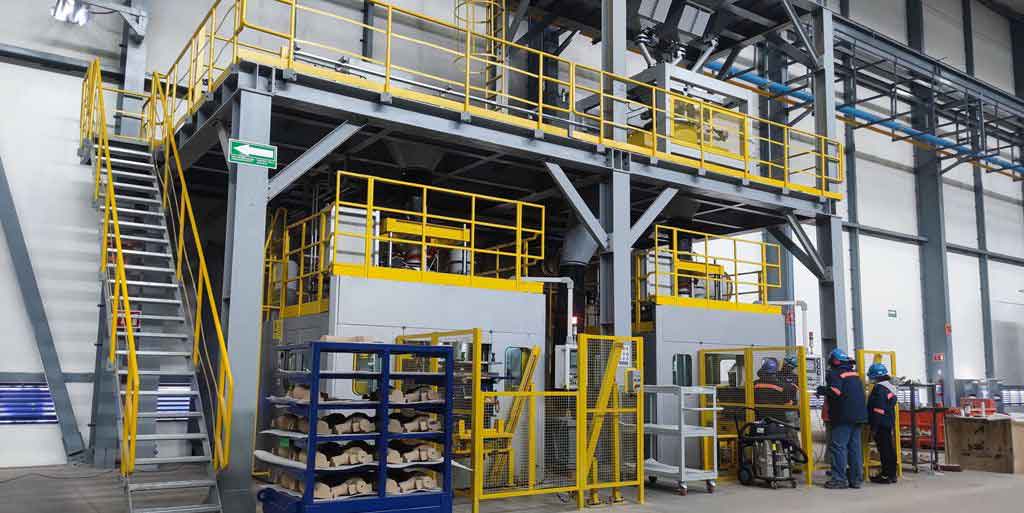
The image above illustrates typical steel casting equipment used in manufacturing, underscoring the complexity of producing large-scale components. Such equipment must be meticulously controlled to minimize defects that could exacerbate LMAC risks. For example, improper cooling rates during casting can induce internal stresses, while inadequate gating design may lead to porosity or shrinkage cracks. These imperfections, though perhaps not visible initially, can become initiation sites for LMAC during galvanizing. Therefore, a holistic approach to quality control is essential, encompassing foundry practices, non-destructive testing, and process optimization.
Factors Contributing to LMAC in Steel Castings
To systematically address LMAC, it is helpful to categorize the contributing factors into four domains: structural design, material selection, manufacturing processes, and galvanizing operations. Each domain interacts with the others, and mitigation strategies must be integrated across all stages of the steel casting lifecycle.
Structural Design Considerations: The geometry of steel castings significantly influences stress distribution. Designs should favor smooth transitions, with thickness ratios limited to 2.5:1 to avoid thermal gradients during galvanizing. Symmetrical sections are preferable, as they reduce inherent stresses from uneven cooling. Welded joints should be positioned near the neutral axis to minimize bending moments, and fillet welds are generally less stress-inducing than butt welds. Intermittent welding can also lower overall stress levels. In retrofitting existing designs, finite element analysis (FEA) can simulate thermal and mechanical loads during galvanizing, identifying potential hotspots for cracking. For critical applications, such as seismic-resistant structures or dynamic load-bearing frames, designers should prioritize fatigue-resistant details that mitigate stress concentrations.
Material Selection and Chemistry Control: As emphasized earlier, the carbon equivalent is a key determinant of LMAC risk. For steel castings intended for hot-dip galvanizing, materials with CE values below 0.44% are recommended. This often necessitates using low-alloy steels or specified grades like G20Mn5+N or G10MnMoV6-3+QT2 per European standards, which offer balanced strength and ductility. Additionally, trace elements like boron, titanium, or niobium should be controlled, as they can affect hardenability and grain boundary cohesion. Table 2 compares different steel casting materials in terms of their typical CE values and suitability for galvanizing.
| Material Grade | Typical CE Range (%) | Yield Strength (MPa) | LMAC Risk Level | Recommended Use |
|---|---|---|---|---|
| G20Mn5 | 0.35–0.42 | ≥300 | Low | General engineering castings |
| G34CrMo4 | 0.57–0.71 | ≥500 | High | High-strength connectors (avoid galvanizing) |
| G10MnMoV6-3 | 0.40–0.48 | ≥450 | Moderate | Critical structures with controlled galvanizing |
| Carbon Steel (ASTM A216) | 0.25–0.40 | ≥250 | Low | Non-critical components |
For steel castings with unavoidably high CE, alternative corrosion protection methods, such as cold spray zinc or epoxy paint systems, should be considered instead of hot-dip galvanizing. This approach eliminates the liquid metal exposure, thereby nullifying the LMAC mechanism.
Manufacturing and Processing Techniques: The production of steel castings involves multiple steps—melting, pouring, solidification, heat treatment, machining, and welding—each introducing potential stresses. To minimize these, foundries should adopt slow cooling rates and stress-relief annealing after casting. Welding repairs must follow qualified procedures, with preheating and post-weld heat treatment applied to reduce hardness and residual stresses. Non-destructive testing (NDT) methods, like magnetic particle inspection (MPI) or ultrasonic testing (UT), should be employed before galvanizing to detect surface or subsurface flaws. Notably, cold working operations, such as punching or bending, can induce severe internal stresses; for thick sections, drilling is preferred over punching for hole creation. Statistical process control (SPC) can monitor variability in chemical composition and mechanical properties, ensuring consistency across batches of steel castings.
Hot-Dip Galvanizing Practices: The galvanizing process itself is a critical phase where LMAC can occur. Key parameters include zinc bath temperature, immersion time, preheating rate, and bath purity. Bath temperature should be maintained at the lower end of the specification, typically around 440°C, to reduce thermal shock. Immersion time should be minimized—preferably under 30 minutes—to limit heat input. Preheating the steel castings gradually to near-zinc temperatures can alleviate thermal gradients. Additionally, the composition of the zinc bath must adhere to standards like BS EN ISO 1461:2009, which limits impurities to 1.5% total, with specific thresholds for tin, lead, and bismuth. Table 3 outlines optimal galvanizing parameters for steel castings.
| Parameter | Optimal Range | Risk Factor if Deviated | Control Measure |
|---|---|---|---|
| Bath Temperature | 440–450°C | High temperature increases thermal stress | Use calibrated thermocouples and controllers |
| Immersion Time | 5–10 minutes | Prolonged exposure raises crack risk | Automated hoists with timers |
| Preheating Rate | Slow and uniform | Rapid heating causes cracking | Controlled furnace ramping |
| Zinc Purity | ≥98.5% Zn | Impurities promote LME | Regular bath analysis and replenishment |
| Component Orientation | Minimize bending stress | Angled immersion increases tension | Design fixtures for vertical dipping |
Furthermore, galvanizing facilities should conduct trial dips on sample steel castings before full-scale production, inspecting for cracks after zinc removal. This proactive testing can validate process suitability and prevent widespread issues.
Preventive and Mitigation Strategies for LMAC
Building on the factor analysis, a comprehensive strategy to prevent LMAC in steel castings involves multi-layered controls, from design inception to post-galvanizing inspection. The following measures, synthesized from industry best practices and case study learnings, provide a roadmap for engineers and manufacturers.
Design Phase Interventions: Engineers should collaborate with foundries and galvanizers early in the design process. Using computational tools, such as thermal-stress simulations, they can predict areas prone to cracking and modify geometries accordingly. For instance, adding radii to sharp corners or tapering thickness transitions can distribute stresses more evenly. In welded assemblies, specifying low-heat-input welding processes and symmetrical weld sequences can reduce residual stresses. Design codes, such as Eurocode 3 for steel structures, offer guidelines for fatigue detailing that indirectly mitigate LMAC risks by minimizing stress concentrations. For critical steel castings, consider incorporating non-galvanized connections or using alternative materials like stainless steel for high-stress zones.
Material Specification and Testing: Procurement documents should explicitly require CE and Es calculations for steel castings, with maximum limits set at 0.44%. Chemical analysis certificates must be verified, and batch testing performed to ensure compliance. For alloy steel castings, charpy impact tests at service temperatures can assess toughness, as brittle materials are more susceptible to LMAC. Additionally, microstructure examination—using techniques like scanning electron microscopy (SEM)—can reveal grain boundary conditions that might predispose to cracking. Implementing a material review board (MRB) to evaluate non-conformances can prevent unsuitable steel castings from proceeding to galvanizing.
Process Optimization in Manufacturing: Foundries should adopt advanced casting techniques, such as vacuum degassing or controlled atmosphere melting, to reduce inclusions and gas porosity. Heat treatment cycles must be tailored to achieve uniform hardness and stress relief; for example, normalizing or quenching and tempering can enhance ductility. Welding procedures should be qualified per standards like AWS D1.1, with emphasis on controlling interpass temperature and using low-hydrogen electrodes to avoid cold cracking. Post-weld, non-destructive testing (NDT) is mandatory; magnetic particle inspection (MPI) is particularly effective for surface cracks in steel castings, though it requires zinc layer removal if thickness exceeds 50 µm. Automated inspection systems, coupled with machine learning algorithms, can improve defect detection rates.
Galvanizing Process Controls: Galvanizers must adhere to strict protocols, including bath chemistry monitoring and temperature logging. The use of additives like nickel or aluminum in the zinc bath can improve coating adhesion and reduce iron-zinc alloy growth, potentially lowering stress. Pre-galvanizing treatments, such as acid pickling or fluxing, should be optimized to avoid hydrogen embrittlement. After galvanizing, steel castings should undergo thorough visual inspection, with suspect areas ground and tested via MPI. For high-risk components, 100% inspection is advisable, possibly supplemented by eddy current testing for subsurface flaws. Documentation trails, including galvanizing reports and NDT records, ensure traceability and facilitate root cause analysis if cracks appear.
Alternative Corrosion Protection Methods: When LMAC risks are unacceptably high, abandoning hot-dip galvanizing in favor of other methods is prudent. Cold spray zinc, which applies zinc particles via kinetic energy without molten metal, eliminates thermal stress and LME. Paint systems, such as epoxy primers with polyurethane topcoats, offer durable protection and can be tailored to environmental conditions. For interior applications or dry environments, these alternatives may suffice, preserving the integrity of steel castings. Lifecycle cost analyses can guide selection, balancing initial expense against long-term maintenance and failure risks.
Case Study Insights and Quantitative Analysis
Reflecting on real-world incidents, such as the stadium project mentioned earlier, provides valuable lessons. In that case, U-shaped and cone-shaped connectors of cable-net structures developed cracks after galvanizing. Investigation revealed that the steel castings had high carbon equivalents (CE > 0.65%) and underwent aggressive galvanizing with prolonged immersion at elevated temperatures. The cracks were predominantly in weld repair zones, where hardness exceeded 300 HV, indicating insufficient stress relief. By contrasting two galvanizing vendors—one using a large bath at 440°C and short immersion, the other a small bath at 500°C with extended time—the impact of process parameters became evident. The latter produced severe cracking, underscoring the sensitivity of steel castings to heat input.
To generalize such findings, we can model the thermal stress during galvanizing using a simplified equation. Assuming linear elastic behavior, the thermal stress (\(\sigma_{th}\)) induced in a steel casting can be approximated by:
$$\sigma_{th} = E \cdot \alpha \cdot \Delta T$$
where \(E\) is Young’s modulus (approximately 210 GPa for steel), \(\alpha\) is the coefficient of thermal expansion (about 12 × 10⁻⁶ /°C), and \(\Delta T\) is the temperature difference between the surface and core. During immersion, \(\Delta T\) can reach 100°C or more, leading to stresses upwards of 250 MPa, which may surpass the yield strength of certain steel castings. When combined with residual stresses (\(\sigma_{res}\)), the total stress can initiate cracks. The risk index \(R\) for LMAC can be expressed as:
$$R = \frac{CE}{0.44} + \frac{\sigma_{th} + \sigma_{res}}{\sigma_y}$$
where \(\sigma_y\) is the yield strength. A value of \(R > 2\) suggests high risk, prompting preventive actions. This heuristic, while simplistic, aids in prioritizing steel castings for detailed evaluation.
Moreover, statistical analysis of failure data can identify patterns. For instance, a regression model might link cracking frequency to variables like section thickness, weld density, and zinc bath impurities. Collecting such data across projects enables predictive maintenance and design refinements. Industry consortia, like the Galvanizers Association and British Constructional Steelwork Association, have published guidelines that emphasize these relationships, advocating for a risk-based approach to galvanizing steel castings.
Conclusion and Future Directions
Liquid Metal Assisted Cracking in steel castings is a multifaceted issue that demands attention from designers, material scientists, foundry engineers, and galvanizers. By understanding the interplay of material chemistry, structural design, manufacturing stresses, and galvanizing parameters, stakeholders can implement effective controls to mitigate risks. Key takeaways include limiting carbon equivalent to below 0.44%, optimizing geometries to reduce stress concentrations, enforcing rigorous welding and heat treatment procedures, and controlling galvanizing process variables. For high-risk applications, alternative corrosion protection methods should be considered.
Future research could explore advanced materials, such as nano-structured steels with enhanced toughness, or develop real-time monitoring systems for galvanizing baths to detect impurity spikes. Digital twins of steel castings, integrating IoT sensors during service, could predict crack propagation and enable proactive interventions. As the construction industry pushes towards longer spans and higher loads, the reliability of steel castings becomes paramount. Through collaborative efforts and continuous improvement, the incidence of LMAC can be minimized, ensuring the safety and durability of critical infrastructure.
In summary, steel castings are vital components in modern engineering, and safeguarding them against LMAC requires a holistic, knowledge-driven approach. By adhering to the principles outlined herein, practitioners can enhance quality, extend service life, and contribute to the advancement of steel casting technology.