
In the demanding world of industrial wear components, few materials are as iconic and widely relied upon as high manganese steel, specifically the Hadfield steel grades. As a practitioner deeply involved in metallurgical processing, I have consistently observed that the legendary performance of a high manganese steel casting is not merely a function of its chemical composition but is profoundly and decisively shaped by the execution of its final heat treatment: water toughening (water quenching). This process, often viewed as a straightforward quenching operation, is in fact a delicate and critical procedure where subtle deviations in implementation can lead to significant variations in wear resistance, toughness, and overall service life. It is a common yet perplexing occurrence to find two castings of identical chemistry, processed under the same nominal protocol, and subjected to identical abrasive working conditions, exhibit drastically different durability. One may perform exceptionally well, while the other fails prematurely through fracture or rapid wear. The root cause, I contend, almost invariably traces back to the nuanced “implementation state” of the water toughening process. This article delves into the key practical aspects of this process, moving beyond the standard recipe to explore the engineering details that separate a good casting from a great one.
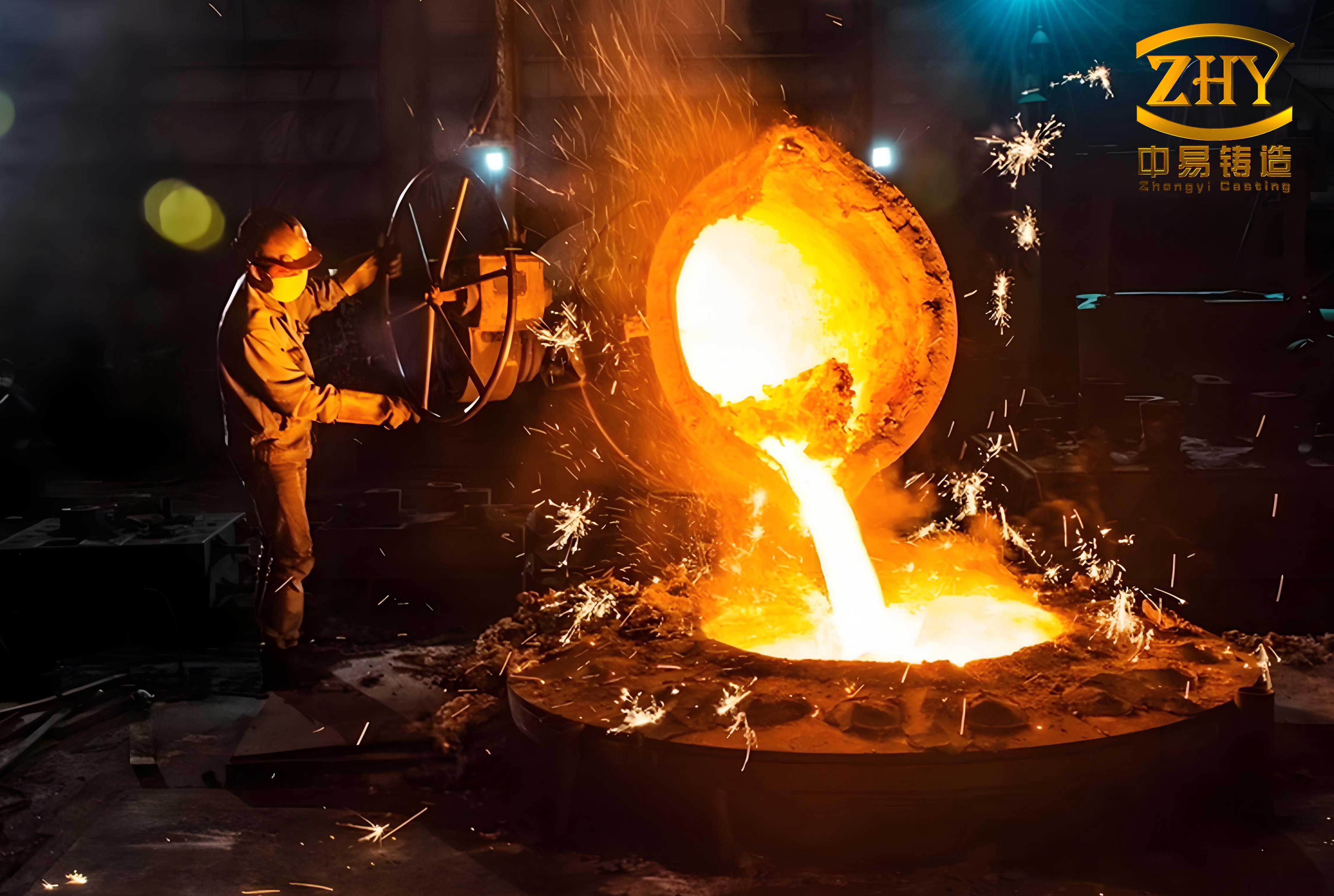
The fundamental principle behind the remarkable properties of a high manganese steel casting is its unique metastable austenitic structure and its capacity for surface work-hardening. Under severe impact and/or high-stress abrasion, the surface layer of the austenite undergoes intense plastic deformation. This deformation generates a high density of dislocations and mechanical twins, effectively transforming the soft, ductile surface (typically ~200 HB) into an extremely hard, wear-resistant layer (exceeding 500 HB). This phenomenon is described by the relationship between flow stress and dislocation density:
$$\sigma = \sigma_0 + \alpha G b \sqrt{\rho}$$
where $\sigma$ is the flow stress, $\sigma_0$ is the lattice friction stress, $\alpha$ is a constant, $G$ is the shear modulus, $b$ is the Burgers vector, and $\rho$ is the dislocation density. The impact loading causes $\rho$ to increase dramatically in the subsurface region, leading to the observed hardening. Meanwhile, the tough, austenitic core absorbs energy and prevents catastrophic fracture. However, this ideal behavior is contingent upon achieving a correct, homogeneous, and carbide-free austenitic microstructure prior to service. The as-cast structure of a standard high manganese steel casting is wholly unsuitable, consisting of austenite grains with a brittle network of carbides (typically $(Fe,Mn)_3C$) at the grain boundaries. These carbides severely embrittle the material, providing easy paths for crack propagation and inhibiting the uniform work-hardening response. The sole purpose of the water toughening treatment is to dissolve these carbides completely, homogenize the carbon and manganese in solid solution, and then “freeze” this single-phase austenite structure by rapid quenching to room temperature.
The Crucible of Quality: Austenitization and Homogenization
The heating stage is far more than just bringing the casting up to temperature. It is a controlled thermal journey designed to manage stress, dissolve carbides, and homogenize the alloy without causing excessive grain growth or surface degradation. The implementation details here are paramount.
Workpiece Placement and Load Configuration
In batch-type furnaces, such as the commonly used pulverized coal-fired furnaces, how the castings are arranged on the furnace car is the first determinant of temperature uniformity. Castings must be stacked methodically with deliberate gaps between them to allow for effective circulation of hot gases. The required stacking gap is not arbitrary but should be proportional to the section thickness of the high manganese steel casting. A general guideline is presented below:
| Casting Wall Thickness (mm) | Minimum Stacking Gap (mm) |
|---|---|
| < 50 | > 60 |
| 50 – 100 | > 100 |
| > 100 | > 150 |
Furthermore, the blocks or fixtures used to create these gaps should be oriented parallel to the direction of the main furnace gas flow to minimize flow disruption. Whenever possible, grouping castings of similar thickness and chemistry in the same furnace charge significantly simplifies achieving a uniform thermal profile.
Achieving and Maintaining Furnace Temperature Uniformity
A uniform microstructure across a batch of high manganese steel casting components demands a uniform austenitizing temperature. This is achieved through active furnace management. Adjusting dampers or burner valves to create a turbulent, circulating atmosphere is essential. Additionally, strategic load planning can help: placing heavier, thicker-section castings in known hotter zones of the furnace can act as a thermal sink, helping to balance the heat distribution. The target is to minimize the furnace temperature gradient, ideally keeping it within ±10°C of the set point throughout the effective workspace.
The Art of Controlled Heating: A Two-Stage Approach
The heating cycle cannot be a simple ramp to the holding temperature. High manganese steel has relatively poor thermal conductivity (approximately half that of carbon steel) and high thermal expansion, making it prone to thermal shock and stress-induced cracking in the brittle as-cast state. A deliberate two-stage heating strategy is therefore critical.
Consider a heating curve with two distinct intervals: a low-temperature stage from room temperature to about 600°C (Interval a-b), and a high-temperature stage from 600°C to the austenitizing temperature (Interval b-c).
Interval a-b (Up to ~600°C): In this range, the material’s plasticity is low, and the network of brittle carbides is still fully present. The heating rate must be conservative to limit thermal stress. It is influenced by casting geometry, carbon/phosphorus content, and the initial carbide morphology. A general safe heating rate ($v_{ab}$) is:
$$v_{ab} \leq 60 \text{°C/h}$$
For simpler geometries with low C and P, and a finer initial structure, this can be increased to the range of 60-100°C/h.
Interval b-c (~600°C to Austenitizing Temperature): Above 600°C, the steel gains ductility, reducing cracking risk. However, this is the stage where carbides begin to dissolve actively. The dissolution of carbides, particularly coarse ones, is associated with a volumetric change (carbides have a ~14-18% larger specific volume than the matrix). This creates localized micro-stresses. Therefore, the heating rate ($v_{bc}$) in this interval must be controlled based on the severity of the as-cast carbide network and the casting’s susceptibility to stress.
$$v_{bc} = 120 \text{ to } 170 \text{°C/h (for moderate conditions)}$$
$$v_{bc} \leq 120 \text{°C/h (for heavy sections, complex designs, or coarse carbides)}$$
Austenitizing Temperature and Time: The Dissolution Kinetics
This is the core of the homogenization stage. The goal is complete carbide dissolution and adequate homogenization of carbon without excessive grain growth. The required time ($t_{hold}$) at the austenitizing temperature ($T_{aust}$) depends on chemical composition (primarily carbon content), maximum section thickness ($d_{max}$), and the initial carbide size and distribution. A useful conceptual model relates to the diffusion-controlled dissolution process. While simplified, the time required for a significant level of homogenization can be considered proportional to the square of a characteristic diffusion distance (e.g., related to carbide spacing or section size).
$$t_{hold} \propto \frac{(d_{diff})^2}{D}$$
where $d_{diff}$ is a diffusion distance and $D$ is the diffusion coefficient, which is strongly temperature-dependent via an Arrhenius relationship: $D = D_0 \exp(-Q/RT)$. This underscores why both time and temperature are critical. Practical industrial guidelines suggest:
- $T_{aust}$: Typically between 1050°C and 1100°C. Higher carbon grades or those with coarse carbides require the upper end.
- $t_{hold}$: Generally 1 to 2.5 hours, calculated from the moment the entire load reaches the target temperature. For very heavy-section high manganese steel casting, it may approach the upper limit.
Exceeding 1100°C or holding for excessively long times leads to rapid austenite grain coarsening, which detrimentally impacts toughness and can reduce work-hardening capacity. Furthermore, prolonged exposure at high temperature accelerates surface decarburization and scaling. A decarburized surface layer, upon quenching, may form a hard but brittle martensitic or pearlitic structure instead of the desired tough austenite, leading to spalling or crack initiation during early service.
The Quenching Imperative: From Theory to Dynamic Practice
Once the ideal homogeneous austenite is achieved, it must be preserved. This requires quenching through the temperature range from about 550°C down to below 250°C with sufficient speed to prevent the re-precipitation of carbides. In practice, this means a violent water quench. The criticality of the quenching implementation cannot be overstated; it is where many processes fail to deliver the theoretical microstructure.
The Water-to-Steel Mass Ratio
The quenching tank must have sufficient thermal mass (water) to absorb the heat from the castings without a drastic temperature rise. A temperature rise above 50-60°C significantly reduces the cooling rate in the critical temperature range, risking carbide precipitation. Empirical evidence strongly supports a minimum water-to-steel mass ratio ($R_{w/s}$):
$$R_{w/s} = \frac{m_{water}}{m_{steel}} \geq 8:1$$
For a robust process with a safety margin, especially in non-agitated tanks, a ratio of 10:1 is recommended. This ratio is a fundamental design parameter linking furnace charge capacity to quench tank volume.
Dynamic Quenching: Beyond Static Immersion
Simply dropping a casting into a static pool of water is suboptimal. The key to maximizing heat extraction is to disrupt the stable vapor blanket (Leidenfrost stage) that forms around the hot metal immediately upon immersion. This blanket is a superb insulator. The implementation goal is to break this blanket continuously and ensure fresh, cool water contacts the metal surface. This is achieved through forced agitation. A highly effective method involves a combination of water injection and air bubbling, as illustrated in the conceptual design below:
The system operates on two fronts:
- High-velocity water jets are directed at the primary immersion zone just before and as the casting enters. This mechanically disrupts the vapor film.
- Compressed air pipes at the tank bottom release bubbles, creating turbulent upward flow that continuously churns the water, eliminating temperature stratification (hot water rising to the top).
Simultaneously, a pump maintains a controlled overflow, actively skimming and discharging the hottest water from the surface, maintaining the bulk quenchant temperature. The flow rate is balanced by the principle $Q_{in} = Q_{out}$, where $Q_{in}$ is the inflow of cool makeup water and $Q_{out}$ is the discharge of hot water. This creates a dynamic cooling environment that approaches the ideal quenching severity.
Quenching Mechanism and Handling
The method of transferring the red-hot casting from the furnace to the quench tank must be swift and smooth. Various tilting or dumping mechanisms are used. The critical implementation detail is to minimize violent impact between castings, or between castings and the tank structure, during the transfer and immersion. Such impacts on extremely hot, now-ductile austenite can cause plastic deformation or even cracking before the quenching even begins, creating stress concentrators that may lead to failure later.
The Consequence of Process Deviation: Linking Microstructure to Performance
Understanding what happens when the implementation falters solidifies the importance of the aforementioned details. Let’s model some potential outcomes.
| Process Deviation | Microstructural Consequence | Effect on High Manganese Steel Casting Performance |
|---|---|---|
| Insufficient stacking gap / poor furnace uniformity | Non-uniform austenitization. Regions with lower temperature retain undissolved carbides. | Localized brittleness. Crack initiation sites. Inconsistent work-hardening across the part surface. |
| Excessive heating rate in Interval a-b | Thermal stress exceeding the strength of the brittle as-cast structure. | Cracking during heat-up, rendering the casting scrap before quenching. |
| Excessive $T_{aust}$ or $t_{hold}$ | Austenite grain coarsening; severe surface decarburization. | Lower impact toughness; brittle surface layer prone to spalling, reducing effective wear life. |
| Low water-to-steel ratio; inadequate agitation | Slow cooling through 550-250°C range. Precipitation of fine carbides at grain boundaries. | Loss of toughness (“embrittled” austenite). The casting may fracture under impact instead of work-hardening. |
| Rough handling during transfer to quench | Introduction of hot deformation or notches. | Stress concentrators that can propagate into cracks during quenching or subsequent service. |
The presence of even minor carbide networks after quenching fundamentally alters the work-hardening behavior. The idealized work-hardening law for clean austenite may be modified by the presence of second-phase particles (carbides), which can act as dislocation sources or barriers, but more detrimentally, as void nucleation sites. The wear resistance, often empirically measured as volume loss ($V_{loss}$), is inversely related to the hardened layer’s stability and integrity. We can conceptualize:
$$V_{loss} \propto \frac{1}{H_{eff} \cdot \varepsilon_f}$$
where $H_{eff}$ is the effective work-hardened hardness and $\varepsilon_f$ is the fracture strain of the subsurface material. Carbides at grain boundaries drastically reduce $\varepsilon_f$, leading to premature microfracture and material removal, thus increasing $V_{loss}$.
Holistic Integration and Practical Guidelines
The water toughening of a high manganese steel casting is therefore a systems engineering challenge. It begins with a well-designed casting and sound melting practice to control the initial as-cast structure. The heat treatment recipe must then be tailored to this specific starting condition, not applied generically. Finally, the physical implementation of both heating and quenching must be rigorously controlled.
To synthesize the key implementation principles:
- Process Design is Contextual: The austenitizing parameters (ramp rates, temperature, time) must be a function of the casting’s actual thickness, geometry complexity, chemical analysis (especially C and P), and the observed as-cast microstructure.
- Thermal Uniformity is Non-Negotiable: Achieve it through intelligent load stacking, furnace adjustments, and charge grouping. The goal is isothermal conditions for the entire load.
- Quenching is an Active, Dynamic Process: Design for a high water-to-steel ratio (≥10:1) and implement forced agitation (water jets, air bubbling, pumped overflow) to maximize cooling severity and uniformity. View the quench tank as an active reactor, not a passive reservoir.
- Handling is Part of the Process: Design transfer mechanisms to be swift and gentle to prevent hot damage.
- Quality is Inseparable from Process Fidelity: The final quality of the high manganese steel casting—its wear resistance in crushing, grinding, or digging applications—is intrinsically linked to the meticulous execution of each step in the water toughening sequence. A perfect chemical composition is only potential; it is the heat treatment that unlocks and secures its legendary performance.
In conclusion, mastering the water toughening process requires moving beyond the basic temperature-time chart. It demands an engineering focus on the physical realities of heat transfer, fluid dynamics, and stress management within the production environment. By controlling the implementation state—the how, not just the what—we consistently transform a prone-to-brittleness high manganese steel casting into the durable, tough, and self-hardening workhorse that industry depends on.