
The pursuit of enhanced durability and longevity in severe service components remains a central challenge in materials engineering. Among the various candidates, high manganese steel castings, particularly those based on the Austenitic Mn13 grade, have established a long-standing reputation for applications involving high impact and abrasive wear, such as mining shovel teeth, crusher liners, and railway crossings. The canonical property of these steels is their exceptional work-hardening capacity; upon significant impact or deformation, the metastable austenitic microstructure undergoes a strain-induced transformation to martensite, forming a hard, protective surface layer while retaining a tough core. However, the inherent limitations of traditional grades—including relatively low yield strength and inconsistent wear resistance under varying impact energies—prompt continuous research into microstructural engineering and alloy design to push the performance boundaries of high manganese steel castings.
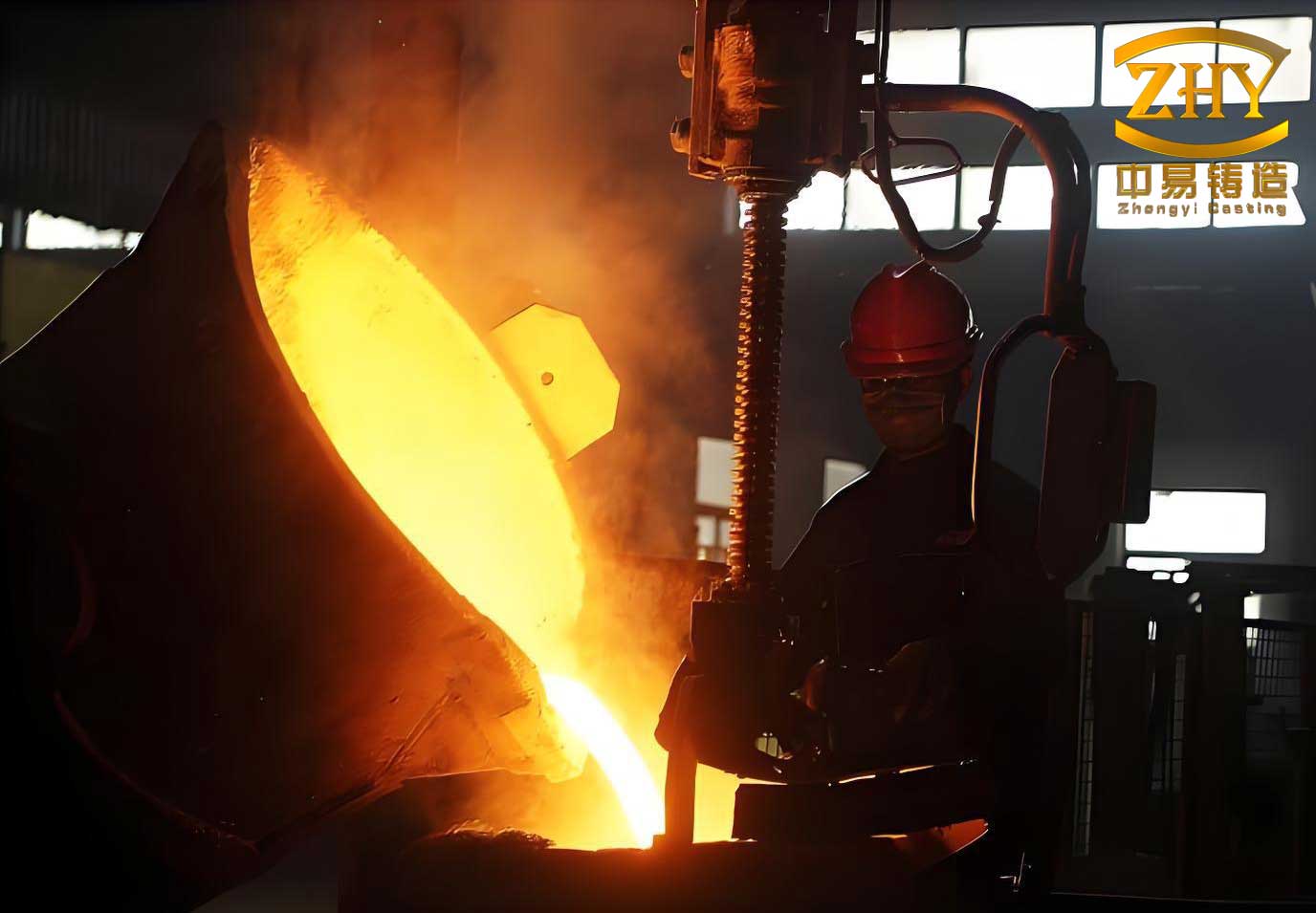
The core objective of modern alloy development for high manganese steel castings is to achieve a synergistic improvement in strength, toughness, and wear resistance. This often involves moving beyond the simple C-Mn system to incorporate strategic microalloying additions. Elements such as Chromium (Cr), Molybdenum (Mo), Vanadium (V), and Titanium (Ti) are frequently investigated. While Cr and Mo primarily enhance hardenability and solid solution strengthening, the carbonitride-forming elements V and Ti offer a potent pathway for grain refinement and precipitation strengthening. The controlled introduction of these elements can fundamentally alter the as-cast and heat-treated microstructure of high manganese steel castings, leading to superior mechanical properties and a more reliable wear response. This article delves into the microstructural evolution, mechanical property enhancement, and detailed wear mechanisms of alloyed high manganese steel castings, with a focused analysis on the role of V-Ti additions.
Alloying Strategies and Microstructural Design
The chemical composition is the foundational blueprint for any high manganese steel casting. Traditional Mn13 steel serves as the baseline, but its properties can be significantly modulated. A comparative analysis of a standard and an alloyed grade illustrates this point.
| Element | Traditional Mn13 Casting (wt.%) | V-Ti Alloyed High Manganese Steel Casting (wt.%) | Primary Function |
|---|---|---|---|
| C | 1.0 – 1.2 | 1.0 – 1.2 | Austenite stabilizer, forms carbides |
| Mn | 12.0 – 14.0 | 12.0 – 14.0 | Austenite stabilizer, promotes work-hardening |
| Si | 0.3 – 0.5 | 0.3 – 0.5 | Deoxidizer, solid solution strengthener |
| Cr | 1.7 – 1.9 | 1.7 – 1.9 | Solid solution strengthener, improves corrosion/oxidation resistance |
| Mo | 0.5 – 0.7 | 0.5 – 0.7 | Solid solution strengthener, enhances tempering resistance |
| Ti | — | ~0.10 | Grain refiner, forms Ti(C,N) precipitates |
| V | — | ~0.25 | Precipitation strengthener, forms V4C3/VC precipitates |
The addition of Ti and V, even in these modest amounts, initiates profound changes during the solidification and subsequent heat treatment of the high manganese steel casting. Titanium, with a high affinity for both carbon and nitrogen, preferentially forms very fine, stable Ti(C,N) particles at high temperatures. These particles act as potent heterogeneous nucleation sites for austenite grains during solidification and, more importantly, pin the grain boundaries during any high-temperature exposure (like the solution treatment at 1050-1100°C), effectively inhibiting grain growth. This results in a significantly refined austenitic grain structure. The Hall-Petch relationship succinctly describes the strength benefit of this refinement:
$$\sigma_y = \sigma_0 + k \cdot d^{-1/2}$$
where $\sigma_y$ is the yield strength, $\sigma_0$ is the lattice friction stress, $k$ is the strengthening coefficient, and $d$ is the average grain diameter. A reduction in grain size $d$ directly increases the yield strength of the high manganese steel casting.
Vanadium, on the other hand, has a higher solubility in austenite at solution treatment temperatures. During subsequent cooling or aging, it precipitates out as fine, coherent, or semi-coherent vanadium carbide (V4C3 or VC) particles. These nano-scale to micro-scale precipitates are dispersed within the austenite matrix and act as formidable obstacles to dislocation motion. This precipitation strengthening mechanism, often described by Orowan looping theory, provides a substantial boost to the yield and tensile strength without severely compromising ductility. The synergistic effect of Ti-induced grain refinement and V-induced precipitation creates a composite-like austenitic matrix that is both strong and tough—a highly desirable combination for a high manganese steel casting destined for impact-abrasive service.
Microstructural Evolution and Precipitation Characteristics
Following a standard solution heat treatment (e.g., 1080°C for 2-4 hours followed by water quenching), both the traditional and alloyed high manganese steel castings exhibit a fully austenitic matrix. However, detailed microstructural analysis reveals critical differences. The traditional Mn13 casting typically shows larger austenite grains, often in the range of 150-200 µm. More detrimentally, carbides (often rich in Cr and Mo) tend to precipitate preferentially at grain boundaries in a coarse, continuous, or semi-continuous network. Such a morphology can act as a brittle pathway, facilitating crack initiation and propagation, thereby reducing impact toughness and potentially accelerating wear through grain detachment.
In contrast, the V-Ti alloyed high manganese steel casting displays a markedly refined microstructure. The austenite grain size is reduced, often by 20-30%. Crucially, the precipitation behavior is transformed. The primary Ti(C,N) particles are stable and remain small. The vanadium carbides precipitate in a much finer and more uniform manner, appearing as discrete, spherical, or cuboidal particles dispersed throughout the austenite grains and at grain boundaries. This transition from a coarse, intergranular network to a fine, intragranular dispersion is pivotal. The following table contrasts the key microstructural features:
| Microstructural Feature | Traditional Mn13 Casting | V-Ti Alloyed High Manganese Steel Casting |
|---|---|---|
| Austenite Grain Size | Coarse (~190 µm average) | Refined (~170 µm average) |
| Carbide Morphology | Coarse, elongated, intergranular network | Fine, spherical, intragranular dispersion |
| Primary Precipitate | (Cr,Mo,Fe)23C6 | Ti(C,N) and V4C3/VC |
| Precipitate Size Range | Larger, often > 5-7 µm | Finer, predominantly 1-5 µm |
The refinement and dispersion of second-phase particles can be quantified by measuring their size distribution. Let $N(d)$ represent the number density of particles with diameter $d$. For the alloyed high manganese steel casting, the distribution $N_A(d)$ is shifted towards smaller $d$ and has a higher integrated number density compared to the distribution $N_T(d)$ for the traditional casting:
$$\int_{0}^{d_0} N_A(d) \, dd > \int_{0}^{d_0} N_T(d) \, dd \quad \text{for a given small diameter } d_0$$
This higher density of fine, hard particles directly enhances the matrix’s resistance to plastic deformation and micro-cutting during wear.
Mechanical Property Enhancement
The microstructural advantages conferred by V-Ti alloying translate directly into measurable improvements in the bulk mechanical properties of the high manganese steel casting. These properties form the first line of defense against failure in service.
| Mechanical Property | Traditional Mn13 Casting | V-Ti Alloyed High Manganese Steel Casting | Percentage Improvement |
|---|---|---|---|
| Yield Strength (Rp0.2) | ~350 MPa | ~402 MPa | ~14.9% |
| Tensile Strength (Rm) | ~570 MPa | ~667 MPa | ~17.0% |
| Elongation (A) | ~16% | ~18% | ~12.5% |
| Impact Toughness (Charpy, 20°C) | ~150 J/cm² | ~171 J/cm² | ~14.0% |
| Initial Hardness (HV) | ~197 HV | ~224 HV | ~13.7% |
The increase in yield strength is primarily attributed to the combined Hall-Petch (grain refinement) and Orowan (precipitation) strengthening mechanisms. The fine, dispersed carbides effectively pin dislocations, increasing the stress required for plastic flow to begin. This is critically important for a high manganese steel casting because a higher initial yield strength means the component is more resistant to initial deformation and denting under low-to-medium impact loads, preserving its geometry.
Remarkably, this strength increase is achieved without sacrificing toughness; in fact, impact toughness improves. The refinement of the austenite grain structure increases the total grain boundary area, which acts as a barrier to crack propagation. Furthermore, replacing the brittle, interconnected grain boundary carbide network with fine, isolated particles prevents the easy linkage of microvoids, leading to a more ductile fracture mode. The enhanced tensile strength and elongation further confirm the improved work-hardening capacity and ductility of the alloyed high manganese steel casting. The initial hardness increase provides a higher baseline for the work-hardening process to build upon during service.
Impact-Abrasive Wear Behavior and Testing Methodology
The true performance of a high manganese steel casting is validated under simulated service conditions. Impact-abrasive wear, which combines repetitive mechanical冲击 with abrasive scratching, is the dominant failure mode for components like digger teeth. A standard test to evaluate this is the dynamic impact abrasive wear test, using equipment like an MLD-20C tester. In this test, a rectangular sample (the high manganese steel casting specimen) is subjected to periodic impacts from a hammer while being pressed against a rotating disc (often made of hardened steel) in the presence of abrasive grit (e.g., silica sand).
The key test parameters can be defined as follows:
– Impact Energy, $E_i$ (Joules): The kinetic energy of the hammer.
– Impact Frequency, $f$ (min⁻¹): Number of impacts per minute.
– Abrasive Flow Rate, $\dot{m}_a$ (kg/h): Mass of abrasive introduced per hour.
– Test Duration, $t$ (minutes).
The wear loss is typically measured as mass loss, $\Delta m$, at intervals. The wear resistance, $\epsilon$, is often defined as the inverse of the wear rate:
$$\epsilon = \frac{1}{\omega} = \frac{t}{\Delta m}$$
where $\omega$ is the average mass loss rate ($\Delta m / t$). A comparative study between the two types of high manganese steel castings under a moderately high impact energy (e.g., 4 J) reveals significant differences in performance.
| Wear Test Parameter / Result | Traditional Mn13 Casting | V-Ti Alloyed High Manganese Steel Casting |
|---|---|---|
| Impact Energy (Ei) | 4 J | |
| Test Duration | 60 min | |
| Mass Loss ($\Delta m$) | ~340 mg | ~300 mg |
| Wear Resistance ($\epsilon$) | ~2.94 mg⁻¹ | ~3.33 mg⁻¹ |
| Relative Wear Resistance Improvement | ~13.3% | |
| Work-Hardened Layer Thickness | ~450 µm | ~500 µm |
| Surface Hardness after Wear | ~421 HV | ~440 HV |
The data clearly shows that the V-Ti alloyed high manganese steel casting exhibits lower mass loss and higher calculated wear resistance. More importantly, it demonstrates a superior work-hardening capability: a thicker hardened layer (500 µm vs. 450 µm) and a higher ultimate surface hardness (440 HV vs. 421 HV) are achieved. This indicates that the alloyed matrix can absorb more impact energy and undergo more extensive strain hardening, creating a more effective protective shell.
Analysis of Wear Mechanisms and Subsurface Evolution
Post-wear analysis of the surface and subsurface regions provides deep insights into the active wear mechanisms and the role of microstructural features. Under a 4 J impact condition, the dominant wear mechanism for both high manganese steel castings transitions from micro-cutting/plowing (more common at lower stresses) to surface fatigue and deformation wear.
Worn Surface Morphology: The worn surface of the traditional Mn13 casting typically shows deep, discontinuous pits and craters formed by material removal via fatigue spalling. Signs of plastic deformation and extruded lips are also evident. In contrast, the surface of the V-Ti alloyed high manganese steel casting is generally smoother with shallower and smaller pits. The fine, hard (Ti,V)C precipitates act as microscopic barriers, effectively resisting the penetration and grooving action of the abrasive particles. This reduces the depth of plastic deformation and delays the initiation of fatigue cracks.
Subsurface Hardness Profile: The gradient of hardness from the worn surface into the bulk material is a direct map of the work-hardening effect. Let $H(x)$ represent the microhardness (HV) at a depth $x$ from the worn surface. The profile can often be approximated by an exponential decay function:
$$H(x) = H_0 + \Delta H \cdot \exp(-x/\lambda)$$
where $H_0$ is the bulk hardness, $\Delta H$ is the maximum hardness increase at the surface, and $\lambda$ is a decay constant representing the work-hardened layer depth. For the V-Ti alloyed high manganese steel casting, $\Delta H$ is larger and $\lambda$ is greater, confirming a higher and deeper work-hardening capacity.
Wear Mechanism Synergy: The superior performance of the alloyed high manganese steel casting can be explained by a multi-stage mechanism:
1. Initial Resistance: The higher initial yield strength and hardness resist initial plastic deformation and particle embedding.
2. Precipitate Reinforcement: The fine, dispersed (Ti,V)C precipitates directly obstruct dislocation motion and abrade/ fracture the attacking silica grit, reducing its cutting efficiency. They also act as pinning points that stabilize the heavily deformed microstructure.
3. Enhanced Strain Hardening: The refined grain structure provides more grain boundaries to obstruct dislocation glide, promoting a higher rate of dislocation multiplication and storage. This accelerates the transformation of austenite to martensite (if applicable) and the formation of dense dislocation structures, leading to the observed thicker and harder deformed layer.
4. Delayed Fracture: The tough, refined microstructure with isolated carbides resists the propagation of subsurface fatigue cracks, preventing large-scale spalling.
The overall wear rate $\Delta W$ (volume loss) can be conceptualized as a function of material parameters and test conditions:
$$\Delta W = k \cdot P^{\alpha} \cdot v^{\beta} \cdot t \cdot f(H, \sigma_y, K_{IC}, V_p)$$
where $P$ is load, $v$ is sliding speed, $t$ is time, $k$, $\alpha$, $\beta$ are constants, and $f$ is a function decreasing with increasing material hardness $H$, yield strength $\sigma_y$, fracture toughness $K_{IC}$, and precipitate volume fraction $V_p$. The V-Ti alloyed high manganese steel casting improves several terms within this function simultaneously.
Conclusions and Future Perspectives
The strategic microalloying of high manganese steel castings with elements like Vanadium and Titanium represents a highly effective pathway to transcend the performance limits of traditional grades. The additions, though small in quantity, orchestrate significant microstructural refinements: grain size reduction and the formation of a fine, uniform dispersion of stable carbonitride precipitates. This transforms the austenitic matrix from a relatively soft, single-phase structure into a composite-like material with integrated strengthening phases.
The mechanical property enhancements are clear and synergistic: a 15-17% increase in yield and tensile strength, coupled with a 14% improvement in impact toughness. This creates a high manganese steel casting with a much more robust foundation to withstand service loads. Under impact-abrasive wear conditions, this translates into a demonstrable 13%+ improvement in wear resistance, underpinned by a superior work-hardening capacity that generates a thicker and harder protective surface layer.
The future development of high manganese steel castings will likely involve further optimization of multi-component microalloying systems (e.g., V-Ti-Nb), precise control of precipitate composition and size distribution through advanced thermal processing, and the potential integration of computational materials science to predict microstructure-property relationships. Furthermore, exploring the synergy between microalloying and novel heat treatment cycles, including interrupted quenching or ausforming processes, could unlock additional performance gains. The ultimate goal remains to engineer high manganese steel castings that offer not only longer service life but also greater predictability and reliability in the most demanding mining, quarrying, and material handling applications, thereby delivering significant economic and operational benefits.