
In my extensive experience within the manganese steel casting foundry industry, I have witnessed persistent challenges that hinder production efficiency and product quality. One of the most enduring issues is the adhesion of sand to manganese steel castings, a problem that has plagued foundries for decades. This adhesion, often referred to as “burn-on” or “penetration,” results in rough casting surfaces, increased cleaning costs, and potential defects. In this article, I will delve into the intricacies of this problem and explore a groundbreaking solution developed from domestic resources, which not only resolves adhesion but also promotes environmental sustainability. The manganese steel casting foundry sector is crucial for applications requiring high wear resistance, such as mining equipment, railway components, and crusher parts, making advancements in this field vital for industrial progress.
The adhesion of sand to manganese steel castings primarily stems from the high reactivity of manganese during the casting process. Manganese steel typically contains 11-14% manganese, which, at elevated temperatures, interacts aggressively with silica-based molding sands, leading to chemical bonding and penetration. This results in a fused layer that is difficult to remove, compromising surface finish and dimensional accuracy. In traditional manganese steel casting foundry operations, this necessitates extensive shot blasting or grinding, increasing labor and material costs. Moreover, the poor surface quality can affect the performance and longevity of the cast components. To quantify the impact, consider the surface roughness parameter, Ra, which for problematic castings can exceed 50 μm, far above the acceptable range for many applications. The fundamental reaction can be represented by the following equation, illustrating the interaction between manganese and silica:
$$ \text{Mn} + \text{SiO}_2 \rightarrow \text{MnO} + \text{Si} + \text{heat} $$
This exothermic reaction exacerbates the adhesion, making it a critical focus for improvement in manganese steel casting foundry practices.
Historically, manganese steel casting foundries have relied on expensive specialty sands to mitigate adhesion. Chromite sand and olivine sand are commonly used due to their high refractoriness and low reactivity with manganese. Chromite sand, derived from chromium ore, offers excellent thermal stability but is costly and subject to supply chain fluctuations. Olivine sand, composed primarily of forsterite and fayalite, provides good resistance but is also expensive and limited in availability. These materials, while effective, strain the economics of manganese steel casting foundry operations, especially for small to medium-sized enterprises. For instance, the cost of chromite sand can be two to three times higher than that of conventional silica sand, significantly impacting overall production expenses. Additionally, the environmental footprint of mining these specialty sands raises concerns, prompting the need for sustainable alternatives. In many manganese steel casting foundry setups, the use of such sands is coupled with binders like sodium silicate, but even then, adhesion issues persist under high-temperature conditions.
To address these challenges, a novel composite sand has been developed, leveraging metallurgical waste slag as a primary raw material. This innovation, which I will refer to as “Ling-1 sand,” represents a paradigm shift in manganese steel casting foundry practices. By utilizing waste slag, it not only reduces adhesion but also turns an industrial by-product into a valuable resource, aligning with circular economy principles. The development of Ling-1 sand involved years of research, focusing on optimizing its composition to resist manganese interaction while maintaining cost-effectiveness. This approach is particularly relevant for manganese steel casting foundry environments where cost control and environmental compliance are paramount. The sand’s formulation is designed to withstand the harsh conditions of manganese steel pouring, typically at temperatures ranging from 1450°C to 1550°C, without degrading or bonding to the metal surface.
The chemical composition of Ling-1 sand is critical to its performance. As shown in Table 1, it comprises a balanced mix of oxides that enhance refractoriness and reduce reactivity. Key components include silica, alumina, and magnesia, which collectively form stable phases at high temperatures.
| Component | Content (%) | Role in Manganese Steel Casting Foundry |
|---|---|---|
| SiO₂ | 35-40 | Provides basic refractory structure |
| Al₂O₃ | 15-20 | Enhances thermal stability and reduces wetting |
| MgO | 10-15 | Increases refractoriness and inhibits manganese diffusion |
| CaO | 5-10 | Acts as a flux but controlled to prevent low-melting phases |
| Fe₂O₃ | 3-5 | Minimal to avoid reduction reactions with manganese |
| Others (e.g., K₂O, Na₂O) | <2 | Trace elements managed to avoid degradation |
This composition ensures that the sand remains inert during the casting process in a manganese steel casting foundry. The high alumina and magnesia content specifically counteract the reactivity of manganese, as they form more stable oxides compared to silica. The chemical resistance can be modeled using the following expression for the free energy of reaction, ΔG, which indicates the tendency for adhesion:
$$ \Delta G = \Delta H – T \Delta S $$
Where ΔH is the enthalpy change, T is the temperature in Kelvin, and ΔS is the entropy change. For Ling-1 sand, the ΔG for interactions with manganese is positive at casting temperatures, indicating non-spontaneous reactions, thereby preventing adhesion. This theoretical framework underpins its effectiveness in manganese steel casting foundry applications.
The mineralogical composition of Ling-1 sand further explains its superior performance. As detailed in Table 2, it contains a blend of phases that contribute to its mechanical and thermal properties.
| Mineral Phase | Content (%) | Function in Manganese Steel Casting Foundry |
|---|---|---|
| Olivine ((Mg,Fe)₂SiO₄) | 40-50 | Provides high melting point and low thermal expansion |
| Magnesium-Aluminate Spinel (MgAl₂O₄) | 20-30 | Enhances thermal shock resistance and chemical inertness |
| Glass Phase | 10-15 | Controlled to bind particles without excessive sintering |
| Metallic Inclusions | <5 | Negligible impact, derived from waste slag |
The presence of spinel is particularly beneficial for manganese steel casting foundry operations, as it resists penetration by molten metal due to its dense crystalline structure. The olivine content mimics the properties of traditional olivine sand but at a fraction of the cost, making it an economical alternative. The glass phase, when properly regulated, aids in bonding the sand grains without creating weak points that could lead to erosion or adhesion. This mineralogy ensures that the sand maintains integrity under the thermal cycles typical in a manganese steel casting foundry.
The physical and chemical properties of Ling-1 sand are rigorously tested to meet the demands of manganese steel casting foundry environments. Key parameters include density, refractoriness, and strength, both at room temperature and elevated temperatures. Table 3 summarizes these properties, highlighting its suitability for high-temperature applications.
| Property | Value | Significance for Manganese Steel Casting Foundry |
|---|---|---|
| Density | 2.8-3.2 g/cm³ | Ensures adequate mold stability and heat capacity |
| Refractoriness | >1600°C | Withstands pouring temperatures without softening |
| Room Temperature Strength (with 3% sodium silicate binder) | 1.5-2.0 MPa | Provides sufficient green strength for mold handling |
| High-Temperature Strength (at 1400°C) | 0.8-1.2 MPa | Maintains mold integrity during metal pouring |
| Residual Strength after 1000°C | <0.5 MPa | Facilitates easy shakeout and cleaning of castings |
| Thermal Expansion Coefficient | 1.0-1.5 × 10⁻⁶ /°C | Minimizes mold wall movement and casting defects |
These properties make Ling-1 sand an ideal choice for manganese steel casting foundry processes. The high refractoriness ensures that the sand does not break down when exposed to molten manganese steel, which typically has a pouring temperature above 1500°C. The strength values are optimized to prevent mold collapse while allowing for easy removal after cooling. The low residual strength at elevated temperatures is crucial for reducing cleaning efforts, a common pain point in manganese steel casting foundry operations. The thermal expansion behavior can be described by the following linear expansion formula:
$$ \Delta L = L_0 \cdot \alpha \cdot \Delta T $$
Where ΔL is the change in length, L₀ is the original length, α is the thermal expansion coefficient, and ΔT is the temperature change. For Ling-1 sand, the low α value minimizes dimensional changes during heating and cooling, reducing stress on the mold and improving casting accuracy. This is particularly important in manganese steel casting foundry applications where precise tolerances are required for components like crusher liners or track pads.
In practical manganese steel casting foundry settings, the implementation of Ling-1 sand has yielded remarkable results. When used with a sodium silicate binder and CO₂ curing, the sand molds exhibit consistent performance. For instance, in trials conducted at various foundries, the surface roughness of manganese steel castings produced with Ling-1 sand achieved an Ra value of 6.3-12.5 μm, which is at least one grade lower than that obtained with olivine sand. This improvement translates to smoother surfaces, reduced post-casting machining, and enhanced component performance. The ease of cleaning is another significant advantage; castings can be freed from the mold with minimal effort, lowering labor costs and increasing throughput in the manganese steel casting foundry. Moreover, the sand’s stability reduces the incidence of defects such as veining or rat tails, which are common with less stable molding materials. The following empirical relationship highlights the correlation between sand properties and casting quality in a manganese steel casting foundry:
$$ Q = k \cdot \left( \frac{S_r}{R_a} \right) \cdot \exp(-\beta \cdot A) $$
Where Q is the casting quality index, k is a constant, S_r is the sand refractoriness, R_a is the surface roughness, β is a adhesion factor, and A is the adhesion tendency. For Ling-1 sand, the low A value leads to higher Q, underscoring its efficacy. These outcomes demonstrate how innovations in molding materials can revolutionize manganese steel casting foundry practices, making them more efficient and cost-effective.
The economic and environmental benefits of Ling-1 sand are substantial for any manganese steel casting foundry. By utilizing metallurgical waste slag, which is often discarded and poses disposal challenges, this approach reduces raw material costs by up to 40% compared to specialty sands like chromite. This cost reduction is critical in competitive markets where manganese steel casting foundry operations must optimize expenses. Environmentally, the repurposing of waste slag mitigates landfill usage and reduces the carbon footprint associated with sand mining and processing. In a typical manganese steel casting foundry, the adoption of Ling-1 sand can decrease waste generation by 20-30%, aligning with sustainability goals. Additionally, the improved casting quality reduces scrap rates, further conserving resources. The overall impact can be quantified through a life-cycle assessment (LCA) model, which for Ling-1 sand shows a lower environmental impact score, E, compared to traditional sands:
$$ E = \sum_{i=1}^{n} (C_i \cdot W_i) $$
Where C_i is the impact category (e.g., energy consumption, emissions) and W_i is the weighting factor. For manganese steel casting foundry applications, this translates to a greener production process without compromising performance. As regulations tighten and consumers demand sustainable products, such innovations position manganese steel casting foundries for long-term success.
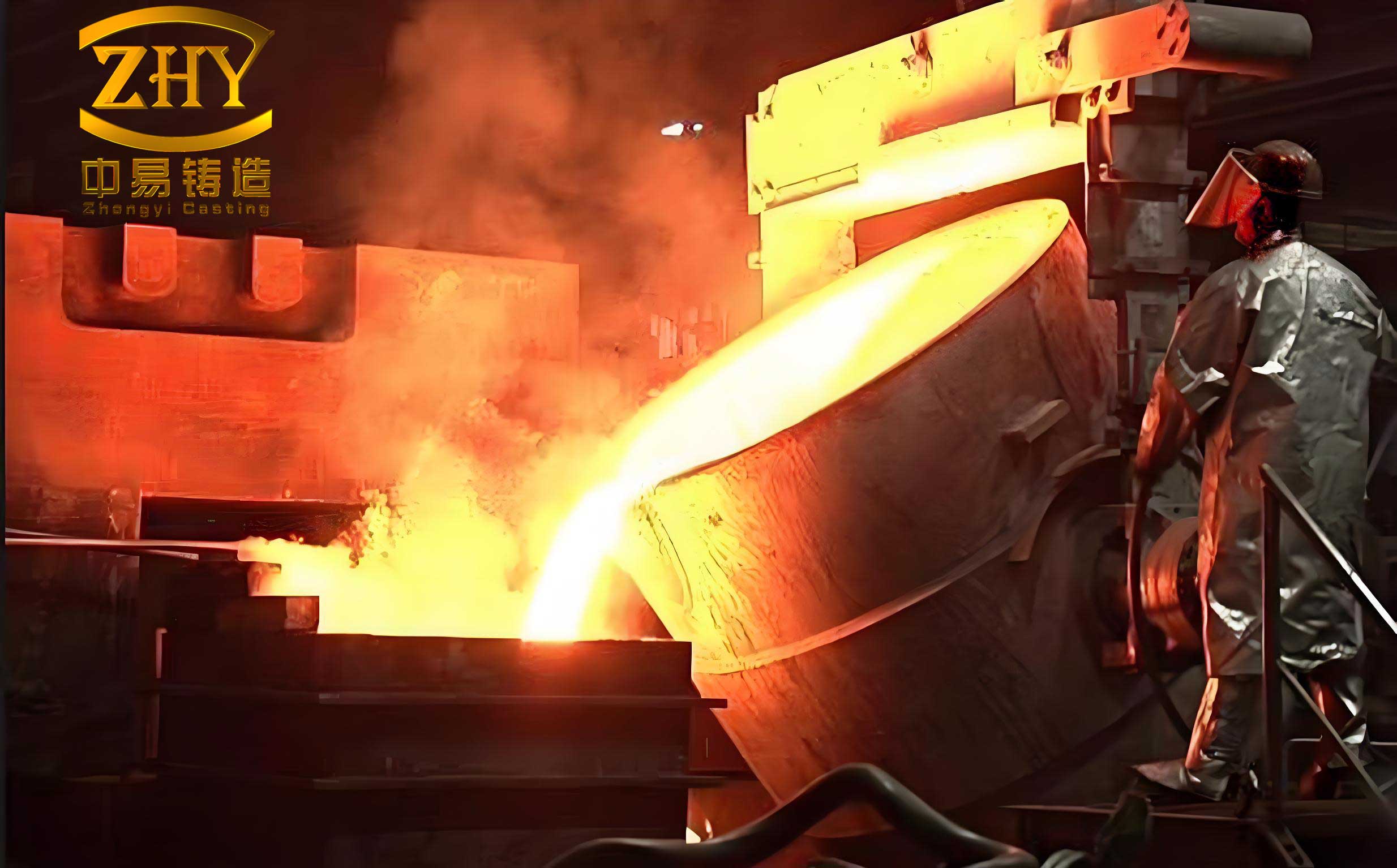
Looking ahead, the future of manganese steel casting foundry technology will likely involve further refinements of materials like Ling-1 sand. Research into additive manufacturing of molds and cores, combined with advanced sand formulations, could enhance precision and reduce waste. For example, 3D printing with Ling-1 sand composites may enable complex geometries for manganese steel castings, opening new applications in aerospace or automotive sectors. Additionally, smart foundry concepts integrating IoT sensors to monitor sand conditions in real-time could optimize usage and predict maintenance needs. The manganese steel casting foundry industry must continue to innovate to meet evolving demands for high-performance, durable components. By embracing solutions like Ling-1 sand, foundries can overcome historical challenges like adhesion while contributing to a circular economy. In my view, the key to progress lies in collaboration between researchers, foundry engineers, and material scientists to develop integrated systems that boost efficiency and sustainability.
In conclusion, the adhesion problem in manganese steel casting foundry operations has been a long-standing hurdle, but through innovative approaches like Ling-1 sand, it is now being effectively addressed. This composite sand, derived from metallurgical waste, offers excellent chemical resistance, thermal stability, and economic advantages, making it a game-changer for the industry. By adopting such materials, manganese steel casting foundries can achieve superior casting quality, reduce costs, and minimize environmental impact. As the demand for high-manganese steel components grows in sectors like mining, construction, and transportation, continuous improvement in foundry practices will be essential. I am confident that with ongoing research and practical implementation, the manganese steel casting foundry sector will reach new heights of excellence and sustainability.