
In the realm of industrial manufacturing, the manganese steel casting foundry plays a pivotal role, particularly in producing wear-resistant components for demanding applications such as railway crossings. As an engineer deeply involved in foundry operations, I have focused on enhancing the quality and efficiency of these processes. High manganese steel, renowned for its exceptional hardness and toughness under impact, is extensively used in castings like railroad frogs. However, the casting process often faces challenges related to surface defects, such as rough textures and sand adhesion, primarily due to inadequate coatings. This article details our comprehensive experimental journey to improve coatings for manganese steel casting foundry applications, leveraging local materials and advanced formulations to achieve superior performance.
The traditional coating used in manganese steel casting foundry environments is typically an alcohol-based magnesia powder coating. While magnesia offers a high melting point (approximately 2800°C for pure MgO), it tends to allow molten steel penetration between particles, leading to surface imperfections. Our goal was to develop a coating that undergoes solid-phase sintering at high temperatures, forming a dense spinel structure to enhance erosion resistance. We explored the use of chromite slag powder as a cost-effective alternative to expensive alumina-based materials, integrating it with reburned magnesia powder. This approach not only reduces costs but also improves coating performance, crucial for large castings like high manganese steel frogs. The manganese steel casting foundry industry constantly seeks such innovations to maintain quality and competitiveness.
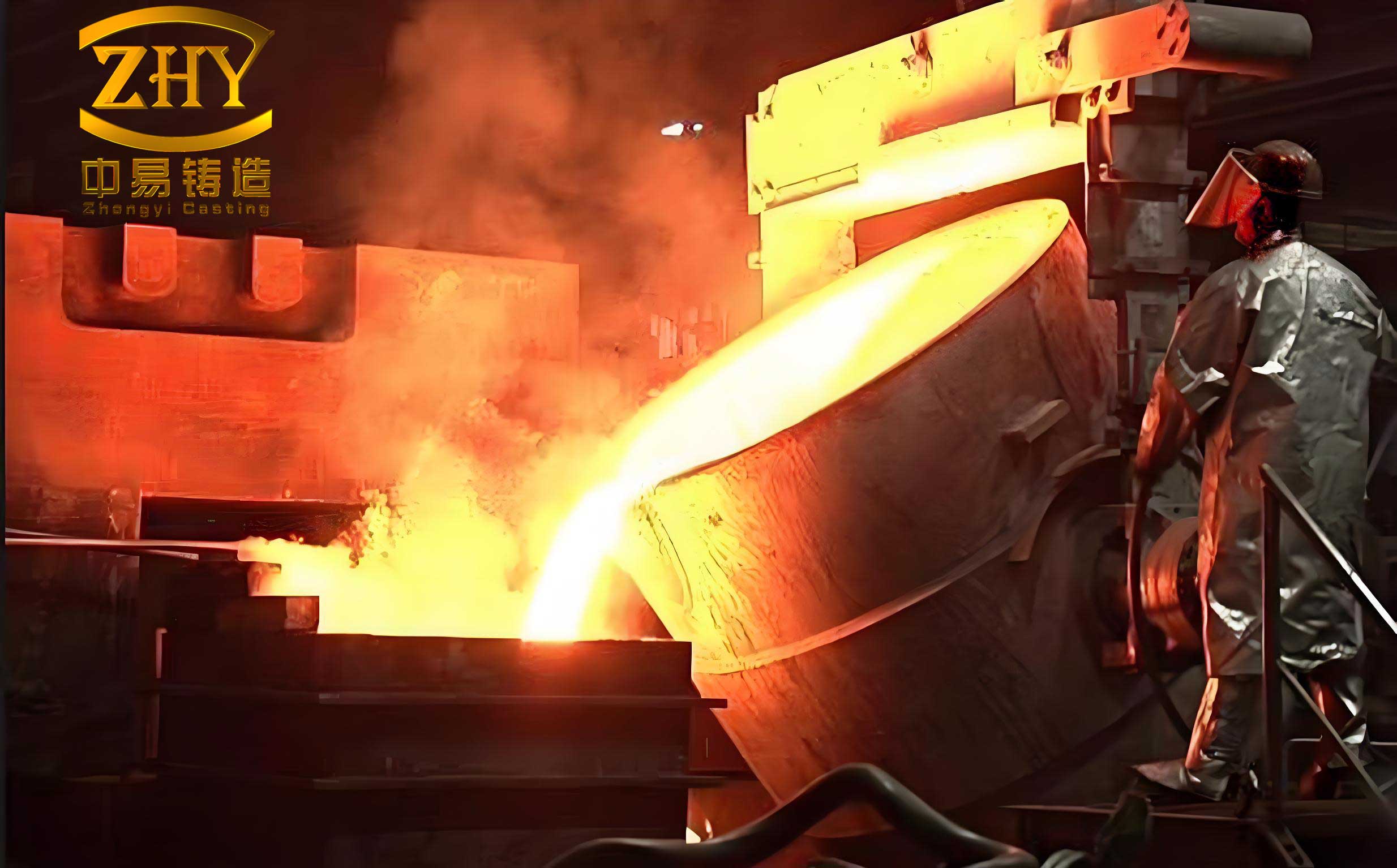
To begin, we carefully selected the raw materials for coating formulation. The refractory aggregates included reburned magnesia powder and chromite slag powder. Reburned magnesia powder, primarily composed of MgO with a content above 90%, has a density around 3.5 g/cm³ and a melting point near 2000°C due to impurities. It exhibits low thermal expansion and excellent resistance to basic slags, making it suitable for manganese steel casting foundry operations. Chromite slag powder, a by-product from ferrochrome production, was ground to a fineness of 100-200 mesh. It contains about 65% Al₂O₃ and 20% Cr₂O₃, giving it a high melting point of 1800-2000°C, a density of 3.8 g/cm³, and neutral chemical properties. This material is ideal for withstanding molten metal冲刷 in a manganese steel casting foundry, and its cost is only about 30% of that of alumina powder. Other components included suspension stabilizers like lithium-based bentonite and polyvinyl butyral (PVB), binders such as thermosetting phenolic resin, a carrier of industrial alcohol (ethanol content above 95%), and additives like surfactants, defoamers, and combustion aids.
The coating preparation process followed a systematic method: lithium-based bentonite, additives, PVB, phenolic resin, refractory fillers, and flux were mixed with industrial alcohol for 40-60 minutes before discharge. To optimize the formulation, we employed an orthogonal experimental design with three factors and three levels, focusing on the key components—phenolic resin, PVB, and lithium-based bentonite—and their effects on suspension, coating strength, and high-temperature crack resistance. The results, summarized in Table 1, guided our selection of the best combination for manganese steel casting foundry applications.
| Experiment No. | Suspension Rate (%) | Coating Strength (MPa) | High-Temperature Crack Resistance (Rating) |
|---|---|---|---|
| 1 | 92.0 | 2.35 | Good |
| 2 | 91.5 | 2.20 | Fair |
| 3 | 93.5 | 2.23 | Fair |
| 4 | 96.0 | 3.25 | Good |
| 5 | 90.0 | 3.05 | Fair |
| 6 | 95.0 | 1.30 | Excellent |
| 7 | 93.5 | 1.20 | Fair |
| 8 | 92.0 | 1.50 | Good |
| 9 | 95.0 | 4.15 | Fair |
From the analysis, lithium-based bentonite had the most significant impact on suspension, but excessive amounts led to minor cracks. PVB influenced both suspension and strength, though overuse could cause foaming and surface pits. Phenolic resin primarily enhanced strength, with a target of 2.5 MPa deemed sufficient for manganese steel casting foundry requirements. Balancing these factors, we determined the optimal ratios. Additionally, to improve combustibility in alcohol-based coatings—a common issue in manganese steel casting foundry settings where coatings may not dry properly—we incorporated combustion aids instead of toxic methanol. A flux, such as CaF₂, was added to promote easy剥离 and prevent sand adhesion during shakeout. The sintering performance of the composite refractory materials was also evaluated, as shown in Table 2, indicating that increased chromite slag powder content enhanced bonding and density through spinel formation.
| Chromite Slag Powder Content (%) | Spinel Content (%) | Sintered Coating Strength (Qualitative Assessment) |
|---|---|---|
| 0 | 1.5 | Surface脱落 with light touch |
| 10 | 5.2 | Surface脱落 with slight friction |
| 20 | 7.3 | Surface脱落 with moderate friction |
| 30 | 10.4 | Surface脱落 with nail scratch |
The finalized coating formulation was derived from these insights, tailored for the manganese steel casting foundry environment. To assess its performance, we conducted rigorous tests using standard methods. Suspension was measured via a graduated cylinder method: after settling for 8 hours, the suspension rate was calculated using the formula:
$$ \text{Suspension rate} = \frac{(1000 – V)}{1000} \times 100\% $$
where V is the volume of the clear layer in milliliters. Coating strength was determined on a专用 instrument, recording compressive strength values. High-temperature crack resistance involved heating coated samples at 1200°C for 5 minutes and observing cracking. Our experimental coating showed excellent properties, comparable to alumina-based coatings, as detailed in Table 3. This validates its suitability for manganese steel casting foundry applications, ensuring smooth, defect-free surfaces.
| Indicator | Experimental Coating | Alumina-Based Coating |
|---|---|---|
| Suspension (%) | 92.5 | 93.5 |
| Density (g/cm³) | 1.82 | 1.90 |
| Viscosity (Pa·s) | 1.8 | 1.6 |
| Coating Strength (MPa) | 2.3 | 3.5 |
| High-Temperature Crack Resistance | Good | Fair |
| Brushability | Excellent | Excellent |
| Ignition Time (s) | 30 | 20 |
| Gas Evolution (mL/g) | 45 | 48 |
Production validation in a real manganese steel casting foundry setting confirmed these results. Batch production of high manganese steel frogs revealed castings with smooth,平整 surfaces, sharp edges, no sand adhesion, and high dimensional accuracy. The coating sintered layer脱落 in flakes, demonstrating effective performance. This success underscores the importance of tailored coatings in a manganese steel casting foundry for achieving superior product quality.
To understand the underlying mechanisms, we analyzed the sintering process. Chromite slag, belonging to the spinel group with primary composition FeO·(Cr,Al)₂O₃, undergoes solid-phase sintering during molten metal pouring, which helps prevent metal penetration. Additionally, the high Al₂O₃ content in chromite slag (around 65%) reacts with magnesia at 1200-1400°C to form magnesium aluminate spinel (MgAl₂O₄). This reaction can be expressed using a simplified chemical equation:
$$ \text{MgO} + \text{Al}_2\text{O}_3 \rightarrow \text{MgAl}_2\text{O}_4 $$
The spinel forms a network that connects isolated periclase (MgO) grains, enhancing sintered layer strength. This dual sintering mechanism—intrinsic to chromite slag and the magnesia-chromite interaction—synergistically improves coating integrity. The formation of spinel structures is critical in a manganese steel casting foundry, as it resists thermal shock and chemical erosion from high-temperature steel.
Further exploration into the thermodynamics of sintering reveals the role of free energy changes. For the spinel formation reaction, the Gibbs free energy ΔG can be approximated as:
$$ \Delta G = \Delta H – T\Delta S $$
where ΔH is the enthalpy change, T is temperature in Kelvin, and ΔS is the entropy change. At typical casting temperatures (e.g., 1500°C or 1773 K), ΔG becomes negative, favoring spontaneous spinel formation. This principle is vital for optimizing coating compositions in a manganese steel casting foundry. Moreover, the particle size distribution of refractory aggregates affects packing density, which we modeled using the Andreasen equation for optimal grading:
$$ CPFT = 100 \left( \frac{d}{D} \right)^n $$
where CPFT is the cumulative percent finer than size d, D is the maximum particle size, and n is the distribution modulus (typically 0.3-0.5 for coatings). By adjusting n, we achieved a dense coating structure that minimizes porosity and enhances performance in manganese steel casting foundry operations.
The role of additives also warrants discussion. PVB, as a polymeric binder, improves green strength and flexibility, while phenolic resin provides thermal stability. The combination can be described by a composite strength model:
$$ \sigma_c = V_f \sigma_f + (1 – V_f) \sigma_m $$
where σ_c is the composite coating strength, V_f is the volume fraction of filler (refractory aggregates), σ_f is filler strength, and σ_m is matrix (binder) strength. Optimizing V_f through our orthogonal experiments ensured balanced properties for the manganese steel casting foundry environment. Additionally, lithium-based bentonite enhances thixotropy, which is crucial for maintaining suspension during application. The rheological behavior can be represented by the Herschel-Bulkley model:
$$ \tau = \tau_0 + K \dot{\gamma}^n $$
where τ is shear stress, τ_0 is yield stress, K is consistency index, \dot{\gamma} is shear rate, and n is flow index. Coatings with suitable τ_0 and n values prevent settling and ensure easy brushing, key for efficient manganese steel casting foundry workflows.
In terms of economic impact, using chromite slag powder reduces material costs by approximately 70% compared to alumina-based systems. For a typical manganese steel casting foundry producing hundreds of tons of castings annually, this translates to significant savings without compromising quality. We estimated the cost per kilogram of coating using the formula:
$$ C_{\text{coating}} = \sum (c_i \cdot w_i) $$
where c_i is the cost per unit weight of component i, and w_i is its weight fraction. Our formulation achieved a cost reduction of 40-50%, making it highly attractive for manganese steel casting foundry applications globally.
Looking ahead, future work in manganese steel casting foundry coatings could involve nanotechnology, such as incorporating nano-oxides to further enhance sintering and erosion resistance. The use of computational fluid dynamics (CFD) to model coating application and solidification processes may also optimize performance. Additionally, sustainability aspects, like recycling chromite slag from industrial waste, align with green manufacturing trends in the manganese steel casting foundry sector. Continued innovation will drive advancements in this field, ensuring that manganese steel casting foundry operations remain efficient and environmentally responsible.
In conclusion, our experimental改进 of coatings for manganese steel casting foundry use has yielded a high-performance, cost-effective solution. By leveraging chromite slag powder and optimizing formulations through systematic testing, we developed a coating that exhibits excellent suspension, strength, and high-temperature resistance, leading to superior casting surface quality. The dual sintering mechanism involving spinel formation provides robust protection against molten steel erosion. This work not only benefits high manganese steel frog production but also extends to other manganese steel casting foundry applications, contributing to the industry’s pursuit of excellence. As we continue to refine these materials, the manganese steel casting foundry will see enhanced productivity and product reliability, solidifying its role in critical infrastructure projects worldwide.