
Throughout my extensive career in railway component engineering, the pursuit of enhanced durability and reliability for critical track elements has been a paramount objective. Among these, the manganese steel casting foundry-produced frog stands as a linchpin in railway turnouts. For decades, high-manganese steel (Hadfield steel) has been the material of choice due to its remarkable combination of high toughness and unparalleled work-hardening capability upon impact. This characteristic is fundamental for components subjected to the brutal, repeated loading of train wheels. While domestic production had reached an average lifespan surpassing 100 million gross tons (MGT) by the mid-1990s, a significant dispersion in service life—from as low as 32.8 MGT to over 300 MGT—indicated substantial room for improvement. The prevailing belief of a theoretical upper limit of 120 MGT was a challenge we were determined to overcome through systematic research and process innovation. This article details the first-person perspective on the comprehensive analysis, methodological approaches, and significant results achieved in elevating the quality of manganese steel casting foundry products, specifically frogs, to new performance benchmarks.
The foundational step in any quality improvement initiative is a rigorous failure analysis. We conducted a detailed investigation on a significant sample of failed and in-service frogs from high-density, high-axle-load trunk lines. The data clearly delineated the primary failure modes, as summarized in the table below.
| Failure Mode | Number Observed | Percentage of Total Failures | Primary Location |
|---|---|---|---|
| Wear/Shelling Limit | 44 | 61.1% | Top surface of wing rail and nose rail adjacent to the gap. |
| Cracking Failure | 27 | 37.5% | 0-1200 mm from the heel of the frog (vertical cracks). |
| Wing Rail Collapse | 1 | 1.4% | Wing rail section. |
The metallurgical investigation into these failures yielded critical insights. Wear and shelling were identified as a classical contact fatigue process. Under the colossal cyclic impact of wheels, the subsurface material experiences plastic deformation (slip) and work-hardening. Micro-cracks initiate within these slip bands, propagate parallel to the surface, and then deflect upward, leading to flake-like spalling or gradual wear. The microstructure in these areas was characterized by a high density of deformation twins, relatively lower dislocation density, and traces of ε-martensite.
Cracking failures were unequivocally fatigue-driven. The primary initiators were internal casting defects such as shrinkage cavities and porosity. These discontinuities act as stress concentrators, nucleating cracks under cyclic loading. Secondary but significant contributors were microstructural inhomogeneities: excessive carbides and phosphide eutectics at grain boundaries, along with non-metallic inclusions. These brittle phases severely degrade intergranular strength and overall material toughness, accelerating both crack initiation and propagation. The relationship between crack growth rate (da/dN) and the stress intensity factor range (ΔK) in such a microstructure can be considered through a modified Paris’ law framework common for heterogeneous materials:
$$ \frac{da}{dN} = C (\Delta K)^m \cdot f(\phi_{carbide}, \phi_{inclusion}) $$
where $C$ and $m$ are material constants, and $f(\phi_{carbide}, \phi_{inclusion})$ is a function representing the detrimental effect of the volume fraction of brittle phases.
The path to quality improvement was therefore multipronged, targeting the root causes: enhancing resistance to contact fatigue and eliminating sources of fatigue crack initiation. This required a holistic approach encompassing design, metallurgy, and the core processes within the manganese steel casting foundry.
Optimization of Frog Design and Foundry Process
The structural design of the frog was revisited not just for functional geometry but with a keen eye on foundry-friendly design and stress management. The goal was to mitigate stress concentrations and eliminate “hot spots” prone to shrinkage.
- Reinforcement of Weak Sections: Areas historically prone to cracking were analyzed via stress simulation. Wall thicknesses were increased, strategic rib plates were added, and abrupt section transitions were redesigned into smoother contours with optimized fillet radii. This directly reduced peak operational stresses.
- Redesign of Heavy Junctions: Complex, bulky intersections in the casting are inherent shrinkage risks. Where possible, these junctions were minimized or relocated to less critically stressed areas. For unavoidable heavy sections, the design was modified to facilitate directional solidification towards feeders (risers), making them more amenable to effective feeding from the manganese steel casting foundry‘s rigging system.
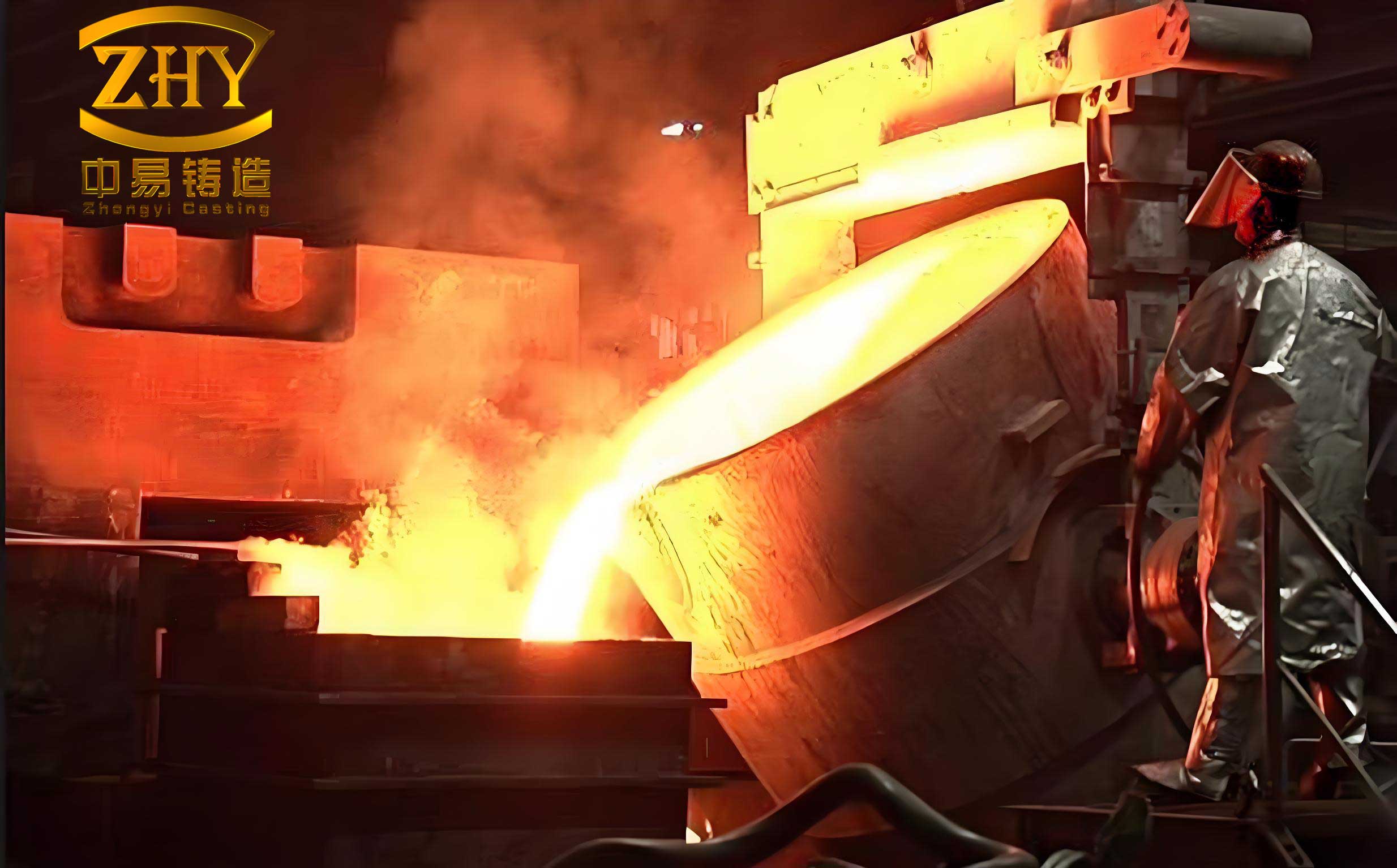
Casting process optimization was the most critical arena. The objective was to achieve sound, dense castings, particularly in the top working surfaces. Key advancements included:
- Advanced Feeding System Design: A combination of exothermic and insulating sleeves for risers was implemented. Their size, placement, and the complementary use of chilling were meticulously calibrated through iterative trials to ensure sequential solidification and eliminate shrinkage porosity in the main body of the frog.
- Surface Enhancement Techniques: To combat wear on the tread surface, two methods were employed. First, intensive chilling using iron blocks was applied to the mold at critical top surfaces. This rapid cooling refines the austenite grain size and increases subsurface density. Second, explosion hardening treatment was adopted for specific high-wear zones, pre-inducing a work-hardened layer to delay the onset of contact fatigue.
Metallurgical and Process Refinements
Superior performance starts with melt chemistry and treatment. Phosphorus (P) is a particularly pernicious element in high-manganese steel, forming a brittle phosphide eutectic network at grain boundaries when its content exceeds approximately 0.04%. This severely impairs toughness and fatigue resistance. Our countermeasures were twofold:
- Adopting an oxidative refining practice to remove phosphorus into the slag phase.
- Sourcing and using a specially graded, ultra-low phosphorus ferromanganese alloy (FeMn65C7-2-I grade) for the final alloying addition. This stringent control is non-negotiable for a quality-focused manganese steel casting foundry.
The impact of phosphorus on mechanical properties is stark, as shown below:
| Phosphorus Content (wt.%) | Tensile Strength (MPa) | Elongation (%) | Impact Toughness (J) |
|---|---|---|---|
| < 0.035 | ~850-900 | ~50-60 | ~250-300 |
| 0.04 – 0.06 | ~800-850 | ~35-45 | ~150-200 |
| > 0.07 | Sharp Decline | Sharp Decline | Sharp Decline |
To further enhance melt cleanliness and modify inclusion morphology, rare earth (RE) treatment was introduced. Adding RE elements (e.g., Ce) promotes the formation of small, globular, and stable oxy-sulfides instead of elongated, brittle manganese sulfides. This transformation, along with grain refinement and suppression of grain boundary carbides, significantly improves overall mechanical properties. The reaction can be simplified as:
$$ [MnS] + [RE] \rightarrow (RE)_xS_y + [Mn] $$
$$ 3[FeO] + 2[RE] \rightarrow (RE)_2O_3 + 3[Fe] $$
Where `[ ]` denotes elements in solution and `( )` denotes solid compounds.
Given the absence of full secondary refining, argon stirring in the ladle was implemented as a vital purification step. Bubbling inert argon gas through the melt promotes temperature and composition homogeneity, flotation of non-metallic inclusions, and degassing, resulting in a cleaner, more consistent liquid metal delivered to the casting molds.
Heat Treatment and Quality Assurance Evolution
Heat treatment, or water toughening, is the process that unlocks the potential of high-manganese steel. It involves heating the casting to a temperature where all carbides are dissolved into the austenite matrix (typically 1050-1100°C), holding for sufficient time, and then quenching rapidly in water to preserve the supersaturated, single-phase austenitic structure. We optimized this process by:
- Precisely controlling the solutionizing temperature and soak time based on section thickness.
- Improving charge stacking in the furnace for uniform heat penetration.
- Ensuring turbulent water flow in the quench tank for maximum cooling rate to prevent carbide reprecipitation.
The kinetics of carbide dissolution can be approximated by:
$$ \phi_{carbide}(t) = \phi_0 \cdot \exp(-k(T) \cdot t) $$
where $\phi_{carbide}(t)$ is the volume fraction of carbide at time $t$, $\phi_0$ is the initial fraction, and $k(T)$ is a temperature-dependent rate constant following an Arrhenius relationship.
A pivotal shift in non-destructive testing (NDT) was crucial for reliable quality assurance. While ultrasonic testing is common, the coarse as-cast grain structure of manganese steel causes severe scattering and attenuation of ultrasound, making defect sizing unreliable. We transitioned to high-energy X-ray real-time imaging, in line with international standards (UIC, AREA). This provides a clear, quantifiable picture of internal soundness, allowing for the confident release of defect-free products from the manganese steel casting foundry.
Results and Performance Validation
The culmination of these integrated improvements was subjected to the ultimate test: placement in the busiest corridors of the national network. The results were transformative. The first batch of 87 frogs, incorporating all optimizations, achieved an average lifespan of 173 MGT, with the majority exceeding 120 MGT. The standard deviation in service life was significantly reduced to 31.6 MGT, demonstrating remarkable consistency—a key indicator of process control maturity in the manganese steel casting foundry. This performance not only shattered the perceived 120 MGT ceiling but also proved competitive on the global stage, leading to successful, sustained exports to North America and other regions.
The success underscores a critical principle: the demanding operational environment of high-density, mixed passenger-freight traffic with heavy axle loads necessitates components of the highest integrity. While alternative materials like alloy steels have emerged, the unparalleled cost-to-performance ratio and proven durability of premium high-manganese steel frogs ensure their continued dominance for the vast majority of track applications. Furthermore, the characteristics of high-manganese steel—exceptional toughness and hardening under high-stress, lower-frequency impacts—align well with the performance requirements for high-speed rail applications, as evidenced by their use in advanced European systems. Therefore, the journey of innovation within the manganese steel casting foundry is far from complete. Continuous research into further refinement of metallurgy, precision casting techniques, and predictive performance modeling remains essential to meet the evolving challenges of global railway infrastructure.