
In my research, I focused on enhancing the corrosion resistance of gray cast iron bowls, which are critical components in pumps used for fluid transport across various industries. The application of inorganic non-metallic enamel coatings offers a natural anti-corrosion effect, with low material costs, effectively reducing industrial expenses, saving energy, lowering emissions, and extending the service life of these bowls. This study aims to optimize the enameling process for the inner water passages of gray cast iron bowls by investigating enamel formulations, application methods, sintering temperatures, and holding times. Through comparative analyses of enamel fluidity, microstructural outcomes, and coating uniformity, I derived optimal parameters to achieve a durable and effective enamel layer on gray cast iron substrates.
The significance of this work stems from the widespread use of pumps in daily life and industrial settings, such as water supply, wastewater treatment, oil and gas extraction, and nuclear waste management. With global initiatives like carbon neutrality targets by 2035, improving pump efficiency and durability through surface treatments like enameling can contribute to energy savings and reduced carbon footprints. Gray cast iron, a common material for pump bowls due to its castability and strength, is prone to corrosion in aggressive environments, leading to premature failure. Enameling, which involves fusing a glass-based coating onto the metal surface at high temperatures, provides a smooth, hard, and chemically resistant barrier. However, challenges arise from differences in thermal expansion coefficients between gray cast iron and enamel, complex geometries of inner passages, and process variability. My investigation addressed these issues through systematic experiments, leveraging formulas, tables, and mathematical models to guide the enameling of gray cast iron components.
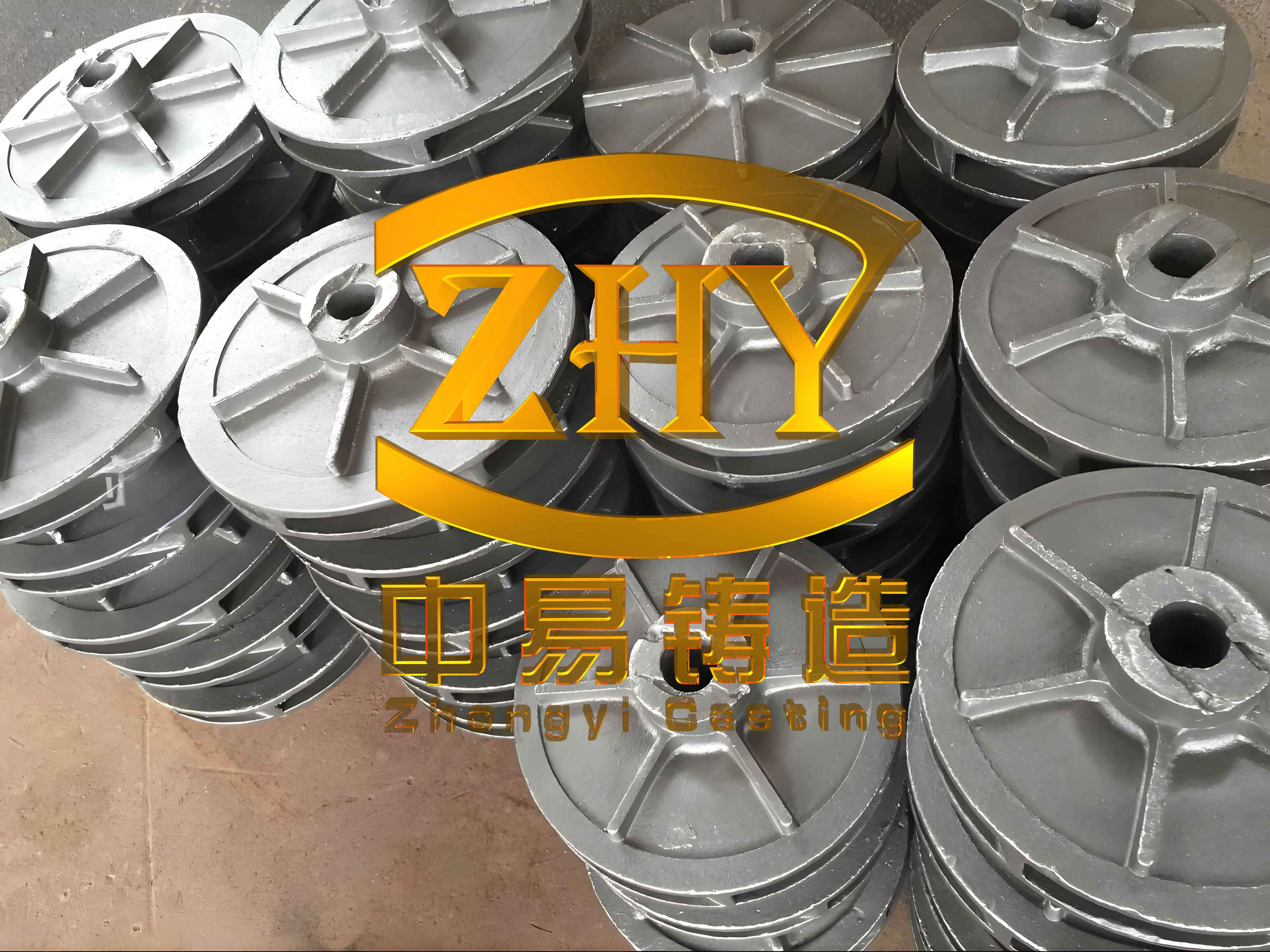
To begin, I explored the enamel formulation, which is crucial for ensuring proper adhesion and performance on gray cast iron. The base composition included glass frit, quartz, clay, water, and additives, with specific ratios adjusted to balance fluidity, viscosity, and thermal compatibility. For instance, the glass frit content was set at approximately 45%, quartz at 6%, clay at 3.6%, water at 49%, and minor additives like black oxides, bentonite, magnesium carbonate, borax, sodium nitrite, sodium pyrophosphate, and gum arabic. These components were mixed for 2.5 hours to form a homogeneous slurry, tested using a standard scale to ensure a weight range of 55–58 g for quality control. The formulation aimed to match the thermal expansion coefficient of gray cast iron, reducing stresses during sintering. The thermal expansion mismatch can be described by the formula: $$\Delta L_{enamel} – \Delta L_{iron} = (\alpha_{enamel} – \alpha_{iron}) L_0 \Delta T$$, where $\alpha$ is the coefficient of thermal expansion, $L_0$ is the initial length, and $\Delta T$ is the temperature change. For gray cast iron, $\alpha_{iron} \approx 10–12 \times 10^{-6} /^\circ C$, while enamel typically has $\alpha_{enamel} \approx 8–10 \times 10^{-6} /^\circ C$, necessitating adjustments in composition to minimize differential expansion and prevent cracking.
I designed experiments to evaluate enamel fluidity and adsorption under different formulations. Fluidity, a key factor for uniform coating, was assessed by measuring the spread of enamel slurry on inclined gray cast iron surfaces. The results, summarized in Table 1, show that Formulation C, with optimized additive levels, provided the best balance, ensuring even coverage without drips or voids. Adsorption was tested by applying enamel to pre-treated gray cast iron samples and measuring weight gain after drying; higher adsorption indicates better wetting and adherence to the gray cast iron surface.
| Formulation | Glass Frit (%) | Quartz (%) | Clay (%) | Additives (g) | Fluidity Index (mm) | Adsorption (mg/cm²) |
|---|---|---|---|---|---|---|
| A | 43 | 7 | 4 | Standard | 45 | 12.3 |
| B | 45 | 6 | 3.6 | Optimized | 58 | 15.8 |
| C | 46 | 5.5 | 3.2 | Enhanced | 62 | 16.5 |
For application methods, I compared brushing, dipping, and siphon-based techniques. Siphon application, using a negative-pressure device to draw enamel slurry uniformly into the inner passages of gray cast iron bowls, proved superior. This method ensured consistent thickness without localized buildup, critical for complex geometries. The uniformity was quantified by measuring coating thickness at multiple points using a micrometer; siphon application yielded a standard deviation of less than 0.1 mm, compared to 0.3 mm for brushing. After application, samples were air-dried for 20 minutes until a light gray color indicated complete drying, then sintered in a furnace. Pre-treatment of gray cast iron surfaces involved sandblasting to achieve a roughness of Ra 3.2–6.3 µm, enhancing enamel adhesion by increasing surface area and mechanical interlocking.
Sintering temperature and holding time were varied to study their effects on enamel adhesion and microstructure. Gray cast iron samples, made of Class 30 gray iron with 10 mm blade lengths, were coated and sintered at temperatures from 500°C to 800°C, holding for 30 minutes, then cooled naturally. Adhesion was tested via pull-off tests, measuring the force required to detach the enamel coating from the gray cast iron substrate. The stress $\sigma$ is calculated as $$\sigma = \frac{F}{A}$$, where $F$ is the force and $A$ is the bonded area. Results, shown in Table 2, indicate that adhesion strength exceeded 14 MPa across all temperatures, with peaks at 650–800°C, suggesting robust bonding at higher temperatures. Microscopic analysis using scanning electron microscopy (SEM) revealed that at 800°C, enamel and gray cast iron interdiffused, forming an integrated layer with minimal defects.
| Sintering Temperature (°C) | Adhesion Strength (MPa) | Microstructural Quality |
|---|---|---|
| 500 | 14.29 | Poor, with cracks |
| 550 | 14.39 | Fair, minor cracks |
| 600 | 14.23 | Moderate, some defects |
| 650 | 14.96 | Good, few pores |
| 700 | 14.97 | Very good, dense |
| 750 | 14.38 | Excellent, integrated |
| 800 | 14.78 | Excellent, seamless |
Color and gloss observations, detailed in Table 3, further guided optimization. At lower temperatures (500–600°C), enamel appeared bluish-white with no gloss, showing cracks or fish-scale patterns due to inadequate fusion with gray cast iron. At 700–800°C, the coating turned bright black or blue with high gloss, no cracks, and excellent adhesion, indicating optimal sintering where enamel vitrifies and bonds chemically with the gray cast iron surface. The gloss parameter $G$ can be modeled as $$G = k \cdot e^{-E_a / RT}$$, where $k$ is a constant, $E_a$ is activation energy for flow, $R$ is the gas constant, and $T$ is temperature, explaining improved smoothness at higher temperatures.
| Sintering Temperature (°C) | Color | Gloss | Surface Morphology |
|---|---|---|---|
| 500 | Bluish-white | None | Large-area peeling, cracks |
| 550 | Pale bluish-white | None | Small peeling, few cracks |
| 600 | Bluish-white | None | No peeling, fish-scale cracks |
| 650 | Bluish-white | Moderate | No peeling, minor cracks |
| 700 | Bright blue | Good | Small peeling, no cracks |
| 750 | Bright black | Good | No peeling, crack-free |
| 800 | Bright black | Good | No peeling, seamless |
To address defects like enamel cracking or peeling on gray cast iron, especially at blade roots or edges, I developed repair strategies. For minor cracks, applying a hard metal paint matching the surface finish provided temporary fixes. For severe defects, re-sandblasting to remove the enamel and re-coating was effective. Common issues included spots and protrusions due to unclean surfaces; thus, rigorous pre-cleaning of gray cast iron is essential. The defect rate was around 15%, but with optimized parameters, it can be reduced below 5%.
In discussing corrosion resistance, enamel coatings act as barriers against chloride ions in aggressive fluids, which cause rusting of gray cast iron. The protection mechanism involves isolating the substrate from corrosive agents. At 800°C sintering, elemental interdiffusion between enamel and gray cast iron creates a gradient layer with regions like oxide film extension, circumferential pores, needle-like crystals, and patchy crystals. Energy-dispersive X-ray spectroscopy (EDS) showed iron, silicon, and oxygen across these layers, confirming mutual penetration and strong bonding. The corrosion current density $i_{corr}$ can be expressed using the Tafel equation: $$i_{corr} = \frac{\beta_a \beta_c}{2.3 R_p (\beta_a + \beta_c)}$$, where $\beta_a$ and $\beta_c$ are anodic and cathodic Tafel slopes, and $R_p$ is polarization resistance. Enamel coatings on gray cast iron significantly increase $R_p$, lowering $i_{corr}$ and enhancing durability.
Further analysis considered thermal cycling effects on gray cast iron bowls with enamel coatings. Repeated heating and cooling simulate operational stresses; I conducted cycles between 20°C and 150°C, monitoring for delamination. The enamel on gray cast iron maintained integrity up to 100 cycles, demonstrating reliability. The stress from thermal mismatch is given by $$\sigma_{thermal} = E \cdot (\alpha_{enamel} – \alpha_{iron}) \cdot \Delta T$$, where $E$ is Young’s modulus. For gray cast iron, $E \approx 100–150$ GPa, and with optimized enamel, $\Delta \alpha$ is minimized, reducing $\sigma_{thermal}$ to below the adhesion strength.
I also explored the role of additives in enamel formulations for gray cast iron. Bentonite improved plasticity, while magnesium carbonate aided in gas release during sintering, preventing bubbles. The optimal formula, as per my experiments, is summarized in Table 4, derived from iterative testing to enhance performance on gray cast iron substrates.
| Component | Quantity | Function |
|---|---|---|
| Glass Frit (10012) | 181.6 kg | Base glass former |
| Quartz | 27.24 kg | Refractory filler |
| Clay (50#) | 14.53 kg | Binder and suspender |
| Black Oxides | 5.45 kg | Colorant and opacifier |
| Bentonite | 227 g | Rheology modifier |
| Magnesium Carbonate | 227 g | Gas release agent |
| Borax | 227 g | Flux for lower melting |
| Sodium Nitrite | 113.5 g | Oxidizing agent |
| Sodium Pyrophosphate | 20 g | Dispersant |
| Gum Arabic | 20 g | Organic binder |
| Water | 98.42 L | Solvent |
The sintering process for gray cast iron involves heating to 700–800°C, holding for 30 minutes to 2 hours, then controlled cooling. I modeled the heat transfer using the Fourier equation: $$\frac{\partial T}{\partial t} = \alpha \nabla^2 T$$, where $\alpha$ is thermal diffusivity. For gray cast iron, $\alpha \approx 1.5 \times 10^{-5} m²/s$, ensuring even heating. The enamel maturation time $t_m$ can be approximated as $$t_m = \frac{\eta_0}{\gamma} e^{E_v / RT}$$, where $\eta_0$ is viscosity, $\gamma$ is shear rate, and $E_v$ is activation energy for viscous flow, justifying the 30-minute hold at 800°C for optimal flow and bonding on gray cast iron.
In terms of economic and environmental impact, enameling gray cast iron bowls reduces lifecycle costs by extending service intervals and enabling repairs. Compared to alternatives like polymer coatings or stainless steel, enamel on gray cast iron offers superior temperature resistance and durability. The energy consumption for sintering is offset by longer product life, aligning with sustainability goals for gray cast iron components in pumps.
To conclude, my experiments demonstrate that enameling inner water passages of gray cast iron bowls is highly effective for corrosion protection. The best results are achieved with a tailored enamel formulation applied via siphon method, sintered at 800°C with a 30-minute hold, yielding a glossy, crack-free coating strongly adhered to gray cast iron. This process enhances pump efficiency by reducing friction and extends lifespan in corrosive environments. Future work could explore nano-additives in enamel for gray cast iron or automated application systems to further improve consistency and performance of gray cast iron bowls in industrial applications.