
In my extensive experience within the dissolving pulp industry, I have consistently encountered two critical challenges that significantly impact product quality: the instability of reaction performance and the elevated levels of ash and iron content, which I often refer to as the ‘grey cast iron’ problem due to its persistent and troublesome nature, reminiscent of impurities found in metallurgical casting. The rapid expansion of dissolving pulp capacity in recent years has intensified competition, making superior product quality a paramount concern for maintaining a competitive edge. This article delves into a comprehensive analysis of the factors influencing these issues and presents detailed control measures, drawing upon practical insights and theoretical frameworks. I will emphasize the role of process uniformity and impurity management, with a particular focus on mitigating ‘grey cast iron’ content—a term I use metaphorically to underscore the tenacious iron-based contaminants that plague the process.
The reaction performance of dissolving pulp is a holistic metric defining its suitability for subsequent chemical processing, such as in viscose rayon production. It essentially measures the pulp’s ability to uniformly react with alkali to form alkali cellulose and then with carbon disulfide to produce cellulose xanthate, with good filterability being a key indicator. Poor reaction performance leads to uneven alkalization and sulfonation, difficult filtration, and ultimately, spinning problems in fiber manufacturing. Meanwhile, high levels of ash and iron—what I collectively term the ‘grey cast iron’ burden—can catalyze undesirable degradation reactions, discolour the final product, and interfere with chemical processes. Controlling these ‘grey cast iron’ elements is as crucial as managing the reactivity itself.
Fundamental Factors Affecting Reaction Performance
From my observations, the reaction performance is governed by several interconnected factors. Primarily, it depends on the morphological and chemical uniformity of the cellulose fibers. The key influences I have identified are:
- Raw Material Homogeneity: Variations in wood species, age, growth conditions, and soil composition lead to inherent inconsistencies in fiber structure and chemical composition, directly affecting the uniformity of subsequent processing.
- Fiber Morphological Structure: The degree and uniformity of the primary wall destruction during pulping. Efficient removal or disruption of the primary wall is essential for reagent accessibility to the crystalline cellulose.
- Separation of Fines and Non-Cellulosic Components: This is closely related to the alpha-cellulose content. A higher alpha-cellulose content generally indicates better removal of hemicellulose and other impurities, promoting better reactivity. The presence of fines can hinder uniform chemical penetration.
- Uniformity of Polymerization Degree (DP) Distribution: Dissolving pulp requires a controlled and narrow molecular weight distribution. For viscose grade pulp, the intrinsic viscosity is typically maintained at $$500 \pm 20 \text{ ml/g}$$, corresponding to a DP range of approximately 200 to 1200. A broad DP distribution often correlates with poor and uneven reactivity.
The pursuit of uniformity is therefore the central theme in optimizing reaction performance. The production process must be meticulously designed and controlled to minimize variability at every stage, much like how controlling the melt composition is critical to prevent defects in ‘grey cast iron’ casting.
Process Control Strategies for Enhanced Reaction Performance
Based on my work, improving reaction performance requires an integrated approach from woodyard to bleaching. Relying on post-treatment additives like V388 or LV3 is a costly and non-fundamental solution. The following measures target the root causes:
1. Raw Material and Chip Feeding
Consistency starts at the beginning. I advocate for using wood from similar species, age, and geographical origin to minimize natural variation. Furthermore, segregating and separately processing sawdust (‘pins’) from chips is crucial, as their physical form affects penetration and reaction kinetics. Controlling the packing density in the digester and using low-pressure steam to evacuate air from chips promotes uniform liquor penetration, reducing localized over-cooking and oxidative degradation of cellulose under high temperature alkaline conditions.
2. Pre-Hydrolysis Stage
Pre-hydrolysis is arguably the most critical step for determining final pulp reactivity, as it selectively removes hemicelluloses. The intensity of this stage is quantified using the P-factor, which integrates time and temperature based on the activation energy for hemicellulose removal. The P-factor is calculated as:
$$P\text{-factor} = \int_0^t k_T\, dt = \int_0^t e^{(43.2 – \frac{15106}{T})} \, dt$$
where \( t \) is time in hours, \( T \) is temperature in Kelvin, and the activation energy is 125.6 kJ/mol. An optimal P-factor must be identified; too low leaves excessive hemicellulose, while too high can cause lignin condensation, making subsequent delignification harder and potentially degrading cellulose uniformity. For eucalyptus, for instance, a P-factor around 800 is often effective. The table below illustrates how different P-factors and H-factors (for kraft cooking) affect pulp properties after cooking and bleaching.
| Run No. | P-factor / H-factor | After Cooking | After Bleaching | ||||||
|---|---|---|---|---|---|---|---|---|---|
| Alpha-Cellulose (%) | Yield (%) | Pentosan (%) | Viscosity (ml/g) | Alpha-Cellulose (%) | Pentosan (%) | Brightness (%ISO) | Viscosity (ml/g) | ||
| 1 | 471 / 1262 | 95.9 | 38.77 | 3.97 | 663 | 94.2 | 3.88 | 85.2 | 324 |
| 2 | 642 / 720 | 96.9 | 39.70 | 3.31 | 874 | 97.2 | 2.53 | 90.78 | 604 |
| 3 | 1410 / 720 | 96.7 | 36.34 | 2.11 | 725 | 96.7 | 2.11 | 87.22 | 522 |
This table shows that beyond a certain point, increasing the P-factor yields diminishing returns in pentosan removal and can even reduce brightness and viscosity uniformity, akin to how excessive heat treatment can worsen the structure of ‘grey cast iron’.
3. Kraft Cooking Stage
Cooking must complete delignification while preserving cellulose integrity and uniformity. I recommend a modified continuous or batch cooking profile with careful control. The liquor circulation during heating and the use of a low-temperature black liquor displacement at the end of the cook are vital for terminating reactions uniformly. The H-factor, governing the delignification kinetics, is calculated as:
$$H\text{-factor} = \int_0^t k_T\, dt = \int_0^t e^{(43.2 – \frac{16113}{T})} \, dt$$
with an activation energy of 134.0 kJ/mol. Stabilizing the target H-factor and using a displacement wash helps achieve consistent pulp properties batch-to-batch, reducing the variability that harms reaction performance.
4. Washing, Screening, and Bleaching
Unlike paper pulp, dissolving pulp requires extensive removal of dissolved solids, fines, and metal ions. I prefer using a combination of pressing and displacement washing equipment, such as twin-roll presses followed by DD washers. Increasing the washing factor and employing deionized water in the final washing stage significantly reduces impurities. Bleaching serves not only to brighten but also to adjust and homogenize the viscosity (DP). A typical sequence like O-D0-EOP-D1-PO allows for controlled viscosity reduction. The oxygen delignification (O), oxygen-enhanced alkaline extraction (EOP), and oxygen-reinforced peroxide (PO) stages are most effective for viscosity adjustment. Adding bleaching agents early in the stage, at lower temperatures, and with good mixing promotes uniform reaction across the fiber population. The following table details viscosity drops across a typical O-D0-EOP-D1-PO sequence, highlighting where DP uniformity is actively managed.
| Sample Point | Viscosity (ml/g) – Average of Multiple Trials | Viscosity Drop in Stage (ml/g) |
|---|---|---|
| Inlet to O Stage | 569 | – |
| Outlet from O Stage | 569 | 0 (Primarily delignification) |
| Inlet to D0 Stage | 600 | – |
| Outlet from D0 Stage | 495 | 105 |
| Inlet to EOP Stage | 486 | – |
| Outlet from EOP Stage | 438 | 48 |
| Inlet to D1 Stage | 559 | – |
| Outlet from D1 Stage | 496 | 63 |
| Inlet to PO Stage | 486 | – |
| Outlet from PO Stage | 438 | 48 |
| Total Viscosity Reduction from Cooked Pulp to Final Bleached Pulp | ~162 ml/g | |
This controlled, multi-stage reduction is essential for achieving a uniform DP distribution, just as precise cooling rates are needed to control the graphite flake formation in ‘grey cast iron’.
The Persistent Challenge of ‘Grey Cast Iron’ Content
I use the term ‘grey cast iron’ content symbolically to represent the combined burden of ash (inorganic salts) and iron ions in the pulp. These contaminants, particularly iron, act similarly to impurities in molten ‘grey cast iron’, seeding unwanted reactions and causing defects. High levels can catalyze cellulose degradation during bleaching and drying, reduce brightness, and impair the viscose process. The sources are multifactorial.
1. Influencing Factors for High ‘Grey Cast Iron’ Content
- Raw Material: Wood inherently contains minerals and iron. Bark, soil contamination, and metal wear from harvesting equipment contribute significantly. Sawdust (‘pins’) often has higher contaminant loads than chips.
- Process Water and Chemicals: White liquor, black liquor, and wash water can carry dissolved and suspended solids rich in calcium, magnesium, and iron. Recirculated process waters accumulate these ions.
- Equipment Corrosion: The acidic pre-hydrolysis liquor (pH 3-4) and chlorine dioxide bleaching stages are highly corrosive. Carbon steel equipment can leach iron ions into the pulp slurry, directly contributing to the ‘grey cast iron’ problem.
- Inefficient Washing and Removal: Inadequate washing after acidic stages or inefficient screening/cleaning fails to remove colloidal and dissolved impurities.
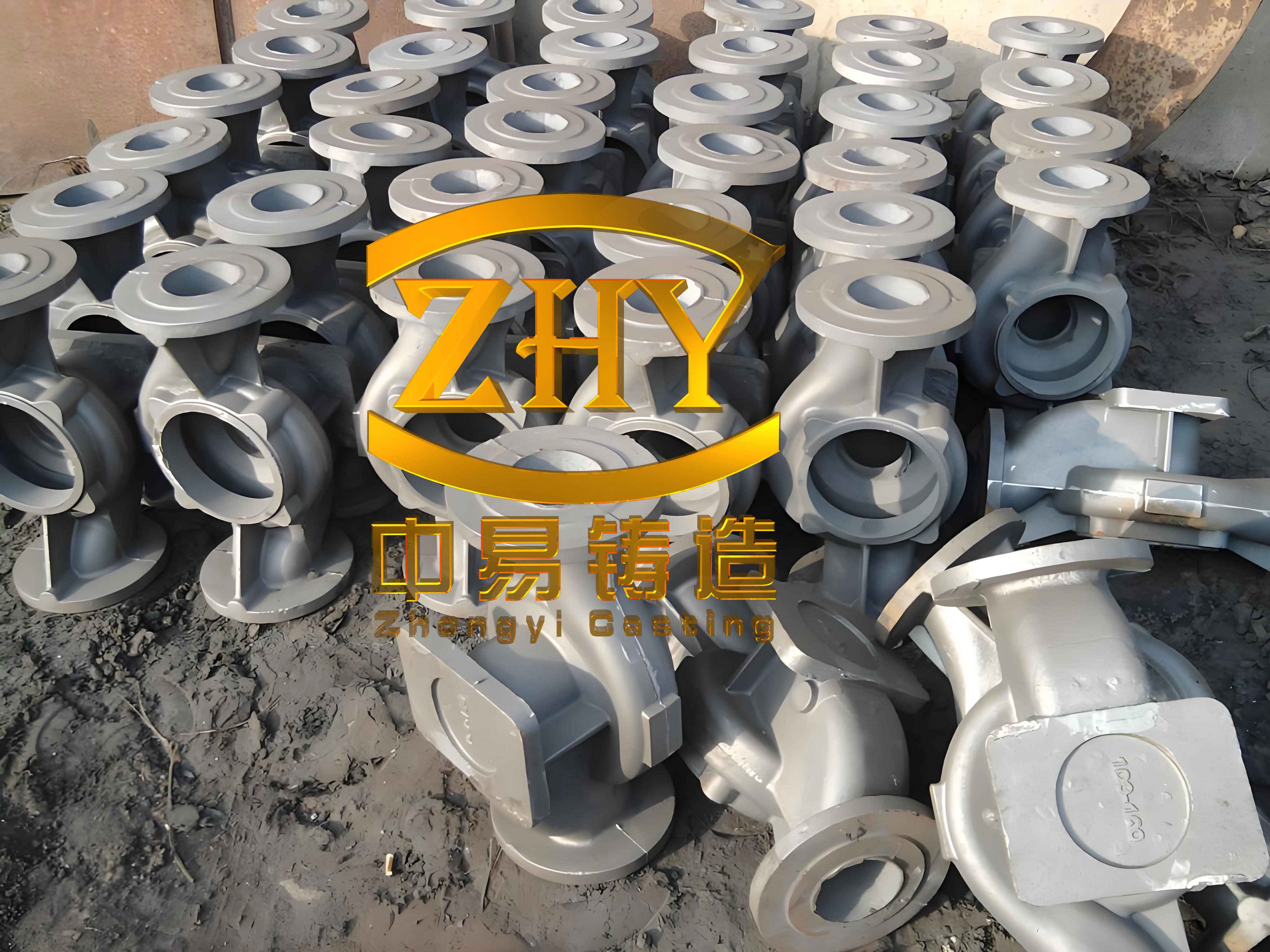
The visual below, while depicting metallurgical ‘grey cast iron’, serves as a powerful analogy for the intrusive, pervasive nature of iron contaminants in our pulp system. Just as the graphite flakes define the structure of ‘grey cast iron’, iron ions can become intricately bound within the fiber matrix.
2. Control Measures to Reduce ‘Grey Cast Iron’ Content
Combating high ‘grey cast iron’ content requires a source-control strategy, mirroring the precision needed in foundry charge preparation.
A. Raw Material Management: Implement strict woodyard cleanliness. Use washing for chips and pins to remove adherent dirt and sand. Magnetic separators are essential to remove tramp metal. The table below demonstrates the effectiveness of washing on contaminant levels for eucalyptus feedstock.
| Material | Treatment | Ash Content (%) | Reduction in Ash | Iron Content (mg/kg) | Reduction in Iron |
|---|---|---|---|---|---|
| Chips | Unwashed | 0.43 | 13.95% | 22 | 40.91% |
| Washed with DI water | 0.37 | 13 | |||
| Pins (Sawdust) | Unwashed | 0.50 | 16.00% | 59 | 52.54% |
| Washed with DI water | 0.42 | 28 |
B. Process Equipment and Design: Specify corrosion-resistant materials for all equipment contacting acidic or oxidizing liquors. This includes using stainless steel (e.g., 316L), fiber-reinforced plastics (FRP), or specialized alloys for digesters, piping, washers, and bleach tower internals. This directly prevents iron dissolution, the core of the ‘grey cast iron’ issue. Furthermore, optimize the efficiency of cleaning systems like centrifugal cleaners (e.g., a three-stage primary cleaning setup) to remove dense, inorganic particles.
C. Water and Chemical Quality:
- White Liquor: Clarify and filter white liquor to reduce suspended solids and calcium carbonate content. This improves the effective alkali concentration and reduces scaling, which can harbor iron compounds.
- Black Liquor Management: Maximize washing efficiency to minimize the carryover of black liquor solids, which are rich in inorganic elements, into subsequent stages. This reduces the recirculation load of ‘grey cast iron’ precursors.
- Process Water: Use deionized or soft water for final pulp washing, especially after the acid (D0) and peroxide stages. Regularly purge and refresh white water systems in the sheet-forming area to prevent the accumulation of dissolved metals.
D. Enhanced Washing Practices: The choice of wash water has a profound impact, as shown in the following data comparing tap water and deionized (DI) water at different process stages.
| Process Stage | Wash Water Type | Ash Content in Pulp (%) | Iron Content in Pulp (mg/kg) |
|---|---|---|---|
| After Cooking | Tap Water | 0.57 | 44 |
| Deionized Water | 0.51 | 29 | |
| After D0 Stage | Tap Water | 0.29 | 50 |
| Deionized Water | 0.26 | 40 | |
| After Final Bleaching (PO) | Tap Water | 0.13 | 47 |
| Deionized Water | 0.10 | 27 |
This table starkly illustrates that while ash content decreases through the process, iron content can remain stubbornly high if inappropriate wash water is used. Deionized water consistently delivers lower iron levels, directly attacking the ‘grey cast iron’ component. The persistence of iron from cooking to finished pulp under tap water washing suggests either water contamination or strong adsorption of iron ions onto fines and fibers, a problem analogous to the segregation of carbon in ‘grey cast iron’.
Integrated Process Modeling and Advanced Considerations
To synthesize these control strategies, I often employ simple kinetic models to predict key parameters. For instance, the overall degradation of cellulose viscosity during bleaching can be approximated by a pseudo-first-order reaction relative to an oxidizing agent’s concentration. The rate constant \( k \) is temperature-dependent via the Arrhenius equation:
$$k = A e^{(-E_a / RT)}$$
where \( A \) is the pre-exponential factor, \( E_a \) is the activation energy, \( R \) is the gas constant, and \( T \) is the absolute temperature. Controlling temperature and residence time based on such models helps achieve targeted, uniform viscosity reduction.
Furthermore, the relationship between ‘grey cast iron’ content (specifically iron ions, \( Fe^{2+}/Fe^{3+} \)) and catalytic cellulose degradation during peroxide bleaching can be described. Iron catalyzes the decomposition of hydrogen peroxide into hydroxyl radicals (\(\cdot OH\)):
$$Fe^{2+} + H_2O_2 \rightarrow Fe^{3+} + OH^- + \cdot OH$$
$$Fe^{3+} + H_2O_2 \rightarrow Fe^{2+} + H^+ + \cdot HO_2$$
These radicals attack cellulose chains, causing depolymerization. Therefore, the rate of viscosity loss (\(-dV/dt\), where \( V \) is viscosity) can be correlated with iron concentration \([Fe]\) and peroxide concentration \([P]\):
$$-\frac{dV}{dt} \propto [Fe]^{m}[P]^{n}$$
where \( m \) and \( n \) are reaction orders. This underscores why minimizing the ‘grey cast iron’ load is not just about product purity but is essential for predictable process chemistry.
The economic impact of these control measures can be summarized in a cost-benefit analysis framework. While investments in corrosion-resistant materials and deionized water systems increase capital and operating costs, they reduce chemical consumption (e.g., peroxide, stabilizers), improve yield by reducing cellulose degradation, eliminate the need for expensive reactivity additives, and enhance product value. The following table presents a simplified qualitative analysis.
| Control Measure | Primary Cost Impact | Primary Benefit Impact | Net Effect on ‘Grey Cast Iron’ & Reactivity |
|---|---|---|---|
| Raw Material Washing & Sorting | Increased water/energy use, capital for washing lines | Lower contaminant load, more uniform cooking, reduced bleaching chemical use | Direct reduction in ‘grey cast iron’ source; improved homogeneity aids reactivity. |
| Stainless Steel Equipment | Higher capital investment | Eliminates iron dissolution, reduces maintenance, extends equipment life | Fundamental elimination of a major ‘grey cast iron’ source. |
| Deionized Water Systems | Capital for ion-exchange/RO, operational energy/chemicals for regeneration | Significantly lowers ash and iron in pulp, improves bleaching efficiency and control | Direct reduction in ionic ‘grey cast iron’ content throughout the process. |
| Optimized Washing & Screening | Potential for larger equipment, higher pump capacities | Better removal of fines and dissolved solids, higher alpha-cellulose, more uniform pulp | Reduces ‘grey cast iron’ carriers (fines) and improves fiber wall accessibility for reaction. |
| Precise P-factor & H-factor Control | Investment in advanced process control systems | Superior pulp uniformity, consistent viscosity and pentosan content, predictable reactivity | Addresses the root cause of reaction performance variability, independent of ‘grey cast iron’ but crucial for quality. |
Conclusion and Future Perspectives
In my professional judgment, mastering the production of high-quality dissolving pulp hinges on two pillars: ensuring absolute uniformity in fiber processing and relentlessly pursuing the minimization of impurities, particularly the ‘grey cast iron’ complex of ash and iron. The strategies outlined—from raw material homogenization and controlled pre-hydrolysis to corrosion-resistant engineering and purified water usage—form an interdependent system. One cannot hope to achieve stable, excellent reaction performance while ignoring the insidious effects of high ‘grey cast iron’ content, just as one cannot produce sound ‘grey cast iron’ castings with uncontrolled melt chemistry and poor inoculation.
Looking ahead, the industry must move beyond empirical corrections and embrace more sophisticated online monitoring and control. Real-time sensors for pulp viscosity, metal ion concentration (especially iron), and fiber morphology could enable closed-loop control of the bleaching and washing stages, dynamically adjusting conditions to counteract variability. Furthermore, the development of novel, selective chelating agents or adsorbents that target iron ions without affecting cellulose could provide an additional tool to scrub the final pulp of ‘grey cast iron’ residues. Biotechnology also holds promise, with engineered enzymes designed to modify hemicellulose or lignin more uniformly during pre-hydrolysis, potentially reducing the severity required and the associated risk of generating impurities. The principles of quality control learned from battling ‘grey cast iron’ in pulp are universally applicable: know your sources, protect your process stream from contamination, and measure and control with precision at every step. This holistic, disciplined approach is the key to producing dissolving pulp that consistently meets the stringent demands of modern chemical fiber industries.