
The pursuit of higher machining accuracy, efficiency, and long-term reliability in modern manufacturing has placed unprecedented demands on the foundational components of machine tools. As a core material, conventional gray cast iron often falls short of meeting the rigorous requirements for high strength, low stress, high rigidity, and high elastic modulus. This article details the comprehensive production technology and control measures we developed and implemented to stably manufacture high-strength synthetic gray iron castings, specifically for high-end machine tool casting applications. The target was a bed component with stringent specifications, including a tensile strength exceeding 300 MPa, a predominantly pearlitic matrix (≥98%), and a uniform A-type graphite distribution.
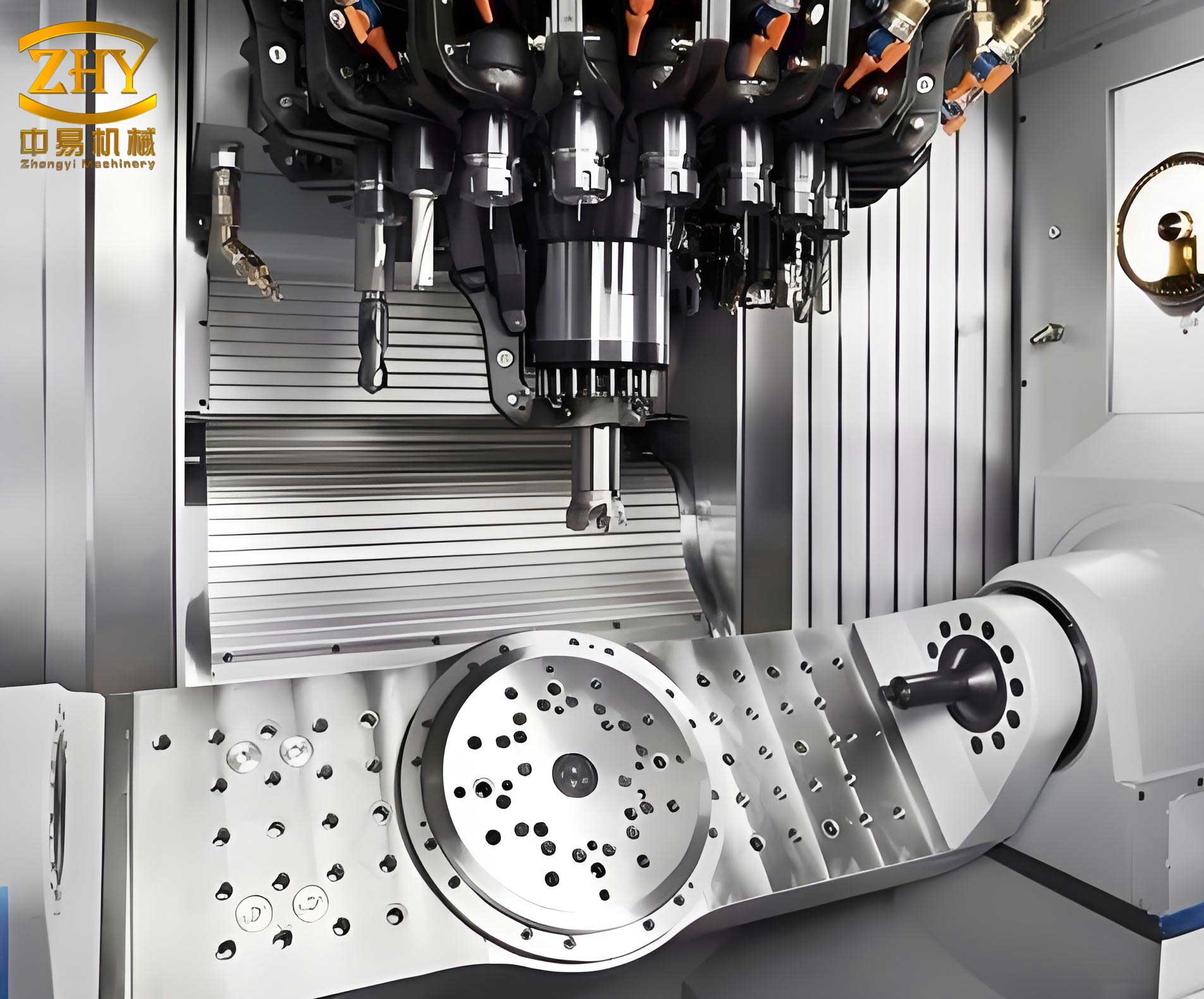
The performance and integrity of a machine tool casting are fundamentally dictated by its metallurgical structure. For critical components like bedways and bases, the requirements extend beyond basic strength. We targeted a microstructure consisting of undirected, uniformly distributed A-type graphite with a length of 3-6 (according to standard charts). The matrix was required to be at least 98% pearlite to ensure high wear resistance and stability. Mechanically, the castings needed a tensile strength (Rm) ≥ 300 MPa, a bulk Brinell hardness between 190-210 HB, and a Shore hardness (HS) of 32-38. A subsequent flame or induction hardening process for the guideway sections further necessitated exceptional microstructural homogeneity and consistency throughout the entire machine tool casting to prevent distortion and achieve uniform hardness penetration.
1. Foundry Process Design and Control Strategy
To achieve the target specifications reliably, we focused our control on four interconnected pillars: precise chemical composition, strict charge and melting practice, proactive gas content management, and a tailored inoculation process.
1.1 Selection and Control of Chemical Composition
The chemical composition is the primary lever for controlling the properties of gray iron. Carbon Equivalent (CE) plays a pivotal role; a higher CE promotes better castability, damping capacity, and reduced shrinkage tendency but typically lowers strength and hardness. Our strategy was to employ a moderately high CE combined with low-alloy additions to achieve the necessary strength without compromising other vital foundry characteristics.
Given the requirement for guideway hardening, we selected Copper (Cu) and Tin (Sn) as alloying elements. Copper strengthens the pearlite matrix and refines graphite, while Tin is a potent pearlite promoter, ensuring a fully pearlitic matrix even in slower-cooling sections. A critical rule was established to prevent embrittlement: the combined alloy factor must satisfy:
$$Cu + 10 \times Sn \leq 0.8\%$$
To ensure consistency across every machine tool casting, we enforced tight compositional tolerances: ±0.05% for C, Si, and Mn. The finalized composition range was as follows:
- Carbon (C): 3.1% – 3.3%
- Silicon (Si): 1.6% – 1.9%
- Manganese (Mn): 0.8% – 1.0%
- Sulfur (S): 0.06% – 0.10%
- Phosphorus (P): < 0.05%
- Copper (Cu): 0.5% – 0.6%
- Tin (Sn): 0.02% – 0.03%
The Carbon Equivalent for this composition can be calculated using the standard formula:
$$CE = C + \frac{1}{3}(Si + P)$$
For our target median values (C=3.2%, Si=1.75%, P=0.03%), the CE is approximately 3.79%, which is in the desired range for producing high-strength irons with good castability.
1.2 Charge Makeup and Melting Practice
We adopted a synthetic iron approach using a medium-frequency induction furnace (2-ton capacity). The charge consisted primarily of high-quality low-residual steel scrap (55-65%), returns from the same grade (25-30%), and precise additions of carburizers. This method minimizes the “inheritance effect” from pig iron and drastically reduces the introduction of detrimental trace elements like Titanium (Ti) and Lead (Pb).
The carburizing package was crucial. We used a blend of semi-graphitic recarburizer (1.0-1.3%) and metallurgical-grade silicon carbide (SiC, 0.6-1.2%, 2-9 mm grain size). SiC acts as a potent preconditioner; it decomposes in the molten iron, providing both carbon and silicon while generating numerous, finely dispersed heterogeneous nucleation sites. This effectively reduces the undercooling tendency of the iron melt, favoring the formation of A-type graphite and promoting a more complete graphitization process, counteracting the reduced nucleation sites typical of electric furnace melting.
The tapping temperature was strictly controlled between 1500°C and 1520°C. Following tapping, the melt was held at a high temperature for 3-5 minutes. The electromagnetic stirring action inherent to the induction furnace facilitated the flotation and removal of non-metallic inclusions and dissolved gases, thereby enhancing the overall metallurgical quality and fluidity of the iron, a critical factor for producing sound, dense machine tool casting sections.
1.3 Management of Gas Content
Control of interstitial elements, particularly Nitrogen (N), is vital in high-quality gray iron production. Nitrogen acts as a micro-alloying element; it can blunt graphite tips, refine eutectic cells, increase pearlite content and micro-hardness, thereby improving mechanical properties. However, excess nitrogen (>120 ppm) leads to subsurface pinhole porosity. The primary sources of N are the steel scrap and carburizers.
We implemented a proactive control strategy by sourcing raw materials with certified low nitrogen levels. The recarburizer and SiC were specified to have a nitrogen content ≤ 500 ppm. Through routine monitoring using an oxygen/nitrogen analyzer, we maintained the final iron’s nitrogen content within an optimal window of 50-100 ppm. Oxygen (O) content, though less studied, was also monitored. Based on our empirical data, maintaining oxygen levels between 10-40 ppm correlates with favorable graphite morphology and overall casting soundness in a machine tool casting.
1.4 Inoculation Strategy
A two-stage inoculation process was employed to guarantee effective and lasting nucleation throughout the solidification of the heavy-section machine tool casting.
- Primary Inoculation: At the furnace spout during tapping, a Ca-Ba-Si-Fe based长效孕育剂 (long-lasting inoculant) was added at 0.4-0.6% (3-8 mm grain size). Barium (Ba) significantly enhances graphitization potential and provides a sustained inoculation effect, which is crucial for preventing chill in thicker sections and ensuring a uniform A-type graphite structure.
- Secondary (Stream) Inoculation: During mold pouring, a fine-grade ferrosilicon (75% Si, 0.2-0.7 mm) was added at 0.05-0.1% via a calibrated feeder. This late inoculation step introduces fresh, active nucleation sites just before solidification, counteracting any fading effects from the primary treatment and ensuring the highest possible nodule count for maximum strength and uniformity.
2. Product Trial and Comprehensive Result Analysis
The castings were produced using a no-bake resin sand molding process. A bottom-gating system with side runners was designed to ensure a smooth, non-turbulent fill, promoting temperature uniformity and reducing the risk of slag entrainment in the final machine tool casting. Five separate furnace melts were conducted under the specified process controls.
2.1 Chemical and Gas Analysis
Samples from each of the five melts were analyzed using optical emission spectrometry and an O/N analyzer. The results, presented in Table 1, demonstrate exceptional control. All elemental concentrations, including the critical Cu and Sn levels, were within the narrow target bands. The combined alloy factor (Cu+10Sn) remained well below the 0.8% limit. Most importantly, the gas contents (O and N) were consistently maintained within the prescribed optimal ranges.
| Melt No. | Chemical Composition (wt.%) | Gas Content (ppm) | |||||||
|---|---|---|---|---|---|---|---|---|---|
| C | Si | Mn | P | S | Cu | Sn | O | N | |
| 1 | 3.14 | 1.72 | 0.857 | 0.028 | 0.071 | 0.65 | 0.022 | 15 | 63 |
| 2 | 3.12 | 1.69 | 0.887 | 0.015 | 0.077 | 0.60 | 0.025 | 13 | 57 |
| 3 | 3.17 | 1.64 | 0.840 | 0.021 | 0.061 | 0.61 | 0.023 | 17 | 67 |
| 4 | 3.15 | 1.70 | 0.861 | 0.020 | 0.080 | 0.64 | 0.021 | 24 | 61 |
| 5 | 3.13 | 1.69 | 0.878 | 0.018 | 0.078 | 0.61 | 0.022 | 23 | 53 |
2.2 Mechanical Properties and Microstructure Evaluation
Separately cast test bars (for tensile testing) and samples from the actual castings (for hardness and microstructure) were evaluated. The results are consolidated in Table 2. The tensile strength of the test bars significantly exceeded the 300 MPa requirement, ranging from 365 MPa to 395 MPa. The hardness of both test bars and castings met the specified ranges. Metallographic examination confirmed the target microstructure: A-type graphite uniformly distributed at a size of 4, with a pearlite content exceeding 98% in all samples from both test bars and casting bodies. This level of consistency confirms the effectiveness of the controlled production process for a high-performance machine tool casting.
| Melt No. | Separately Cast Test Bar | Casting Body (Bulk Sample) | |||||
|---|---|---|---|---|---|---|---|
| Graphite Type | Pearlite (%) | Tensile Strength (MPa) | Hardness (HB) | Graphite Type | Pearlite (%) | Hardness (HS) | |
| 1 | A | 99.5 | 395 | 230 | A | 98 | 34 |
| 2 | A | 99.6 | 370 | 230 | A | 98 | 35 |
| 3 | A | 99.4 | 390 | 229 | A | 98 | 35 |
| 4 | A | 98.7 | 365 | 226 | A | 98 | 36 |
| 5 | A | 99.0 | 375 | 229 | A | 98 | 35 |
The microstructural uniformity is paramount. The consistent graphite morphology and high pearlite content across all samples indicate that the synthetic iron process, combined with precise alloying and inoculation, successfully eliminated microstructural variations that could lead to uneven stress distribution or unpredictable behavior during machining and service of the machine tool casting.
3. Key Conclusions and Industrial Validation
Based on the systematic development and trial production, several key conclusions can be drawn for the manufacture of high-strength synthetic gray iron for critical machine tool casting applications:
- Controlled Micro-alloying: The judicious addition of Copper and Tin within the defined constraint ($$Cu + 10Sn \leq 0.8\%$$) effectively strengthens the pearlitic matrix, refines the graphite structure, and ensures microstructural homogeneity. This is essential for achieving high strength, consistent hardness, and predictable response to localized hardening treatments on the machine tool casting.
- Criticality of Gas Control: Active management of interstitial gas elements, particularly Nitrogen and Oxygen, is not optional but a necessity for premium-grade castings. Maintaining N between 50-100 ppm and O between 10-40 ppm optimizes graphite morphology, enhances mechanical properties, and safeguards against gas-related defects, ensuring the internal soundness of the machine tool casting.
- Robust Process Integration: Success hinges on the integration of all control pillars: a synthetic melting base with high-purity charge materials, precise thermal management in the furnace, a two-stage inoculation system for robust nucleation, and gating that promotes laminar filling. The mathematical control of composition, expressed through tight tolerances (e.g., $$C = 3.2\% \pm 0.05\%$$), is the foundation of this integration.
The production technology outlined here has been successfully scaled for the serial production of high-end machine tool bed castings. The consistency in quality and performance has been validated through sustained supply and positive feedback, confirming the robustness of this controlled approach for manufacturing high-integrity machine tool castings. It is acknowledged that specific adjustments may be required to adapt this framework to different foundry conditions, but the fundamental principles of compositional precision, gas management, and controlled nucleation remain universally applicable.