
In my extensive experience within the manufacturing sector, the repair of machine tool castings through welding has proven to be an indispensable technique for economic sustainability. Machine tool castings constitute approximately 60% to 80% of the total weight of a complete machine tool. Due to the inherent complexities in foundry processes, localized defects such as porosity, cracks, and mechanical damage are often unavoidable. Rather than discarding these castings, welding repair is widely adopted globally to restore their functionality, yielding significant cost savings. However, the weldability of gray iron, commonly used in machine tool casting, is notoriously poor. Challenges include the formation of hard, unmachinable white iron structures in the weld metal and heat-affected zone, residual thermal stresses, differences in color and mechanical strength between the weld and base metal, and overall structural integrity. To address these issues, we have developed and refined a proprietary strongly graphitizing cast iron electrode, coupled with a tailored preheating and stress-relief工艺. This approach ensures the weld zone achieves a gray iron microstructure, excellent machinability, sufficient strength, and minimal color discrepancy, making it highly reliable for repairing critical machine tool casting components.
The cornerstone of our success lies in the careful design of the welding electrode. The primary objective is to promote graphite formation during solidification, thereby avoiding the precipitation of hard cementite (Fe3C). Carbon and silicon are the most potent graphitizing elements. For hypoeutectic cast iron with a ferrite-pearlite matrix, the graphitization coefficient, denoted as K, is a key parameter that predicts the tendency for graphite formation. It is related to the chemical composition as follows:
$$K = C\% + 0.3 \cdot Si\%$$
For general non-alloyed cast irons, this serves as a good approximation. The graphitization coefficient directly influences the kinetics of cementite decomposition. A higher K value significantly accelerates the transformation of cementite into graphite. Empirical data shows that the time required for cementite to decompose into graphite decreases exponentially with increasing K. For instance, when K reaches a value of 5, the decomposition time can be as short as 0.5 to 1.0 second. This principle is leveraged by adjusting the carbon and silicon content in the weld filler metal to control the graphitization coefficient of the weld deposit. Our practice indicates that maintaining the weld metal’s graphitization coefficient within the range of 4.0 to 5.0 is optimal for guaranteeing a fully gray iron structure. Accounting for losses due to arc burning and dilution from the base metal, the electrode core wire composition must be enriched. After numerous trials, we finalized the core wire composition as presented in Table 1.
| Carbon (C) | Silicon (Si) | Manganese (Mn) | Sulfur (S) | Phosphorus (P) |
|---|---|---|---|---|
| 3.2 – 3.6 | 3.0 – 3.4 | 0.5 – 0.8 | ≤ 0.04 | ≤ 0.08 |
The coating formulation is equally critical. It must ensure arc stability, compensate for graphitizing element losses, provide adequate slag and gas protection for the molten pool, and facilitate slag removal. Our developed coating recipe is detailed in Table 2.
| Ingredient | Content (%) | Primary Function |
|---|---|---|
| Graphite Powder | 25 – 30 | Graphitizing agent, arc stabilizer |
| Fluorspar (CaF2) | 20 – 25 | Slag formation, fluidity |
| Marble (CaCO3) | 15 – 20 | Gas shielding (CO2), slag formation |
| Aluminum Powder (Al) | 8 – 12 | Deoxidizer, exothermic reaction |
| Cryolite (Na3AlF6) | 5 – 10 | Slag fluidizer, arc stabilizer |
| Silicon Powder (Si) | 10 – 15 | Graphitizing element compensation |
The electrode manufacturing process involves thoroughly mixing the coating powders, then adding an aqueous solution of sodium silicate (water glass) amounting to 25-30% of the powder weight, along with适量 water to form a paste. This paste is evenly coated onto the core wire to a thickness of 1.2-1.5 mm. The coated electrodes are air-dried in a well-ventilated area and subsequently baked in an electric furnace at 300-350°C for 2 hours. These self-made electrodes have demonstrated consistent performance over long-term use, producing weld metal with hardness, strength, density, and color matching that meet the stringent requirements for machine tool casting repair. Microstructural examination typically reveals a pearlite + graphite gray iron structure in both the weld metal and the transition zone.
The welding工艺 is the other pivotal half of the equation. For small to medium-sized machine tool castings or areas on large castings with low inherent stress, preheating may be omitted. However, for massive castings or regions prone to high stress concentration, local preheating between 350°C and 450°C is generally necessary. The complete repair procedure is outlined in Table 3.
| Step | Description | Key Considerations |
|---|---|---|
| 1. Defect Preparation | Thoroughly clean the defect area by grinding, chipping, or machining to remove all contaminants, oxides, and fragile material. | Ensure sound base metal is exposed; shape the cavity appropriately. |
| 2. Clay Mold Fabrication | Build a clay mold around the defect using a mixture of fireclay and refractory brick powder (70:30 ratio). | The mold contains molten metal, acts as a crucible for refining, and provides thermal insulation. |
| 3. Preheating | Heat the casting locally using coke or gas flames to the specified temperature. | Temperature depends on casting size and wall thickness (see Table 4). Employ “heated area stress relief” method. |
| 4. Welding Operation | Perform welding using DC power source. Current set by I = (35-45)*d (A), where d is electrode diameter (mm). | Weld from the lowest point; remove slag frequently; control pool temperature; fill mold completely. |
| 5. Post-Weld Heat Treatment | After welding, cover the hot clay mold with charcoal or other insulating material for slow cooling. | Prevents rapid cooling and minimizes thermal stresses. |
| 6. Clean-up | After complete cooling, remove the clay mold and clean the repaired area by grinding or machining. | Final inspection for soundness and dimensional accuracy. |
Preheating temperature guidelines for various types of machine tool castings are summarized in Table 4.
| Type of Machine Tool Casting | Preheating Temperature Range (°C) |
|---|---|
| Various machine beds (large, medium, small) | 400 – 450 |
| Headstocks, saddles, carriages | 350 – 400 |
| Other medium-sized components | 300 – 350 |
The selection of preheating zones is crucial for stress management, a technique we refer to as “heated area stress relief.” Consider a frame-like machine tool casting with a crack in section A. If only section A is heated, it expands during heating and contracts during cooling. Adjacent cold sections B and C restrain this contraction, inducing tensile stress in A upon cooling, which can lead to re-cracking. The correct approach is to also preheat sections B and C to a lesser degree, allowing coordinated expansion and contraction, thereby reducing constraint stresses. This principle is vital for complex machine tool casting geometries.
Another advanced technique involves pre-deformation. For a severely cracked bed foot, we first open the crack into a U-groove with a gap. Knowing the weld metal’s contraction量 Δ (approximately 1.5-2.0 mm per 100 mm length), we use a screw jack to widen the gap by an amount equal to Δ before welding. After filling the cavity, once the weld metal begins to solidify but is still hot, the jack is released. The elastic recovery of the casting compresses the weld, counteracting the subsequent tensile shrinkage stresses. This has been remarkably effective in preventing re-fracture in challenging machine tool casting repairs.
Over the years, we have successfully repaired countless defective machine tool castings, including critical components like lathe beds. Common repair sites on guideways, such as shrinkage cavities, gas holes, and impact damage, have been restored to full serviceability. The clay mold technique is particularly useful for rebuilding missing corners or edges on machine tool casting guideways through contour deposition. The visual result is seamless, and the repaired areas exhibit excellent machinability.
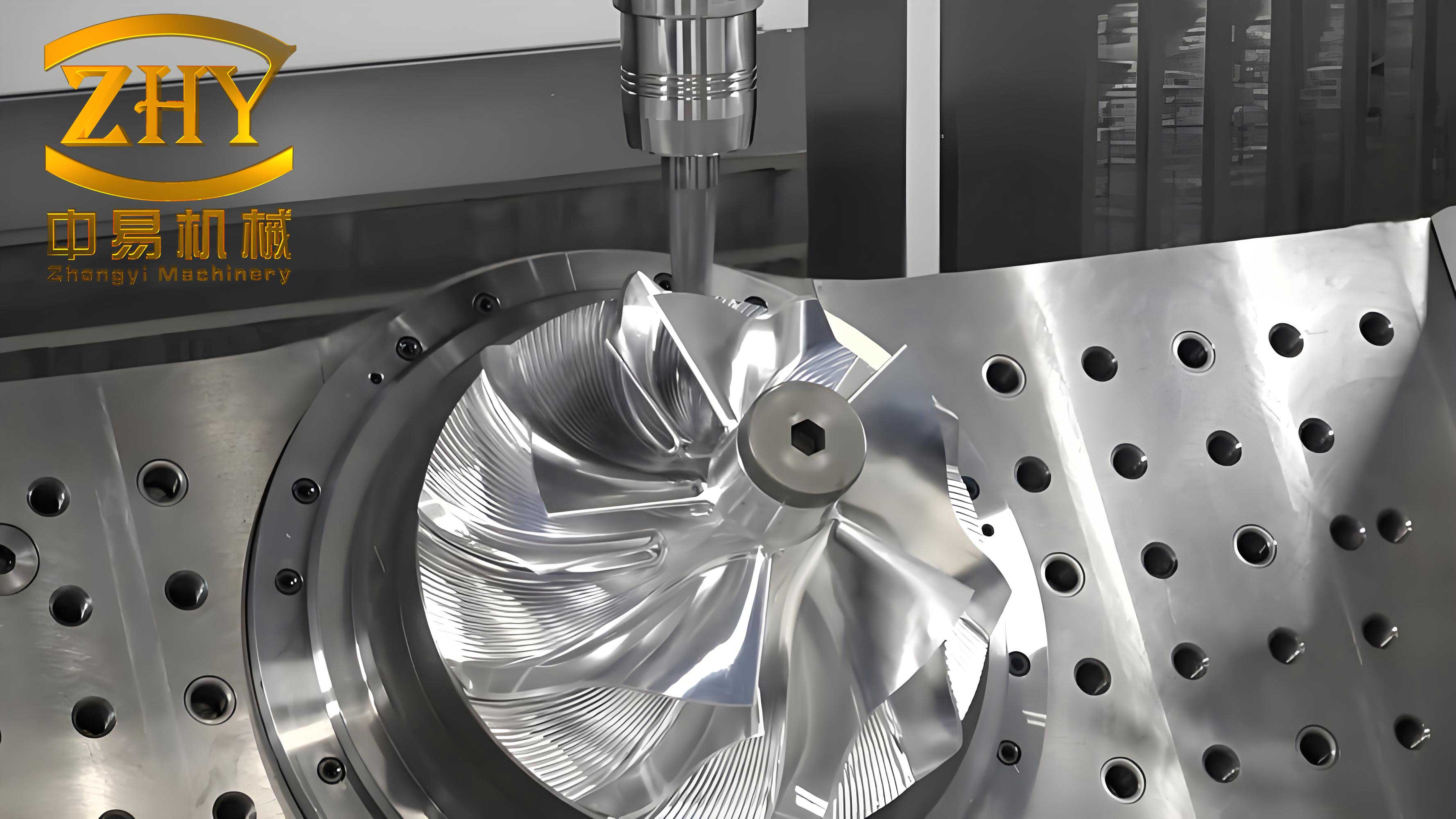
The image above illustrates the typical robust nature of a machine tool casting, underscoring the importance of reliable repair methods to maintain such valuable assets. Our method, though requiring preheating and thus having somewhat demanding working conditions, delivers superior comprehensive properties compared to many cold welding techniques using nickel-based electrodes. With the development of remote-controlled welding tongs, the working environment can be significantly improved.
Regarding industry standards, there exist regulations that restrict or prohibit welding on certain critical surfaces like guideways and mating faces. While these rules aim to encourage higher casting quality, they also lead to the unnecessary scrapping of thousands of tons of otherwise salvageable machine tool castings annually. In my view, instead of imposing broad restrictions, the focus should shift towards establishing rigorous, detailed quality standards for welding repairs. A qualified repair, verified by non-destructive testing and mechanical property checks, should be deemed acceptable even on critical surfaces. This balanced approach promotes quality control while harnessing the full economic potential of repair technologies for machine tool casting.
The graphitization process can be further analyzed kinetically. The time (t) for cementite decomposition can be modeled as a function of the graphitization coefficient K and temperature T. An empirical relationship derived from our data can be expressed as:
$$ t = A \cdot e^{-B \cdot K} $$
where A and B are constants related to the specific alloy system and thermal conditions. For a typical machine tool casting iron under our welding thermal cycle, with K around 4.5, the calculated t is very short, ensuring complete graphitization. The dilution effect from the base machine tool casting metal is accounted for in the final weld metal composition. The effective composition in the weld pool (Ceff, Sieff) can be estimated using a mixing rule:
$$ C_{\text{eff}} = \frac{C_{\text{electrode}} \cdot m_e + C_{\text{base}} \cdot m_b}{m_e + m_b} $$
$$ Si_{\text{eff}} = \frac{Si_{\text{electrode}} \cdot m_e + Si_{\text{base}} \cdot m_b}{m_e + m_b} $$
where m_e and m_b are the masses of melted electrode and base metal, respectively. Our electrode composition is designed so that even after dilution, K remains above 4.0.
The thermal stress analysis during repair of a machine tool casting involves complex thermo-elastic-plastic calculations. A simplified model for the stress σ induced in a constrained weld zone during cooling considers the coefficient of thermal expansion α, the modulus of elasticity E, and the temperature drop ΔT:
$$ \sigma \approx E \cdot \alpha \cdot \Delta T \cdot f(C) $$
Here, f(C) is a constraint factor ranging from 0 (fully free) to 1 (fully constrained). Preheating reduces ΔT, and the heated area stress relief method effectively reduces the constraint factor f(C) for the welding zone of the machine tool casting.
In conclusion, the integrated system of strongly graphitizing electrodes and carefully controlled thermal工艺 provides a robust, cost-effective solution for repairing defective machine tool castings. The methodology ensures metallurgical compatibility, mechanical performance, and aesthetic consistency. We have successfully reclaimed over a thousand tons of castings using this approach. It represents a vital technique for enhancing sustainability in the machine tool industry by extending the life of costly components. Continuous refinement, such as optimizing coating compositions for better operability or developing more precise preheating protocols, remains an ongoing endeavor. The fundamental principles, however, rooted in controlling graphitization and managing thermal stresses, will continue to guide effective repair strategies for machine tool casting.