
In recent years, the rapid development of CNC machine tools towards high precision, powerful cutting, high-speed machining, large-scale, and ultra-thin structures has placed increasingly stringent demands on machine tool castings. As an expert in the field, I conducted an investigation from August to December 2009, focusing on 11 machine tool casting enterprises with relatively advanced production technologies. The goal was to analyze production data, assess the current state of machine tool casting quality in China, and identify gaps compared to international advanced levels. This article summarizes my findings and explores key trends, metallurgical quality factors, and improvement strategies for machine tool castings.
Machine tool castings, often referred to as the “mother of machines,” require exceptional properties to maintain high precision under high-speed and powerful cutting conditions. The evolution of machine tool castings can be characterized by several critical trends: high strength, high rigidity, thin-wall design, dimensional stability, vibration damping, and machinability. However, despite China’s leading position in machine tool production volume, the reliance on imports for CNC machine tools indicates significant quality disparities, particularly in casting quality. Through my investigation, I aim to shed light on these issues and provide insights into enhancing machine tool casting performance.
The development of machine tool castings is driven by the need for materials that balance mechanical properties with manufacturing feasibility. High-strength gray iron grades such as HT250, HT300, and HT350 are commonly used, but achieving these strengths often comes at the cost of reduced carbon equivalent (CE), leading to challenges like shrinkage porosity, deformation, and poor machinability. In my survey, I observed that domestic machine tool castings typically have lower CE values compared to international standards for the same strength grades, highlighting a key area for improvement. For instance, while foreign advanced machine tool castings achieve CE values around 3.95% for HT250, 3.82% for HT300, and 3.76% for HT350, the average CE values from the surveyed Chinese enterprises were 3.75%, 3.60%, and 3.48%, respectively. This discrepancy underscores the importance of pursuing high-CE, high-strength gray iron for machine tool castings.
To quantify these differences, I compiled data on chemical compositions and mechanical properties. The carbon equivalent is a critical parameter, calculated as: $$CE = C + \frac{1}{3}(Si + P)$$ where C, Si, and P are the weight percentages of carbon, silicon, and phosphorus, respectively. A higher CE generally improves casting fluidity, reduces stress, and enhances machinability, but must be coupled with proper metallurgical control to maintain strength. Below is a comparison of CE values between domestic and international machine tool castings:
| Grade | Domestic Average CE (%) | International Advanced CE (%) | Difference (%) |
|---|---|---|---|
| HT250 | 3.75 | 3.95 | -0.20 |
| HT300 | 3.60 | 3.82 | -0.22 |
| HT350 | 3.48 | 3.76 | -0.28 |
High strength in machine tool castings is essential for withstanding cutting forces, but it must be achieved without compromising other properties. In my analysis, I evaluated additional metallurgical quality indicators such as maturity (RG), hardening tendency (HG), and quality coefficient (Qi). Maturity reflects the effectiveness of metallurgical processing and is defined as: $$RG = \frac{R_m}{1000 – 800 \cdot Sc}$$ where \(R_m\) is the tensile strength in MPa, and \(Sc\) is the saturation degree, calculated as \(Sc = \frac{C}{4.26 – 0.31(Si + P)}\). A higher RG indicates better utilization of the iron’s potential strength. Similarly, hardening tendency assesses hardness uniformity, and quality coefficient combines strength and hardness to gauge overall performance. From the surveyed data, enterprises with higher molten iron temperatures (above 1500°C) exhibited superior RG and Qi values, emphasizing the role of metallurgical quality.
Elastic modulus is another vital property for machine tool castings, as it determines rigidity and resistance to deformation under load. However, none of the surveyed enterprises included elastic modulus in their quality assessments, which is a significant oversight. International standards recommend higher elastic modulus values for gray iron grades, as shown below:
| Grade | International Elastic Modulus (GPa) | Domestic Recommended (GPa) |
|---|---|---|
| HT250 | 120 | 100-110 |
| HT300 | 135 | 115-125 |
| HT350 | 145 | 125-135 |
Thin-wall design is a growing trend in machine tool castings to reduce weight and material costs while maintaining strength. This requires high-CE, high-strength iron to ensure good fluidity and minimize defects. In my survey, 72% of enterprises noted increased demands for thin-wall castings, but achieving this with low-CE iron often leads to issues like shrinkage and deformation. The relationship between wall thickness, CE, and strength can be expressed using empirical formulas, such as: $$t_{min} = k \cdot \frac{1}{CE^{1.5}}$$ where \(t_{min}\) is the minimum achievable wall thickness, and \(k\) is a material constant. Higher CE allows for thinner walls without sacrificing integrity.
Dimensional stability is crucial for precision machine tools, and it is closely linked to residual stress in castings. High-strength irons tend to have higher casting stress, which can be mitigated by increasing CE. My data shows that casting stress \(\sigma\) correlates with tensile strength \(R_m\) and CE as: $$\sigma = a \cdot R_m – b \cdot CE$$ where \(a\) and \(b\) are coefficients derived from regression analysis. For instance, in the surveyed samples, stress reduction of up to 20% was observed with a 0.2% increase in CE. This underscores the importance of optimizing composition for stress relief.
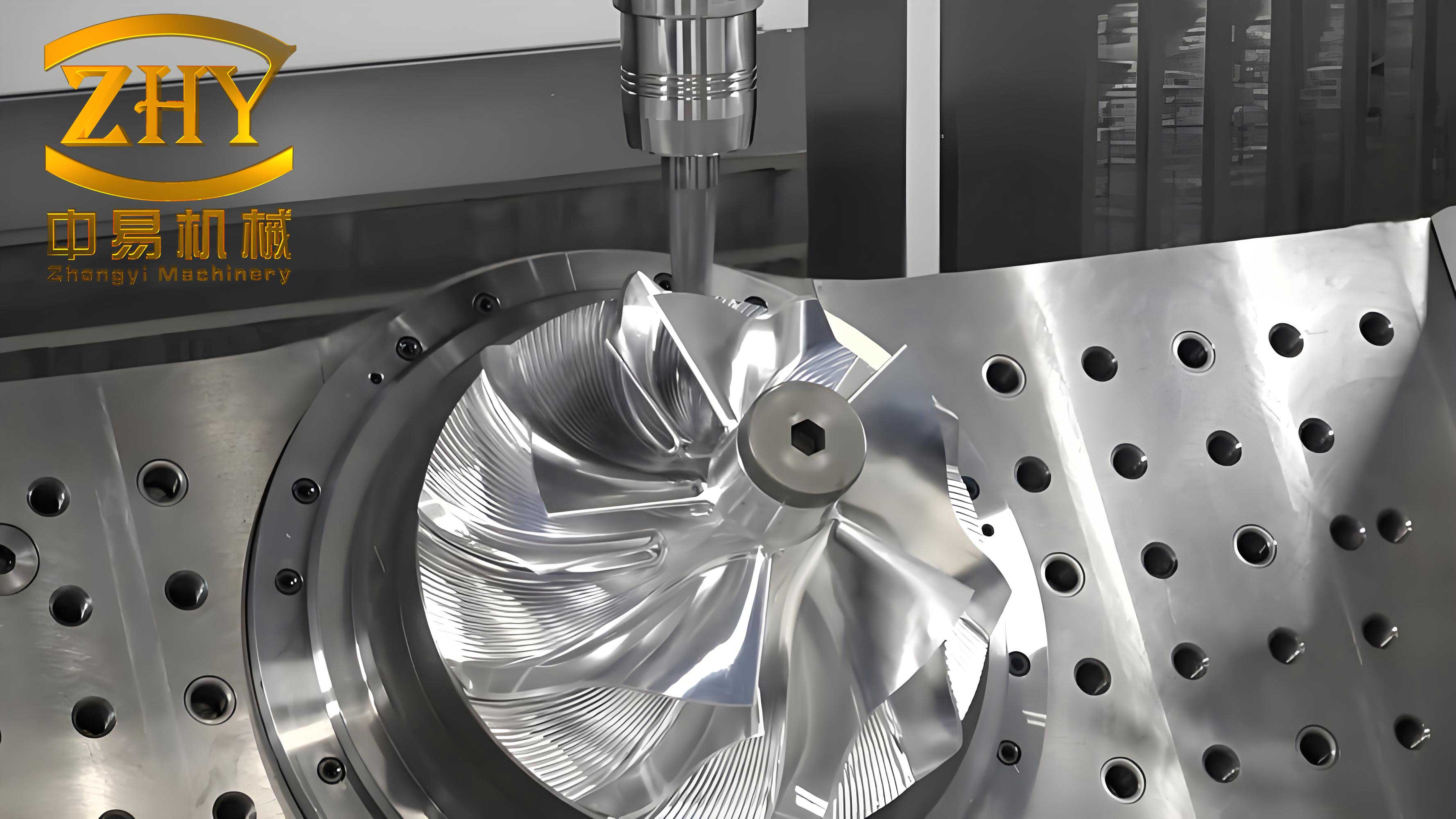
Vibration damping is another key attribute of machine tool castings, as it affects machining accuracy. Gray iron inherently has good damping capacity, but it decreases with lower CE. The specific damping capacity \(\psi\) can be modeled as: $$\psi = \psi_0 \cdot e^{-c \cdot (1/CE)}$$ where \(\psi_0\) is the base damping, and \(c\) is a constant. Maintaining high CE helps preserve damping properties, which is essential for ultra-precision machining applications.
Machinability is a critical concern for machine tool castings, especially with the adoption of automated machining centers. Hardness (HB) and the ratio of tensile strength to hardness (\(m = R_m/HB\)) are common indicators. From my survey, optimal machinability corresponds to \(m\) values in specific ranges, as shown below:
| Grade | Optimal m Value Range | Typical Hardness (HB) |
|---|---|---|
| HT250 | 1.1–1.2 | 170–190 |
| HT300 | 1.3–1.4 | 180–210 |
| HT350 | 1.4–1.6 | 190–230 |
Metallurgical quality is the foundation for achieving these properties. Key factors include molten iron temperature, scrap steel ratio, FeO content in slag, and inoculation practices. In my investigation, enterprises with molten iron temperatures above 1500°C demonstrated better overall performance. The table below summarizes data from selected enterprises:
| Enterprise | Molten Iron Temp. (°C) | Scrap Ratio (%) | FeO in Slag (%) | RG (Maturity) | Qi (Quality Coef.) |
|---|---|---|---|---|---|
| A | 1510–1540 | 50 | 2.5–3.5 | 1.05 | 1.129 |
| B | 1480–1500 | 40 | 5–6 | 0.98 | 1.165 |
| C | 1450 | 30 | 4 | 0.87 | 1.000 |
| D | 1510 | 20 | <2 | 1.13 | 1.388 |
High molten iron temperature promotes graphitization, reduces oxidation, and improves inoculation effectiveness. The relationship between temperature and tensile strength can be approximated as: $$R_m = R_{m0} + \alpha (T – T_0)$$ where \(T\) is the molten iron temperature, \(T_0\) is a reference temperature, and \(\alpha\) is a coefficient. For every 10°C increase above 1450°C, strength can improve by 5–10 MPa, depending on composition.
Scrap steel ratio is another vital parameter. Higher scrap ratios (e.g., 50–80%) enhance strength and reduce graphite size, but require precise control of carbon equivalent through carburizing. The optimal scrap ratio \(S_{opt}\) for a target CE can be estimated as: $$S_{opt} = \frac{CE_{target} – CE_{base}}{k_s}$$ where \(CE_{base}\) is the CE of base materials, and \(k_s\) is a scrap contribution factor. In my survey, enterprises with scrap ratios above 50% achieved higher strengths at similar CE levels.
FeO content in slag indicates the oxidation level of the molten iron. Lower FeO (below 3%) correlates with better machinability and reduced element burn-off. The burn-off rates for silicon and manganese can be modeled as: $$\Delta Si = \beta_{Si} \cdot [FeO]$$ $$\Delta Mn = \beta_{Mn} \cdot [FeO]$$ where \([FeO]\) is the FeO content in slag, and \(\beta\) are constants. Controlling FeO through proper furnace operation is essential for high-quality machine tool castings.
Inoculation plays a crucial role in refining graphite and improving properties. Delayed instant inoculation methods, such as stream inoculation or mold inoculation, are more effective than traditional ladle additions. The inoculation efficiency \(\eta\) can be expressed as: $$\eta = \eta_0 \cdot e^{-t/\tau}$$ where \(t\) is the time after inoculation, and \(\tau\) is the衰退 time constant. Using efficient inoculants like FeSi alloys with strontium or barium enhances graphite morphology and reduces undercooling.
Alloying is often necessary to achieve high strength in machine tool castings without lowering CE. Common additions include copper (0.4–0.6%), chromium (0.2–0.4%), and tin or antimony for hardness control. The combined effect of alloys on strength can be described by a linear model: $$R_m = R_{m,base} + \sum k_i \cdot w_i$$ where \(w_i\) is the weight percentage of alloying element i, and \(k_i\) is its potency coefficient. For example, copper contributes approximately 50 MPa per 0.1% addition in gray iron.
Stress relief annealing is critical for dimensional stability. My survey revealed that 70% of enterprises use thermal aging, but often with improper parameters. The stress reduction \(\Delta \sigma\) during annealing follows an exponential decay: $$\Delta \sigma = \sigma_0 \cdot (1 – e^{-t/t_c})$$ where \(\sigma_0\) is the initial stress, \(t\) is time, and \(t_c\) is a characteristic time dependent on temperature. Optimal annealing for machine tool castings requires temperatures of 550–600°C for high-grade irons, with holding times based on wall thickness: $$t_{hold} = \frac{d}{25}$$ where \(d\) is the wall thickness in mm, and \(t_{hold}\) is in hours. Cooling rates should be below 30°C/h to prevent stress re-introduction.
Natural aging is an alternative but requires extended periods (9–12 months) outdoors with temperature fluctuations. The stress relaxation during natural aging can be modeled as: $$\sigma(t) = \sigma_0 \cdot \left(1 – \frac{\ln(1+t/\tau_n)}{\ln 2}\right)$$ where \(\tau_n\) is a time constant. For precision machine tool castings, a combination of thermal aging after rough machining and natural aging after semi-finishing is recommended for best results.
Large-scale machine tool castings, weighing up to 140 tons, present additional challenges such as property degradation in thick sections and shrinkage porosity. For these, ductile iron (e.g., QT600-3) is increasingly used due to its superior strength and toughness. The properties of large castings can be optimized through controlled cooling and alloying. Data from my survey on heavy-section castings is summarized below:
| Casting Type | Material | Weight (t) | Tensile Strength (MPa) | Hardness (HB) |
|---|---|---|---|---|
| Vertical Lathe Bed | HT300 | 42 | 358 | 242 |
| Gantry Column | QT600-3 | 93 | 700 | 260 |
| Crossbeam | QT600-3 | 123 | 780 | 270 |
To address shrinkage in thick sections, feeding rules based on modulus calculations are essential. The modulus \(M\) is defined as volume divided by cooling surface area, and the required feeder size can be estimated as: $$M_f = 1.2 \cdot M_c$$ where \(M_f\) is the feeder modulus, and \(M_c\) is the casting modulus. Proper gating and risering design, coupled with simulation software, can minimize defects in large machine tool castings.
In conclusion, my investigation highlights significant opportunities for improving machine tool casting quality in China. The key lies in adopting high-carbon-equivalent, high-strength gray iron through enhanced metallurgical practices. This involves increasing molten iron temperatures above 1500°C, optimizing scrap steel ratios, controlling slag FeO content, implementing effective inoculation, and using alloying strategically. Additionally, proper stress relief annealing and attention to large-scale casting challenges are crucial. By focusing on these areas, the machine tool casting industry can bridge the gap with international standards, supporting the advancement of precision CNC machine tools. The future of machine tool castings depends on a holistic approach that balances strength, rigidity, thin-wall design, stability, damping, and machinability—all achievable through rigorous quality control and innovation.
Moving forward, I recommend that enterprises establish comprehensive quality metrics, including elastic modulus, maturity, and damping capacity, alongside traditional tests. Continuous research into new materials and processes, such as compacted graphite iron or advanced heat treatments, will further propel the evolution of machine tool castings. As the demand for high-performance machine tools grows globally, investing in casting quality is not just an option but a necessity for competitiveness and technological leadership.