
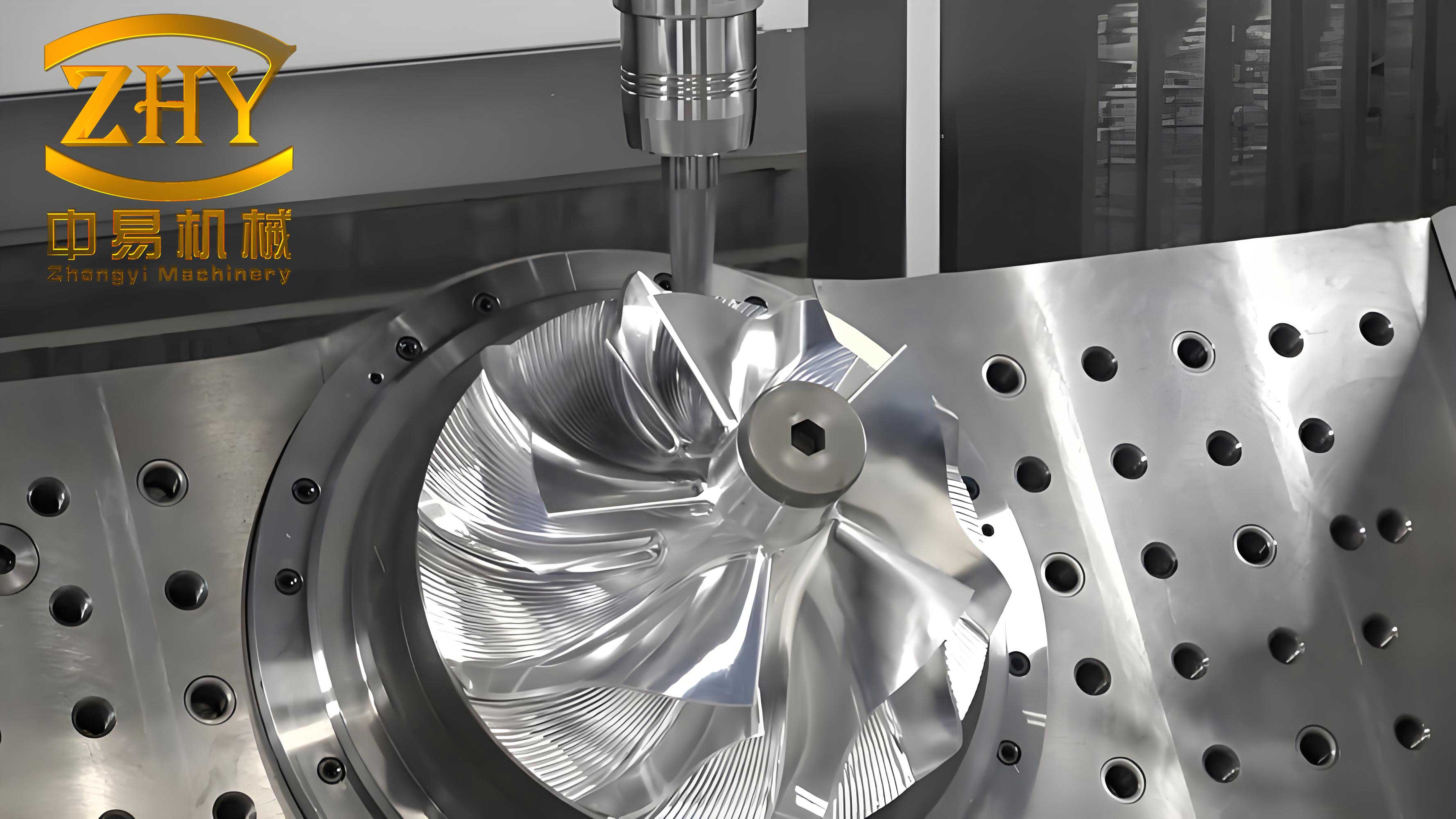
Machine tools are the cornerstone of the equipment manufacturing industry and are essential for precision machining across diverse sectors. The advancement of industries like automotive, aerospace, and defense has led to escalating demands for higher precision, stability, and longevity in machine tools. Consequently, high-precision CNC machine tools have become the industry standard. While foreign manufacturers have long led in technology, domestic capabilities in R&D and manufacturing of high-end CNC machines have seen significant progress, narrowing the technological gap. The foundational quality of a machine tool is profoundly influenced by its cast components—structural elements and major parts often originate as castings. The properties of these machine tool castings directly determine the machine’s final quality, operational lifespan, and, most critically, its ability to maintain precision over time.
The performance requirements for modern machine tool castings are multifaceted and stringent. They must exhibit high compressive and tensile strength to withstand mechanical loads. Exceptional dimensional stability is non-negotiable for preserving accuracy. A high modulus of elasticity (stiffness) is crucial to resist deformation under cutting forces. The material must offer good wear resistance for longevity, excellent vibration damping to ensure smooth surface finishes, and consistent machinability for efficient production. Furthermore, the casting alloy itself must possess favorable foundry characteristics for sound casting production, and the final castings must achieve high dimensional accuracy with a low surface roughness. The technical control to meet these demands revolves around meticulous management of chemical composition, mechanical properties, microstructure, dimensional tolerances, and stress-relief treatments.
1. Chemical Composition Control: The Foundation of Consistency
In CNC machining, maintaining consistent part accuracy from the first to the last workpiece requires exceptional stability in the casting’s hardness and machinability. Although CNC systems feature automatic measurement and tool wear compensation, fluctuations in these material properties can still impact the stability of machining precision. Ensuring the stability of the chemical composition is a primary measure to guarantee stable hardness and machining performance of the machine tool casting. For high-grade castings, the allowable fluctuation in key elements must be tightly constrained. For instance, the content of Carbon (C), Silicon (Si), and Molybdenum (Mo) should ideally not vary by more than ±0.1% (by mass), with Carbon controlled even more strictly, within ±0.05%.
International Benchmarks and Carbon Equivalent (CE): A comparison of compositional control between leading international foundries and common domestic specifications reveals critical differences. The following table illustrates the target composition for high-grade castings from a prominent Japanese foundry.
| Cast Iron Grade | C | Si | Mn | P | S | Note |
|---|---|---|---|---|---|---|
| FC35 (~HT350) | 3.15 | 1.85 | 0.85 | ≤0.35 | ≤0.100 | For wear-prone parts (e.g., with guideways): Add Cu ~0.6%, Cr ~0.3% |
| FC30 (~HT300) | 3.20 | 1.90 | 0.80 | ≤0.35 | ≤0.100 | Same as above |
| FC25 (~HT250) | 3.30 | 1.95 | 0.50 | ≤0.35 | ≤0.100 | Same as above |
The precision of control is as important as the target values themselves. The contrast in allowable fluctuation ranges is stark.
| Grade | Carbon (C) | Silicon (Si) | ||
|---|---|---|---|---|
| Range | ΔC | Range | ΔSi | |
| Japan FC30 | 3.15 – 3.25 | 0.10 | 1.80 – 2.00 | 0.20 |
| Typical HT300 | 2.90 – 3.30 | 0.40 | 1.40 – 2.10 | 0.70 |
| Japan FC35 | 3.10 – 3.20 | 0.10 | 1.75 – 1.95 | 0.20 |
| Typical HT350 | 2.80 – 3.10 | 0.30 | 1.30 – 1.90 | 0.60 |
This tighter control directly influences the Carbon Equivalent (CE), a key parameter predicting casting behavior. The CE is calculated as:
$$ CE = C\% + \frac{Si\% + P\%}{3} $$
(for low phosphorus irons, often simplified to $CE = C\% + \frac{Si\%}{3}$).
Comparing average CE values shows that for the same nominal strength grade, international specifications often maintain a higher CE.
| Grade Pair | CE Range (%) | Average CE (%) |
|---|---|---|
| FC30 / HT300 | 3.81 – 3.85 / 3.60 – 3.76 | 3.83 / 3.68 |
| FC35 / HT350 | 3.75 – 3.78 / 3.43 – 3.53 | 3.76 / 3.48 |
A higher CE at a given strength level generally translates to superior castability (better fluidity, lower shrinkage tendency) and often better machinability. This is a critical advantage for producing thin-walled, lightweight machine tool castings common in modern designs, where wall thicknesses can be as low as 8-14 mm.
Balancing Strength and Castability: The global trend is towards using higher strength grades like HT350 and HT300 for critical machine tool castings. However, simply reducing CE to increase strength degrades castability. Advanced foundry practices achieve high strength at a relatively high CE through methods like high-temperature melting with significant steel scrap charges (promoting carbon pickup), powerful inoculation techniques, and optimizing the Si/C ratio. Increasing the Si/C ratio from ~0.45 to 0.7-0.8 can enhance both tensile strength and the modulus of elasticity. Therefore, precise chemical and CE control is the cornerstone for producing high-performance, castable, and lightweight machine tool castings.
2. Mechanical Properties: Beyond Tensile Strength
While domestic machine tools frequently use HT200, HT250, and HT300 grades for major components, international counterparts predominantly specify HT300 or HT350. From a functional perspective, the stiffness (resistance to elastic deformation) of a machine tool casting is often more critical than its ultimate tensile strength. Even under maximum cutting loads, the safety factor for compressive/tensile strength is usually ample. However, insufficient stiffness can lead to elastic deformations that directly compromise machining accuracy during high-speed, heavy-cut operations.
Thus, the Modulus of Elasticity (E) becomes a paramount material property. It has a direct, though not perfectly linear, relationship with tensile strength ($\sigma_b$).
| Tensile Strength, $\sigma_b$ (MPa) | Elastic Modulus, $E_0$ (GPa) |
|---|---|
| 155 | 103.5 |
| 185 | 111.7 |
| 215 | 120.0 |
| 265 | 129.7 |
| 310 | 137.9 |
| 355 | 141.4 |
| 400 | 144.8 |
This relationship can be approximated by empirical formulas such as:
$$ E_0 \approx k \cdot \sigma_b^{n} $$
where $k$ and $n$ are material constants. However, tensile strength alone cannot reliably predict elastic modulus. Two castings with identical strength can have different stiffness due to variations in graphite morphology, matrix structure, and chemical composition (e.g., Si/C ratio). The elastic modulus decreases non-linearly with increasing applied stress. The decline is less severe for higher strength irons, which is a key reason for specifying them in high-stiffness applications. Designers often use the “secant modulus” at a practical stress level (e.g., $\sigma_b/4$) for calculations.
Comparative data highlights the target values for premium machine tool castings.
| Cast Iron Grade | Typical Elastic Modulus Range (GPa) | Recommended Design Modulus, E (GPa) |
|---|---|---|
| HT250 | 100 – 120 | 115 |
| HT300 | 115 – 135 | 130 |
| HT350 | 125 – 145 | 140 |
3. Microstructural Requirements
The superior mechanical properties of advanced machine tool castings are fundamentally rooted in their refined microstructure. When comparing high-quality international castings (e.g., Mechanite-type) to standard domestic grades at similar CE, distinct microstructural advantages are evident. The graphite is predominantly Type A (random flake), but it is finer and more uniformly distributed. The pearlitic matrix is not merely “pearlite”; it has a much finer interlamellar spacing, approaching a sorbitic or troostitic structure.
Microstructural refinements have dramatic effects. For example, with a constant CE of 3.27%, changing from coarse to fine graphite can increase tensile strength from ~205 MPa to ~295 MPa. With identical graphite, refining the pearlite lamellar spacing can boost strength by 30-100 MPa. The elastic modulus is most significantly influenced by the total amount and shape of graphite; less and finer graphite yields a higher modulus.
Typical microstructural specifications for premium machine tool castings include:
- Graphite: Type A, size 4-5 (according to relevant standard charts, e.g., ASTM A247).
- Matrix: Minimum 95% pearlite. The interlamellar spacing should be less than 1 µm when observed at 500x magnification.
- Carbides: Free carbides should be limited to less than 3% to ensure good machinability.
4. Dimensional Accuracy and Surface Finish
The widespread adoption of resin sand molding has significantly improved the dimensional accuracy of machine tool castings. The achievable precision is defined by casting tolerance grades (e.g., CT). While many domestic foundries achieve CT9 to CT10, with flatness often less than 2 mm over a 600 mm length, the benchmark for components destined for flexible manufacturing lines or high-end machines is CT8 with flatness better than 1 mm over 600 mm. International leaders consistently achieve CT8 as a standard. This level of precision minimizes machining allowances, reduces production time and cost, and provides a geometrically stable starting point for final precision machining.
5. Stress Relief Treatments
The shift to higher strength grades like HT300/350 for machine tool castings inherently increases the magnitude of residual casting stresses. Effective stress relief is therefore critical to prevent long-term dimensional instability (warping) during machining or in service. The three primary methods are: thermal (furnace) stress relieving, vibratory stress relief, and the use of “low-stress” iron grades designed to minimize residual stress from solidification.
For thermal stress relief, the treatment temperature must correlate with the material’s strength and composition. Higher strength irons require higher temperatures to effectively reduce stresses. A guideline for thermal treatment is presented below.
| Tensile Strength Grade (MPa) | Approximate Stress Relief Temperature Range (°C) |
|---|---|
| 210 – 250 | 510 – 560 |
| 280 – 320 | 560 – 590 |
| 350+ | 590 – 620 |
The relationship between the required stress relief temperature ($T_{sr}$) and the material’s strength can be conceptually linked to its thermal stability and the temperature needed for microstructural recovery, though it is primarily an empirical relationship based on foundry experience.
6. Conclusion: The Path Forward for Foundries
The production of high-integrity machine tool castings is a sophisticated discipline that sits at the intersection of metallurgy, foundry engineering, and precision manufacturing. The gap between standard and world-class practice is closed not by a single change, but through the systematic and precise control of every stage: from the rigorous management of charge materials and melting to achieve tight compositional bands and optimal CE; through advanced molding and process control for dimensional fidelity; to the implementation of tailored heat treatments for stability. The microstructure—the fine A-type graphite and the sorbitic pearlite—is the physical manifestation of this controlled process and the direct source of the required high strength, high stiffness, and excellent damping capacity.
As the global manufacturing landscape grows increasingly competitive, the domestic foundry industry’s progression from a volume producer to a technology leader hinges on sustained investment in research, process innovation, and workforce development. Mastering the integrated technical controls for machine tool castings, as outlined, is a fundamental step in enhancing the value, performance, and reliability of the capital equipment that forms the backbone of modern manufacturing, thereby contributing to the broader goal of advanced industrial capability.